My grandmother was tough as nails. She had just turned 17 when the Nazis entered her village in the Kyiv region, near what is now the city of Bucha. She hid in the attic to avoid being taken for forced labor. They didn’t find her that time, but a few weeks later, she was caught working in the fields. They put her in a cattle wagon and took her to Germany. She escaped and walked a couple of hundred kilometers back to her village. Grandma said life was hard for everyone during the war, but she was lucky.
In the past month, two of my friends here in Kyiv happened to tell me that their hands have started shaking during Russian airstrikes. Everyone who knows that my hands shake during airstrikes tells me their stories. One day, during an airstrike in the Donetsk region, I had a meltdown and have never recovered. Today, you could say I am an ambassador for people whose hands shake during airstrikes.
Those two friends said the exact same thing: their hands never used to shake before, and now they do. Each one wrote: “I don’t understand what’s just happened to me.”
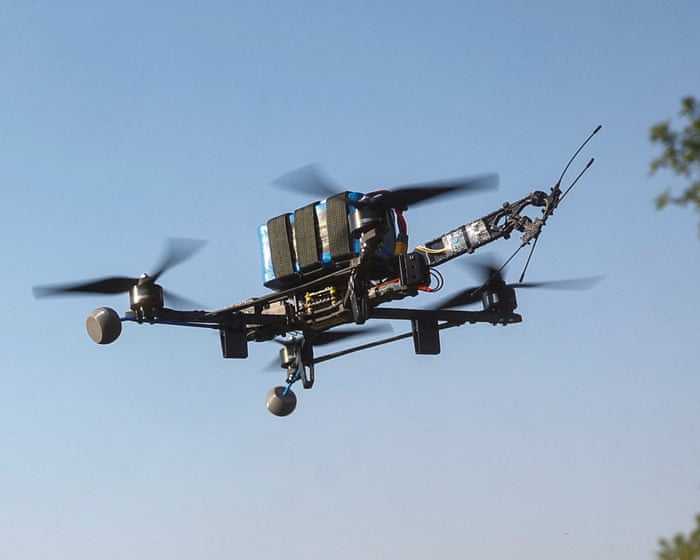
For nearly five years, the Russians have been targeting these women and their children with drones, rockets, jet-powered drones, and missiles. They have threatened us with nuclear weapons. They have used an Oreshnik intermediate-range ballistic missile in combat; carried out a siege; again threatened a nuclear strike; tried to freeze us by destroying Ukraine’s heat and power systems in the middle of winter; blown up a dam, flooding two city districts; used more drones and fired yet other types of long-range missiles at Ukrainian cities; organized terror attacks; and, once again, threatened to wipe us out with nuclear weapons.
In the early hours of 19 July, the general staff of the armed forces of Ukraine reported a massive combined Russian attack: 41 missiles and 125 drones, with Kyiv as the main target. Next morning, I got a message from my friend Valya. “Everything was fine, and then all of a sudden something happened,” she wrote. “Everyone but me is at home asleep. I’m the only one who’s so anxious.”
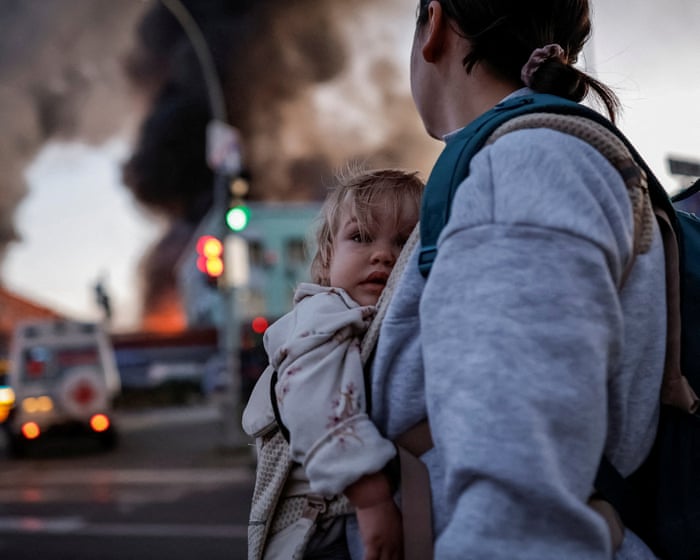
After every airstrike, the women I know “pull themselves together,” take their children to preschool, and go to work. Because children need to be fed – and if the state-run preschool doesn’t have a bomb shelter, the private one that does costs money. The women I know sleep beside their children in the corridors of their apartment buildings, in underground parking garages, in the metro, or in pedestrian tunnels. “Everything’s fine,” say these women. After Russia fires dozens of missiles at Kyiv overnight, they say: “It was loud, but everything’s fine.” And they wonder why their hands shake and even blame themselves for being weak.
My grandma’s name was Dina, and she was tough as nails. She would get very angry when I snuggled up to our relatives. Once, my grandma’s sister was over, and I climbed onto her lap and wrapped my arms around her. Grandma Dina yelled at me: “Get down, what a disgrace, you’re a big girl now!” I was seven. My grandma was afraid I would be spoiled. Whenever I cried, she would say to my mother: “Look how you’ve spoiled her, how will she cope with life?”
Grandma Dina liked to feed stray cats. Grandpa protested, but she did it anyway. When she went out to feed them, for a few minutes she became a completely different person. First, she scolded them for being a nuisance, wearing her usual face. Then, as they ate, she would start to smile a bit and stroke their thin, fluffy backs. With one hand on her thigh, she would lean over and pet each cat once or twice, smiling. Then she would pick up the bowl, straighten up, and her expression would return to normal.
One morning, I found a large grey cat dead under a bush; a cat that my grandma had been feeding for 10 years, as long as I had been alive. He had probably diedBecause of old age or illness. I burst into tears and ran to my grandma. She rolled up a towel and gave me a smack on the ribs. “Now stop that crying, you’re a big girl now!” When my mother came home from work that evening, I said, “I think Grandma’s a robot.” Mum replied, “Nonsense, now go finish your soup.”
There was nothing soft about Grandma Dina. If she were still alive today, she’d be well prepared. She didn’t know much about getting along with people, but she did know how to pull herself together.
Now I understand that she couldn’t give herself any leeway or allow any self-kindness, and that’s why she had no compassion for others either. Compassion was too risky for her.
And it’s true, we can’t let ourselves be as emotional or compassionate as we were before the war. We can’t live, let alone work, the way we used to. On top of that, war highlights the sharp contrast between our reality and the self-obsession you see on social media. Viral posts about “success, energy, and choosing yourself” mean nothing to someone caring for a sick child when it’s 5°C inside their apartment.
Enduring daily death and the violence of Russia’s attacks has changed us forever. The skin of Ukrainian women has thickened into armor. These women fight in combat, live under constant airstrikes, and still keep working and caring for their families through it all.
But if it were up to me, I’d keep my belly soft. I still want to hug people, hold them close, and feel the warmth of their hands. So what if Grandma Dina would say I’m not ready for life? I think love is worth the risk.
We stay calm because our children are watching us, because they need to be taken to preschool in the morning, because there’s still work to do. But when resilience becomes an obligation, every trembling hand starts to feel like a personal failure. I don’t want survival to take away my tenderness towards other people, or towards myself.
Translated from Ukrainian by Larissa Babij
Alina Sarnatska is a Ukrainian writer, playwright, and war veteran. She is the author of two books and nine plays, and her work has been staged and presented internationally.
Do you have an opinion on the issues raised in this article? If you would like to submit a response of up to 300 words by email to be considered for publication in our letters section, please click here.
Frequently Asked Questions
Here is a list of FAQs based on the provided statement written in a natural tone with clear concise answers
Frequently Asked Questions
1 What does the phrase Russia is raining death on Ukraines women and children mean
It is a stark emotional description of the reality of war It means that Russian military strikes are hitting residential areas and civilian targets causing deaths and injuries among noncombatants specifically the most vulnerable populations like women and children
2 Is it accurate to say the attacks are specifically targeting women and children
No The attacks are indiscriminate and often target civilian infrastructure However because women children and the elderly make up the majority of the civilian population remaining in conflict zones they suffer the highest number of casualties from these bombings
3 What does Our hands tremble but we keep moving forward refer to
This describes the psychological state of the Ukrainian people The trembling represents the fear trauma and exhaustion from living under constant threat Moving forward represents their daily act of resiliencegoing to work taking care of family and resisting despair despite the terror
4 How can a person keep moving forward when they are so afraid
It usually comes down to purpose For many it is the love for their children or their country that forces them to act They focus on the immediate taskcooking a meal finding shelter helping a neighborrather than the overwhelming scale of the danger It is survival driven by love
5 What does the phrase for love mean in this context
It signifies the primary motivation for the Ukrainian resistance It is not about hate for the enemy but rather the deep love for their families their homes and their culture This love is what turns fear into determination
6 Is this a political statement or a humanitarian one
While it has political implications the statement is fundamentally a humanitarian observation It highlights the human cost of the war and the emotional state of the civilians enduring it rather than focusing on military strategy or political leaders
7 How can I help people who are in this situation
The most effective ways are to donate to verified humanitarian organizations that are on the ground providing food water and medical aid Additionally supporting refugee resettlement programs in your local community can