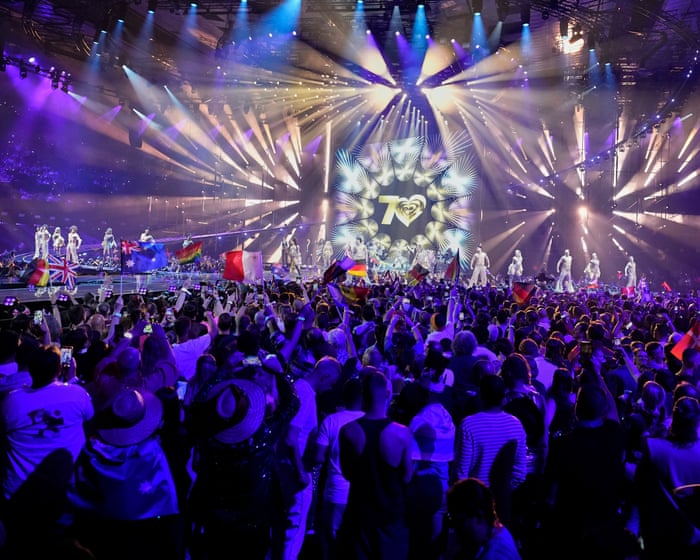
Ireland will boycott Eurovision for a second consecutive year due to the “appalling” ongoing killings in Gaza, its national broadcaster has announced. Ireland was among five countries—along with Iceland, the Netherlands, Spain, and Slovenia—that refused to participate in this year’s competition in protest of Israel’s involvement.
RTÉ announced on Thursday that it would not take part in the 2027 competition. Dutch broadcaster Avrotros announced its own boycott last month, calling Eurovision a “platform for division.”
In a statement, the Irish broadcaster said: “RTÉ feels that Ireland’s participation cannot be justified given the appalling and ongoing loss of lives in Gaza and the humanitarian crisis there, which continues to put the lives of so many civilians at risk.”
Next year’s Eurovision will be held in the Bulgarian Black Sea city of Burgas, after the country won for the first time in May.
Avrotros said it would not participate, claiming the competition “can no longer be considered neutral, with a participating country still involved in a large-scale military conflict.”
Eurovision’s director, Martin Green, said he regretted but respected RTÉ’s decision. “They remain a valued part of our family and will be missed,” he said.
“That power to bring people together is at the heart of what makes the contest so special and is even more important now in an increasingly difficult and divided world,” he added.
“All broadcasters decide on an annual basis to participate in the following year’s contest. We will remain in dialogue with RTÉ and hope to welcome them back to the contest in the future.”
The European Broadcasting Union, which organises the event, has tried twice to address broadcasters’ concerns over Israel’s participation.
Last year it reduced the number of votes that could be entered online or by telephone by one individual, amid allegations Israel had mounted a disproportionate campaign for public votes.
Last month the EBU announced that broadcasters would no longer be eligible to host the Eurovision song contest if their state was involved in an “armed conflict” or in a “sensitive geopolitical situation.”
Eurovision has faced protests in and outside the competition venues in recent years over the participation of Israel, a competitor since 1973.
In 2024, the European Commission made an unusual intervention after the organisers banned audience members from waving the EU flag at the grand final in Sweden, describing the decision as “mind-blowing” and “regrettable.”
Palestinian authorities report that more than 73,000 people have been killed in Israel’s war on Gaza, which was launched after Hamas-led fighters killed 1,200 people in an attack on southern Israel in October 2023.
A US-brokered ceasefire agreed last year calls for eventual reconstruction of the territory but Israeli strikes have continued. According to Gaza’s health ministry, 1,369 Palestinians have been killed and 4,627 wounded since the fragile ceasefire took effect on 11 October 2025.
Reuters contributed to this report
Frequently Asked Questions
Here is a list of frequently asked questions regarding Ireland the Eurovision Song Contest and the controversy surrounding Israels participation
Beginner Questions
What is Eurovision
It is a massive annual song contest where countries from Europe perform original songs It is famous for its campy performances political voting blocs and dramatic scoring
Why would Ireland boycott Eurovision
Ireland would boycott to protest Israels participation in the contest The argument is that participating alongside Israel normalizes the countrys actions in Gaza where thousands of civilians have died
Has Ireland boycotted Eurovision before
Yes In 1973 Ireland refused to participate because the contest was held in Luxembourg which was hosting to celebrate Israels 1978 win Ireland also boycotted the 1983 contest in Germany due to the political situation at the time
What does boycott mean in this context
It means Ireland would refuse to send a singer or song to the competition They would not appear on the broadcast and would not be eligible to win
Is Ireland actually going to boycott again
As of now no official decision has been made The Irish broadcaster has not confirmed a boycott However there is significant public pressure and calls from Irish politicians and artists to do so
Intermediate Questions
What is the specific reason for the boycott calls now
The calls are in response to the ongoing war in Gaza Critics point to the high death toll the humanitarian crisis and what they call disproportionate military action by Israel They argue that Israel should be excluded from cultural events until the violence stops
Who decides if Ireland boycotts
The decision is made by RTÉ often in consultation with the Irish government and the Eurovision steering group They weigh public opinion political pressure and the cost of participation
What is the Eurovision rules argument against a boycott
The European Broadcasting Union which runs Eurovision argues that the contest is a nonpolitical event They say excluding a member country based on political pressure sets a dangerous precedent and that the contest is for broadcasters not governments
Have other countries threatened to boycott
Yes Several other countries including Iceland Slovenia and Spain have faced similar internal debates Some artists have also called for a boycott