The United Arab Emirates has left the OPEC oil cartel, dealing a major blow to the group and its de facto leader, Saudi Arabia, amid the global energy crisis sparked by the war in Iran.
The surprising departure of the UAE, a long-time OPEC member, could cause chaos and weaken the group, which has usually tried to present a united front despite internal disagreements over issues ranging from geopolitics to production limits.
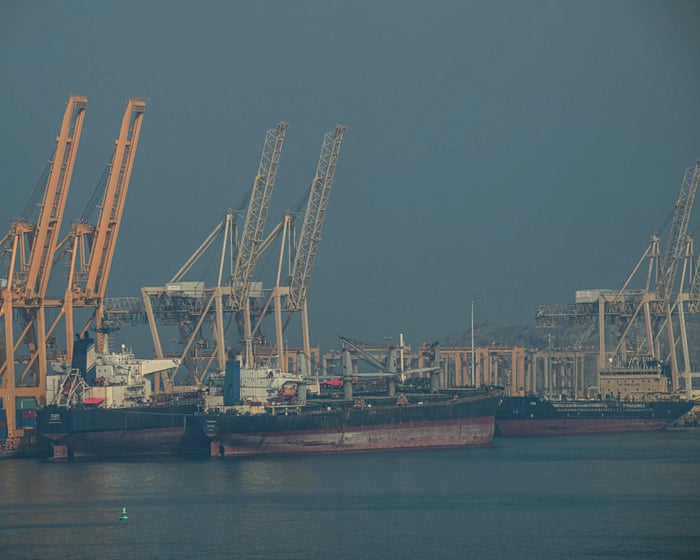
Gulf OPEC producers have already been struggling to ship exports through the Strait of Hormuz, a narrow passage between Iran and Oman where about a fifth of the world’s crude oil and liquefied natural gas normally flows, due to Iranian threats and attacks on ships.
UAE leaves OPEC group of oil producers; UK government borrowing costs near highest since 2008 – business live
Read more
The UAE’s energy ministry said that the restrictions in the strait meant the decision to leave wouldn’t have a huge impact on the market. Leaving OPEC will give the country more “flexibility” and aligns with its “long-term strategic and economic vision,” the ministry stated.
The UAE joined OPEC in 1967 through the Emirate of Abu Dhabi and stayed in the organization when the UAE was formed in 1971. Its departure will take effect on Friday.
However, the UAE’s exit from OPEC and its sister group OPEC+ is a big win for Donald Trump, who has accused the organization of “ripping off the rest of the world” by driving up oil prices.
The price of Brent crude oil has reached as high as $119.50 a barrel since the war in Iran began. On Tuesday, it rose 3.4% to $111.67.
The US president has also linked American military support for the Gulf to oil prices, saying that while his country defends OPEC members, they “exploit this by imposing high oil prices.”
This move came after the UAE, a regional business hub and one of Washington’s most important allies, criticized other Arab states for not doing enough to protect it from numerous Iranian attacks during the Middle East conflict.
Anwar Gargash, the diplomatic adviser for the UAE president, criticized the Arab and Gulf response to the Iranian attacks during a session at the Gulf influencers forum on Monday.
“The Gulf Cooperation Council countries supported each other logistically, but politically and militarily, I think their position has been the weakest historically,” Gargash said.
“I expect this weak stance from the Arab League and I am not surprised by it, but I haven’t expected it from the [Gulf] Cooperation Council and I am surprised by it,” he added.
Jorge León, an analyst at Rystad, said: “The UAE withdrawal marks a significant shift for OPEC. Alongside Saudi Arabia, it is one of the few members with meaningful spare capacity – the mechanism through which the group exerts market influence.
“While near-term effects may be muted given ongoing disruptions in the Strait of Hormuz, the longer-term implication is a structurally weaker OPEC.”
He added: “Outside the group, the UAE would have both the incentive and the ability to increase production, raising broader questions about the sustainability of Saudi Arabia’s role as the market’s central stabiliser – and pointing to a potentially more volatile oil market as OPEC’s capacity to smooth supply imbalances diminishes.”
Frequently Asked Questions
Here is a list of FAQs about the UAE leaving OPEC framed as a win for Trump and a weakening of the oil cartel
BeginnerLevel Questions
Q What is OPEC
A OPEC is a group of major oilproducing countries that work together to control how much oil they pump By limiting supply they try to keep oil prices high
Q Why did the UAE leave OPEC
A The UAE wanted to pump more oil to make more money but OPEC was forcing them to cut production to keep prices high The UAE decided it wasnt worth staying in the group if they couldnt grow their own oil business
Q How is this a win for Trump
A Donald Trump has long pushed for lower oil prices and more US energy dominance When the UAE leaves OPEC it breaks the cartels unity This makes it harder for OPEC to control prices and supply which can lead to lower gasoline prices and less power for US rivals like Saudi Arabia and Russia
Q Does this mean oil prices will drop immediately
A Not necessarily right away but it puts downward pressure on prices With the UAE free to pump more oil global supply increases which usually leads to lower prices over time It also makes OPEC look weaker which scares oil markets
Q Will this hurt Saudi Arabia
A Yes it hurts Saudi Arabia politically and economically They lose a key ally in OPEC and their ability to dictate oil policy It also shows other members they can leave without consequences weakening Saudi leadership
AdvancedLevel Questions
Q How does the UAE leaving OPEC specifically weaken the cartels pricing power
A OPECs power comes from its ability to enforce production cuts When a major producer like the UAE leaves the cartel loses control over a huge chunk of supply The UAE can now pump as much as it wants flooding the market and making OPECs cuts less effective at raising prices
Q What is the win for Trump beyond just lower oil prices
A Its a geopolitical win Trump has wanted to isolate Iran and Russia A weaker OPEC means less revenue for those