This CSS code defines a custom font called “Guardian Headline Full” with multiple styles and weights. It specifies the font files in different formats (WOFF2, WOFF, and TTF) and their online locations. The font includes light, regular, medium, and semibold weights, each with both normal and italic styles.@font-face {
font-family: Guardian Headline Full;
src: url(https://assets.guim.co.uk/static/frontend/fonts/guardian-headline/noalts-not-hinted/GHGuardianHeadline-Bold.woff2) format(“woff2”),
url(https://assets.guim.co.uk/static/frontend/fonts/guardian-headline/noalts-not-hinted/GHGuardianHeadline-Bold.woff) format(“woff”),
url(https://assets.guim.co.uk/static/frontend/fonts/guardian-headline/noalts-not-hinted/GHGuardianHeadline-Bold.ttf) format(“truetype”);
font-weight: 700;
font-style: normal;
}
@font-face {
font-family: Guardian Headline Full;
src: url(https://assets.guim.co.uk/static/frontend/fonts/guardian-headline/noalts-not-hinted/GHGuardianHeadline-BoldItalic.woff2) format(“woff2”),
url(https://assets.guim.co.uk/static/frontend/fonts/guardian-headline/noalts-not-hinted/GHGuardianHeadline-BoldItalic.woff) format(“woff”),
url(https://assets.guim.co.uk/static/frontend/fonts/guardian-headline/noalts-not-hinted/GHGuardianHeadline-BoldItalic.ttf) format(“truetype”);
font-weight: 700;
font-style: italic;
}
@font-face {
font-family: Guardian Headline Full;
src: url(https://assets.guim.co.uk/static/frontend/fonts/guardian-headline/noalts-not-hinted/GHGuardianHeadline-Black.woff2) format(“woff2”),
url(https://assets.guim.co.uk/static/frontend/fonts/guardian-headline/noalts-not-hinted/GHGuardianHeadline-Black.woff) format(“woff”),
url(https://assets.guim.co.uk/static/frontend/fonts/guardian-headline/noalts-not-hinted/GHGuardianHeadline-Black.ttf) format(“truetype”);
font-weight: 900;
font-style: normal;
}
@font-face {
font-family: Guardian Headline Full;
src: url(https://assets.guim.co.uk/static/frontend/fonts/guardian-headline/noalts-not-hinted/GHGuardianHeadline-BlackItalic.woff2) format(“woff2”),
url(https://assets.guim.co.uk/static/frontend/fonts/guardian-headline/noalts-not-hinted/GHGuardianHeadline-BlackItalic.woff) format(“woff”),
url(https://assets.guim.co.uk/static/frontend/fonts/guardian-headline/noalts-not-hinted/GHGuardianHeadline-BlackItalic.ttf) format(“truetype”);
font-weight: 900;
font-style: italic;
}
@font-face {
font-family: Guardian Titlepiece;
src: url(https://interactive.guim.co.uk/fonts/garnett/GTGuardianTitlepiece-Bold.woff2) format(“woff2”),
url(https://interactive.guim.co.uk/fonts/garnett/GTGuardianTitlepiece-Bold.woff) format(“woff”),
url(https://interactive.guim.co.uk/fonts/garnett/GTGuardianTitlepiece-Bold.ttf) format(“truetype”);
font-weight: 700;
font-style: normal;
}
@media (min-width: 71.25em) {
.content__main-column–interactive {
margin-left: 160px;
}
}
@media (min-width: 81.25em) {
.content__main-column–interactive {
margin-left: 240px;
}
}
.content__main-column–interactive .element-atom {
max-width: 620px;
}
@media (max-width: 46.24em) {
.content__main-column–interactive .element-atom {
max-width: 100%;
}
}
.content__main-column–interactive .element-showcase {
margin-left: 0;
}
@media (min-width: 46.25em) {
.content__main-column–interactive .element-showcase {
max-width: 620px;
}
}
@media (min-width: 71.25em) {
.content__main-column–interactive .element-showcase {
max-width: 860px;
}
}
.content__main-column–interactive .element-immersive {
max-width: 1100px;
}
@media (max-width: 46.24em) {
.content__main-column–interactive .element-immersive {
width: calc(100vw – var(–scrollbar-width));
position: relative;
left: 50%;
right: 50%;
margin-left: calc(-50vw + var(–half-scrollbar-width)) !important;
margin-right: calc(-50vw + var(–half-scrollbar-width)) !important;
}
}
@media (min-width: 46.25em) {
.content__main-column–interactive .element-immersive {
transform: translate(-20px);
width: calc(100% + 60px);
}
}
@media (max-width: 71.24em) {
.content__main-column–interactive .element-immersive {
margin-left: 0;
margin-right: 0;
}
}
@media (min-width: 71.25em) {
.content__main-column–interactive .element-immersive {
transform: translate(0);
width: auto;
}
}
@media (min-width: 81.25em) {
.content__main-column–interactive .element-immersive {
max-width: 1260px;
}
}
.content__main-column–interactive p,
.content__main-column–interactive ul {
max-width: 620px;
}
.content__main-column–interactive:before {
position: absolute;
top: 0;
height: calc(100% + 15px);
min-height: 100px;
content: “”;
}
@media (min-width: 71.25em) {
.content__main-column–interactive:before {
border-left: 1px solid #dcdcdc;
z-index: -1;
left: -10px;
}
}The interactive content column has a left border and specific spacing for elements. Paragraphs following certain elements get extra top padding, and the first letter of these paragraphs is styled as a large, colored drop cap. Inline elements and figures are limited to a maximum width. Various color variables are defined for consistent theming.Pullquotes within specific containers should have a maximum width of 620 pixels.
Captions for showcase elements in main content and article containers should be positioned statically, with a full width up to 620 pixels.
Immersive elements should span the full viewport width, minus the scrollbar. On larger screens, their maximum width is 978 pixels, with caption padding adjusted at different breakpoints. On medium screens, the maximum width is 738 pixels. On smaller screens, immersive elements should align to the left edge with adjusted margins and caption padding.
For furniture wrappers on large screens, a grid layout is used with defined columns and rows. Headlines have a top border, meta sections are positioned relatively, and standfirst text has specific styling for links and paragraphs. Figures within the wrapper have no left margin and a maximum width of 630 pixels when inline. On extra-large screens, the grid template columns are adjusted.The CSS defines a grid layout for an article header with specific areas for the title, headline, standfirst, meta information, and portrait (main media). It sets styles for these elements, including fonts, borders, and spacing. The layout adjusts at different screen widths: for wider screens (over 81.25em), it uses a more detailed grid and adjusts element widths; for medium screens (over 71.25em), the headline font size increases; and for smaller screens (under 46.24em), the main media adjusts to full viewport width. Borders and lines use a custom color variable, and some elements are hidden or repositioned at certain breakpoints.The CSS code defines styles for a webpage layout, focusing on a component called “furniture-wrapper.” This component has a dark background and adjusts its margins and padding based on screen size. For larger screens, it adds decorative sidebars.
Inside this wrapper, elements like article headers, headlines, and meta information (such as social sharing buttons) are styled. Headlines use a light gray color and bold font. Social buttons have colored borders that match a theme color, and they change to a solid color on hover.
The code also manages the visibility of captions and a caption toggle button for media elements. Overall, the styles ensure the layout is responsive and visually consistent across different devices.This CSS code defines styles for a webpage component, likely a sidebar or content wrapper. It sets text colors, link behaviors, and layout adjustments for different screen sizes. Links are styled with specific colors and underlines, and the layout includes background elements that adjust based on the viewport width. Media queries ensure the design adapts to various devices, from tablets to large desktop screens.The CSS code defines styles for article elements and loads custom fonts. It sets a light border color for comments and adjusts heading styles: h2 headings in articles have a light font weight by default, but become bold if they contain a strong tag. Additionally, it imports the Guardian Headline Full font family in various weights and styles (light, regular, medium, semibold, each with normal and italic versions) from specific web addresses.The text appears to be a fragment of CSS code defining font faces and styling rules, likely for a website. Here is a rewritten version in fluent, natural English:
This CSS code defines several custom font families for use on a website. It specifies different font files (in WOFF2, WOFF, and TrueType formats) for the “Guardian Headline Full” font in various weights and styles, such as semibold italic, bold, bold italic, black, and black italic. Each definition includes the font’s weight and style.
It also defines a “Guardian Titlepiece” font in bold weight.
Additionally, the code sets CSS custom properties (CSS variables) for color schemes, particularly for dark mode on iOS and Android devices. It defines colors for dark backgrounds and feature elements, with specific colors for regular and dark modes.
There are also media queries and specific styling rules for the first letter of the first paragraph in article containers on iOS and Android devices, which apply when certain HTML structures are present.For Android devices, the first letter of the first paragraph in standard or comment articles is styled with a secondary pillar color. On both iOS and Android, article headers are hidden, and the furniture wrapper has specific padding. Labels within this wrapper use a bold, capitalized font with a new pillar color. Headlines are set to 32px, bold, with bottom padding and a dark color. Image figures are positioned relatively, with full-width margins and automatic height.For Android devices, images within article containers should have a transparent background, span the full viewport width (accounting for scrollbars), and adjust their height automatically.
On both iOS and Android, the introductory text in articles should have specific spacing: 4 pixels of padding on top, 24 pixels on the bottom, and a 10-pixel negative margin on the right.
The paragraphs within this introductory text should use the Guardian’s headline font family.
Links inside this text should be styled with a specific color, an underline positioned 6 pixels below the text, and a light gray underline color. They should have no background image or bottom border. When hovered over, the underline should change to match the link’s text color.
Additionally, the metadata section in articles on iOS and Android should also receive these styling rules.This CSS code sets styles for article containers on Android and iOS devices. It adjusts margins, colors, padding, and button displays for various article types and their components.On iOS and Android devices, for feature, standard, and comment article containers, images that are not thumbnails or immersive are styled to have no margin, a width calculated from the viewport minus 24 pixels and the scrollbar width, and an automatic height. Their captions have no padding.
Immersive images in these containers are set to a width calculated from the viewport minus the scrollbar width.
Within the article body’s prose, quoted blockquotes display a colored marker using a custom CSS variable. Links are styled with an underline, using specific colors for the link and underline, which change on hover.
In dark mode, the furniture wrapper’s background color is set to a dark gray (#1a1a1a).For iOS and Android devices, the content labels in feature, standard, and comment articles use the new pillar color. Headlines in these articles have no background and use the header border color. The standfirst text also uses the header border color, while links within it and author bylines use the new pillar color. Icons in the meta section are styled with the new pillar color. Captions for showcase images use the dateline color. Additionally, quoted blocks within the article body for iOS devices are styled accordingly.For iOS and Android devices, blockquotes within article bodies should use the new pillar color.
On both iOS and Android, the main content areas in feature, standard, and comment articles should have a dark background.
Additionally, for iOS devices, the first letter of a paragraph following specific elements in these articles should be styled.This appears to be a CSS selector targeting the first letter of paragraphs in specific article containers on iOS and Android devices. The selector applies to various article types (standard, feature, comment) and accounts for different page structures and sign-in gate elements.This CSS code sets styles for specific elements on Android and iOS devices. It defines colors, padding, margins, and other visual properties for various article containers, buttons, and text elements. It also includes dark mode preferences and sets certain headers to be invisible.The CSS code sets styles for article containers on iOS and Android devices. It removes margins from the furniture-wrapper class and defines colors for labels, headlines, and links using CSS variables and specific hex codes. Headlines are set to a light gray color, while links and labels use a custom property for color. A repeating linear gradient is applied to meta section borders, and byline text is also styled in light gray.For iOS and Android devices, links within the meta section of feature, standard, and comment article containers should use a specific color variable. Similarly, SVG strokes within the meta section’s miscellaneous elements should also use this variable. Labels for alerts within these sections should be set to a light gray color with high importance. Additionally, any span elements containing data icons in these areas should adopt the same color variable.For iOS and Android devices, the icon color within the meta section of feature, standard, and comment article containers is set to a custom pillar color, defaulting to a dark mode feature color.
On larger screens (71.25em and above), the meta section in these containers displays as a block with a top border, using the same pillar color or a default header border color. The miscellaneous content within the meta section then has its left margin adjusted.
Additionally, paragraphs and unordered lists within the article body of these containers have a maximum width of 620px. Blockquotes with the class “quoted” are styled with a preceding element.On a drizzly October afternoon, I’m in a rural Lancashire pub, sharing pints of Moretti with London’s top snail farmer and a convicted member of the Naples mafia. We’re talking about how to prevent a mollusc orgy.
The farmer is 79-year-old Terry Ball, a former shoe salesman who has made and lost several fortunes. For hours, he’s been cheerfully explaining in detail how he was inspired by former Conservative minister Michael Gove to use snails to cheat local councils out of tens of millions in taxes.
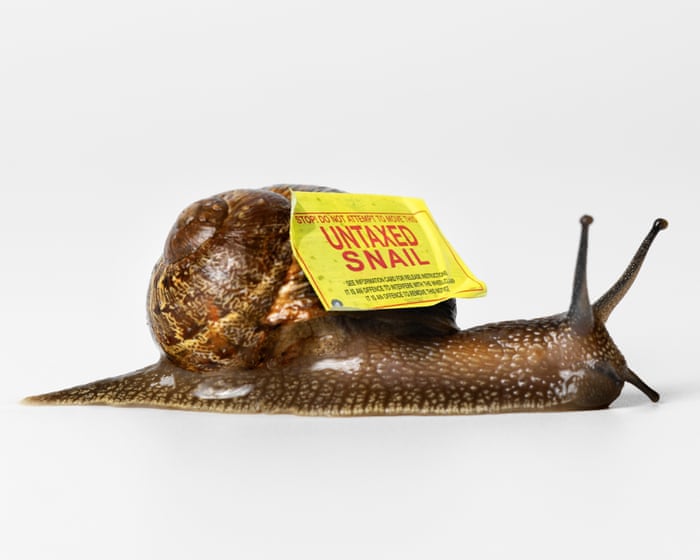
His method is straightforward. First, he sets up shell companies that breed snails in empty office buildings. Then he claims the office block is legally a farm—despite all evidence to the contrary—making it exempt from taxes.They’re exempt from taxes. “They’re sexy things,” Ball chuckles in his thick Blackburn accent, describing how quickly two snails can multiply into dozens if left alone in a box for a few weeks. He warns that snails love group sex and even cannibalism.
As the conversation shifts from snail breeding, Ball shares stories about his personal connections to a prominent MP, his years hiding Italian mafia killers on the run, and the potential market for snail salami. Much of what he tells me sounds far-fetched, yet everything I could later verify turns out to be true. I have little reason to doubt the rest.
We’re having a drink with “Joseph,” an employee at the snail farm. Earlier, I watched him using a cleaver to chop lettuce for thousands of snails. These snails are then shipped to sites across the country, including four large snail farms they currently operate in London. Ball takes out his phone and shows me a picture of another man—”my mafia boss friend”—posing with the legendary Napoli footballer Diego Maradona in the 1980s.
Joseph, who speaks with a distinctive Italian-Lancastrian accent, is actually a man named Giuseppe from Naples. Very matter-of-factly, Giuseppe explains that he spent four years in prison after a former friend—a convicted mafia murderer—became an informant and helped Italian authorities convict his old criminal associates. Ball says he hired Giuseppe to look after his tax-dodging snails as a thank you. Giuseppe once warned Ball not to travel to Italy, when the snail magnate might have faced prosecution due to the same informant’s confessions.
Three hours earlier, I knew none of this. I had shown up unannounced at Ball’s snail farm headquarters, hoping I might catch a glimpse of the man behind one of the most brazen tax dodges I’d ever encountered.
Standing by the concrete snail statues guarding the security gate outside the farm, I expected to be told to piss off. Instead, I was met by Giuseppe, who called his boss. Intrigued by a journalist who had traveled 250 miles from London to stand in the rain without an appointment, Ball agreed to meet. I was told to come back in an hour for what would be his first-ever interview—a man whose photo had never even appeared online until now.
Over the next few hours, Ball makes confession after confession: his attempts to outwit the taxman with increasingly elaborate schemes, his decades-long ties to the Naples underworld, and how, at this very moment, he is using his unique snail-breeding method in buildings across London to cheat frustrated local councils out of millions of pounds. “I’m turning 80 next month and I haven’t got jack shit in my name. What are they going to do?” Ball chuckles when asked if he’s worried about prosecution. “You can’t take nothing off nothing. They’ve stopped torturing people.”
Ball is proudly committed to spending his remaining years finding innovative ways to get revenge on the “bastard” authorities he feels wronged him in the past: “I just do it for devilment. I do it just to get away with it.”
None of this, it’s fair to say, is normal. But almost nothing about this story is.
Right now, if you take the Tube to Edgware Road and walk a few minutes down Old Marylebone Road, you’ll find Winchester House, a 1970s office block awaiting redevelopment. If you go up to the sixth floor and press your ear to the door, you might just hear the low hum of snails in boxes munching lettuce and breeding.
All the snails inside the office block are living in sacks branded with L’Escargotiere, the name of Ball’s snail farm. For Ball, these mollusks have one sole purpose in life: to reproduce and enable tax avoidance.Chester House. Photograph: Westminster council
The tenants listed for each floor of this office block have names like Snai1 Primary Products (2023) Ltd. They are all companies registered by Terry Ball for £35 each. He is the sole director of every one but says he has no intention of filing accounts or paying any taxes. These companies don’t earn income or hold assets; they are just shells created to sign legal paperwork. Whenever a local council successfully liquidates one for unpaid debts, Ball simply phoenixes it—abandoning the old company and its debts and starting a new one. Westminster council is now seeking to recover more than £286,000 from Ball’s companies, which it says are operating multiple tax-avoiding snail farms in Winchester House.
Ball’s desk is piled with brown envelopes addressed to his various shell companies. I notice some with logos from HMRC and Companies House, while others are from Westminster and Barnet councils. At one point, he proudly holds up a stack of paperwork for a property on Old Marylebone Road, pointing out how Westminster council appears to have accidentally approved some of the farms.
Most people are familiar with council tax, paid by residents to their local authority. Business rates are the commercial equivalent, paid by the occupant of an office, shop, or other non-residential property. A rule change introduced by Gordon Brown in 2008 states that if a commercial building has no tenant, the landlord must pay the full property tax.
This means a landlord with an empty office or shop in a major city can quickly face hundreds of thousands of pounds a year in business rates, even with no rental income. One solution is to lease the space cheaply to a legitimate tenant. Another is to find someone willing to accept a small fee to sign a lease and take on the legal responsibility for the taxes.
That person could be an overseas student pretending to run a gift shop, who racks up a large tax bill before leaving the country. Or it could be someone running a business that is fully exempt from business rates, such as an agricultural enterprise. While reading tax guidance early one morning in the 2010s, Ball noticed that this category includes fish farms.
Snails cross copies of legislation that Ball says provides the legal grounds to enable his tax avoidance scheme. Photograph: Joel Goodman/The Guardian
The problem is that running a fish farm in a central London office block is complicated. Breeding salmon is tricky because there’s nowhere to release them. You could breed crustaceans like lobsters, but they require careful attention to meet food hygiene standards.
However, in the fine print of HMRC guidance, Ball spotted a further clarification. In the late 1980s, a government minister told parliament that the legal definition of a fish farm includes breeding “molluscs of any description”—a rule originally meant to cover oysters. The minister confirmed that, since land-based snails are also molluscs, any business breeding snails for human consumption legally qualifies as a fish farm and is potentially exempt from business rates.
L’Escargotiere HQ is located on the edge of the picturesque village of Ribchester, an ancient settlement in the Ribble Valley between Preston and Blackburn. “It’s a very middle-class village,” says one resident. “It’s like something out of a Joanna Trollope novel.”
Inside a recently built corrugated metal shed is a large freezer holding 6,000 snails in suspended animation, ready to be sent to another office block. The snail farm’s website offers 1kg of snails for £14, but there doesn’t seem to be much direct consumer trade. Outside, a caravan sits alongside a bonfire and several holiday chalets.The snail farm is being marketed for up to £200,000. Approved partly on the basis that it would be an educational tourist attraction, it is now the subject of a planning dispute with the local council.
Ball’s daughter invites me into the building and seats me in his office. True to his tax-avoiding reputation, the office has been subdivided into different units, each supposedly run by separate companies controlled by Ball. One door bears a sign stating the company specialises in “the development of snail extract mucus, skin creams, and beauty products.” Cables dangle from the ceiling throughout the whole block. Behind the large wooden desk sits Ball’s big leather chair—a scene reminiscent of lawyer Saul Goodman’s office in Breaking Bad.
Ball walks in with a glint in his eye and immediately starts talking. He barely pauses for an hour as he recounts his life story. He is a man driven by a commitment to ruining the lives of tax collectors by exploiting loopholes—whether those loopholes actually work is another matter.
According to him, Ball was born into poverty in postwar Blackburn, sharing a bed with his siblings while his father, Tommy, ran a market stall selling cut-price shoes in the mill town. What began as a small enterprise grew into a chain of shops across northwest England that, as the BBC reported after Tommy’s death in 2008, “revolutionised the footwear business.” It was built on a discount model centred on buying factory seconds—products rejected for minor flaws. His shops attracted coach trips from across northern England.
Terry left school at 14 and followed his father into the shoe business, eventually going into direct competition with him after a family feud. In the early 1970s, Terry began travelling to Italy to source discount shoes. He claims, holding up a dusty old leather shoe from a shelf in his snail farm office, that he was the only man to secure seconds from the late Giorgio Armani’s factories.
The problem, he says, was getting the shoes back to the UK. Before the European Union, he would lose shoes to corrupt officials at every border along the route. Then he encountered the Neapolitan mafia, which controlled the local port. Instead of driving a lorry across Europe, he discovered he could simply pay the local customs agent in Naples and have the shoes shipped straight to the UK. Thus began a decades-long relationship with the Camorra, the dominant mafia organisation in Naples.
“I did them favours, they did me favours,” said Ball.
Terry Ball claims that at various points he has been a multimillionaire. He owned large houses and property across northwest England. He experimented with different businesses, at one point distributing a beer called “Shag” and hiring PR Max Clifford to concoct a successful media campaign that got it banned from Australia.
Ball explains that it was in the late 2000s when he became radicalised over business rates. A friend had decided to liquidate a long-running family business. They wanted to do right by their employees and pay their taxes, but during the financial crisis were left with an empty, unsellable building that was accruing tax debts to the local council. Ball says Michael Gove was the one who had warned of this impact of Gordon Brown’s decision to impose business rates on empty buildings. “Why should you pay tax if there’s no income?” he asks. Ball waves around an annotated copy of a parliamentary speech by Gove—then a shadow planning minister—that he keeps on his desk.
Around this time, Ball and his family were taken to court multiple times for attempting to evade taxes by repeatedly phoenixing companies and shuffling assets between different businesses. He defended himself and lost badly. Ball was declared bankrupt and banned from being a company director for nine years, until 2016.He set out to deprive the taxman through innovative methods, declaring: “I said you got £600,000 off me. I’m going to get £20 million off you.”
In 2018, he began establishing snail farm businesses in empty commercial properties on behalf of landlords, who paid his company 20% of the empty property tax they saved. This came after years of experimenting on how to keep snails alive for long periods. He bred Helix aspersa muller, the common garden snail, which needed to survive for weeks at a time to legally qualify as a farm—a tricky task. “The mortality rate is very high,” he says. “If you put more than two in a box, you get cannibalism and snail orgies.”
Fresh food in the boxes would rot, attracting flies and maggots. After three years of trial and error, his breakthrough came during a visit to a local Pets at Home, where he found hamster food that worked better. He figured out how to fatten up the snails, put them in a freezer to hibernate, and then place them on a site where they could breed and survive on their body fat for an extended period without needing human attention.
“I’m the ideas man,” Ball said, insisting he charges landlords only a modest fee for his tax-reduction efforts. “We’re not robbers. We cover our costs. It’s the principle I don’t like.”
Initially, Ball marketed his tax avoidance services under the brand name Crusader, promising landlords he could cut empty property business rates by 93%. His public relations were handled by someone closely linked to Blackburn Rovers, who enlisted former Scotland football captain Colin Hendry to promote the company.
Business boomed, with his daughter helping to run it. However, councils began raiding the snail farm premises and challenging the agricultural exemptions, leaving landlords liable. A snail farm in Liverpool was raided, and earlier this year, Westminster council reported on one of the farms to the Sunday Times—a story Ball shared with friends on WhatsApp. In a notable 2021 court case in Leeds, a judge ruled definitively that Ball’s snail farm constituted tax avoidance. Ball blames this very public setback on a landlord who failed to follow his strict guidelines. (For his scheme to work, Ball says, buildings must be used solely as snail farms and for no other purpose.) Additionally, some landlords who used his tax avoidance services failed to pay his fees, which annoyed him due to their lack of respect.
Ball now plans to diversify into a new “pop-up charity shop” business rates avoidance scheme, exploiting a loophole in Charity Commission rules designed for small charities. A landlord would give him the keys to an office block, where he would set up a temporary “charity shop” and arrange for a few people to buy large bags of mixed goods for a single day. The landlord could then claim a significant business rates discount on the basis that the premises were being used by an unregistered charity. To support this new tax dodge, he has filled every corner of his snail farm with hundreds of thousands of pounds worth of cheap Chinese goods and toys. Ball insisted I take a plastic crossbow for my child.
Having openly admitted to enabling large-scale tax avoidance through snails, the interview concluded. I was shown the snail farm one last time, and then the conversation took a stranger turn. Ball began talking with Giuseppe, who had just finished chopping snail food, about a former mutual acquaintance named Gennaro Panzuto.
Panzuto, the two men explained while pulling up YouTube videos on their phones, is now building a career as an actor and influencer known as Genny Earthquake, who appeared in a 2024 Ross Kemp documentary about the Italian mafia in Britain. But in his previous life, Panzuto was a key member of the Camorra criminal organization and was jailed in Italy for murder, mafia association, extortion, drug trafficking, arms trafficking, and money laundering.
The two men laughed at Panzuto’s…Now a TikTok influencer and anti-mafia campaigner, Ball unexpectedly points at a video of the convicted mafia killer and tells me, “I hid him for years.”
Pardon?
“I HID HIM FOR YEARS,” Ball repeats, gesturing again at the video. “Do you want a pint?”
A few years ago, the BBC’s home affairs correspondent Dominic Casciani interviewed an apparently repentant Gennaro Panzuto inside a maximum-security prison in Italy. The former “mafia kingpin” and senior member of the Piccirillo clan described his long life of crime on the streets of Naples and the murders he had committed.
In 2006, Panzuto realized the Italian authorities were closing in and urgently needed to flee the country. According to the BBC, one of Panzuto’s closest associates in Naples “had made deep connections to an organised crime gang in north-west England” involved in the shoe trade. The gang was led by a businessman “who appeared to be an entirely upstanding member of his community.”
Panzuto contacted this mysterious businessman, who offered him an escape and a new identity. When Panzuto arrived at Liverpool John Lennon Airport, the businessman supposedly sent a Rolls-Royce to take him straight to a Lancashire pub for a pint of ale.
Panzuto told the BBC he was sometimes baffled by the businessman’s indiscreet actions. The businessman paid to house him in a Lancashire caravan park and occasionally asked for help with debt enforcement in return.
While Italian crime was bloody and messy, Panzuto found British crime mundane and profitable. He was astonished by how easy it was to evade taxes in the UK, concluding that Britain had far less financial regulation enforcement than Italy. Unlike the Camorra, his British host didn’t need to sell drugs or extort money from local businesses. Instead, the businessman simply shifted goods between companies while dodging the taxes that other traders had to pay legitimately.
The BBC did not name the businessman for legal reasons. But as we sit in the pub, Ball cheerily reveals that he is the person who paid to hide Gennaro Panzuto from the authorities. “I’ve known Gennaro’s family for a long time,” he says. “[Hiding him] cost me thousands.”
Sipping a pint of Guinness, Ball insists Panzuto exaggerated various aspects of the story in the interview. He disputes one detail in particular: he didn’t pick up Panzuto from the airport, and he certainly wasn’t driving a Rolls-Royce at the time—he’d sold it and had a Bentley by then. “What really happens and what gets in the papers is different,” says Ball. “They make it more flowery. I don’t blame them. That’s their job.”
This interview seems to be Ball’s chance to finally set the record straight. Yes, he confirms, he did offer Camorra gangsters an undercover getaway in rural Lancashire for many years. His lawyer would find them jobs in local restaurants, where they were appreciated for working for free. As proof, Ball—who says he’s never sent an email—sits in the pub looking up historic news reports on his phone about our drinking buddy (and his snail farm employee) Giuseppe’s past arrests for drug trafficking and involvement in the Panzuto case.
Ball stands in a refrigerator with boxes of snails ready for dispatch.
Ball insists he was never formally in business with the mafia, but they did each other favors. When two factions of the same Naples crime family were at war in the mid-2000s, they asked Ball to mediate. He refused—so they held a summit at the local Lancashire caravan park instead. He says Panzuto’s uncles later personally apologized to Ball for their family member “blabbing” to the authorities and giving evidence. It clearly bothers Ball that he can no longer visit Naples. He once went to watch Napoli, the local fo…At a football club, his associates in organized crime arranged for the team’s ultras to chant his name as if he were a visiting dignitary. Giuseppe, who claims to have served a long prison sentence based on Panzuto’s testimony, reenacts the chant in the pub: “TERRY BALL! TERRY BALL! TERRY BALL!”
Near the end of the BBC report, there is a final revelation about Ball’s criminal connections. Anti-mafia prosecutor Michele Del Prete states that he provided UK authorities with all the information he had about Panzuto’s British businessman host. “I remember the British told us that [the businessman] was definitely involved in scams—they already knew about him,” the prosecutor said in 2021. “But his ties to the Neapolitan Camorra were new to them. We don’t know what they did with that information.” The BBC noted that Lancashire police had opened an investigation at one point, but its outcome remains unknown.
In early October, shortly after my trip to Lancashire, enforcement officers from Westminster council entered Winchester House, an office building on Old Marylebone Road, while investigating snail-related activities. According to photos shared with London Centric, they discovered another of Ball’s ventures.
Adam Hug, the leader of Westminster City Council, told me he has repeatedly raised the “absurd idea of snail farms” claiming business rate exemptions with the central government, but to no avail. “Instead of dishonest traders hopping from one avoidance scheme to another, we need a general clause to prevent business rates evasion and stop these activities completely. As a local authority with limited resources, we enforce wherever possible. We will pursue the snail racketeers or anyone else trying to cheat the taxpayer.”
The property’s landlord is a company based in the British Virgin Islands, controlled by Iraqi businessman Namir El-Akabi, who amassed wealth through contracts with Western governments after the 2003 invasion of Iraq. He did not respond to multiple requests for comment.
In late November, Westminster council took one of Ball’s companies to the High Court over unpaid taxes. The company was swiftly shut down in a hearing that lasted only minutes. Ball did not contest it, as he had no intention of paying the tax bill.
As Ball drove me back from the pub to Preston railway station in his Jaguar with personalized plates, he talked about what he hopes to leave for his grandchildren, while also insisting he has no assets in his own name. Passing through local villages, he pointed out various plots of land he had bought and sold over the years. He also detailed his connections with high-ranking politicians, prominent businessmen, and showed me messages exchanged with a general in the Cambodian army.
I couldn’t help but wonder why he continued with his snail-based tax avoidance scheme, even as he approached his 80s. Ball explained that battling authorities like Westminster council over taxes helps ward off the boredom of old age: “All my retired friends—you can’t have a conversation with them; they’re just waiting to die. I’ve had a laugh. Every day, no matter what happens, I’ve had a laugh.”
This article originally appeared in London Centric, a new investigative news outlet reporting on the people and money that shape London. Listen to our podcasts here and sign up for the long read weekly email here.
Frequently Asked Questions
Of course Here is a list of FAQs about the snail farm donation tax avoidance scheme designed to answer questions from basic understanding to more complex implications
Understanding the Scheme
1 What is the snail farm donation scheme in simple terms
Its a tax avoidance strategy where someone invests in a snail farming business gets a valuation that massively inflates the value of the snails and then donates them to charity The donor then claims a tax deduction for the inflated value potentially saving more in taxes than they originally invested
2 Why snails Couldnt it be anything
Snails were used because they are living assets that are difficult to value objectively Their value is based on future breeding potential which allowed for aggressive and questionable valuations The scheme could theoretically use any hardtovalue asset but snails became the infamous example
3 Is this legal
The schemes were structured to exploit loopholes in tax law regarding charitable donations of property Tax authorities like the IRS and HMRC have ruled these specific schemes as illegal tax avoidance and have successfully challenged them in court Participating in one now would almost certainly lead to penalties back taxes and interest
How It Worked The Problems
4 How did the math supposedly work for the donor
An individual might invest 100000 in a snail farm partnership The partnership would then obtain an appraisal valuing the donated snail breeding stock at 1000000 The donor would claim a charitable deduction for 1000000 which could offset other income and save them for example 370000 in taxes They get 370000 in tax savings from a 100000 investment
5 What was the main flaw or too good to be true part
The valuation was the core flaw The appraisals were based on unrealistic speculative future income models that ignored market realities costs and risks Tax authorities argued the fair market value was close to the actual cash investment not the inflated appraisal
6 What happened to people who used these schemes
They were audited