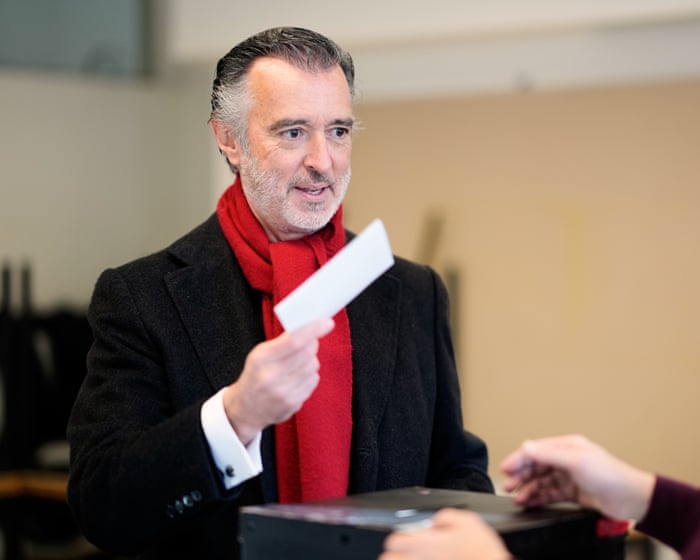
Portuguese voters lined up at polling stations on Sunday to choose a new president. Opinion polls indicated that three candidates—including the leader of the far-right Chega party—were neck-and-neck for a place in a likely runoff between the top two finishers.
Since Portugal emerged from fascist dictatorship five decades ago, only one presidential election—back in 1986—has gone to a runoff. The fact that another runoff now appears probable underscores how divided the political scene has grown, fueled by the rise of the far right and widespread voter disillusionment with mainstream parties.
Although largely ceremonial, the Portuguese presidency holds several important powers. These can include dissolving parliament, calling snap elections, and vetoing legislation under certain conditions.
Around 11 million people are eligible to vote. Polls closed at 7 p.m., with exit polls expected by 8 p.m. and official results due overnight.
The final pre-election survey, released Friday by Pitagórica, showed Socialist candidate António José Seguro leading with 25.1%, followed by Chega leader André Ventura at 23%, and João Cotrim de Figueiredo of the pro-business Liberal Initiative party at 22.3%.
Chega, an anti-establishment, anti-immigration party founded about seven years ago, became the main opposition party after last May’s parliamentary election, securing 22.8% of the vote.
Some polls last week placed Ventura slightly ahead, though always within the margin of error. All projections for a runoff suggest he would lose due to his high rejection rate—more than 60% of voters view him unfavorably.
The Economist Intelligence Unit recently noted that a Seguro-Ventura runoff “would be more straightforward given Ventura’s limited appeal beyond his core base.” A runoff involving Cotrim de Figueiredo, however, would be tighter and harder to predict.
The EIU added that while the presidency is mostly symbolic, “Ventura is the only candidate signaling a more interventionist approach, though EIU sees this as unlikely to translate into victory.”
Eight other candidates are also running, including Luís Marques Mendes, backed by the ruling centre-right Social Democrats, and retired admiral Henrique Gouveia e Melo, who led Portugal’s COVID-19 vaccination campaign. Both have support above 11%.
Frequently Asked Questions
Of course Here is a list of FAQs about the close Portuguese presidential election and the potential farright runoff written in a clear and natural tone
Basic Understanding Context
Q1 Wait Portugal is having an election I thought they just had one
A Portugal has two main types of national elections This is a presidential election which is separate from the parliamentary elections The president is the head of state a more ceremonial but important role with powers to veto laws dissolve parliament and act as a national arbiter
Q2 Who is the farright candidate and what do they stand for
A The candidate is André Ventura leader of the Chega party His platform focuses on strict anticorruption measures tougher laws on crime and immigration and criticizing the established political system His rhetoric has been controversial often targeting minority groups like the Roma community
Q3 What does advancing to a runoff mean
A In Portugals presidential election if no candidate wins more than 50 of the vote in the first round the top two candidates face off in a second round called a runoff This ensures the winner has majority support
Q4 Why is this election such a big deal
A Its a big deal because a farright candidate has never made it to a presidential runoff in Portugals modern democratic history It signals a significant political shift in a country long known for its stable moderate politics
The Election Process Mechanics
Q5 When is the election and who can vote
A The first round was on January 24 2021 The runoff if needed would be held two weeks later All Portuguese citizens aged 18 and over are eligible to vote
Q6 Who are the main candidates besides André Ventura
A The frontrunner is the centerright incumbent Marcelo Rebelo de Sousa who is very popular Other major candidates include Ana Gomes Joo Ferreira and Marisa Matias
Q7 How close is the race really
A Polls show President Marcelo is likely to win the first round but fall short of the 50 needed The