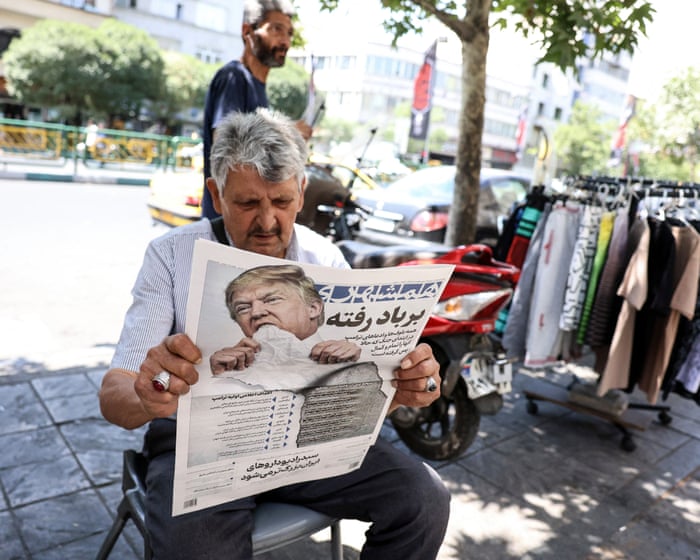
The US has paused its strikes on Iran for a second night, as diplomatic efforts to prevent a return to full-scale war continued on Sunday.
Donald Trump is reportedly weighing both diplomatic and military options in the nearly five-month-old conflict, with Israeli Prime Minister Benjamin Netanyahu expected to visit the White House on Tuesday. Netanyahu has been a vocal critic of Washington’s negotiations with Iranian leaders.
Netanyahu is under significant political pressure to show that his military campaigns against Iran and Hezbollah in Lebanon have produced results, ahead of elections scheduled for October.
On Sunday, Tehran said it would pause what it called “retaliatory” attacks against US allies in the region. “These [US] attacks continued until two nights ago, but over the past two nights the Americans have stopped their attacks,” said army spokesperson Mohammad Akraminia. “Our strategy has essentially been retaliatory, and we have also halted our retaliatory operations.”
‘Shameful’: Pentagon accused of cover-up over US military casualties in Iran war
Read more
Senior officials in the Trump administration have reportedly warned the president about dwindling munitions stockpiles, which could hinder a sustained military campaign in the region.
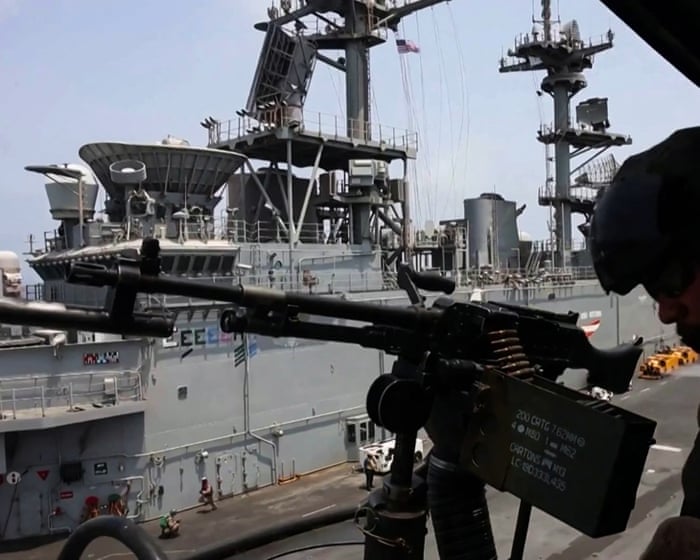
The lull in fighting, which began on Friday evening, follows nearly two weeks of strikes against Iran and the collapse of a ceasefire brokered by Trump. Washington blamed Iran for attacks on US forces and allies in the region, as well as for closing the Strait of Hormuz, a passageway for an estimated 20% of the world’s oil and gas.
Senior diplomats from Iran and Oman were reportedly holding negotiations on Sunday to reopen the vital waterway. A Tehran official confirmed that colleagues had been in touch with US negotiators to prevent a return to war. Iran has demanded payment and control over which ships can pass through the strait.
“Mediators are working and trying to prevent tension from escalating,” Iranian foreign ministry spokesperson Esmail Baghaei told a press conference on Sunday.
But an Iranian army spokesperson struck a defiant tone, saying the US had no clear strategy and was “experiencing strategic decision-making fatigue.”
Graph showing how fighting has stopped ships transiting Hormuz
According to media reports, US Vice President JD Vance and Dan Caine, chair of the joint chiefs of staff, warned Trump about the risks of a renewed military campaign against Iran during an Oval Office meeting on Friday. The president then ordered the military to call off new strikes, which he had previously warned could “knock out everything they have.”
“We’re talking to [the Iranians] right now,” Trump told reporters on Friday. “I think they’re getting more and more serious as the days go by. We’re locked and loaded and ready to go, but we’re talking to them.”
At a White House Correspondents’ Association dinner that evening, he said he didn’t think Iran was ready to make a deal, but he was ready to listen.
View image in fullscreen
Israeli army units stage a raid near Nablus in the occupied West Bank after the deaths of four Palestinians and two Israelis when armed settlers entered a village. Photograph: Mohammed Torokman/Reuters
Caine warned Trump about dwindling munitions stockpiles, including Patriot missile interceptors and offensive weapons like Tomahawk cruise missiles. Vance campaigned on his opposition to US military interventions in the Middle East and has become more vocal in his opposition to the war in Iran.
Netanyahu’s office announced on Sunday that he would convene a meeting of his security cabinet before leaving for Washington on Monday. He played a key role in lobbying Trump to launch joint strikes against Iran in February and has said that US negotiators must take a strong line on Iran’s nuclear and ballistic missile program. US negotiators, however, have prioritized reopening the Strait of Hormuz.
Netanyahu will travel to Washington amid some of the worst violence this year in the West Bank, where his military is launching an “extensive” operation afterFour Palestinians and two Israelis were killed on Thursday when armed settlers entered a Palestinian village.
Frequently Asked Questions
Here is a list of FAQs about the US pausing attacks on Iran for a second day as peace talks continue
BeginnerLevel Questions
Q Why did the US pause attacks on Iran
A The US paused attacks to create a peaceful environment for ongoing diplomatic talks Its a show of good faith to see if a ceasefire or agreement can be reached
Q Does this mean the war is over
A Not yet A pause is a temporary stop It means both sides are giving peace talks a chance but fighting could restart if the talks fail
Q Is this a sign that the US is backing down
A No its a strategic move The US is using the pause to test whether Iran is serious about negotiating rather than continuing a costly military exchange
Q How long will the pause last
A There is no set deadline It will likely continue as long as peace talks are making progress If talks break down the pause could end immediately
Q What are the peace talks about
A The talks are focused on stopping the current military conflict deescalating tensions and potentially addressing broader issues like Irans nuclear program or regional influence
Intermediate Questions
Q What does paused attacks actually mean on the ground
A It means the US has ordered its military to stop airstrikes drone strikes and other offensive operations against Iranian targets Defensive actions are still allowed
Q Has Iran also paused its attacks
A This FAQ is about the US pause However for a ceasefire to work Iran would likely need to pause its attacks too The success of the talks depends on mutual restraint
Q What happens to US troops in the region during this pause
A They remain on high alert The pause is only for offensive operations Troops are still ready to defend themselves if attacked and they are not withdrawing
Q Could this pause be a trap by either side
A Its possible Both sides are wary The US might use the pause to resupply or reposition and Iran might use it to rebuild Trust is very low which is why talks are fragile
Q What are the main obstacles to a permanent peace deal
A Key obstacles include Irans