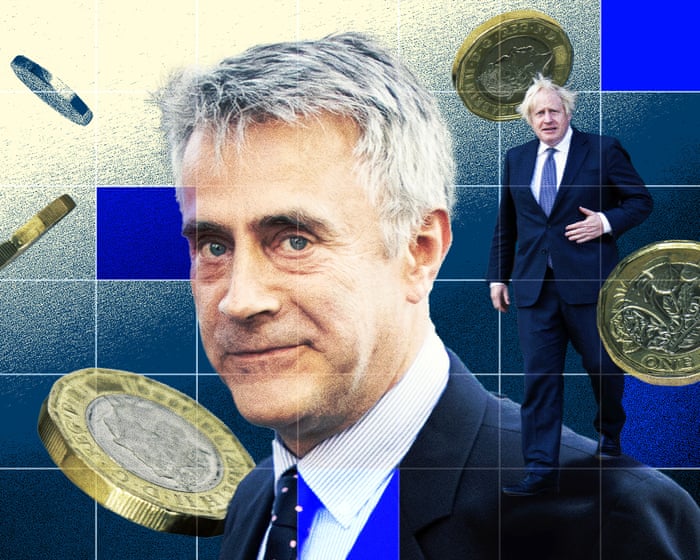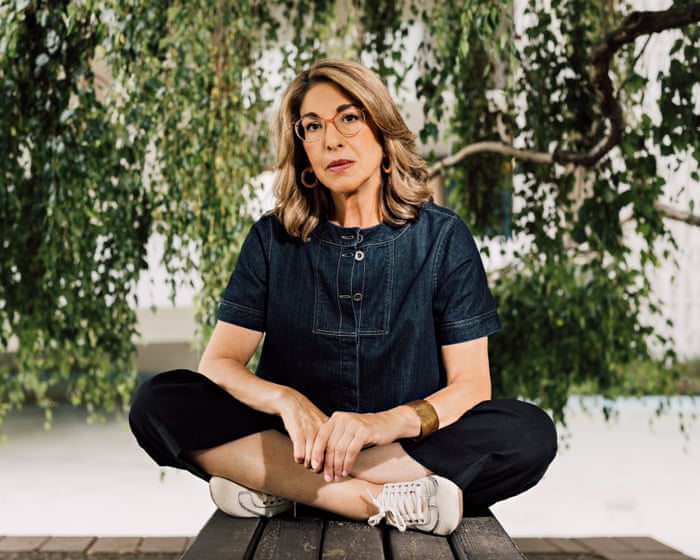
Naomi Klein’s new book opens on a mountaintop, with two “faithful men gathering an audience to share their vision.” It’s a vision of a paradise city, gated at every entrance, where no weapons are needed and everyone is rich. One of the men has tears in his eyes as he describes its beauty. But the opening scene of End Times Fascism, co-written with Astra Taylor, is not a metaphor. The men are Jared Kushner and Steve Witkoff. The year is 2026, the mountain is Davos. The paradise city will be called New Gaza.
The World Economic Forum gathering in Davos, Switzerland, has always served a dual purpose: to give the super-rich a platform to talk about all the good they’re doing on poverty and climate, and to offer us a glimpse into their enviable lives. This year, what we witnessed was, quite brazenly, the world’s richest men gathering to discuss the real estate possibilities of a mass grave.
At that same Davos, Donald Trump announced his Board of Peace for the reconstruction of Gaza. It has delivered nothing substantial in the seven months since, but more significantly, Klein says, “we’re being hit with so many extraordinary events that it’s hard to hold on to what a big deal it is: they have announced a privatised United Nations.”
“I think we understand that wealth compounds, right? Certainly rich people understand that wealth compounds,” Klein continues, speaking to me from her peaceful, roomy study in British Columbia. “But I don’t feel like we spend a lot of time really thinking about the implications of what it means for that much wealth to be compounded, and what that does psychologically. Part of the new shamelessness we’re seeing is just what happens when this amount of financial, mediagenic, technological and military weaponry is concentrated in the hands of this very small, unaccountable group of people. They stop trying to seduce us in any way.”
Klein looks calm and curious as she delivers this message. She has a ready laugh. But then, she had the same unruffled, buoyant delivery when I interviewed her on stage in Manchester for Doppelgänger, her 2023 book in which she described how the digital world is destroying our connection to reality, and to one another. In 1999, when her breakthrough work No Logo was published, she seemed exhilaratingly certain, at 29, that neoliberalism was causing harm whose full extent we couldn’t yet see, and yet she appeared centred and happy in the world. Somehow she manages to maintain this attitude, even though the news she delivers is always so convincingly, unbelievably bad.
End Times Fascism describes the world we’re in, where the components of authoritarianism are modelled everywhere you look: anarcho-libertarian economics in Argentina, the destruction of a free press in Russia, the erosion of democratic institutions in Hungary (until Viktor Orbán was deposed), “anti-immigrant neofascism” in Italy, the weaponisation of trans identity by Jair Bolsonaro in Brazil, Islamophobia in Modi’s India. But this is fascism with a difference. Its proponents are actively willing an apocalypse, or a wave of interconnected apocalypses brought on by climate change and financial chaos, to hasten us towards a post-democratic world in which only a rich few survive to prosper.
“These are trends I’ve been following for a long time, the privatised enclave born of shock, of disaster, I saw when I was reporting from Iraq.”
This book started as an article in the Guardian, “which went totally viral,” Klein says. “Astra and I knew there was a lot more reporting to do, but on a personal level, did we want to spend the next year in the minds of these people, in these cultures? Then Astra said, ‘I’m down the rabbit hole, I’m gonna be listening to these guys anyway. So I may as well feel like I’m doing something about it.’ This is the reason it’s the first book I’ve co-written. When you go to dark, scary places,It’s nice to bring a friend.” Astra Taylor is also a writer, activist, and documentary filmmaker. She founded the Debt Collective, a fascinating experiment in building structured, quasi-unionized solidarity around personal debt, with the long-term goals of abolishing student tuition fees, nationalizing healthcare, and building tenant power. In the book, Klein and Taylor introduce us to the religious fundamentalists, Christian Zionists, and Christian Nationalists in the US who are preparing for the second coming. Describing a “bunkered state,” the authors link climate-related disasters, a rabid anti-immigrant standing army in the form of ICE, and a politics built on false promises and misinformation to paint a picture of a feverish, divided society that doesn’t know what to believe. But the truly terrifying part is the bridging section on tech billionaires. The super-rich have apocalypse fantasies of their own, built not on faith or ideology but on a calm and rational assessment of how best to maintain their position; they would genuinely rather reign in hell than share in heaven. And they have all the money to make sure they get there. “These are trends I’ve been following for a long time,” Klein says. “The privatized enclave born of shock, of disaster, I saw when I was reporting from Iraq. There’s the image of the Green Zone, this Emerald City run by the US in the middle of Baghdad, built by Halliburton and all these private contractors, with the power to appoint a viceroy. In the final parts of The Shock Doctrine [2007], I talk about how these contractors migrated [from Iraq] to Hurricane Katrina, and the idea that these climate disasters are their next growth frontier. Reporters started calling New Orleans ‘Baghdad on the Bayou.’ The gang’s all here, there’s Halliburton, there’s Bechtel, there’s Blackwater.” But, and she cannot stress this enough, as useful as it is to know the recent history of these trends, you should not take comfort from the idea that you’ve seen it all before. “I have found the image of a spiral really useful, in terms of how to make sense of the fact that our era is both familiar and different,” Klein says. “The thing about a spiral is that you’re going round, but you’re not going to the same place. If the spiral is pointing down, it’s deeper, it’s tighter, it’s carrying more velocity, it’s carrying more force, it’s carrying more heat, it’s carrying more violence.” The image is at once poetic and extremely sobering. She offers a brief morale boost, like someone handing you a slice of orange on your way into a war zone. “You can flip a spiral – it goes outwards, it’s the spiral of the universe.” At the moment we’re in now, when crises and disasters hit so frequently that we’re in a constant state of disorientation and shock, the status quo isn’t static, it’s always getting worse. “There’s this impulse to read history,” Klein says. “We’ve seen it again and again. After 9/11, people were suddenly reading history books about Afghanistan and Iraq, Chomsky, trying to find their bearings. We saw it again during the pandemic, people were reading about the plagues of the past. But there’s a trap in believing that everything has happened before, that there is not a compounding effect of history. After Donald Trump was re-elected, I’ll be honest with you, Shock Doctrine sales went crazy. People were saying, ‘It’s exactly like you said,’ and I was thinking, ‘I don’t think it is.'” “Musk’s satellites are crawling through the sky, and he wants more. Who said he could? Who gave him that right?” The neoliberal age – for brevity let’s call it the period between the end of the cold war and Covid – was “capitalism lying on the couch in its underwear, going ‘what are you gonna do, leSave me?’ In the Cold War, even a little competition made a big difference – but after the Soviet Union collapsed, that competition disappeared, and capitalism stopped trying.” Still, being super-rich back then came with a vulnerability: whether you had gained your wealth through privatization politics in the US or Europe, or through faster, more corrupt means in former communist states, it was clear you had taken public wealth. “So they would stage these seduction rituals, whether at Davos or Aspen, or TED, or the Clinton Global Initiative. They’d say, ‘We are going to cure the sick, and we are going to fund your schools in this new and exciting way, don’t worry about us. Don’t be afraid of our wealth. This is actually a new way of redistributing for the public good.’”
I distinctly remember that world: huge conferences like the Skoll Foundation awards, where journalists would be wined and dined while watching immensely rich people hand out £20,000 prizes to grassroots clean water initiatives in Kenya. To be fair, in the era before and directly after the financial crash, there were plenty of dissenting voices about capitalist benevolence solving intractable problems like inequality. Many people, with Klein at the forefront, pointed out that it smelled like a scam. But while we were having that discussion, the wealth agenda moved on.
In the run-up to the 2024 presidential election, at the Faena Hotel in Miami, Peter Thiel hosted panel discussions titled “the enemy,” naming sustainable development goals, “precautionary principles,” and “social responsibility” as those foes, rounded off with an “apocalypse ball”-themed fancy dress party. Some of the costumes, Klein and Taylor write, were “a doctor of eugenics”; a “Haitian chef with a bloodied cat toy hanging out of his apron [a reference to the Springfield immigrant pet-eating hoax, which spread in 2024, repeated by both Trump and JD Vance]; a couple wearing pagers as a ha-ha reference to Israel’s murderous attack in Lebanon.”
View image in fullscreen
Naomi Klein and Astra Taylor. Photograph: naomiklein.substack.com
Thiel has been explicitly anti-democracy for years, writing in 2009, “I no longer believe that freedom and democracy are compatible.” But other tech billionaires have had a complete volte face. “Jeff Bezos renamed a stadium in Seattle the Climate Pledge Arena, and gave out Earth prizes,” Klein points out. Elon Musk invested in electric cars and once saw himself as a saviour figure. “Any time anyone was in trouble, Musk would rush in to save them, ‘I shall save Puerto Rico,’ ‘I shall save the children stuck down the mine.’ It’s fun to be a superhero, right? But if you’re going to be a superhero, you should be worshipped. And people stopped worshipping them.” Now, the climate pledges are gone, replaced by a performed nihilism around averting climate crisis, coupled with a determination to build ever more data centres. “We’re not dealing with stupid people who don’t understand climate change,” Klein says. “We’re dealing with people who know very clearly what it means to wire together 35 gas turbines in Memphis.” (It means gargantuan energy and water use, as well as the destruction of air and sound quality in the vicinity, all for Musk to power Grok, his intermittently Nazi large language model.)
The speed with which previously Democrat-leaning billionaires fell in behind Trump in 2024 was jaw-dropping. “I don’t think that Mark Zuckerberg’s phase of seeming to care deeply about democracy and climate change was real,” Klein says. “He reincarnates as whatever is good for his business. Figures like Thiel and Musk, where there is real ideology there, are easier to understand than figures like Bezos and Zuckerberg, where it really does feel like there’s no there there, they’re just uninterestingguys who ended up massively rich.” She’s mildly curious about what combination of events created these men, many of whom were shaped by the dotcom boom, when they were worshipped as gods and pictured on the cover of Time magazine on golden thrones. There’s an element of ego rage, a sense that we just aren’t grateful enough. Ultimately, though, “we end the book concluding that wealth has its own deranging effects. It almost inevitably turns you into a supremacist because humans are creatures of story and you need a story to rationalise, why you? Why do you have so much in a time of so much want and need? And the only possible story that’s available is that there’s something about you that justifies it.”There’s a new goading quality to the talking points of the super-rich – explicit eugenicism and Islamophobia, raw delight in the prospect of AI wiping out our jobs. It almost feels as though they’re daring us to rebel, just so that they can prove that rebellion is fruitless.On that, though, Klein would disagree. It is not beyond our collective means to build a wealth disarmament movement, or a tech disarmament movement. She points to the Pearson brothers, KeShaun and Justin, fighting Musk’s Colossus 2 data centre in Memphis: “the way they so consciously root their struggle in the history of the civil rights movement, and the environmental justice movement in Memphis, going back to the formerly enslaved people who built Boxtown. This is where MLK was murdered, assassinated after marching with the sanitation workers in Memphis.” KeShaun Pearson leads Memphis Community Against Pollution, which has had major wins against oil pipelines, the industrial release of carcinogenic chemicals, and is now mobilising against data centres. Justin is running for Congress.In End Times Fascism, Klein and Taylor raise Walter Benjamin’s concept “jetztzeit”, literally “now time”, a moment so pregnant with the spirit, the urgency of revolution that it marshals the energy of all movements that went before it. Again, it’s poetic, but it’s also literal, observable. If we want to oppose this new fascist strain, we really have to get a move on. “I don’t tend to use this language, I try to be measured, but I think I’ve earned the right to escalate,” she says. “The moment we’re in, people are really mad and however mad you are, it’s not enough. Because there is something so profound about no longer believing in the future, about seeing no value in our shared home, in the natural world. They’re traitors to creation.”Klein doesn’t want for reasons to fight. “I’ve made a choice to live very close to nature in a pretty wild part of British Columbia,” she says. “On a dark night, it’s a blanket of stars. And now we see so many of what I call Elon’s space bugs [Starlink satellites] just crawling through the sky. He wants to increase that a hundredfold. Who said he could? Who gave him that right? That’s a place where I find my anger. I get really angry about the stars. I get really angry about the orcas. I get really angry about Gaza. Other people will find their anger somewhere else. We have to find our places of deepest love and fight like hell.” End Times Fascism by Naomi Klein and Astra Taylor is published by Allen Lane on 15 September. To support the Guardian, order your copy at guardianbookshop.com. Delivery charges may apply.
Frequently Asked Questions
FAQs Naomi Klein on Extreme Wealth Extreme wealth is maddening It turns you into a supremacist
1 What is this quote actually about
Its Naomi Kleins argument that having extreme wealth doesnt just give you more money it changes how you see other people You start believing youre naturally superior to those with less
2 Who is Naomi Klein
A Canadian author journalist and activist Shes written bestsellers like No Logo The Shock Doctrine and The Shock Doctrine followup This Changes Everything focused on capitalism corporate power and climate justice
3 Where did she say this
Shes made versions of this argument in interviews and talks especially around her 2023 book Doppelganger which explores how wealth and status distort peoples thinking
4 What does she mean by maddening
Not literally insane she means wealth distorts your judgment It warps your sense of reality ethics and other peoples worth
5 What does supremacist mean here
Someone who believes theyre inherently better than others Klein argues extreme wealth breeds this mindset a belief that rich people deserve their status and poor people deserve theirs
6 Is she saying all rich people are supremacists
No Shes describing a tendency a psychological and social effect of extreme wealth not a rule about every individual
7 Why would money change someones beliefs
Because wealth buys isolation deference and control When everyone agrees with you and your problems get solved with money you can lose empathy and start mistaking luck for superiority
8 Whats the benefit side of this argument
The argument itself is a warning not a benefit Its value is awareness understanding how extreme inequality damages the wealthy too not just everyone else
9 What common problems does she connect to this
Billionaires shaping politics to protect their wealth
Tax avoidance and weakened public services
A culture that worships the rich
The wealthy losing touch with ordinary life
10 Can you give a realworld example
Think of billionaires who lobby against taxes on the rich while using public infrastructure or tech moguls who talk about saving humanity while treating workers as disposable