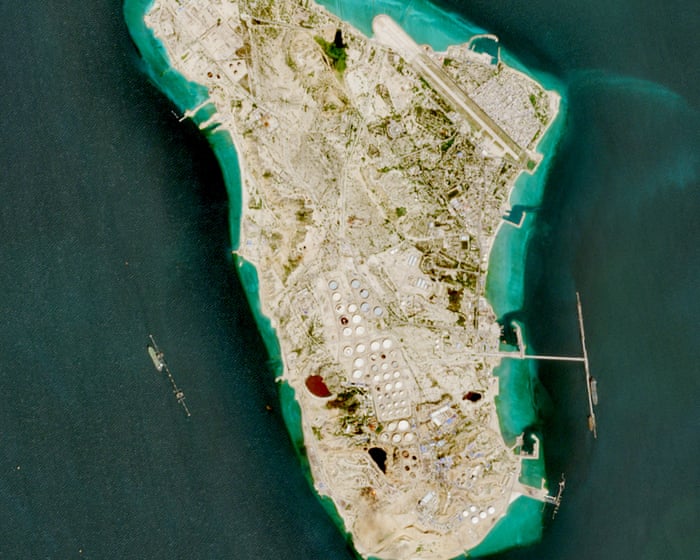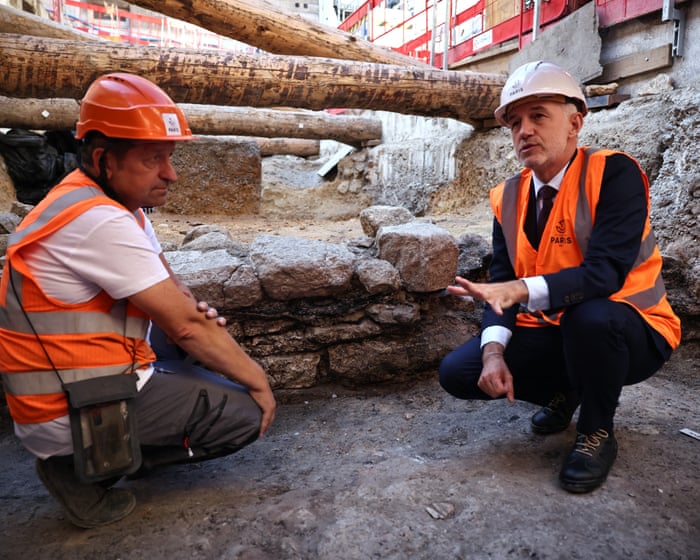
An ancient wall found beneath Paris has been called a “major breakthrough” by France’s culture ministry, and the discovery could help confirm where the city was originally settled. This summer, a roughly 20-metre (65ft) section of wall from the Gallo-Roman period was uncovered in Paris beneath a building on the Île de la Cité, near Notre Dame Cathedral in the heart of the capital. The stone-and-wood structure is believed to be part of the ramparts of Lutetia—the ancient name for Paris—built by the Gallic Parisii tribe, who lived along the River Seine during the Iron Age. The Île de la Cité has long been considered the centre of Lutetia, but a competing theory, supported by some archaeological research, argues that it was in Nanterre, a western suburb. “We may be looking at one of the most important remains ever discovered for understanding Gallic Lutetia,” culture minister Catherine Pégard said in a statement on Wednesday. “Scientific caution still requires that we verify its function and its chronology, but the convergence of evidence is particularly remarkable at this stage.” Lutetia was first mentioned in book seven of Julius Caesar’s Gallic Wars, where it was described as being on an island in the River Seine—a vague description that has led to many theories about its location. The wall, found during excavations beneath the Hôtel-Dieu hospital, shows traces of fire, which may match Caesar’s account that the Gauls set fire to their town before the Battle of Lutetia against the Romans. Carbon dating of the charred evidence placed the find between 200BC and 10BC, the ministry said—a timeframe that includes the Battle of Lutetia in 52BC. The Île de la Cité is the largest island in the Seine in the Paris region and became the centre of the Roman settlement of Lutetia.
Frequently Asked Questions
Here is a list of FAQs about the ancient wall found beneath Paris
Beginner Questions
What exactly did archaeologists find under Paris
They found the remains of an ancient wall It is believed to be part of the very first settlement that eventually grew into the city of Paris
Where was the wall discovered
It was found beneath the streets of modern Paris specifically during an archaeological dig before a construction project
How old is this wall
Experts believe it dates back around 2000 years to the time of the Roman Empire or slightly before
Why is this discovery such a big deal
For a long time historians were not sure exactly where the first Parisians lived This wall may finally confirm the exact location of that original settlement
Is this wall the same as the famous Wall of Philip Augustus
No The Wall of Philip Augustus was built much later in the Middle Ages This new discovery is much older and is from the original founding of the city
Intermediate Questions
What is the first settlement of Paris
It is the original village or town that was established on the banks of the Seine River The Roman name for this settlement was Lutetia
How does this wall help confirm the location of Lutetia
Historians already knew roughly where Lutetia was but this wall provides physical proof of exactly where the city center was It helps pin down the borders of the original town
What is the wall made of
It is made of large stones and masonry typical of the Roman era This style of building helps archaeologists date the structure
Did they find anything else with the wall
Yes Archaeologists usually find pottery coins and other daily objects nearby These artifacts help them understand who built the wall and when
Why was the wall built there
It was likely built for defense to protect the settlement from attacks It may also have been used to mark the boundary of the town or to control the river port
Advanced Questions
How do archaeologists date a wall like this
They use a method called stratigraphy This means they look at the layers of soil and debris around the wall They also use radiocarbon dating on any organic material found nearby like wood or charcoal
Does this discovery change what we know about Roman Paris
It confirms