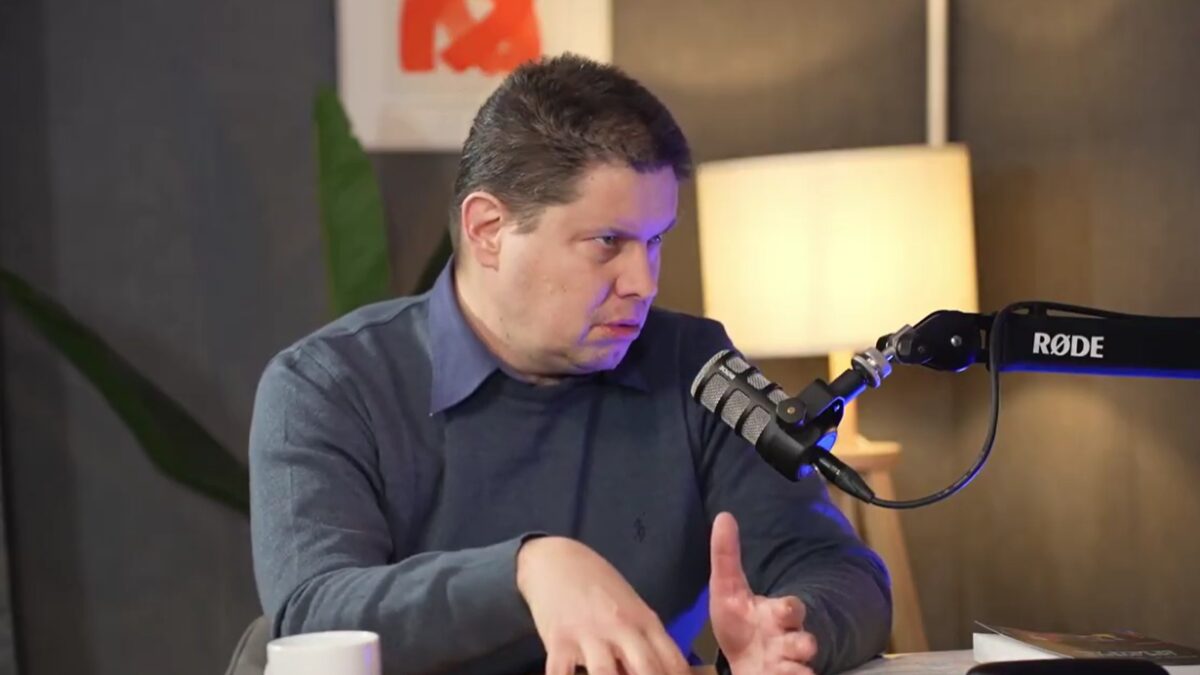
A look back at the Jacques Baud affair, featuring a detailed exchange between Pierre Jean Duvivier and Guy Mettan.
This debate revisits the facts, points of disagreement, and media issues surrounding this case.
Since 2014, Russia has portrayed the Donbas war as a “Ukrainian civil war,” which is a fiction.
This article demonstrates, with supporting sources, that this narrative is factually misleading: the conflict was triggered and structured by Russian intervention, according to public statements from pro-Russian actors and institutional documents.
Introduction — On Baud’s Method and Its Analytical Limitations
Before examining the factual arguments regarding the presence—or absence—of Russian troops in Donbas, it is essential to clarify what Jacques Baud actually argued and the intellectual method he used to support his positions. A significant part of the debate stems less from specific factual disagreements and more from a deep divergence on how to interpret incomplete evidence in a hybrid warfare context.
In his texts, interviews, and lectures prior to the full-scale invasion of February 24, 2022, Jacques Baud consistently maintained that, in his view, there was no solid proof of a massive, structured, and permanent presence of regular Russian troops on Ukrainian territory, particularly in Donbas. He argued that the forces fighting on the separatist side were mainly composed of local fighters, volunteers—including foreigners—and, occasionally, Russian advisors. He emphasized that Western accusations largely relied on declarative intelligence, interpretations of satellite imagery, and media narratives he considered biased. It is important to recall, as he himself regularly does, that these analyses were formulated before 2022, meaning before the official and acknowledged Russian invasion of Ukraine.
However, Baud’s position becomes problematic when confusion arises—whether intentional or not—between the absence of a massive and visible presence, in the classic sense of a deployment of identifiable armored divisions or expeditionary forces, and the complete absence of any real presence of regular Russian forces. The implicit reasoning then tends to become binary: since there is no observable large-scale conventional deployment, there would be no Russian troops. This reasoning rests on a false dilemma, because the central question from 2014 onward was not about a classic invasion, but about the existence of regular units operating occasionally, discreetly, without insignia, within the framework of hybrid warfare. On this point, and even before 2022, a body of publicly available evidence already contradicted the hypothesis of a total absence.
Without resorting to classified sources, several facts were indeed established: documented captures of Russian soldiers identified as such, sometimes officially acknowledged by Moscow using ambiguous phrases like military personnel who “crossed the border by mistake”; the appearance on the ground of military equipment…Military equipment that was not exported, never supplied to either Ukraine or the separatist forces, and thus exclusively in service with the Russian army; operational methods, rotations, and tactical discipline incompatible with the actions of local militias acting alone, and difficult to explain without professional oversight; finally, Russian losses acknowledged indirectly through compensation payments, discreet burials, and mentions in the Russian regional press. Taken together, these elements do not imply the existence of a massive invasion, but they are sufficient to invalidate the thesis of a total absence.
The core of the methodological problem, however, lies elsewhere, in the implicit reliance on an argument from authority. Jacques Baud heavily relies on his past experience in intelligence to assert that if Russian troops had been involved, it would necessarily have been clearly and incontrovertibly established. This claim is debatable for at least two reasons: on the one hand, hybrid operations are precisely designed to remain below the threshold of public proof, by creating gray areas and plausible deniability; on the other hand, the absence of publicly acknowledged evidence never constitutes, in itself, proof of absence. By applying a framework derived from conventional intelligence to a deliberately unconventional conflict, Baud thus tends to underestimate the very logic of the situation he claims to analyze.
To be intellectually rigorous, it is nevertheless important to recognize what remains defensible in his position. Jacques Baud did not deny Russian support, oversight, or the supply of equipment to the separatist forces, and his criticisms were primarily aimed at what he considered Western exaggerations, the idea of a disguised invasion as early as 2014, and the political use of intelligence in public debate.
On these points, his initial skepticism was neither absurd nor unfounded, and it sometimes served as a useful counterweight to overly simplistic narratives.
The breaking point, however, comes after 2022.
Once the open invasion was launched, the thesis of a prior “non-presence” becomes retrospectively untenable, and some of his subsequent positions give the impression of either downplaying elements that are now widely established or shifting the debate to considerations about NATO or Western narratives without explicitly correcting the initial error.
The problem is not the analytical error itself, but the absence of a clear and acknowledged correction.
Ultimately, while the thesis of a total absence of Russian troops before 2022 does not withstand factual scrutiny, Jacques Baud was nevertheless right to denounce certain Western exaggerations and simplifications. His main error was underestimating the specific logic of hybrid warfare, the discreet but real engagement of Russian forces, and Moscow’s deliberate maintenance of a blurred threshold between involvement and denial. In short, Jacques Baud asked good questions, but drew overly absolute conclusions.
One of the recurring pillars of Jacques Baud’s reasoning is to assert that, since the OSCE Special Monitoring Mission (SMM) never officially observed or documented the presence of regular Russian units in Donbas, it should be concluded that this presence simply never existed—a line of reasoning that may seem rigorous at first glance but which, upon methodological examination, reveals a major structural weakness.
Indeed, the OSCE SMM operated under extremely restrictive conditions, marked by access limitations.Repeated deployments to combat zones, constant hindrances to its technical capabilities—such as the regular jamming or neutralization of drones—and a political framework that drastically limited what it could observe, document, and, above all, publicly publish.
In this context, the absence of observation cannot reasonably be equated with an absence of factual reality: “not having observed” does not mean “not having been present,” but simply “not having been able to establish and disseminate a verifiable observation according to the organization’s standards.”
The rigorous conclusion on this point is therefore necessarily limited: the OSCE argument does not allow for the assertion that Russian troops were absent, but only that the OSCE was unable to publicly document the formal identification of regular Russian units—a proposition with a completely different scope.
A second element put forward involves citing an intelligence map published by the American press in December 2021, notably picked up by the Washington Post, which purportedly shows no presence of Russian troops in the Donbas. This map is then used as negative evidence intended to invalidate any contrary claims.
However, logically, this argument poses a fundamental problem: a map published at a given moment is neither an exhaustive chronicle nor a complete historical synthesis, but at best a partial, selected, and contextualized representation dependent on editorial choices and the information its authors wish or are able to make visible at that precise moment. Such a representation cannot establish a general truth about a period as long and complex as that from 2014 to 2021, much less rule out the possibility of discreet rotations, sporadic engagements, or time-limited interventions. The only reasonable conclusion is thus extremely modest: on this specific map, at this specific date, the published graphical elements do not show Russian troops in the Donbas, which falls far short of refuting the entirety of facts alleged elsewhere.
The third frequently invoked argument relies on a 2015 statement attributed to Vasyl Hrytsak, then head of the SBU, claiming that only fifty-six Russian fighters had been observed in Ukraine. This statement is used to support the idea of an almost total absence of Russian engagement.
This reference, however, raises several major issues: first, it is a political statement made in a context of strategic communication, not an audited, transparent, and methodologically robust statistical basis; second, even taken at face value, this statement already invalidates the idea that there were “never” any Russian troops, since fifty-six is not equal to zero; finally, and most importantly, the core of the debate is not about the existence of a massive, permanent, and officially declared stationing of Russian forces, but about the sporadic engagement of regular units at critical moments, particularly in 2014 and 2015, during decisive phases of the conflict. Even interpreted in the most favorable light, this argument can at best only support the absence of a large-scale permanent occupation, and certainly not conclude a total absence of intervention.
It is precisely at this stage that counter-evidence from OSINT and institutional analyses comes into play, because to refute the categorical claim that there were “zero Russian troops,” it is sufficient to establish the documented existence of specific units, equipment, or engagements.Stay tuned.
Several independent investigations, including those by Bellingcat, have uncovered converging evidence, both direct and indirect, suggesting the presence of Russia’s 136th Motorized Rifle Brigade in the Donbas. This evidence includes the identification of personnel, artillery, and tanks linked to this unit.
Furthermore, as early as 2014, military equipment such as the T-72B3 tank was observed. At that time, this model was exclusively used by the Russian army and had not been exported to Ukraine. These tanks were identified crossing the border and in combat situations, with documentation widely covered by specialized international media.
In addition, institutional analyses, such as those from the Polish think tank OSW, explicitly describe regular Russian military units crossing the Ukrainian border in late summer 2014 and engaging directly in combat. Concurrently, NATO publicly stated it had evidence—including satellite imagery—confirming the direct involvement of Russian forces on the ground.
Taken together, this evidence is more than sufficient to categorically refute the claim that there were “no” Russian troops in the Donbas.
While this does not settle every debate about the exact scale, timing, official nature, or command structure of these engagements, it makes any position based on absolute denial untenable.
From this point, serious discussion can no longer be about whether there was a Russian presence, but only about its nature, intensity, and strategic objectives.
We will dismantle four claims from Russian propaganda:
### CLAIM #1 — “The Donbas rose up spontaneously against Kyiv”
VERDICT: FALSE
Igor Girkin (Strelkov), a former FSB officer and military leader of the separatist forces in spring 2014, has publicly stated:
“I was the one who pulled the trigger of this war. Without our unit, everything would have fizzled out…” (source at the end of the article)
He explains that in 2014, without the entry of his unit, the movement would not have escalated into war (comparing it to other cities where unrest failed).
What this demonstrates:
* Girkin is not a “local”: he is a Russian actor linked to security structures from the Russian FSB (intelligence service).
He claims a triggering role (not mere participation).
* An “internal” conflict that depends on being triggered by a foreign force does not fit the “civil war” narrative.
### CLAIM #2 — “There were no Russian soldiers, only local militias”
VERDICT: FALSE
On April 17, 2014, Vladimir Putin publicly acknowledged that Russian military personnel were operating “behind” the so-called “self-defense” forces in Crimea, enabling action that was “correct but resolute.”
What this demonstrates:
The 2014 intervention mechanism relied on denial, local front actors, and real operational control from behind the scenes.
The Donbas conflict began using the same playbook: the precedent set in Crimea destroys the plausibility of a purely local uprising.AFFIRMATION #3 — “Crimea and Donbas: Two Unrelated Cases”
VERDICT: MISLEADING
The takeover of Crimea was a rapid, covert operation (later acknowledged).
Girkin (Strelkov) places his own actions in direct continuity with the Crimean operation.
The methods are comparable: seizing buildings, establishing parallel authorities, official denial.
The difference lies in the outcome (rapid annexation vs. prolonged war), not in the nature of the actions: it is the same logic of intervention.
AFFIRMATION #4 — “According to international law, this is an internal conflict”
VERDICT: FALSE
Institutional Evidence (Crimea)
The 2016 report from the Office of the Prosecutor of the International Criminal Court (ICC) states that available information suggests the situation in Crimea amounts to an international armed conflict between Ukraine and the Russian Federation.
Institutional Evidence (ECHR)
The Grand Chamber of the European Court of Human Rights (ECHR) ruled on the inter-state case Ukraine v. Russia (re Crimea) (judgment of 25 June 2024), addressing, among other things, the exercise of Russian extraterritorial jurisdiction and violations in Crimea since February 2014.
COMMON OBJECTION — “There were local participants”
Verdict: True, but not decisive. The presence of local participants does not prove a civil war if:
1. The triggering of the conflict is attributed to a force coming from Russia (Girkin), and
2. The same state admits to providing military oversight in a neighboring theater at the same time (Putin/Crimea).
Therefore, the war in Donbas indeed began through direct, armed Russian intervention, just like in February 2022.
CONCLUSION
The narrative of the “Donbas civil war” serves to conceal:
* An externally triggered conflict, acknowledged by a key pro-Russian actor (Girkin);
* A method of intervention under official denial, acknowledged by Putin in Crimea;
* An institutional interpretation (ICC/ECHR) that is incompatible with the thesis of a mere internal conflict.
Behind civilians, as now, people will die on both sides of a front line between Ukrainian and Russian forces, in the unfortunately classic damages of a war in the strict sense between two nations.
SOURCES (with links)
The Moscow Times — Russia’s Igor Strelkov: I Am Responsible for War in Eastern Ukraine (21 Nov. 2014)
https://www.themoscowtimes.com/all/41598
Interfax — Putin: Russian military servicemen were behind Crimean self-defense forces’ back (17 Apr. 2014)
https://interfax.com/newsroom/top-stories/43723
International Criminal Court (Office of the Prosecutor) — Report on Preliminary Examination Activities 2016 (14 Nov. 2016) (PDF)
https://www.icc-cpi.int/sites/default/files/iccdocs/otp/161114-otp-rep-PE_ENG.pdf
ECHR / HUDOC — Ukraine v. Russia (re Crimea) (Grand Chamber, judgment of 25 June 2024 — HUDOC page)
https://hudoc.echr.coehttps://hudoc.echr.coe.int/eng?i=002-14347
EJIL:Talk! — Legal analysis of the ECHR ruling of 25 June 2024 (Ukraine v Russia (re Crimea)) (27 June 2024)
https://www.ejiltalk.org/ukraine-v-russia-re-crimea-the-european-court-of-human-rights-goes-all-in
IBTimes UK — Igor Strelkov: I Started War in Eastern Ukraine (21 Nov. 2014) (coverage and context)
https://www.ibtimes.co.uk/igor-strelkov-i-started-war-eastern-ukraine-1475982
Strasbourg Observers — Analysis of the ECHR ruling of 25 June 2024 (3 July 2024)
Russian sources on the Girkin interview, who is ‘merely’ the military commander of the Donbas separatists…
Original source: Zavtra* (Завтра) newspaper.
Date: 20 November 2014.
Article title: « Кто ты, « Стрелок »? » (Who are you, “Strelkov”?*).
Link to archive (in Russian): You can find the full text on the newspaper’s official website: https://zavtra.ru/blogs/kto-tyi-strelok.
OSCE: Access restrictions / technical obstructions (drones, jamming, etc.)
* OSCE SMM Spot Report 6/2021 (GPS interference; “62.5%” of LR-UAV flights affected over 2 months): https://www.osce.org/special-monitoring-mission-to-ukraine/483008
* OSCE – “Thematic Reports” page (including reports on “Restrictions to the SMM’s freedom of movement…”): https://www.osce.org/special-monitoring-mission-to-ukraine/156571
* Example OSCE PDF report mentioning UAV jamming/interference: https://www.osce.org/sites/default/files/f/documents/6/1/492970_0.pdf
“Intelligence / press” map (limited negative evidence)
* Map file (Wikimedia Commons) “Russian forces near Ukraine, 2021-12-03” (attributed to an intelligence document “obtained by The Washington Post”): https://commons.wikimedia.org/wiki/File:Russian_forces_near_Ukraine,_2021-12-03.j
SBU / Hrytsak Statement (2015): “56”
- Kyiv Post (2015) – “SBU registers involvement of 56 Russians…”: https://archive.kyivpost.com/article/content/war-against-ukraine/sbu-registers-involvement-of-56-russian-in-military-actions-against-ukraine-since-military-conflict-in-eastern-ukraien-unfolded-399718.html
OSINT: Units / Equipment / Convoys
- Bellingcat (2015) – 136th Motorized Infantry Brigade in Donbass (artillery): https://www.bellingcat.com/news/uk-and-europe/2015/11/13/136-brigade-in-donbass/
- RFE/RL (2019) – mentions convoys entering Donetsk in late August 2014 and the T-72B3 tank: https://www.rferl.org/a/british-online-research-group-says-more-evidence-found-of-russian-role-in-donbas-conflict/30116665.html
Institutional Analyses: Border Crossing / “Regular Units”
- OSW (Centre for Eastern Studies, Poland) – “The Russian military intervention in eastern Ukraine” (Sept. 3, 2014; states “regular units crossed the border”): https://www.osw.waw.pl/en/publikacje/analyses/2014-09-03/russian-military-intervention-eastern-ukraine
NATO: Public Statements + Satellite Imagery (August 2014)
- NATO (official site, Aug. 28, 2014) – “NATO releases satellite imagery showing Russian combat troops inside Ukraine” (French version): https://www.nato.int/fr/news-and-events/articles/news/2014/08/28/nato-releases-satellite-imagery-showing-russian-combat-troops-inside-ukraine
- Atlantic Council (Aug. 28, 2014) – coverage/explanation of the NATO release: https://www.atlanticcouncil.org/blogs/natosource/nato-releases-satellite-images-of-russian-combat-troops-inside-ukraine/
- ABC Australia (Aug. 29, 2014) – news coverage of the NATO statement: https://www.abc.net.au/news/2014-08-29/nato-satellite-images-show-russian-troops-operating-in-ukraine/5704550
The post “Affaire Jacques Baud: Débat entre Pierre Jean Duvivier et Guy Mettan sur l’Ukraine” first appeared on Les Plumes Qui Mordent.
Frequently Asked Questions
Of course Here is a list of FAQs about the debate between PierreJean Duvivier and Guy Mettan on the Ukraine conflict framed in a natural tone
General Beginner Questions
1 What is the Affaire Jacques Baud debate about
Its a public discussion between journalist PierreJean Duvivier and Swiss writerformer politician Guy Mettan They debate the origins causes and Western narrative surrounding the war in Ukraine heavily referencing the analyses of former Swiss intelligence officer Jacques Baud
2 Who is Jacques Baud and why is he central to this debate
Jacques Baud is a former colonel in Swiss strategic intelligence a specialist in Eastern Europe and former NATO advisor His controversial analyses argue that the West ignored Russian security concerns that Ukraine violated the Minsk agreements and that Western media presents a onesided narrative The debate examines and critiques his views
3 What are the main opposing viewpoints in this debate
Guy Mettans position Criticizes NATO expansion and EU policies as provocative argues the West bears significant responsibility for the conflict and challenges the mainstream medias portrayal of the war as a simple good vs evil story
PierreJean Duviviers position Defends the principle of Ukrainian sovereignty argues that Bauds analysis sometimes minimizes Russian aggression and imperialist motives and questions the sourcing and conclusions of Bauds claims
4 Is this a debate between a proRussian and a proUkrainian view
Its more nuanced The debate is less about taking sides in the war and more about analyzing root causes and Western policy MettanBaud focus on the geopolitical chain of events leading to the invasion while Duvivier emphasizes agency sovereignty and the dangers of blaming the victim Critics however often label the BaudMettan perspective as proRussian narrative
Advanced Analytical Questions
5 What specific claims by Jacques Baud do they discuss
Key debated claims include that the 2014 Maidan revolution was a Westernbacked coup that Ukraine systematically violated the Minsk II agreements intended to peaceably resolve the Donbas conflict and that Russias invasion was a preemptive move against



.jpg)