The Grateful Dead – The Faster We Go, the Rounder We Get / The Other One (1968)
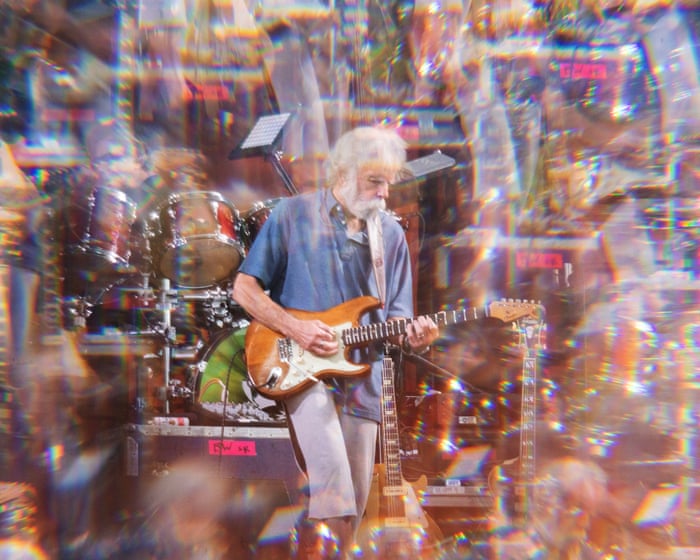
The Dead’s love for life on the road shines through in this section from “That’s It for the Other One,” the four-part opening track of their second album, Anthem of the Sun. With lyrics by Bob Weir—a rarity—it recounts the band’s youngest member getting arrested by the police “for smiling on a cloudy day.” This references a real event where Weir threw water balloons at officers conducting what he believed were illegal searches outside the band’s Haight-Ashbury hangout. The song then links to the band’s spiritual predecessors, the Merry Pranksters, by mentioning Neal Cassady, driver of “a bus to never-ever land.” The track later evolved into “The Other One,” one of the Dead’s most frequently performed songs and a springboard for their exploratory jams—exemplified by this smooth, outstanding version from San Francisco’s Winterland in 1974.
The Grateful Dead – Truckin’ (1970)
“What a long, strange trip it’s been,” Weir muses in what is widely considered the Grateful Dead’s anthem. Lyricist Robert Hunter wrote this colorful tale of the band’s touring adventures just five years into their remarkable 30-year career. It’s packed with gritty details—groupies hooked on “reds, vitamin C and cocaine,” and endless hotel-room drug busts—but the Dead’s lively performance, especially Weir’s cheerful growl, captures the magic of their nomadic life. Like many Dead songs, “Truckin'” was best experienced live (or on a fan-taped bootleg traded in the parking lot before a show). The powerful version recorded at London’s Lyceum for the Europe ’72 live album is as good as it gets.
The Grateful Dead – Sugar Magnolia (1971)
A tribute to Weir’s longtime love, Frankie Hart—”a summer love in the spring, fall and winter” who could “make happy any man alive”—and a standout from their 1970 album American Beauty, “Sugar Magnolia” highlights the Dead’s embrace of Americana and songwriting craft. Their second most-played song gained a joyful concert coda, “Sunshine Daydream,” and was often the first song they played after midnight at their New Year’s Eve shows. The performance at San Francisco’s Winterland Ballroom on December 31, 1978, which marked the closing of that legendary venue, remains a favorite among Deadheads.
Bob Weir – Playing in the Band (1972)
“Playing in the Band” portrays the Dead’s lifestyle as a kind of mystical calling, with the narrator as a seasoned road warrior who has formed his own philosophies along the way: “I don’t trust to nothing / But I know it come out right.” Originating from a riff David Crosby came up with during a jam in Dead percussionist Mickey Hart’s barn, the song first appeared on the Dead’s self-titled 1971 live album, then on Weir’s 1972 solo debut Ace, before the band reclaimed it as a vehicle for their most adventurous, open-ended explorations. The legendary 46-minute version from Seattle’s Edmundson Pavilion in 1974 is believed to be the longest song the Dead ever performed.
Bob Weir – Cassidy (1972)
Named for the young daughter of a Dead roadie, “Cassidy” also serves as a tribute to Beat poet Neal Cassady, whose restless, searching spirit deeply influenced Weir. This gentle, upbeat folk-rock song finds Weir offering life lessons to the infant Cassidy, inspired by Cassady’s relentless pursuit of freedom, singing in the coda: “Let your life proceed by its own designs … Let the word be yours.” This message, along with the song’s shimmering, intricate folk riff, made “Cassidy” a song Weir returned to throughout his career—both with the Dead and with RatDog, the band he formed after Jerry Garcia’s death.The Grateful Dead – “The Music Never Stopped” (1975)
Is 1975’s Blues for Allah the funkiest Dead album? The Meters-like swing of Jerry Garcia’s “Franklin’s Tower” suggests so, as does this Bob Weir-penned reverie, steeped in Southern rhythms. “The Music Never Stopped” is driven by Weir’s sharp guitar figures, creating a groove that wouldn’t shame Allen Toussaint, while the playful harmonies with singer Donna Jean Godchaux give the song a Bourbon Street-worthy earthiness. The down-home lyrics, co-written with Weir’s frequent collaborator John Perry Barlow, edge toward hokey, but if you aren’t charmed by the “rainbow full of sound… fireworks, calliopes and clowns,” that’s your loss.
Kingfish – “Lazy Lightning/Supplication” (1976)
After the Dead temporarily stalled in the mid-’70s, Weir joined his friend Matthew Kelly’s band Kingfish, for whom he wrote this luminous two-part song blending themes of lust and addiction. The studio version, with its clean harmonies and concise, radio-ready AOR sound, is appealing. But as often happens with Dead-related music, the song truly came alive after the group reformed and Weir added it to their setlists. Performances like this one from the Sportatorium in Florida in 1977 unlocked the conversational, jazzy potential only hinted at on Kingfish’s original studio recording.
The Grateful Dead – “Estimated Prophet” (1977)
“The Grateful Dead play reggae” might be a tough sell, but “Estimated Prophet” is something special. The track carries a menace rare in the Dead’s music, with Weir portraying a darkly charismatic, Manson-like figure wrestling with inner voices and threatening to “call down thunder” and “fill the sky with flame.” The portrait is grimly compelling, likely drawn from encounters with drug-damaged characters as the ’60s faded. Fans often point to the 1990 recording from New York’s Nassau Coliseum as the definitive version, featuring guest saxophonist Branford Marsalis. Still, the song’s dark heart is perhaps best captured in the 1979 Oakland Auditorium Arena recording, where Weir’s choppy guitar adds a foreboding edge to Brent Mydland’s expansive keyboard solo.
The Grateful Dead – “Lost Sailor” (1980)
The Dead rarely paid much attention to mainstream trends. However, during their time with Clive Davis’s Arista Records, the legendary mogul paired them with outside producers in an attempt—however reluctant—to connect the band with the zeitgeist. The cover of 1980’s Go to Heaven, showing the group in white disco suits and flowing hair as if they’d borrowed the Bee Gees’ stylists, seemed like an uncharacteristic misstep. But the album itself has aged well, particularly this meditative and melancholic track. In “Lost Sailor,” a disillusioned Weir sees himself in the figure of a weathered old boatman as devoted to the sea as the singer-guitarist is to the open road, reflecting that “freedom don’t come easy.”
The Grateful Dead – “Hell in a Bucket” (1987)
The Grateful Dead’s only US Top 10 album, 1987’s In the Dark, isn’t particularly loved by Deadheads. But while a quirky, skeleton-filled video briefly introduced these boomers to the MTV generation, this cynical breakup song proved the Dead hadn’t lost their dark wit in pursuit of stardom. The narrator feels like a character from a Steely Dan tune—a loser determined to have the last laugh. Weir’s Dylanesque rasp describes his ex as “the reincarnation of the ravenous Catherine the Great” and declares, in the irresistible chorus, “I may be going to hell in a bucket, babe, but at least I’m enjoyin’ the ride.” It’s a timeless sentiment, even if the wild music video featuring Weir in…Dressed in a pastel suit straight out of Miami Vice, his leather-clad ex hasn’t aged as gracefully—though Bob is clearly having a great time.
Frequently Asked Questions
FAQs Bob Weirs Top 10 Grateful Dead Recordings
Q1 Who is Bob Weir and why would his list matter
A Bob Weir was a founding member rhythm guitarist and vocalist for the Grateful Dead His perspective is unique because he was on stage creating this music for 30 years so his list offers an insiders view on key performances
Q2 Is there an official published list from Bob himself
A Not exactly There isnt one definitive Bob Weir Top 10 list from an official source These lists are usually compiled from his comments in various interviews documentaries and conversations over the years where hes highlighted specific recordings or shows
Q3 What recordings commonly appear on these fancompiled lists
A While it varies certain legendary shows are frequently mentioned such as Cornell 5877 the Europe 72 album Veneta Oregon 82772 and Two From the Vault These are often praised for their energy tight playing and historical significance
Q4 Im new to the Grateful Dead Is this a good place to start
A Absolutely Bobs implied favorites are often the Deads most celebrated and accessible live recordings Starting with shows like Cornell 77 or the Europe 72 album is a perfect introduction to their live magic
Q5 Does Bob Weirs list focus on a specific era of the Dead
A It tends to span their career but often highlights pivotal periods the late 60s psychedelic era the early 70s Americanafolkrock peak and the tight jazzy sound of the late 70s Youll likely see less emphasis on the later 80s90s in these compilations
Q6 Are these all full concert recordings or are some studio albums
A Almost exclusively live concerts The Grateful Deads essence was their improvisational live show Studio albums like American Beauty and Workingmans Dead are masterpieces but top recordings lists from a players perspective usually celebrate live moments
Q7 Whats a common problem or debate about these lists
A The biggest debate is