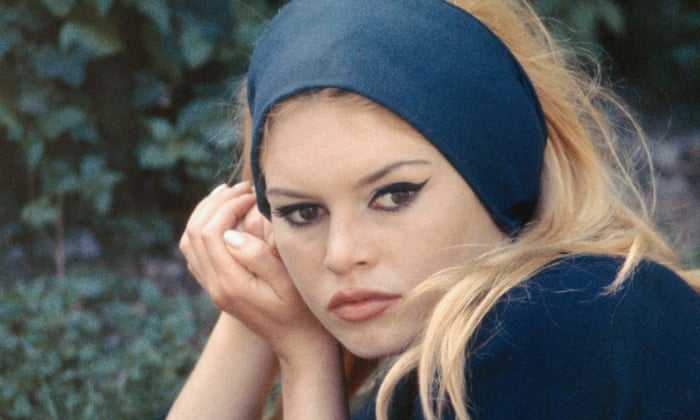
Brigitte Bardot, the French actress and singer who rose to fame as an international sex symbol before leaving the film industry to champion animal rights, has died at the age of 91.
French President Emmanuel Macron was among those paying tribute on Sunday, writing on social media that Bardot had “embodied a life of freedom” and “universal brilliance.” He said France was mourning “a legend of the century.”
Jordan Bardella, president of Marine Le Pen’s far-right National Rally party, which Bardot supported, wrote: “Brigitte Bardot was a woman of heart, conviction and character. An ardent patriot, devoted to animals that she protected throughout her life, she embodied a whole French era, but also above all a certain idea of courage and freedom.”
Le Pen, whom Bardot once called “the Joan of Arc of the 21st century,” wrote on social media that Bardot was “exceptional for her talent, courage, frankness and beauty.” She added, “She was incredibly French. Free, indomitable, whole. She will be hugely missed.”
Bardot’s death was announced on Sunday by her foundation in a statement sent to Agence France-Presse, which did not specify when or where she died.
“The Brigitte Bardot foundation announces with immense sadness the death of its founder and president, Madame Brigitte Bardot, a world-renowned actress and singer, who chose to abandon her prestigious career to dedicate her life and energy to animal welfare and her foundation,” the statement said.
The town hall in Saint-Tropez, where Bardot vacationed as a child and later filmed And God Created Woman, said the actress had “helped make Saint-Tropez shine across the world.” The town described Bardot as its “most radiant ambassador” and a part of “the collective memory of Saint-Tropez, which we must preserve.”
Bardot gained international fame in 1956 with And God Created Woman, written and directed by her then-husband, Roger Vadim. For the next two decades, she was seen as the archetypal “sex kitten.” However, in the early 1970s, she retired from acting and became increasingly active in politics, emerging as an outspoken animal rights campaigner.
Bardot’s inflammatory remarks about ethnic minorities, immigration, Islam, and homosexuality led to several convictions for inciting racial hatred. French courts fined her six times between 1997 and 2008 for her comments, particularly those targeting France’s Muslim community. In one instance, a Paris court fined her €15,000 for stating that Muslims were “this population that is destroying us, destroying our country by imposing its acts.”
Born in Paris in 1934, Bardot grew up in a prosperous, traditional Catholic family. She excelled in dance and earned a place at the prestigious Conservatoire de Paris. While studying ballet, she also worked as a model, appearing on the cover of Elle at age 15. Her modeling led to film roles, and at an audition, she met Vadim, whom she married in 1952 after turning 18. Bardot initially took on small but increasingly prominent roles, such as playing Dirk Bogarde’s love interest in the 1955 UK hit Doctor at Sea.
However, it was Vadim’s And God Created Woman, in which Bardot played an uninhibited teenager in Saint-Tropez, that solidified her image and made her an international icon. The film was a major success in France and abroad, propelling Bardot to the forefront of French cinema.
Beyond captivating movie audiences, Bardot quickly became an inspiration for intellectuBrigitte Bardot captivated audiences and artists alike, with even a young John Lennon and Paul McCartney asking their girlfriends to dye their hair blonde to mimic her style. In 1958, columnist Raymond Cartier wrote a long piece on “le cas Bardot” for Paris-Match, and Simone de Beauvoir followed in 1959 with her famous essay Brigitte Bardot and the Lolita Syndrome, portraying the actress as France’s most liberated woman. By 1969, Bardot was selected as the first real-life model for Marianne, the symbol of the French Republic.
During the early 1960s, Bardot starred in a series of notable French films, such as Henri-Georges Clouzot’s Oscar-nominated drama The Truth, Louis Malle’s A Very Private Affair alongside Marcello Mastroianni, and Jean-Luc Godard’s Contempt. Later in the decade, she accepted several Hollywood offers, including the Mexican-period comedy Viva Maria! with Jeanne Moreau and the western Shalako with Sean Connery.
Bardot also pursued a music career, which included recording the original version of Serge Gainsbourg’s Je T’Aime … Moi Non Plus, a song he wrote for her during their extramarital affair. Fearing scandal after her then-husband Gunter Sachs discovered the recording, Bardot asked Gainsbourg not to release it. He later re-recorded the track with Jane Birkin, achieving massive commercial success.
However, Bardot grew increasingly weary of the pressures of fame, telling the Guardian in 1996, “The madness that surrounded me always seemed unreal. I was never really prepared for the life of a star.” She retired from acting in 1973 at age 39 after making the historical romance The Edifying and Joyous Story of Colinot, shifting her focus to animal protection activism. She joined protests against seal hunts in 1977 and founded the Brigitte Bardot Foundation in 1986.
Over the years, Bardot sent protest letters to world leaders addressing issues like dog extermination in Romania, dolphin killings in the Faroe Islands, and cat slaughter in Australia. She also frequently voiced strong opinions against religious animal slaughter. In her 2003 book A Cry in the Silence, she embraced right-wing politics, criticizing gay men and lesbians, schoolteachers, and what she called the “Islamisation of French society,” leading to a conviction for inciting racial hatred.
Bardot had long supported the RN, previously known as the National Front, stating in 1996, “On the terrifying surge of immigration, I share [Jean-Marie Le Pen’s] views completely.”
She was married four times: to Roger Vadim from 1952 to 1957; to Jacques Charrier from 1959 to 1962, with whom she had a son, Nicolas, in 1960; to Gunter Sachs from 1966 to 1969; and to former Le Pen adviser Bernard d’Ormale, whom she married in 1992. Bardot also had several high-profile relationships, including with Jean-Louis Trintignant and Serge Gainsbourg.
Frequently Asked Questions
Of course Here is a list of FAQs about the passing of Brigitte Bardot designed to answer questions from basic to more detailed
FAQs on the Passing of Brigitte Bardot
Beginner Factual Questions
Q Is it true that Brigitte Bardot has died
A No this is false As of the latest confirmed reports Brigitte Bardot is alive She celebrated her 90th birthday on September 28 2024 Rumors of her death periodically circulate online but are hoaxes
Q How old is Brigitte Bardot now
A Brigitte Bardot is 90 years old
Q Why do I keep seeing rumors that she passed away
A Unfortunately celebrity death hoaxes are common especially targeting iconic older public figures These rumors often spread for clicks misinformation or due to confusion with other news
Q Where does Brigitte Bardot live
A She has lived in SaintTropez France for decades largely out of the public eye
Advanced CareerFocused Questions
Q What was Brigitte Bardot most famous for
A She was a defining French actress and sex symbol of the 1950s and 60s known for films like And God Created Woman She revolutionized popular culture with her liberated persona and iconic style Later she became a globally prominent animal rights activist
Q When did she retire from acting
A She retired from acting in 1973 at the age of 39 after making nearly 50 films
Q What has she been doing since she retired
A She founded the Fondation Brigitte Bardot in 1986 dedicating her life and resources to animal welfare advocacy She has been a vocal and sometimes controversial figure in this field
Q What is her legacy
A Her legacy is dual 1 Cultural She embodied a new kind of female freedom and sensuality in postwar Europe 2 Activist She pioneered celebrity activism for animals raising global awareness and founding a major charitable organization
Practical What Now Questions
Q What is the best way to get accurate news about her
A