As an Australian living in Italy, I grew up within an hour of some of the world’s most untouched coastline, so I’ll never quite get used to Italy’s love for private beach clubs. Along some of Italy’s most naturally stunning beaches—from the Amalfi Coast to the Cinque Terre—exclusive beach clubs and five-star hotels take over the best spots. The natural beauty that made these places famous can start to feel fenced off.
In Australia, beaches are shared, natural spaces. There’s a more laid-back way of swimming along open stretches of sand, with nothing but trees, rocks, and dunes around. For anyone wanting a back-to-nature holiday, here are six of Italy’s most beautiful free beaches, where the coastline stays untouched and open to everyone.
Riviera del Conero, Marche
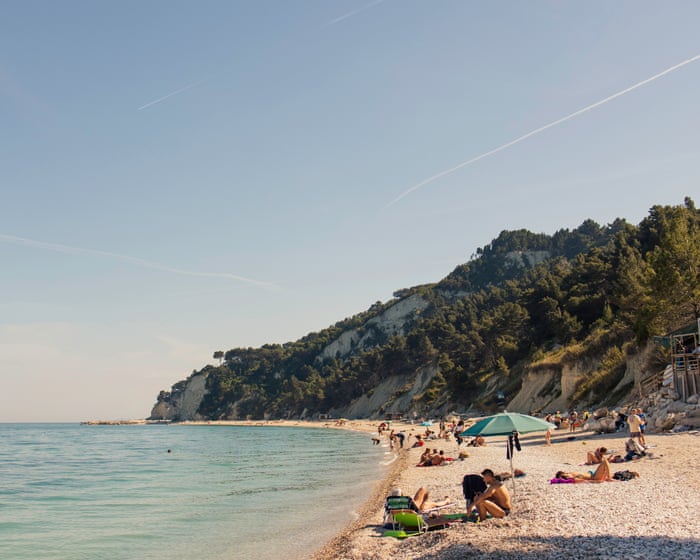
The Riviera del Conero is the Marche region’s most precious gem, in an area still largely untouched by mass tourism. You’ll rarely hear any language other than Italian, since it’s mostly locals and other Italians on their summer holidays. Set against a stunning backdrop of limestone cliffs covered in pine trees, this stretch of coastline within the Conero regional park features a series of protected bays with clear green-blue water and white pebbles.
Sirolo is a long, natural beach at the end of a winding downhill walk through the trees. There’s plenty of room to lay your towel on the smooth rocks, and you can also rent chairs and umbrellas if you like. Portonovo Bay offers low-key, retro 60s beach clubs and long stretches of free beach. Ristorante Emilia has been the top lunch spot here since 1950, serving their signature spaghetti with mussels, hand-picked from the nearby rocks every morning.
In Sirolo, San Michele Relais & Spa has doubles from €108, and Camping Village Internazionale has cabins from about €100.
Gargano, Puglia
While southern Puglia’s beaches are high on many travelers’ bucket lists, the rugged Gargano peninsula—jutting out from northern Puglia into the Adriatic—is far less known. Part of the Gargano national park, it’s full of rocky coves, quiet bays, and long pebbled beaches framed by olive groves. Portogreco, a tiny cove and popular free beach, is surrounded by sea caves and rocks perfect for high diving, with fantastic snorkeling in the clear waters. Vignanotica is a long, narrow pebble beach backed by a sheer limestone cliff that provides welcome shade by late afternoon in summer.
Take the scenic trip an hour north along the coast for lunch at Al Trabucco da Mimì in Peschici, where fresh seafood is caught and served on a traditional wooden fishing platform. Order the mixed seafood grill to try a bit of everything.
HMO Glamping in Vignanotica has tents from about €110, or Baia delle Zagare resort in Mattinata has doubles from €150.
Ponza, Lazio
A favorite summer escape for Romans, the island of Ponza is a short ferry ride from mainland Lazio. Pastel-colored houses cluster around a port town that hasn’t changed much over time. The island opens up into wild coves and quiet swimming spots, with the best ones only reachable by boat. Frontone, the island’s longest beach, is accessed by water taxi from Ponza. While some of the shoreline is taken up by beach clubs, there’s still plenty of free beach, and savvy locals know to perch on the rocks at the southern end.
Some of Ponza’s most spectacular swimming spots, like Chiaia di Luna—a crescent-shaped cove surrounded by towering orange cliffs—are only reachable from the water, so renting a dinghy or a captained boat is part of the experience. Have lunch at Ristoro da Gerardo, which offers the best views over Frontone from its rustic raffia-shaded terrace. The homestyle menu includes eggplant parmigiana alongside Ponzese octopus stew, and dessert is figs picked on-site. Guests are welcome to stay for a post-lunch nap on loungers in the shade.Surrounded by trees.
Hotel Chiaia di Luna has doubles from €115.
Pantelleria, Sicily
There are no sandy beaches on the volcanic island of Pantelleria.
Closer to Tunisia than Sicily, this slow-paced island feels completely separate from mainland Italy and lets you fully connect with nature. Without a single sandy beach, visitors and locals lay their towels on flat volcanic rocks and dive into the clear blue water, surrounded by dry, wind-swept landscapes.
Balata dei Turchi is a quiet bay of volcanic rock at the wilder southern end of the island, perfect for snorkeling. The water is clean, and submerged rocks are full of bright coral and fish. Nearby at Nikà, underwater hot springs bubble up from the sea while you swim.
Laghetto delle Ondine is at the end of a short hike across otherworldly volcanic terrain, where waves crash against the walls of calm rock pools as big as swimming pools.
At sunset, grab an outdoor table at Dispensa Pantesca in Scauri for an antipasto plate of local specialties, including Pantelleria’s fragrant capers. Or book a more formal dinner in the courtyard next door at sister restaurant La Nicchia.
Stay in traditional dammusi (houses made from volcanic stone) at Pantelleria Dream Resort near Kamma from €170, or at Dammuso Biancolilla near Scauri from €140.
Elba, Tuscany
The island of Elba has 90 miles of coastline.
Part of the Tuscan Archipelago, Elba lies 35 miles (55km) east of Corsica, with similarly clear waters and mountainous terrain. Still relatively unknown outside Italy, the island has 90 miles of coastline, dotted with wild bays and tiny beaches. It’s bigger than many visitors expect, so where you stay makes a big difference.
Nisporto is a quiet, unspoiled bay surrounded by pine-covered hills at the end of a winding road, giving it a secluded feel even in summer. The flat sand-and-pebble beach and gentle waves make it great for families with kids. The clear waters and seabeds rich in marine life are ideal for snorkeling, or you can rent a pedalo or canoe to explore the coastline further.
In Portoferraio, book dinner at Teatro Bistro for the amazing views from the terrace, and order the spaghetti with cured mullet bottarga, a Tuscan coastal specialty.
In Nisporto, Residence La Cota Quinta has apartments from about €80 a night (three-night minimum stay), or Sole e Mare camping village has bungalows from €400 a week for two.
Maremma, Tuscany
An untouched beach near Grosseto.
Just outside the walled city of Grosseto, the regional park of Maremma stretches from the Uccellina mountains to the Tyrrhenian Sea, protecting one of Italy’s most unspoiled coastlines.
The park’s wild sandy beaches have no umbrellas, bars, or beach clubs. The only structures are makeshift driftwood forts that offer shade from the sun.
Marina di Alberese is the most accessible beach inside the park, with a shoreline that stretches for miles. Walk along the coast to quieter Collelungo, or reach it on foot or by bike via trails through the lush park.
Easy bike paths, with bikes and e-bikes available to rent, lead through the park from Grosseto to the beaches, passing herds of horned Maremma cows and wild horses.
Stop for a tasting plate of cheeses from La Maremmana dairy. Their specialty is buffalo mozzarella, and they’ll pack extras for a beach picnic.
Agriturismo il Melograno di Banditella in Alberese has doubles from €120 B&B.
Frequently Asked Questions
Here is a list of FAQs about the six best natural and free beaches in Italy
General Questions
Q What does free beach mean in Italy
A It means a public beach with no entrance fee You dont have to pay for a sunbed or umbrella You just bring your own towel and sit anywhere you like
Q Are these beaches really free or is there a catch
A They are truly free to access However you usually have to pay for parking nearby Some may also charge a small fee for a shower or restroom
Q Do I need to book a spot at these beaches
A No Because they are free public beaches you cannot reserve a spot Just arrive early especially in July and August to get a good place
Q What should I bring to a natural free beach
A Bring your own towel umbrella sunscreen water snacks and a hat Most of these beaches have no services so you are responsible for your own shade and food
Specific Beach Questions
Q Which of these six beaches is best for families with small children
A Cala dei Ginepri in Sardinia is excellent The water is very shallow and calm and the sand is soft Its also surrounded by a pine forest that offers natural shade
Q I want crystalclear water and white sand Which beach should I choose
A Go to Cala Mariolu in Sardinia Its famous for its pebbly white sand and incredibly clear turquoise water Its a bit harder to reach which keeps it less crowded
Q Which beach is the most dramatic or scenic
A Cala dei Sospiri in the Cinque Terre near Riomaggiore Its a tiny hidden cove with turquoise water and dramatic cliffs Its very small though so go early
Q I want a long sandy beach where I can walk for miles Which one is that
A