Rakib Hossain was only 11 years old when he was shot in the head while standing on a Dhaka street in July last year. Police were accused of firing the fatal bullet.
Hossain was among more than 1,400 people—men, women, and children—killed during Bangladesh’s mass protests, known as the July revolution. Hundreds of thousands had taken to the streets to oppose then-leader Sheikh Hasina.
In response, Hasina sent heavily armed police with orders to shoot protesters. The crackdown failed, and on August 5 last year, as angry crowds marched toward her residence and the military refused to intervene, she fled Bangladesh by helicopter.
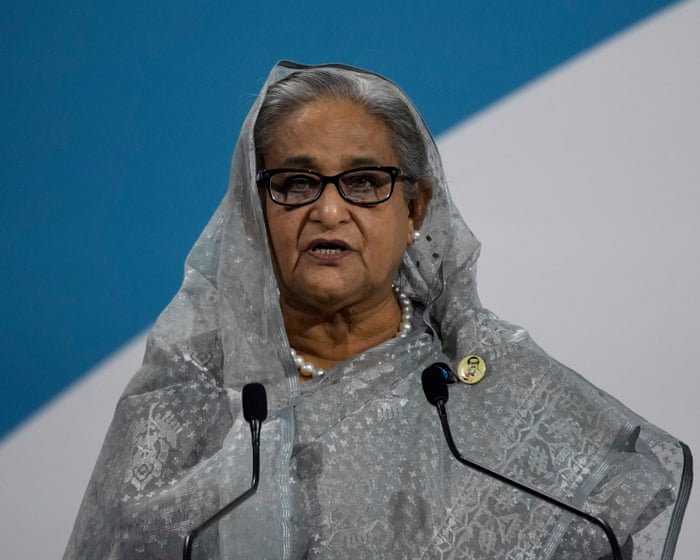
Now, over a year after Hossain’s death, Hasina will stand trial starting August 3. She faces charges of crimes against humanity, including ordering, inciting, and aiding murder, torture, and other atrocities during the protests. The trial will be held before Bangladesh’s International Crimes Tribunal—a court Hasina herself established while in power.
Hasina will not attend the trial. Since fleeing, she has remained in India, ignoring extradition requests from Bangladesh’s interim government. If convicted, she could face the death penalty, making her voluntary return unlikely. She has pleaded not guilty in absentia and will be represented by a state-appointed lawyer.
Ahead of the trial, Hasina and her Awami League party have dismissed the charges, claiming they never received formal legal notices. In a recent open letter, she called the protests a “violent interruption of democracy” and vowed to reclaim power.
Hossain’s father, Abul Khayer, is angry that Hasina won’t face the court in person. “I want her to answer for what she did,” he said. “But India won’t send her back. Everyone knows that.” A year after his son’s death, Khayer has grown disillusioned, doubting the tribunal will deliver true justice.
After Hasina’s ouster, hope surged as Nobel laureate Muhammad Yunus led an interim government promising democratic reforms. But faith has waned as many reforms stalled, and Yunus struggled to control rising violence and attacks on minorities.
With elections due in February—the first since Hasina’s fall—Khayer fears the trial will be politicized. “These cases often become tools for political gain,” he said. “Trials drag on for years to serve ambitions.” Still, he insists the process must continue.Here’s the rewritten text in fluent, natural English while preserving the original meaning:
—
For many who lost loved ones last July, this trial is a crucial first step toward justice. While some senior officials were arrested, many from Hasina’s government fled the country and remain abroad. To ensure transparency, much of the trial will be broadcast live, except when sensitive witnesses testify.
This is only the beginning. Investigators are still working to hold Hasina accountable for other alleged atrocities during her 15-year rule, including enforced disappearances, killings, torture, and mass imprisonment of critics.
Mohammad Tajul Islam, the chief prosecutor, said the court’s investigators have been working tirelessly since September to gather evidence and find witnesses. He called it a “very challenging task,” especially due to destroyed evidence and the large number of people involved. Some suspects still hold power, making victims and witnesses hesitant to come forward.
Islam believes the prosecution has a strong case proving Hasina’s crimes against humanity. A key witness will be her former police chief, Chowdhury Abdullah al-Mamun, who has already pleaded guilty and agreed to testify against her.
Some doubt whether Bangladesh’s judicial system—weakened under Hasina—can conduct a fair trial. But Islam insists reforms have aligned the court with international standards. “This is critical for accountability, the rule of law, and the victims seeking justice,” he said. “Her absence shouldn’t protect her from justice.”
Mohammad Arafat, a former minister in Hasina’s government now facing charges, dismissed the trial as a “political show.” He urged the international community to reject what he called an attempt to criminalize political opposition.
Mubashar Hasan, a political scientist who was abducted and tortured before fleeing Bangladesh, believes Hasina should ideally face trial at the International Criminal Court in The Hague.
Meanwhile, the interim government has barred Hasina’s Awami League from next year’s elections, raising concerns about fairness since it remains a major party. The Bangladesh Nationalist Party, persecuted under Hasina, is expected to win, while the previously banned Islamist party, Jamaat-e-Islami, may gain influence—sparking fears of rising extremism threatening Bangladesh’s secular roots.
—
Let me know if you’d like any further refinements!