@font-face {
font-family: ‘Guardian Headline Full’;
src: url(‘https://assets.guim.co.uk/static/frontend/fonts/guardian-headline/noalts-not-hinted/GHGuardianHeadline-Light.woff2’) format(‘woff2’),
url(‘https://assets.guim.co.uk/static/frontend/fonts/guardian-headline/noalts-not-hinted/GHGuardianHeadline-Light.woff’) format(‘woff’),
url(‘https://assets.guim.co.uk/static/frontend/fonts/guardian-headline/noalts-not-hinted/GHGuardianHeadline-Light.ttf’) format(‘truetype’);
font-weight: 300;
font-style: normal;
}
@font-face {
font-family: ‘Guardian Headline Full’;
src: url(‘https://assets.guim.co.uk/static/frontend/fonts/guardian-headline/noalts-not-hinted/GHGuardianHeadline-LightItalic.woff2’) format(‘woff2’),
url(‘https://assets.guim.co.uk/static/frontend/fonts/guardian-headline/noalts-not-hinted/GHGuardianHeadline-LightItalic.woff’) format(‘woff’),
url(‘https://assets.guim.co.uk/static/frontend/fonts/guardian-headline/noalts-not-hinted/GHGuardianHeadline-LightItalic.ttf’) format(‘truetype’);
font-weight: 300;
font-style: italic;
}
@font-face {
font-family: ‘Guardian Headline Full’;
src: url(‘https://assets.guim.co.uk/static/frontend/fonts/guardian-headline/noalts-not-hinted/GHGuardianHeadline-Regular.woff2’) format(‘woff2’),
url(‘https://assets.guim.co.uk/static/frontend/fonts/guardian-headline/noalts-not-hinted/GHGuardianHeadline-Regular.woff’) format(‘woff’),
url(‘https://assets.guim.co.uk/static/frontend/fonts/guardian-headline/noalts-not-hinted/GHGuardianHeadline-Regular.ttf’) format(‘truetype’);
font-weight: 400;
font-style: normal;
}
@font-face {
font-family: ‘Guardian Headline Full’;
src: url(‘https://assets.guim.co.uk/static/frontend/fonts/guardian-headline/noalts-not-hinted/GHGuardianHeadline-RegularItalic.woff2’) format(‘woff2’),
url(‘https://assets.guim.co.uk/static/frontend/fonts/guardian-headline/noalts-not-hinted/GHGuardianHeadline-RegularItalic.woff’) format(‘woff’),
url(‘https://assets.guim.co.uk/static/frontend/fonts/guardian-headline/noalts-not-hinted/GHGuardianHeadline-RegularItalic.ttf’) format(‘truetype’);
font-weight: 400;
font-style: italic;
}
@font-face {
font-family: ‘Guardian Headline Full’;
src: url(‘https://assets.guim.co.uk/static/frontend/fonts/guardian-headline/noalts-not-hinted/GHGuardianHeadline-Medium.woff2’) format(‘woff2’),
url(‘https://assets.guim.co.uk/static/frontend/fonts/guardian-headline/noalts-not-hinted/GHGuardianHeadline-Medium.woff’) format(‘woff’),
url(‘https://assets.guim.co.uk/static/frontend/fonts/guardian-headline/noalts-not-hinted/GHGuardianHeadline-Medium.ttf’) format(‘truetype’);
font-weight: 500;
font-style: normal;
}
@font-face {
font-family: ‘Guardian Headline Full’;
src: url(‘https://assets.guim.co.uk/static/frontend/fonts/guardian-headline/noalts-not-hinted/GHGuardianHeadline-MediumItalic.woff2’) format(‘woff2’),
url(‘https://assets.guim.co.uk/static/frontend/fonts/guardian-headline/noalts-not-hinted/GHGuardianHeadline-MediumItalic.woff’) format(‘woff’),
url(‘https://assets.guim.co.uk/static/frontend/fonts/guardian-headline/noalts-not-hinted/GHGuardianHeadline-MediumItalic.ttf’) format(‘truetype’);
font-weight: 500;
font-style: italic;
}
@font-face {
font-family: ‘Guardian Headline Full’;
src: url(‘https://assets.guim.co.uk/static/frontend/fonts/guardian-headline/noalts-not-hinted/GHGuardianHeadline-Semibold.woff2’) format(‘woff2’),
url(‘https://assets.guim.co.uk/static/frontend/fonts/guardian-headline/noalts-not-hinted/GHGuardianHeadline-Semibold.woff’) format(‘woff’),
url(‘https://assets.guim.co.uk/static/frontend/fonts/guardian-headline/noalts-not-hinted/GHGuardianHeadline-Semibold.ttf’) format(‘truetype’);
font-weight: 600;
font-style: normal;
}
@font-face {
font-family: ‘Guardian Headline Full’;
src: url(‘https://assets.guim.co.uk/static/frontend/fonts/guardian-headline/noalts-not-hinted/GHGuardianHeadline-SemiboldItalic.woff2’) format(‘woff2’),
url(‘https://assets.guim.co.uk/static/frontend/fonts/guardian-headline/noalts-not-hinted/GHGuardianHeadline-SemiboldItalic.woff’) format(‘woff’),
url(‘https://assets.guim.co.uk/static/frontend/fonts/guardian-headline/noalts-not-hinted/GHGuardianHeadline-SemiboldItalic.ttf’) format(‘truetype’);
font-weight: 600;
font-style: italic;
}Here’s the rewritten version in fluent, natural English:
“`css
@font-face {
font-family: ‘Guardian Headline Full’;
src: url(‘https://assets.guim.co.uk/static/frontend/fonts/guardian-headline/noalts-not-hinted/GHGuardianHeadline-Bold.woff2’) format(‘woff2’),
url(‘https://assets.guim.co.uk/static/frontend/fonts/guardian-headline/noalts-not-hinted/GHGuardianHeadline-Bold.woff’) format(‘woff’),
url(‘https://assets.guim.co.uk/static/frontend/fonts/guardian-headline/noalts-not-hinted/GHGuardianHeadline-Bold.ttf’) format(‘truetype’);
font-weight: 700;
font-style: normal;
}
@font-face {
font-family: ‘Guardian Headline Full’;
src: url(‘https://assets.guim.co.uk/static/frontend/fonts/guardian-headline/noalts-not-hinted/GHGuardianHeadline-BoldItalic.woff2’) format(‘woff2’),
url(‘https://assets.guim.co.uk/static/frontend/fonts/guardian-headline/noalts-not-hinted/GHGuardianHeadline-BoldItalic.woff’) format(‘woff’),
url(‘https://assets.guim.co.uk/static/frontend/fonts/guardian-headline/noalts-not-hinted/GHGuardianHeadline-BoldItalic.ttf’) format(‘truetype’);
font-weight: 700;
font-style: italic;
}
@font-face {
font-family: ‘Guardian Headline Full’;
src: url(‘https://assets.guim.co.uk/static/frontend/fonts/guardian-headline/noalts-not-hinted/GHGuardianHeadline-Black.woff2’) format(‘woff2’),
url(‘https://assets.guim.co.uk/static/frontend/fonts/guardian-headline/noalts-not-hinted/GHGuardianHeadline-Black.woff’) format(‘woff’),
url(‘https://assets.guim.co.uk/static/frontend/fonts/guardian-headline/noalts-not-hinted/GHGuardianHeadline-Black.ttf’) format(‘truetype’);
font-weight: 900;
font-style: normal;
}
@font-face {
font-family: ‘Guardian Headline Full’;
src: url(‘https://assets.guim.co.uk/static/frontend/fonts/guardian-headline/noalts-not-hinted/GHGuardianHeadline-BlackItalic.woff2’) format(‘woff2’),
url(‘https://assets.guim.co.uk/static/frontend/fonts/guardian-headline/noalts-not-hinted/GHGuardianHeadline-BlackItalic.woff’) format(‘woff’),
url(‘https://assets.guim.co.uk/static/frontend/fonts/guardian-headline/noalts-not-hinted/GHGuardianHeadline-BlackItalic.ttf’) format(‘truetype’);
font-weight: 900;
font-style: italic;
}
@font-face {
font-family: ‘Guardian Titlepiece’;
src: url(‘https://assets.guim.co.uk/static/frontend/fonts/guardian-titlepiece/noalts-not-hinted/GTGuardianTitlepiece-Bold.woff2’) format(‘woff2’),
url(‘https://assets.guim.co.uk/static/frontend/fonts/guardian-titlepiece/noalts-not-hinted/GTGuardianTitlepiece-Bold.woff’) format(‘woff’),
url(‘https://assets.guim.co.uk/static/frontend/fonts/guardian-titlepiece/noalts-not-hinted/GTGuardianTitlepiece-Bold.ttf’) format(‘truetype’);
font-weight: 700;
font-style: normal;
}
@media (min-width: 71.25em) {
.content__main-column–interactive {
margin-left: 160px;
}
}
@media (min-width: 81.25em) {
.content__main-column–interactive {
margin-left: 240px;
}
}
.content__main-column–interactive .element-atom {
max-width: 620px;
}
@media (max-width: 46.24em) {
.content__main-column–interactive .element-atom {
max-width: 100%;
}
}
.content__main-column–interactive .element-showcase {
margin-left: 0;
}
@media (min-width: 46.25em) {
.content__main-column–interactive .element-showcase {
max-width: 620px;
}
}
@media (min-width: 71.25em) {
.content__main-column–interactive .element-showcase {
max-width: 860px;
}
}
.content__main-column–interactive .element-immersive {
max-width: 1100px;
}
@media (max-width: 46.24em) {
.content__main-column–interactive .element-immersive {
width: calc(100vw – var(–scrollbar-width, 0px));
position: relative;
left: 50%;
right: 50%;
margin-left: calc(-50vw + var(–half-scrollbar-width, 0px)) !important;
margin-right: calc(-50vw + var(–half-scrollbar-width, 0px)) !important;
}
}
@media (min-width: 46.25em) {
.content__main-column–interactive .element-immersive {
transform: translate(-20px);
width: calc(100% + 60px);
}
}
@media (max-width: 71.24em) {
.content__main-column–interactive .element-immersive {
margin-left: 0;
margin-right: 0;
}
}
@media (min-width: 71.25em) {
.content__main-column–interactive .element-immersive {
transform: translate(0);
width: auto;
}
}
@media (min-width: 81.25em) {
.content__main-column–interactive .element-immersive {
max-width: 1260px;
}
}
.content__main-column–interactive p,
.content__main-column–interactive ul {
max-width: 620px;
}
.content__main-column–interactive:before {
position: absolute;
top: 0;
height: calc(100% + 15px);
min-height: 100px;
content: “”;
}
@media (min-width: 71.25em) {
/ Additional styles can go here /
}
“`Here’s the rewritten version in fluent, natural English:
The main content column for interactive pages has a thin gray border on the left side, positioned slightly behind the content. On larger screens (over 81.25em wide), this border shifts slightly to the left. Inside this column, embedded elements like videos or graphics have no top or bottom margin but include 12px of padding above and below. If a paragraph is followed by one of these elements, the padding is removed and replaced with a 12px margin on both sides. Inline elements are limited to a maximum width of 620px, and on screens wider than 61.25em, figures with the inline role also stay within that width.
For media sections that contain a looping video, the caption sits above other content, and the loop button is 32px wide, aligned to the bottom right with some spacing. The caption button is also given a high stacking order to stay visible. In the main body, self-hosted videos are displayed as block elements, up to 620px wide, with 12px margins above and below. If the video is in a loop and set to immersive mode, it stretches to full width with no maximum, and on very wide screens (over 71.25em), it expands to 1140px with a negative left margin. On even wider screens (over 81.25em), it grows to 1300px with a larger negative margin.
The design uses several color variables: dateline text is a medium gray, borders are light gray, captions are lighter gray with a dark background, and feature elements are red. Subheadings, pull quotes, and block quotes take their colors from a secondary pillar, which changes in dark mode to a dark-mode-specific pillar. Block quotes also have a fill color based on that pillar.
In the main interactive column, embedded elements have no padding. When an element appears right after a paragraph or a horizontal rule (except the last one), the paragraph that follows gets special styling. This applies across various sections like the article body, comment section, and feature body.Here is the rewritten text in fluent, natural English:
Add 14 pixels of padding to the top of the first paragraph after “n-gate+p:first-of-type” and after any horizontal rule that is not the last one in the feature body section. For the first letter of the first paragraph after certain elements (like the first atom, sign-in gate, or non-last horizontal rule) in various sections (article body, interactive content, comment body, and feature body), use the font “Guardian Headline” or similar serif fonts, with a weight of 700, size of 111 pixels, and line height of 92 pixels. This letter should float to the left, be uppercase, have a box-sizing of border-box, an 8-pixel right margin, vertical alignment to the top of the text, and its color should match the drop cap or pillar color variable.
In the article body, interactive content, comment body, and feature body sections, remove the top padding from paragraphs that follow a horizontal rule. Also, set the maximum width of pullquote elements to 620 pixels in these sections.
For figure captions inside showcase elements in the main content, feature article, standard article, and comment article containers, set their position to static and give them a width of 100% with a maximum width of 620 pixels. On screens wider than 71.25 em, change the position to absolute and limit the maximum width to 140 pixels. On screens wider than 81.25 em, increase the maximum width to 220 pixels.
For immersive elements, set their width to the full viewport width minus the scrollbar width. On screens narrower than 71.24 em, limit the maximum width to 978 pixels and add 10 pixels of padding on the left and right for captions. On screens between 30 em and 71.24 em, increase the caption padding to 20 pixels on each side. On screens between 46.25 em and 61.24 em, set the maximum width to 738 pixels. On screens narrower than 46.24 em, remove the margin from immersive elements.Here’s the rewritten version in fluent, natural English:
For screens narrower than 46.24em but at least 30em wide, immersive elements should have a left margin of -20px, and their captions should have 20px of padding on each side.
On screens wider than 71.25em, showcase images in the main content area should have a left margin of -160px. For screens wider than 81.25em, that margin increases to -240px.
The furniture wrapper is positioned relatively. On screens wider than 61.25em, it becomes a grid with 20px column gaps and no row gaps. It has two rows of five columns each, with specific areas for the title, headline, meta, standfirst, and portrait.
In this layout, the first child of the headline section gets a 1px top border. The meta section is positioned relatively with 2px top padding and no right margin. The standfirst has a bottom margin of 4px, and its list items use 20px font size. Links in the standfirst have no bottom border or background image, but are underlined with a 6px offset and a light gray color. On hover, the underline color changes to the pillar color. The first paragraph in the standfirst has a top border and no bottom padding.
For screens wider than 71.25em, this first paragraph’s top border is removed. Figures in the furniture wrapper have no margin except a -10px left margin. Inline figures are limited to 630px width.
On screens wider than 71.25em, the grid changes to have three columns: two for the title, headline, and meta start; five for the standfirst; and seven for the portrait. The rows are 80px for the title, auto for the headline, and auto for the standfirst and meta. The meta section gets a 540px wide, 1px high top border. The standfirst paragraphs have no top border, but the standfirst itself gets a 1px wide, full-height left border.The furniture wrapper uses a grid layout. At screen widths of 81.25em and above, the grid has columns for the title, headline, meta, standfirst, and portrait sections. The meta section has a width of 620px, and the standfirst section starts slightly to the left.
In the article header, the labels inside the title section have a small padding at the top. The headline uses an h1 tag with a font weight of 600, a maximum width of 620px, and a font size of 32px. At 71.25em and wider, the headline’s max width is 540px and the font size increases to 50px.
The keyline-4 element (or the lines section) has no right margin at 46.25em and wider, and is hidden at 61.25em and wider. Its SVG stroke uses the header border color.
The meta section also has no right margin at 46.25em and wider. The social and comment elements within meta use the header border color for their borders. Some islands inside the meta container are hidden.
The standfirst section is positioned with a left margin of -10px and a left padding of 10px. At 46.25em and wider, it gets a small top padding. Its paragraphs have a font weight of 400, a font size of 20px, and a bottom padding of 14px.
The main media section (or media) is placed in the portrait grid area. It has no top margin and a small bottom margin. Its inner divs are full width with no inline margins. At 61.25em and wider, the bottom margin is removed. On screens narrower than 46.25em, the media section spans the full viewport width (minus scrollbar) and shifts left by 10px (or 20px at 30em and wider).
The figure caption is positioned at the bottom of the media, with padding and background color from the caption background variable. It uses the caption text color, has full width, and a minimum height of 46px. The caption’s span elements use the header border color for text and SVG fills. The first span is hidden, while the second is shown with a max width of 90%. At 30em and wider, the caption padding increases. If the caption has the “hidden” class, it becomes transparent.
The caption button is positioned at the bottom right of the media, with a circular background, no border, and a slightly scaled-down SVG icon. At 30em and wider, the button adjusts accordingly.Here’s the rewritten version in fluent, natural English:
The caption button on the furniture wrapper is positioned 10px from the right. On screens wider than 71.25em, the interactive main column has a top offset of -12px and a height of 100% plus 24px. The h2 headings inside the interactive main column have a maximum width of 620px.
For iOS and Android devices, the dark background is set to #1a1a1a, the feature color to #c70000, and the dark mode feature color to #ff5943. The new pillar color uses the primary pillar, or the feature color as a fallback. In dark mode on these devices, the new pillar color switches to the dark mode pillar, or the dark mode feature color.
On iOS and Android, the first letter of the first paragraph after the first element atom in feature, standard, and comment article containers is colored using the secondary pillar, or black as a fallback. The article header in these containers has a height of zero. The furniture wrapper in these containers has 4px padding on top and 10px on the sides, with no bottom padding. The content labels inside the furniture wrapper use bold, capitalized text in the Guardian Headline font family, and their color matches the new pillar color. The h1 headline inside the furniture wrapper follows the same styling.For the comment article container, the headline inside the furniture wrapper should have a font size of 32px, a font weight of 700, 12px of padding at the bottom, and a color of #121212.
On iOS and Android devices, for the feature, standard, and comment article containers, the figure element inside the furniture wrapper should be positioned relatively, with a margin of 14px on top and 0 on the left, and a negative left margin of 10px. Its width should be set to the full viewport width minus the scrollbar width, and its height should be automatic.
Also on iOS and Android, for the same containers, the inner part of the figure, the image, and any link inside the figure should have a transparent background, a width equal to the full viewport width minus the scrollbar width, and an automatic height.
For the standfirst section in these containers on iOS and Android, there should be 4px of padding on top, 24px of padding at the bottom, and a negative right margin of 10px.
In the standfirst’s inner paragraph on iOS and Android, the font family should be set to Guardian Headline, Guardian Egyptian Web, Guardian Headline Full, Georgia, or serif.
For links inside list items and regular links within the standfirst’s inner section on iOS and Android, the same font family should apply.For Android devices, links inside the standfirst section of standard, comment, and feature articles should use the pillar color, have no background image, be underlined with a 6px offset, and use a light gray underline color instead of a bottom border. On hover, the underline color changes to the pillar color.
For both iOS and Android, the meta section in these article containers should have no margin. The byline, author name, author link, and any byline spans within the meta should all use the pillar color. The same applies to the meta__misc section.Here’s the rewritten version in fluent, natural English:
For both iOS and Android, the `.meta__misc` section inside the furniture wrapper of feature, standard, and comment article containers has no padding.
On iOS and Android, the SVG icons in the `.meta__misc` section of the furniture wrapper use the new pillar colour for their stroke.
The caption button inside the showcase element of the furniture wrapper is displayed as a flex container. It has 5px padding, is centered both horizontally and vertically, and is 28px wide and 28px tall, positioned 14px from the right.
The article body for feature, standard, and comment articles on both iOS and Android has 12px padding on the left and right.
For images in the article body that are not thumbnails or immersive, they have no margin and their width is calculated as the full viewport width minus 24px and the scrollbar width. Their height is automatic. The captions for these images have no padding.
Immersive images in the article body take up the full viewport width minus the scrollbar width.
On iOS, blockquotes with the “quoted” class inside the prose section of the article body have a specific style applied before their content.Here’s the rewritten version in fluent, natural English:
“`css
/ Blockquote styling /
.ose blockquote.quoted:before,
body.android #feature-article-container .article__body .prose blockquote.quoted:before,
body.android #standard-article-container .article__body .prose blockquote.quoted:before,
body.android #comment-article-container .article__body .prose blockquote.quoted:before {
color: var(–new-pillar-colour);
}
/ Link styling for iOS and Android /
body.ios #feature-article-container .article__body .prose a,
body.ios #standard-article-container .article__body .prose a,
body.ios #comment-article-container .article__body .prose a,
body.android #feature-article-container .article__body .prose a,
body.android #standard-article-container .article__body .prose a,
body.android #comment-article-container .article__body .prose a {
color: var(–primary-pillar);
background-image: none;
text-decoration: underline;
text-underline-offset: 6px;
text-decoration-color: var(–headerBorder);
}
/ Link hover styling /
body.ios #feature-article-container .article__body .prose a:hover,
body.ios #standard-article-container .article__body .prose a:hover,
body.ios #comment-article-container .article__body .prose a:hover,
body.android #feature-article-container .article__body .prose a:hover,
body.android #standard-article-container .article__body .prose a:hover,
body.android #comment-article-container .article__body .prose a:hover {
text-decoration-color: var(–new-pillar-colour);
}
/ Dark mode styling /
@media (prefers-color-scheme: dark) {
body.ios #feature-article-container .furniture-wrapper,
body.ios #standard-article-container .furniture-wrapper,
body.ios #comment-article-container .furniture-wrapper,
body.android #feature-article-container .furniture-wrapper,
body.android #standard-article-container .furniture-wrapper,
body.android #comment-article-container .furniture-wrapper {
background-color: #1a1a1a;
}
body.ios #feature-article-container .furniture-wrapper .content__labels,
body.ios #standard-article-container .furniture-wrapper .content__labels,
body.ios #comment-article-container .furniture-wrapper .content__labels,
body.android #feature-article-container .furniture-wrapper .content__labels,
body.android #standard-article-container .furniture-wrapper .content__labels,
body.android #comment-article-container .furniture-wrapper .content__labels {
color: var(–new-pillar-colour);
}
body.ios #feature-article-container .furniture-wrapper h1.headline,
body.ios #standard-article-container .furniture-wrapper h1.headline,
body.ios #comment-article-container .furniture-wrapper h1.headline,
body.android #feature-article-container .furniture-wrapper h1.headline,
body.android #standard-article-container .furniture-wrapper h1.headline,
body.android #comment-article-container .furniture-wrapper h1.headline {
background-color: unset;
color: var(–headerBorder) !important;
}
body.ios #feature-article-container .furniture-wrapper .standfirst p,
body.ios #standard-article-container .furniture-wrapper .standfirst p,
body.ios #comment-article-container .furniture-wrapper .standfirst p,
body.android #feature-article-container .furniture-wrapper .standfirst p,
body.android #standard-article-container .furniture-wrapper .standfirst p,
body.android #comment-article-container .furniture-wrapper .standfirst p {
color: var(–headerBorder);
}
body.ios #feature-article-container .furniture-wrapper .standfirst a,
body.ios #standard-article-container .furniture-wrapper .standfirst a,
body.ios #comment-article-container .furniture-wrapper .standfirst a,
body.android #feature-article-container .furniture-wrapper .standfirst a,
body.android #standard-article-container .furniture-wrapper .standfirst a,
body.android #comment-article-container .furniture-wrapper .standfirst a,
body.ios #feature-article-container .furniture-wrapper .meta .byline__author,
body.ios #feature-article-container .furniture-wrapper .meta span.byline__author a,
body.ios #standard-article-container .furniture-wrapper .meta .byline__author,
body.ios #standard-article-container .furniture-wrapper .meta span.byline__author a,
body.ios #comment-article-container .furniture-wrapper .meta .byline__author,
body.ios #comment-article-container .furniture-wrapper .meta span.byline__author a,
body.android #feature-article-container .furniture-wrapper .meta .byline__author,
body.android #feature-article-container .furniture-wrapper .meta span.byline__author a,
body.android #standard-article-container .furniture-wrapper .meta .byline__author,
body.android #standard-article-container .furniture-wrapper .meta span.byline__author a,
body.android #comment-article-container .furniture-wrapper .meta .byline__author,
body.android #comment-article-container .furniture-wrapper .meta span.byline__author a {
color: var(–headerBorder);
}
}
“`For Android devices, the author links in the article containers (feature, standard, and comment) use the new pillar color. For iOS devices, the SVG icons in the same containers also use that color. On both platforms, the captions for showcase images in these containers are styled with the dateline color. Blockquotes in the article body across all container types are also set to the new pillar color. Additionally, for both iOS and Android, the main content areas (like article body, interactive content, feature body, comment body, and the body data attribute) have a dark background color applied. Finally, in the article body, the first letter of a paragraph that follows an element atom (or a sign-in gate after an atom) is styled in a specific way.Here is the rewritten text in fluent, natural English:
On iOS devices, the first letter of certain paragraphs should be styled in a specific way. This applies to paragraphs that come right after an element-atom inside various sections of feature, standard, and comment article containers. These sections include the article body, interactive content, feature body, data-gu-name body, and comment body. The same styling also applies when a sign-in gate appears between the element-atom and the paragraph.
On Android devices, the same first-letter styling applies to paragraphs that follow an element-atom within the article body section of the feature article container.Here’s the rewritten version in fluent, natural English:
On Android devices, the first letter of a paragraph that comes right after an element atom or a sign-in gate should be styled in a specific way. This applies to paragraphs in various sections of feature, standard, and comment article containers, including the article body, interactive content, feature body, comment body, and the area marked with `data-gu-name=”body”`. The same rule applies whether the paragraph follows an element atom alone, an element atom with a sign-in gate, or an element atom with a sign-in gate that has an ID.In the biblical Book of Proverbs, King Solomon describes the harvester ant as a model of wisdom and hard work: “Go to the ant, you sluggard; consider its ways and be wise!” Nearly 3,000 years later, a thriving international black market for a specific type of ant native to East Africa has come into the global spotlight after a series of convictions in Kenya for ant smuggling.
In the most recent case, Zhang Kequn, a Chinese national, was sentenced to a year in prison and fined 1 million Kenyan shillings (about ยฃ5,690) on April 15. He was arrested in March at Jomo Kenyatta International Airport, where authorities found more than 2,200 live ants in special tubes in his luggage, all headed for China.
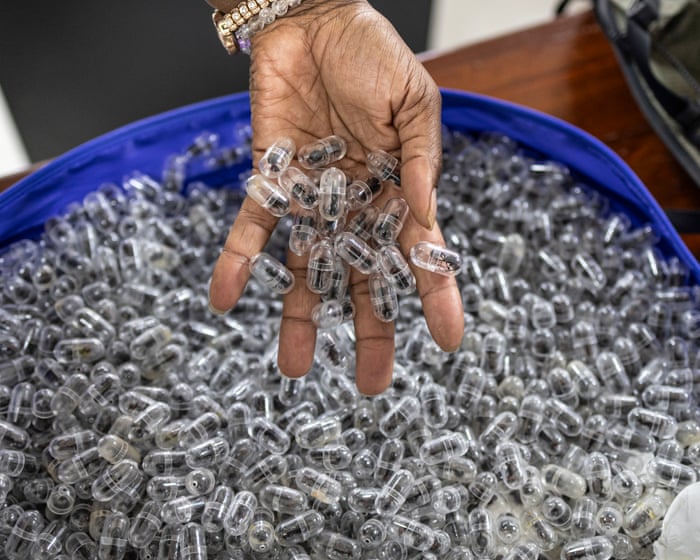
The insects included 1,948 Messor cephalotes, a prized species commonly known as the giant African harvester ant.
The presiding principal magistrate, Irene Gichobi, said a “deterrent sentence” was necessary because of the rising number of ant smuggling cases in Kenya and the ecological damage caused by the trade.
Kequn’s case was the third of its kind in Kenya in less than a year, pointing to a growing market for ants as exotic pets in Asia and Europe. Ant collectors and hobbyists in these regions pay large sums for the insects, which they keep in formicariums, or ant farms, to observe and study their colonies and behaviors.
A 2023 study on the biological invasion risk of online ant sales in China found that Messor cephalotes was the third most popular non-native ant species traded in the country over the internet during a six-month period in 2021.In April 2026, an ant sanctuary was established in Kajiado. (Photograph courtesy of Dino Martins)
Kequn was charged alongside Charles Mwangi, a Kenyan who allegedly sold him the ants and is currently out on bail. Prosecutors stated that Kequn paid 100 Kenyan shillings for each ant.
According to Pat Stanchev, general manager of the online store Best Ants UK, a single giant African harvester queen ant can sell for up to ยฃ235 in exotic pet markets across Europe, Asia, and North America. That’s 40 times the price in Kenya.
Last year, a court in Nairobi sentenced two Belgian teenagers to one year in prison, with the option to pay a fine of 1 million shillings, after they were caught with around 5,000 live giant African harvester queen ants packed in tubes.
(View full image: Belgian nationals Lornoy David and Seppe Lodewijckx pleaded guilty to the charges. Photograph: Monicah Mwangi/Reuters)
In a similar case, a Vietnamese national and a Kenyan received the same sentence after being found with about 400 giant African harvester ants packed in syringes and containers.
Reacting to Zhangโs conviction, the Kenya Wildlife Service said: โThis case highlights the growing concern over the illegal trade in invertebrates. Although often overlooked, these creatures are increasingly targeted by traffickers due to rising global demand.โ
Last yearโs cases led conservationists to urge parties to the CITES treaty on endangered plants and animals to recognize the international ant pet trade as a global conservation and biosecurity issue.
โTheyโre like the tigers of the ant world โ just rare, beautiful, and interesting,โ said Dino Martins.
Messor cephalotes is a species of harvester ant native to East Africa. The ant has striking red and black coloring; it is the largest known species of harvester ant, with workers growing up to 19 mm and queens up to 25 mm. It also shows complex behavior in foraging and nest building. These features make it popular among collectors and hobbyists.
โTheyโre like the tigers of the ant world โ just rare, beautiful, and interesting,โ said Dino Martins, an entomologist.
A queen mates with males and then starts a colony that can grow to hundreds of thousands of offspring, including female workers and soldiers, while continuing to lay eggs throughout her life. Colonies can last for decades. The ants build and live in large, circular nests and store seeds underground.
(View full image: Samples of garden ants in special plastic containers presented as evidence in the Zhang Kequn court case. Photograph: Monicah Mwangi/Reuters)
Stanchev said giant African harvester ants are a rare and dream species for collectors, who value them for their โlarge size, complex colony-building, impressive foraging trails, and polymorphic workers.โ He added, โThe queen ants are splendid, literally.โ
Stanchev noted that Best Ants UK does not support or engage in wild collection or illegal trade. All its ants are captive-bred or sourced ethically within UK and EU regulations.
Martins described giant African harvester ants as a keystone species โ one considered essential for holding the ecosystem together โ in grasslands and savannahs. They play roles such as collecting grass seeds and dispersing them.
โTheyโre like the farmers of the grassland, making sure thereโs a lot of diversity of grasses, which is really important for livestock and wildlife,โ he said.
Martins warned that over-harvesting the ants could have devastating effects. โIf we lose the ants, we lose our cattle, our milk, our butter, our cheese, our wildlife, and our tourism,โ he said.
โMoving species out of their native habitat is almost always a bad idea,โ said Zhengyang Wang.
The places where the ants are moved could also be affected. A 2023 study noted that introducing ants outside their native ranges could make them invasive, โwith dire environmental and economic consequences.โ
Zhengyang Wang, a conservation biologist and lead author of the study, said that as grain collectors, the giant African harvester ant could impact…Crop growth in large agricultural fields, like those in southern Asia or the northern US, could be affected if non-native species were introduced. “In ecological terms, moving species out of their native habitat is almost always a bad idea,” he said.
Frequently Asked Questions
Here is a list of FAQs about the illegal trade in giant harvester ants and Nairobis role as a hub written in a natural conversational tone
BeginnerLevel Questions
1 What exactly is smuggled in syringes
It means that live giant harvester ants are being hidden inside plastic syringes to sneak them through airport security and customs The ants are placed in the barrel of the syringe without the needle
2 Why would anyone smuggle giant ants in syringes
Because they are small easy to hide and the syringe looks like normal medical waste Its a cheap and effective way to transport live insects without raising suspicion
3 What are giant harvester ants
They are large aggressive ants from East Africa They have a very painful sting and are known for their strong jaws They are popular in the exotic pet trade and for antkeeping hobbyists
4 How did Nairobi become a hub for this illegal trade
Nairobi has a major international airport a warm climate perfect for the ants and weak enforcement of wildlife laws Smugglers can easily collect ants from the wild near the city and ship them out
5 Is it illegal to take these ants out of Kenya
Yes Kenya has laws that protect its native wildlife including insects Exporting giant harvester ants without a special permit is illegal and considered wildlife trafficking
Advanced Questions
6 Why are these ants specifically targeted by smugglers
They are prized by collectors because they are large visually striking and have a reputation for being tough or dangerous They also reproduce slowly so wildcaught specimens are in high demand
7 How do smugglers keep the ants alive during transport
They use the syringe trick the ant is placed with a small piece of damp cotton or sponge for moisture and the syringe plunger is slightly pulled back to allow air The syringe is then taped shut and hidden in luggage or parcels
8 What are the main risks of this trade
To the ants High mortality rates during transport due to stress temperature changes or lack of air
To ecosystems If ants escape they could become invasive species in new countries harming local insects and plants