The small device fits neatly into the space above my washing machine. A pipe runs down from it, pulling in wastewater from my laundry. At the end of each wash cycle, the machine makes a polite whirring sound. According to its inventor, Adam Root, that’s the sound of this groundbreaking technology at work. The invention is a microplastics filter.
“The most common thing we hear from customers is: ‘I can’t believe how much material is coming out of the washing machine,’” Root says. “Someone sent me photos of dinner-plate-sized amounts.”
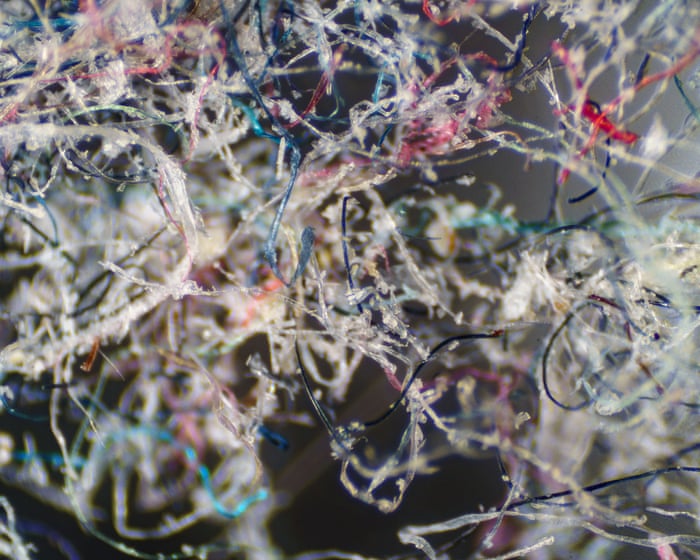
About three weeks after installation, it beeps to let me know it’s time to empty it. I take off the canister and scoop out the contents using the built-in scraper, which is pressed into the lid like a yogurt spoon. What I find is a surprisingly thick mix of gray matter. Root tells me it’s probably a grim combination of microfibers, skin cells, hair, and dust.
Root’s invention is the foundation of his Bristol-based company, Matter Industries. The company says it can capture 97% of microfibers before they leave a washing machine. In 2025, this earned Matter a runner-up spot in the oceans category of the Earthshot Prize. (Root was just behind Rebecca Hubbard, director of the High Seas Alliance, who campaigned for the historic high seas treaty.) Matter’s filter is now available in over 30 European markets and the UK, and the company plans to expand to the US.
The experiment that led to all this started a few years ago on a wet garage floor, covered in buckets, with just £250 invested. Root had rigged up an old, unreliable washing machine with a homemade microplastic filter. “I was turning it on and off with a broom handle, and water was spraying everywhere. I was terrified of electrocuting myself,” he recalls. After a few risky attempts, he says, “I managed to get something that worked. I showed I could capture microfibers.”
His invention joins others like Xeros, and US-based Cleanr and Filtrol, which also work to filter out microplastics before they reach waterways.
According to Root, what makes his filter unique is that it cleans itself. Matter Industries finds that each wash cycle produces about 1 gram of fiber waste. To capture as much as possible, the mesh needs to be very fine. But that makes filters prone to clogging. Root’s version rinses itself after each wash, clearing the mesh surface so wastewater can keep flowing through.
The machine doesn’t just capture plastic textile fibers—it catches all types. That’s a good thing, says Anja Brandon, director of plastics policy at the US nonprofit Ocean Conservancy. “Plastics are our main concern with microfibers, but other textiles are full of chemicals and dyes, and we know they also have impacts.” The instructions warn you to put the waste in the trash, not wash it down the drain.
An estimated 69% of all clothing contains fossil fuel-based plastic textiles like polyester, nylon, and acrylic, which shed billions of fibers into the environment. In the UK, household washing machines release between 6,000 and 87,000 tonnes of clothing fiber into rivers and eventually the ocean each year. The US, with its larger population, more frequent washes, and love for activewear, produces significantly more.
Several studies show that microfibers are the most common type of microplastic in the environment. “They’re among the most common types of microplastics found in tissue samples from all kinds of species. So they’re a huge part of the problem,” says Brandon. They can make up more than 90% of the microplastics found in some samples.Microplastics are consumed by marine animals and are also present in the air, our drinking water, and food.
Root ultimately hopes to see his filters used in municipal wastewater treatment plants to capture as much microplastic as possible before it reaches the sea. He is also pushing for legislation to require microfibre filters in all washing machines across the UK.
[Image: Small plastic pieces and microplastics on the sand of Famara beach, Spain. Experts believe a global plastics treaty is key to preventing this kind of pollution. Photograph: Susanne Fritzsche/Alamy]
Root started his career as a mechanical engineer and later moved into product innovation at Dyson. But he says scuba diving opened his eyes to the scale of ocean pollution. “I didn’t really feel like I was doing anything super-positive,” he says. He then quit his job to work on his own. “I thought there was an opportunity to change some big-picture stuff.”
We need to talk about plastic: five everyday items choking the planet Read more
A small grant from the Prince’s Trust helped him put together that garage-floor prototype, which won him Innovate UK’s Young Innovator of the Year award and helped launch his company in 2018. Since then, Matter Industries has raised $20m (£15m), employs 50 people, and has partnered with Bosch and Siemens, which manufacture units that include Matter’s unique Regen filtering technology.
Matter will soon test its technology on an industrial scale in textile factories across Portugal, Egypt, and Bangladesh. Factories produce kilometres of fabric every day, all of which needs multiple rounds of washing and dyeing. This process releases huge amounts of fibre waste—360 tonnes per year in the case of one factory Matter sampled during its field research—which is sometimes dumped directly into rivers. Catching microplastics from homes is important, but industrial waste is also a major global polluter. “You have to be where the pollution is,” Root says.
[Image: Matter Industries has partnered with Bosch and Siemens, which manufacture units with integrated Regen filtering technology. Photograph: Matter Industries]
However, not everyone agrees that this is where our pollution-fighting efforts should focus. Richard Thompson, professor of marine biology at the University of Plymouth, first alerted the world to the threat of microplastics in a landmark 2004 study. His team’s research has since found that microfibres become a problem long before laundry. “Most of the world’s population probably don’t have a washing machine,” he says. “We showed that more than half of all [microplastic] emissions actually occur while you’re wearing the clothes.”
Thompson sees microplastic filters as “part of the answer,” adding: “I certainly don’t want to pour cold water on any potential solution.” But he worries that if we overestimate the impact of downstream fixes, we might overlook important upstream changes, like designing better textiles. Thompson highlights the developing global plastics treaty as a place where countries can work together to make these system changes.
Root agrees that redesigning textiles is crucial. But he worries about how long it could take to improve synthetic fabrics, especially since they are tied to the massive global oil industry. Alongside long-term efforts to change the system, he believes filters are a tool we can use now to reduce the damage. “I kind of imagine myself being knee-deep in shit. You’ve got your shovel, and you just have to start at your feet and work your way out,” Root says. “I think you have to look at what you can change.”
Frequently Asked Questions
Here is a list of frequently asked questions about the inventor and the concept of fixing washing machines to stop microplastics based on the phrase You have to be where the pollution is
BeginnerLevel Questions
1 What does you have to be where the pollution is mean in this context
It means the inventor believes the best way to stop microplastic pollution from clothes is to catch the fibers at the sourceinside your washing machinebefore they ever reach the wastewater system
2 Who is the inventor trying to fix washing machines to stop microplastics
The phrase refers to a specific inventor The key idea is that instead of cleaning up oceans they want to install filters or devices directly into home washing machines
3 How do microplastics get into the water from my washing machine
Every time you wash synthetic clothes tiny plastic fibers break off These fibers are smaller than 5mm and flow out with the wastewater into rivers and oceans
4 What exactly would the inventor fix on my washing machine
They would add a special filter to the machines drain hose or pump This filter catches the microplastic fibers before the water leaves your house
5 Would this fix change how my clothes get clean
No The filter only catches the plastic fibers it doesnt affect the wash cycle detergent or how clean your clothes are You just have to clean or replace the filter occasionally
Intermediate Questions
6 Is this filter something I can buy right now or is it still an invention
There are already commercial products available but many inventors are still working on cheaper builtin versions that washing machine manufacturers would install at the factory
7 How often would I need to clean the filter
It depends on how much synthetic clothing you wash For a typical family you might need to clean it every 24 weeks You simply remove the captured fiber clump and throw it in the trash
8 Will this filter work on all washing machines
Most retrofits work on toploading and frontloading machines but you need to check compatibility