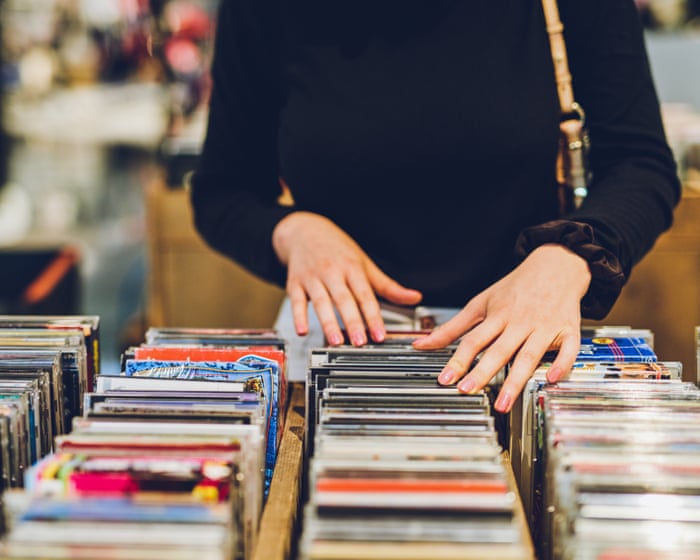
Some people value the security of owning a physical copy of their favorite films and music, free from algorithms, interruptions, and the unpredictability of streaming. For others, it’s the sound of a needle on vinyl, the click of a cassette player, and the ability to interact with a physical format. We asked people if they were returning to CDs, DVDs, vinyl, and older formats to escape algorithmically curated content. Here are some of their responses.
‘I missed the physical connection with music’
Ash says discovering new music for yourself takes more work and effort. Photograph: Dylan Odedra/Guardian Community
Ash, 52, a university lecturer from Cornwall, says he initially embraced streaming but has since cooled on it.
“Algorithms make great suggestions, but it feels like you catch a lot of small fish (OK, bands),” he says. “Reading music magazines and artist recommendations and discovering new music for yourself requires more work and effort … it feels like catching the bigger fish.”
Recently, he has returned to buying and listening to physical media. He says he has collected more than 5,000 records and CDs from 1990 to 2009.
“Technology and streaming felt liberating for a person with a deep and wide music collection and a bad back. I stopped buying and streamed,” he says, but adds: “I spent more time making playlists than listening to music; I lost the ability to listen to a whole album and missed the physical connection with music.
“I listen to records as an activity, but listen through tech more passively. It’s more like wallpaper than a work of art.”
‘We scour flea markets and secondhand shops for shows and movies’
CJ, 55, a compliance manager from Atlanta, says she decided to return to physical media when shows she liked began disappearing from streaming services.
“HBO removed about 200 episodes of Sesame Street in 2022, so we realized any media we wanted to continue to watch or listen to could be gone, and we’d have no way to get it back,” she says. “As the saying goes, if you can’t hold it, you don’t own it, and we firmly agree with this.
“There are so many shows that aren’t on streaming platforms that we want to rewatch. We scour flea markets and secondhand shops for shows and movies that are hard to find. We have also continued to buy CDs.
“When access to media is so easy to cut off, it makes sense to return to owning what you can, so no one can take it away from you.”
‘I wanted to support musicians’
Ruth’s CD collection has its own ‘walk-in closet’ Photograph: Ruth/Guardian Community
Spotify quickly “bored” Ruth, 67, a retired professor from Michigan, but there were other reasons behind her move to CDs and DVDs.
“Most of all, I wanted to own my music and support the musicians, so I own 5,300 CDs; they have their own walk-in closet,” she says. “Owning my own books, music, and photos (no iCloud) has always seemed normal to me, and, increasingly, prudent.
She adds: “No algorithm is as creative as a well-stocked human brain alive to its actual surroundings.”
Ruth also rents physical film titles by mail from a store in Seattle. “We retired to a rural area with internet unreliable for streaming that wouldn’t sustain a movie without interruptions and buffering. We can stream music from the internet, although even then the connection will conk out every once in a while.”
‘Now I don’t have to share my data with a company’
This summer, Antonio, 40, began buying secondhand CDs from a charity shop in an attempt to get off music subscription services.
“I have a ritual now,” says the software engineer, who lives in Reading. “Twice a month I buy between one and 10 CDs – depending on what is available.
“I decided I didn’t want to rely on a subscription any more and have to deal with price rises, and now I don’t have to share my data –I share personal information like my name, bank details, location, and listening history with a company. “These days we give away so much data to big corporations, whether we mean to or not, that if I can cut it down in any way, I’m happy to do it.”
‘Sometimes I’m out of the loop, but I prefer it’
Quinn buys tapes from bands to support the artists. Photograph: Quinn/Guardian Community
Quinn, 26, started collecting cassette tapes last year and “quickly fell in love with it.”
He works nights and weekends, so he has little time to go to concerts. “Buying tapes from bands gave me a way to connect with and support them, even though I couldn’t see their shows,” says Quinn, who works in food delivery and lives in Washington.
“I really like the limits of the format. There’s the routine of handling the tape and equipment to play it, the oddities that come with analogue tech, and of course being able to share music by handing someone a tape instead of a Spotify link.
“My switch definitely came with wanting to choose what I engage with. Instead of having content shown to me, I seek it out myself or find it through friends, and that’s a big part of being low-tech. Sometimes I’m out of the loop, but I prefer it.”
‘I love how slow the setup is to watch films’
Tim’s young and adult children all enjoy watching films on older formats.
“In Sweden many people have a summer house,” says the 61-year-old academic, who lives in Stockholm. “Ours, on the mainland, a 45-minute drive from Stockholm, at the southern end of the Swedish archipelago, has a video projector from around 2010, a DVD player, and the collection of DVDs my big kids watched when they were small.
“The biggest luxury for my small kids is when the cables are set up, the DVD is chosen, and they sit through five minutes of ‘coming soon on Disney’ before we press play on Shrek or whatever the film is.”
Tim says the “old DVDs” often need cleaning, as sticky fingers over the years have left marks.
“I love this middle stage between digital and analogue, and how slow the setup is to watch the films. Next step is to open the trunk with my younger partner’s childhood VHS collection. We’ll see where that goes.”
‘I feel less controlled’
Sophie says she feels less analysed watching DVDs and listening to CDs. Photograph: Sophie/Guardian Community
Sophie, 32, a librarian from Los Angeles, does stream music, but “mostly listens to CDs.” She also often watches DVDs from her own collection or borrows them from the library.
She is “not a fan” of algorithms, which helped push her toward CDs and DVDs. “I enjoy watching DVDs and listening to CDs because nobody sees what I’m doing and they’re not analysing it. Browsing physical versions feels less overwhelming. I also feel less controlled.”
Frequently Asked Questions
FAQs If You Cant Hold It You Dont Own It Why Media Fans Are Escaping Algorithms with CDs DVDs and Vinyl
Beginner Questions
What does if you cant hold it you dont own it actually mean
It means that when you buy digital media a movie purchased on a streaming store an album in your phones library you usually own a license not the thing itself The company can remove it change it or shut down the service If you have a physical disc or record no one can take it away
Why are people buying CDs DVDs and vinyl again
Three main reasons they want to actually own their media theyre tired of streaming services removing content or raising prices and they like the sound quality artwork and ritual of physical media Algorithms recommending what to watch or listen to next is another big turnoff
Isnt physical media obsolete
Not at all Vinyl sales have grown for over 15 years CDs are climbing again and DVDs and Blurays still sell steadily Physical media is niche compared to streaming but its alive and growing among collectors and fans
Whats the difference between owning a digital copy and owning a disc
A digital copy lives on someone elses servers and depends on their apps accounts and business decisions A disc or record is in your hands You can play it without internet lend it to a friend or sell it things you cant do with most digital purchases
What is an algorithm in this context and why do people want to escape it
Its the recommendation system that decides what shows up on your Netflix Spotify or YouTube feed based on your past behavior People want to escape it because it narrows what they see pushes whatever keeps them watching and takes control of the discovery process away from them
Intermediate Questions
Can streaming services really delete content I bought
Yes There have been several highprofile cases where stores removed purchased movies and shows from users libraries due to licensing disputes Your purchase was really a longterm rental tied to the platform staying in business and keeping the rights
What are the main benefits of physical media over streaming
You own it permanently it works without internet quality is often better especially Bluray