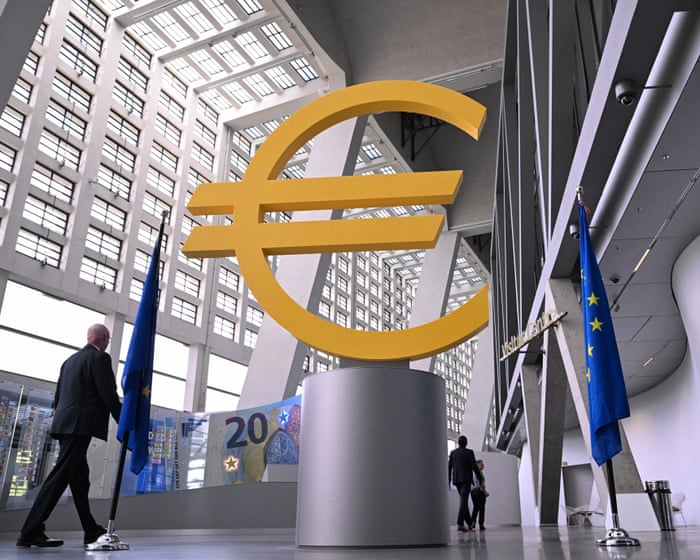
The European Central Bank has raised interest rates for the first time since 2023, responding to higher inflation driven by the war in Iran. The ECB increased its main deposit rate from 2% to 2.25%, a move financial markets expect to be the first of three rate hikes by next spring.
In the eurozone, consumer price inflation rose to 3.2% in May 2026, up from 3% in April. This has raised concerns that the conflict in the Middle East will push manufacturers and retailers to raise prices through the summer and autumn to protect their profits. The ECB’s inflation target is 2%.
ECB President Christine Lagarde said the outlook for inflation and the broader economy remains uncertain as the war in Iran continues to drive up energy costs. “The full impact of the war on medium-term inflation and growth will depend on how intense and long-lasting the energy price shock is, as well as the scale of its indirect and second-round effects,” she said.
The rate increase is widely seen as the ECB’s attempt to get inflation under control early, after facing criticism for delaying rate hikes in 2022 following Russia’s invasion of Ukraine. The interest rate on its main refinancing operations, which commercial banks use to borrow from the ECB, was also raised from 2.15% to 2.4%.
ECB officials lowered their growth forecast for the eurozone to 0.8% in 2026 and 1.2% in 2027, down from previous estimates of 0.9% and 1.3%. Lagarde said: “The risks to growth are on the downside, mainly due to the war in the Middle East, which has added to the already volatile global policy environment. Prolonged disruptions to energy supplies could push energy prices higher and for longer than currently expected.”
Until now, the central bank had kept interest rates steady, hoping the US and Iran would sign a peace deal, which would reduce the need for a rate hike to counter inflation. However, a deal has not been reached, and oil prices remain above $90 a barrel, compared to around $70 before the war began.
Lagarde said that in March, the ECB’s governing council considered ignoring the rise in energy prices caused by the Middle East conflict, but it became clear that higher oil and gas prices were already driving up inflation.
Mark Wall, chief European economist at Deutsche Bank, said: “This is a significant moment. Not only is this the first ECB rate hike since 2023, it’s also the first hike by a major global central bank in response to the energy shock. The ECB is saying that ignoring the problem is not a strong enough response.”
However, he added that financial markets are wrong to expect two more rate hikes by next March, given that the economy is weakening, with rising unemployment and slowing growth. “The question is how far can this tightening cycle go? Not far, is our answer. There’s upside risk to inflation, but also downside risk to growth. One more hike in September, and that’s it,” he said.
Bank of England policymakers are expected to keep UK interest rates at 3.75% when they meet next week, as they assess the impact of rising energy prices on inflation. Inflation fell to 2.8% in April but is expected to rise this summer. The US Federal Reserve is also expected to hold rates steady next week, despite having the highest inflation rate among G7 countries at 4.2%.
Frequently Asked Questions
Here is a list of FAQs about the ECB raising interest rates due to inflation linked to the war in Iran written in a natural conversational tone
BeginnerLevel Questions
1 Wait why is the war in Iran making prices go up in Europe
Answer Iran is a major oil producer The war disrupts its oil exports making global oil prices spike Since oil is used to make everything from petrol to plastic the cost of transporting and producing goods in Europe goes up Thats inflation
2 What exactly is the ECB doing by raising interest rates
Answer The ECB is making it more expensive for banks to borrow money from it Banks then pass that cost on to you and businesses This means loans become pricier but it also encourages people to save rather than spend which cools down the economy and lowers inflation
3 How does raising interest rates help fix inflation caused by a war
Answer It cant fix the war or the oil shortage But it can stop the inflation from spiraling out of control By making borrowing expensive people and companies spend less Lower demand for goods and services means companies cant keep raising prices which slows down inflation
4 Will this make my mortgage or car loan more expensive
Answer Yes very likely If you have a variablerate mortgage your monthly payments will go up Even fixedrate loans become more expensive for new borrowers This is the main way the ECBs decision affects your wallet directly
5 Is this good or bad for my savings account
Answer Its good in the short term Banks usually increase the interest they pay on savings accounts when the ECB raises rates So your money in the bank will grow a little faster However if inflation is still high the real value of your savings might still be shrinking
AdvancedLevel Questions
6 This is a costpush inflation shock not demandpull Why is the ECB using a demandside tool to fix it