When Irish rock band Fontaines DC burst onto the scene in 2019, they were a group of post-punk poets playing harsh guitar music at a time when Dance Monkey, Drake, and The Greatest Showman dominated the charts. But now, with the release of their fifth album, Dopamine Chamber, the five-piece are looking ahead to 2027, with shows in UK stadiums, US arenas, and headline spots at major European festivals—plus rumours they’ll top Glastonbury’s Pyramid stage. It’s been quite a journey.
Their rise has been surprisingly old-fashioned for an era when social media dominates culture. Increasingly ambitious albums, support from radio and institutions like the BBC, and relentless touring have all played a part. Beyond that, “the fact is, they’re one of the best bands in the world,” says Mo Chara, one third of fellow Irish group Kneecap.
Fontaines DC formed at the BIMM Music Institute in Dublin in 2014. The school’s dean, Alan Cullivan, says they had “an absolute focus. It was all about writing a better song after a better song after a better song.” They would apparently play to 30 people in a dive bar one week, then come back three weeks later with half the songs being new.
That caught the attention of Trevor Dietz, who became their manager and was described by Fontaines as “the sixth member of the band” when he died earlier this year. “He brought this unwavering sense of self-belief, and that was very contagious,” says Jeff Bell, who would eventually sign the band to Partisan Records.
Dietz’s connections brought Fontaines into circles beyond the Dublin gig scene. By 2017 the band had released the single Liberty Belle, and Dietz introduced them to south London band Shame, who were playing their first headline shows in Dublin. “We went on this tour together for our first album,” remembers Shame singer Charlie Steen. “It felt like they had their own crowd even with just a few songs out—it’s one thing to have that in Dublin, but it’s another thing to have it in Leicester.” He adds that Fontaines’ frontman Grian Chatten “gave me a Yeats book to read on that tour”: typical of the singer’s unashamed poetic leanings.
BBC Radio 6 Music’s Steve Lamacq was an early champion of the band around the same time. “They sent us the self-released seven-inch of Hurricane Laughter, and we played that a couple of times—it had a power and an atmosphere that a lot of records around at the time didn’t really have,” he recalls.
In March 2018 the band played the Victoria in Dalston, east London, a tiny pub backroom. In the crowd was Lamacq, captivated by Chatten’s stage presence, and Bell, who flew to Dublin the next week to sign them. “As soon as I met them, it was clear that they were the biggest band in the world,” Bell says. “It just hadn’t happened yet.”
The label developed a clear gameplan with the band. “There were two guiding principles: authenticity and urgency,” Bell says. “If the mixes weren’t right, start again. If an edit didn’t feel right, it didn’t go to radio. If a writer didn’t get it, don’t do the interview. We also made a point of showcasing the lyrics wherever we could; that was a real point of access for a lot of people.” After their 2019 debut album Dogrel went Top 10 in the UK and Ireland, the Covid lockdown could have derailed them, as it did so many small acts on the rise. But instead of cancelling releases as others did, they pressed ahead with their second album, A Hero’s Death, which was nominated for a Grammy.
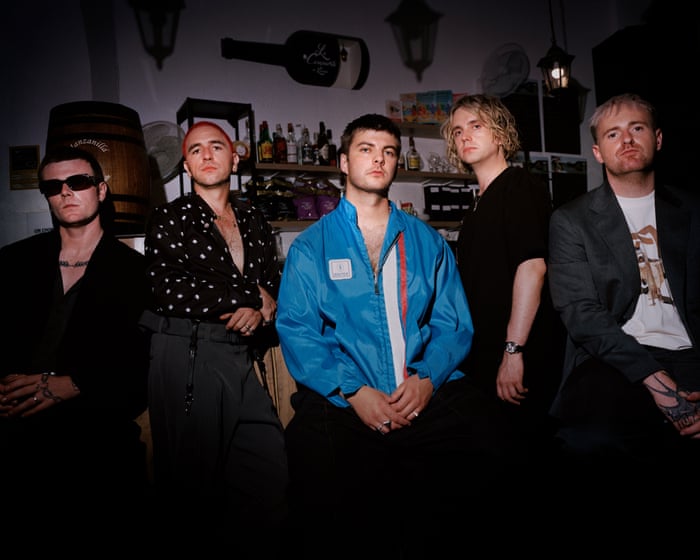
View image in fullscreenFontaines DC pictured in 2026. Photograph: Elizaveta Porodina
The enormous crowds that Fontaines DC now command are not a result of pandering to the TikTok algorithm, though, even mid-lockdown. The band has a presence on social media, but they haven’t done viral video series such as Hot Ones, Chicken Shop Date or Subway Takes. “They are one of those artists that“They’ve quickly gone against the norm by taking a less-is-more approach,” says Liam Ward, founder of Something Something, a music-focused social media marketing agency. That hasn’t stopped Fontaines from having hardcore fans who film entire shows for social media. In Ward’s view, this fan activity online is organic, not manufactured by legions of fake accounts like some of their indie peers use. “I haven’t even heard rumours or whispers of that,” he says. “They put out what they put out, and all that craziness and noise happens around them.”
Their previous album, 2024’s Romance, came with DayGlo artwork and rave-inspired new looks for the members. Some early fans dismissed it as too pop, but it became their first platinum seller in the UK and Ireland and earned a couple more Grammy nominations. Dopamine Chamber, praised in a five-star Guardian review, is just as strange and arresting. “Arctic Monkeys have, in a way, done a brilliant job setting up a space for Fontaines by being a really interesting rock band who have evolved a lot since the early days,” Lamacq says. “There’s a new, younger audience who are perhaps more lyrically led. They like the vocabulary as well as the music.”
Kneecap’s Mo Chara says Fontaines’ political leanings—citing a homelessness benefit show the band curated and their stance against the genocide in Palestine—made the group even more endearing to him and many others. He adds: “If you’re making music as good as they are, the mainstream can’t ignore it, but it feels like they were making music their own way and not to appeal to the masses. The mainstream has come to them rather than the other way round.”
Fontaines DC: Dopamine Chamber review – gloomy, gorgeous and a gargantuan triumph
Read more
There are plenty of bands making amazing music who don’t reach the upper echelons of commercial success, though. For Abel González, who is on the booking team for Barcelona’s Primavera festival, “it’s all about feelings.” Fontaines first played the festival on a small stage in 2018, but next year they’re among the big-name headliners. “Every time they’ve come back to the festival, they’ve had new things to say, and we’ve wanted to hear them.”
The true reason for Fontaines DC’s dizzying rise likely lies somewhere in the middle of a complex Venn diagram: a once-a-generation confluence of talent, commitment, good people and luck. The consensus seems to be that there’s no limit to how massive they could become. Bell agrees, still rabidly enthusiastic about the band even after they’ve moved from Partisan to current label XL Recordings. “They still haven’t reached the top of their mountain. I’m excited to see where it keeps going.” Dopamine Chamber is out now on XL Recordings
Frequently Asked Questions
Heres a set of FAQs covering Fontaines DCs rise from Dublin dive bars to stadium headlining
Beginner Questions
Who are Fontaines DC
An Irish postpunk band formed in Dublin in 2014 The members are Grian Chatten Carlos OConnell Conor Curley Conor Deegan III and Tom Coll
Where did they start out
Playing small Dublin venues and openmic nights often for tiny crowds They built their name in dive bars and local clubs before anyone outside Ireland knew who they were
What kind of music do they play
Postpunk with literary poetic lyrics Their sound has shifted over timefrom raw and gritty early on to more melodic and experimental on later albums
When did they make it big
Their 2019 debut album Dogrel was the breakthrough It earned a Mercury Prize nomination and made them one of the most talkedabout new bands in the UK and Ireland
What does DC in their name mean
It stands for Dublin City
How did they get their first record deal
They selfreleased the single Liberty Belle in 2018 It got attention online and from UK labels which led to a deal with Partisan Records
Intermediate Questions
What was their big break
Dogrel was the turning point Critical praise a Mercury Prize nomination and heavy touring pushed them from club shows to bigger venues fast
How did they go from dive bars to stadiums so quickly
A few things lined up a strong debut relentless touring consistent album releases and growing wordofmouth Each album reached a bigger audience than the last
What made them stand out from other postpunk bands
Grian Chattens spokenword style lyrics about Irish identity workingclass life and nostalgia Their literary influencespoets like James Joyce and Irish writersset them apart
Have their albums all sounded the same
No