This CSS code defines a custom font family called “Guardian Headline Full” with multiple styles and weights. It includes light, regular, medium, and semibold versions, each available in both normal and italic styles. The font files are provided in WOFF2, WOFF, and TrueType formats, hosted on the Guardian’s servers.@font-face {
font-family: Guardian Headline Full;
src: url(https://assets.guim.co.uk/static/frontend/fonts/guardian-headline/noalts-not-hinted/GHGuardianHeadline-Bold.woff2) format(“woff2”),
url(https://assets.guim.co.uk/static/frontend/fonts/guardian-headline/noalts-not-hinted/GHGuardianHeadline-Bold.woff) format(“woff”),
url(https://assets.guim.co.uk/static/frontend/fonts/guardian-headline/noalts-not-hinted/GHGuardianHeadline-Bold.ttf) format(“truetype”);
font-weight: 700;
font-style: normal;
}
@font-face {
font-family: Guardian Headline Full;
src: url(https://assets.guim.co.uk/static/frontend/fonts/guardian-headline/noalts-not-hinted/GHGuardianHeadline-BoldItalic.woff2) format(“woff2”),
url(https://assets.guim.co.uk/static/frontend/fonts/guardian-headline/noalts-not-hinted/GHGuardianHeadline-BoldItalic.woff) format(“woff”),
url(https://assets.guim.co.uk/static/frontend/fonts/guardian-headline/noalts-not-hinted/GHGuardianHeadline-BoldItalic.ttf) format(“truetype”);
font-weight: 700;
font-style: italic;
}
@font-face {
font-family: Guardian Headline Full;
src: url(https://assets.guim.co.uk/static/frontend/fonts/guardian-headline/noalts-not-hinted/GHGuardianHeadline-Black.woff2) format(“woff2”),
url(https://assets.guim.co.uk/static/frontend/fonts/guardian-headline/noalts-not-hinted/GHGuardianHeadline-Black.woff) format(“woff”),
url(https://assets.guim.co.uk/static/frontend/fonts/guardian-headline/noalts-not-hinted/GHGuardianHeadline-Black.ttf) format(“truetype”);
font-weight: 900;
font-style: normal;
}
@font-face {
font-family: Guardian Headline Full;
src: url(https://assets.guim.co.uk/static/frontend/fonts/guardian-headline/noalts-not-hinted/GHGuardianHeadline-BlackItalic.woff2) format(“woff2”),
url(https://assets.guim.co.uk/static/frontend/fonts/guardian-headline/noalts-not-hinted/GHGuardianHeadline-BlackItalic.woff) format(“woff”),
url(https://assets.guim.co.uk/static/frontend/fonts/guardian-headline/noalts-not-hinted/GHGuardianHeadline-BlackItalic.ttf) format(“truetype”);
font-weight: 900;
font-style: italic;
}
@font-face {
font-family: Guardian Titlepiece;
src: url(https://assets.guim.co.uk/static/frontend/fonts/guardian-titlepiece/noalts-not-hinted/GTGuardianTitlepiece-Bold.woff2) format(“woff2”),
url(https://assets.guim.co.uk/static/frontend/fonts/guardian-titlepiece/noalts-not-hinted/GTGuardianTitlepiece-Bold.woff) format(“woff”),
url(https://assets.guim.co.uk/static/frontend/fonts/guardian-titlepiece/noalts-not-hinted/GTGuardianTitlepiece-Bold.ttf) format(“truetype”);
font-weight: 700;
font-style: normal;
}
@font-face {
font-family: Guardian Headline Full;
src: url(https://assets.guim.co.uk/static/frontend/fonts/guardian-headline/noalts-not-hinted/GHGuardianHeadline-Light.woff2) format(“woff2”),
url(https://assets.guim.co.uk/static/frontend/fonts/guardian-headline/noalts-not-hinted/GHGuardianHeadline-Light.woff) format(“woff”),
url(https://assets.guim.co.uk/static/frontend/fonts/guardian-headline/noalts-not-hinted/GHGuardianHeadline-Light.ttf) format(“truetype”);
font-weight: 300;
font-style: normal;
}
@font-face {
font-family: Guardian Headline Full;
src: url(https://assets.guim.co.uk/static/frontend/fonts/guardian-headline/noalts-not-hinted/GHGuardianHeadline-LightItalic.woff2) format(“woff2”),
url(https://assets.guim.co.uk/static/frontend/fonts/guardian-headline/noalts-not-hinted/GHGuardianHeadline-LightItalic.woff) format(“woff”),
url(https://assets.guim.co.uk/static/frontend/fonts/guardian-headline/noalts-not-hinted/GHGuardianHeadline-LightItalic.ttf) format(“truetype”);
font-weight: 300;
font-style: italic;
}
@font-face {
font-family: Guardian Headline Full;
src: url(https://assets.guim.co.uk/static/frontend/fonts/guardian-headline/noalts-not-hinted/GHGuardianHeadline-Regular.woff2) format(“woff2”),
url(https://assets.guim.co.uk/static/frontend/fonts/guardian-headline/noalts-not-hinted/GHGuardianHeadline-Regular.woff) format(“woff”),
url(https://assets.guim.co.uk/static/frontend/fonts/guardian-headline/noalts-not-hinted/GHGuardianHeadline-Regular.ttf) format(“truetype”);
font-weight: 400;
font-style: normal;
}
@font-face {
font-family: Guardian Headline Full;
src: url(https://assets.guim.co.uk/static/frontend/fonts/guardian-headline/noalts-not-hinted/GHGuardianHeadline-RegularItalic.woff2) format(“woff2”),
url(https://assets.guim.co.uk/static/frontend/fonts/guardian-headline/noalts-not-hinted/GHGuardianHeadline-RegularItalic.woff) format(“woff”),
url(https://assets.guim.co.uk/static/frontend/fonts/guardian-headline/noalts-not-hinted/GHGuardianHeadline-RegularItalic.ttf) format(“truetype”);
font-weight: 400;
font-style: italic;
}The text appears to be a snippet of CSS code defining font faces for the “Guardian Headline Full” font family. It specifies different font weights and styles (like regular, italic, medium, bold, etc.), each linking to specific font file formats (WOFF2, WOFF, TTF) hosted online.The provided text appears to be a mix of CSS code for font definitions and responsive grid layouts, likely from a website’s stylesheet. Here is a fluent, natural English description of its meaning:
The code defines two custom fonts for the website: a bold, italic headline font and a bold titlepiece font, specifying where to find the font files. It then sets up a responsive grid layout for article content. This layout changes based on screen size:
* On smaller screens, the content is stacked in a single column.
* On medium screens, the layout adjusts the order of elements and adds some padding.
* On larger screens, the layout splits into a main content area and a right-hand column.
* On the largest screens, it introduces a left-hand border and further refines the grid structure for a more complex, multi-column design.For interactive grid figures with immersive captions, the caption padding is set to 4 pixels at the top and 0 elsewhere. Within the article body, interactive content, comment body, and feature body, elements named “lines” and “meta” are placed in a grid area spanning from row 2 to row 5 and column 1 to column 2. The “lines” elements have a height that adjusts to their content and a top margin of 5 pixels, while “meta” elements have a top margin of 18 pixels.
On larger screens (81.25em and above), the interactive grid uses a five-column layout with specific widths: 219px, 1px, 620px, 80px, and 300px.
For iOS and Android devices, article headers use specific fonts and styling. The standfirst text uses the Guardian Headline font with medium weight. Section kickers are displayed as blocks with their first letter capitalized. A keyline element has increased top padding. Author bylines use a bold Guardian Headline font, and links within are also bold. Images within articles have an automatic height, and paragraphs following atomic elements have no top margin.
Additionally, a custom font called “Guardian Headline Full” is defined with light and light italic variants, sourced from specific URLs in woff2, woff, and truetype formats.The provided text appears to be a series of CSS font-face rules for a font family named “Guardian Headline Full.” These rules define different font weights and styles (like regular, italic, medium, bold) and specify the web addresses (URLs) where the actual font files (in formats like WOFF2, WOFF, and TTF) can be found for the browser to download and use.@font-face {
font-family: ‘Guardian Headline Full’;
src: url(‘https://assets.guim.co.uk/static/frontend/fonts/guardian-headline/noalts-not-hinted/GHGuardianHeadline-Black.woff2’) format(‘woff2’),
url(‘https://assets.guim.co.uk/static/frontend/fonts/guardian-headline/noalts-not-hinted/GHGuardianHeadline-Black.woff’) format(‘woff’),
url(‘https://assets.guim.co.uk/static/frontend/fonts/guardian-headline/noalts-not-hinted/GHGuardianHeadline-Black.ttf’) format(‘truetype’);
font-weight: 900;
font-style: normal;
}
@font-face {
font-family: ‘Guardian Headline Full’;
src: url(‘https://assets.guim.co.uk/static/frontend/fonts/guardian-headline/noalts-not-hinted/GHGuardianHeadline-BlackItalic.woff2’) format(‘woff2’),
url(‘https://assets.guim.co.uk/static/frontend/fonts/guardian-headline/noalts-not-hinted/GHGuardianHeadline-BlackItalic.woff’) format(‘woff’),
url(‘https://assets.guim.co.uk/static/frontend/fonts/guardian-headline/noalts-not-hinted/GHGuardianHeadline-BlackItalic.ttf’) format(‘truetype’);
font-weight: 900;
font-style: italic;
}
@font-face {
font-family: ‘Guardian Titlepiece’;
src: url(‘https://assets.guim.co.uk/static/frontend/fonts/guardian-titlepiece/noalts-not-hinted/GTGuardianTitlepiece-Bold.woff2’) format(‘woff2’),
url(‘https://assets.guim.co.uk/static/frontend/fonts/guardian-titlepiece/noalts-not-hinted/GTGuardianTitlepiece-Bold.woff’) format(‘woff’),
url(‘https://assets.guim.co.uk/static/frontend/fonts/guardian-titlepiece/noalts-not-hinted/GTGuardianTitlepiece-Bold.ttf’) format(‘truetype’);
font-weight: 700;
font-style: normal;
}
@media (min-width: 71.25em) {
.content__main-column–interactive {
margin-left: 160px;
}
}
@media (min-width: 81.25em) {
.content__main-column–interactive {
margin-left: 240px;
}
}
.content__main-column–interactive .element-atom {
max-width: 620px;
}
@media (max-width: 46.24em) {
.content__main-column–interactive .element-atom {
max-width: 100%;
}
}
.content__main-column–interactive .element-showcase {
margin-left: 0;
}
@media (min-width: 46.25em) {
.content__main-column–interactive .element-showcase {
max-width: 620px;
}
}
@media (min-width: 71.25em) {
.content__main-column–interactive .element-showcase {
max-width: 860px;
}
}
.content__main-column–interactive .element-immersive {
max-width: 1100px;
}
@media (max-width: 46.24em) {
.content__main-column–interactive .element-immersive {
width: calc(100vw – var(–scrollbar-width, 0px));
position: relative;
left: 50%;
right: 50%;
margin-left: calc(-50vw + var(–half-scrollbar-width, 0px)) !important;
margin-right: calc(-50vw + var(–half-scrollbar-width, 0px)) !important;
}
}
@media (min-width: 46.25em) {
.content__main-column–interactive .element-immersive {
transform: translate(-20px);
width: calc(100% + 60px);
}
}
@media (max-width: 71.24em) {
.content__main-column–interactive .element-immersive {
margin-left: 0;
margin-right: 0;
}
}
@media (min-width: 71.25em) {
.content__main-column–interactive .element-immersive {
transform: translate(0);
width: auto;
}
}
@media (min-width: 81.25em) {
.content__main-column–interactive .element-immersive {
max-width: 1260px;
}
}
.content__main-column–interactive p,
.content__main-column–interactive ul {
max-width: 620px;
}
.content__main-column–interactive:before {
position: absolute;
top: 0;
height: calc(100% + 15px);
min-height: 100px;
content: “”;
}
@media (min-width: 71.25em) {
.content__main-column–interactive:before {
border-left: 1px solid #dcdcdc;
z-index: -1;
left: -10px;
}
}
@media (min-width: 81.25em) {
.content__main-column–interactive:before {
border-left: 1px solid #dcdcdc;
left: -11px;
}
}
.content__main-column–interactive .element-atom {
margin-top: 0;
margin-bottom: 0;
padding-bottom: 12px;
padding-top: 12px;
}
.content__main-column–interactive p + .element-atom {
padding-top: 0;
padding-bottom: 0;
margin-top: 12px;
margin-bottom: 12px;
}
.content__main-column–interactive .element-inline {
max-width: 620px;
}
@media (min-width: 61.25em) {
figure[data-spacefinder-role=”inline”].element {
max-width: 620px;
}
}
:root {
–dateline: #606060;
–headerBorder: #dcdcdc;
–captionText: #999;
–captionBackground: hsla(0, 0%, 7%, 0.72);
–feature: #c70000;
–new-pillar-colour: var(–primary-pillar, var(–feature));
}
.content__main-column–interactive .element.element-atom,
.element.element-atom {
padding: 0;
}
#article-body > div .element-atom:first-of-type + p:first-of-type,
#article-body > div .element-atom:first-of-type {The first paragraph after specific elements like sign-in gates, horizontal rules, or initial atoms in article bodies, interactive content, comment sections, and feature articles gets a top padding of 14 pixels.
The first letter of that first paragraph in these same contexts is styled as a drop cap. It uses specific headline fonts, is bold and large at 111 pixels with 92 pixels line height. It floats to the left, is uppercase, and uses a designated color variable for the drop cap, with an 8-pixel margin to the right.
Paragraphs that come directly after a horizontal rule in these content areas have no top padding.
Pullquotes within these article bodies, interactive content, comment sections, and feature articles are limited to a maximum width of 620 pixels.
For showcase elements in main articles, features, standard articles, and comment sections, the figure caption is positioned statically, taking the full width up to a maximum of 620 pixels.
Immersive elements span the full viewport width, accounting for the scrollbar. On screens smaller than 71.24 ems, these immersive elements are constrained to a maximum width of 978 pixels, and their captions have inline padding.@media (max-width: 71.24em) and (min-width: 30em) {
.element.element–immersive.element-immersive figcaption {
padding-inline: 20px;
}
}
@media (min-width: 46.25em) and (max-width: 61.24em) {
.element.element–immersive.element-immersive {
max-width: 738px;
}
}
@media (max-width: 46.24em) {
.element.element–immersive.element-immersive {
margin-left: -10px !important;
margin-right: 0 !important;
left: 0;
}
}
@media (max-width: 46.24em) and (min-width: 30em) {
.element.element–immersive.element-immersive {
margin-left: -20px !important;
}
.element.element–immersive.element-immersive figcaption {
padding-inline: 20px;
}
}
@media (min-width: 61.25em) {
.furniture-wrapper {
display: grid;
grid-column-gap: 20px;
grid-row-gap: 0px;
grid-template-columns: [title-start headline-start meta-start standfirst-start] repeat(5, 1fr) [title-end headline-end meta-end standfirst-end portrait-start] repeat(5, 1fr) [portrait-end];
grid-template-rows: [title-start portrait-start] .25fr [title-end headline-start] 1fr [headline-end standfirst-start] .75fr [standfirst-end meta-start] auto [meta-end portrait-end];
}
.furniture-wrapper #headline > div:first-child,
.furniture-wrapper [data-gu-name=headline] > div:first-child,
.furniture-wrapper .headline > div:first-child {
border-top: 1px solid var(–headerBorder);
}
.furniture-wrapper #meta,
.furniture-wrapper [data-gu-name=meta] {
position: relative;
padding-top: 2px;
margin-right: 0;
}
.furniture-wrapper .standfirst .content__standfirst,
.furniture-wrapper #standfirst .content__standfirst,
.furniture-wrapper [data-gu-name=standfirst] .content__standfirst {
margin-bottom: 4px;
}
.furniture-wrapper .standfirst ul li,
.furniture-wrapper #standfirst ul li,
.furniture-wrapper [data-gu-name=standfirst] ul li {
font-size: 20px;
}
.furniture-wrapper .standfirst li a,
.furniture-wrapper .standfirst a,
.furniture-wrapper #standfirst li a,
.furniture-wrapper #standfirst a,
.furniture-wrapper [data-gu-name=standfirst] li a,
.furniture-wrapper [data-gu-name=standfirst] a {
border-bottom: none;
background-image: none !important;
text-decoration: underline;
text-underline-offset: 6px;
text-decoration-color: var(–headerBorder, #dcdcdc);
}
.furniture-wrapper .standfirst li a:hover,
.furniture-wrapper .standfirst a:hover,
.furniture-wrapper #standfirst li a:hover,
.furniture-wrapper #standfirst a:hover,
.furniture-wrapper [data-gu-name=standfirst] li a:hover,
.furniture-wrapper [data-gu-name=standfirst] a:hover {
text-decoration-color: var(–new-pillar-colour);
}
.furniture-wrapper .standfirst p:first-of-type,
.furniture-wrapper #standfirst p:first-of-type,
.furniture-wrapper [data-gu-name=standfirst] p:first-of-type {
border-top: 1px solid var(–headerBorder);
padding-bottom: 0;
}
}
@media (min-width: 61.25em) and (min-width: 71.25em) {
.furniture-wrapper .standfirst p:first-of-type,
.furniture-wrapper #standfirst p:first-of-type,
.furniture-wrapper [data-gu-name=standfirst] p:first-of-type {
border-top: unset;
}
}
@media (min-width: 61.25em) {
.furniture-wrapper figure {
margin: 0 0 0 -10px;
}
.furniture-wrapper figure[data-spacefinder-role=inline].element {
max-width: 630px;
}
}
@media (min-width: 71.25em) {
.furniture-wrapper {
grid-template-columns: [title-start headline-start meta-start] repeat(2, 1fr) [meta-end standfirst-start] repeat(5, 1fr) [title-end headline-end standfirst-end portrait-start] repeat(7, 1fr) [portrait-end];
grid-template-rows: [title-start portrait-start] 80px [title-end headline-start] auto [headline-end standfirst-start meta-start] auto [standfirst-end meta-end portrait-end];
}
.furniture-wrapper #meta:before,
.furniture-wrapper [data-gu-name=meta]:before {
content: “”;
width: 540px;
position: absolute;
top: 0;
background-color: var(–headerBorder);
height: 1px;
}
.furniture-wrapper .standfirst p,
.furniture-wrapper #standfirst p,
.furniture-wrapper [data-gu-name=standfirst] p {
border-top: unset;
}
.furniture-wrapper .standfirst:before,
.furniture-wrapper #standfirst:before,
.furniture-wrapper [data-gu-name=standfirst]:before {
content: “”;
width: 1px;
background-color: var(–headerBorder);
height: 100%;
position: absolute;
top: 0;
left: .5px;
}
}
@media (min-width: 81.25em) {
.furniture-wrapper {
grid-template-columns: [title-start headline-start meta-start] repeat(3, 1fr) [meta-end standfirst-start];
}
}The grid layout uses five equal-width columns from the title to the standfirst, then eight equal-width columns from the portrait onward. Rows are defined with specific start and end points for the title, headline, standfirst, meta, and portrait sections.
For the meta section and its related elements, a width of 620px is set. The standfirst section has a slight left adjustment.
Labels within the article header and title have a small top padding. The headline uses a semi-bold font, a maximum width of 620px, and a font size of 32px. On larger screens (over 71.25em), the headline’s maximum width reduces to 540px with a font size of 50px.
On medium screens (over 46.25em), the right margin for lines is removed. On larger screens (over 61.25em), lines are hidden. The line color uses a custom CSS variable for the header border.
On medium screens, the meta section’s right margin is set to zero. Social and comment elements within the meta section use the same custom variable for their border color. Specific elements within the meta container are hidden.
The standfirst section has a negative left margin and relative positioning, with a left padding of 10px. On medium screens, it gets a small top padding. Paragraphs inside are normal weight, 20px in size, with a bottom padding of 14px.
The main media area is positioned relatively, placed in the ‘portrait’ grid area, with no top margin and a small bottom margin. Its inner divs take full width. On larger screens (over 61.25em), the bottom margin is removed. On small screens (under 46.24em), it spans the full viewport width minus the scrollbar, with a negative left margin. On very small to medium screens (under 46.24em but over 30em), the left margin increases.
Captions are positioned absolutely at the bottom with specific padding and background color, using custom variables. Their width is unrestricted, and they have a minimum height. The caption text color uses the header border variable. The first span inside a caption is hidden, while the second is displayed and limited to 90% width. On medium screens (over 30em), caption padding increases. A hidden caption class sets opacity to zero.
A caption button is displayed absolutely, positioned near the bottom right with a circular background. Its icon is slightly scaled down. On medium screens, its right position adjusts. On very large screens (over 71.25em), the main content column has a pseudo-element with adjusted positioning and height.The main column for interactive content has a maximum width of 620 pixels for h2 headings. For iOS and Android devices, the color scheme uses a dark background and specific accent colors. In dark mode, the accent color adjusts accordingly.
On iOS and Android, the first letter of the first paragraph in various article types is styled with a secondary color. The article header is hidden, while the furniture wrapper has specific padding. Labels within the furniture wrapper are bold, use a particular font family, are colored with the accent color, and are capitalized. Headlines are set to 32 pixels, bold, with bottom padding, and a dark gray color.For iOS and Android devices, the image elements within furniture wrappers across feature, standard, and comment article containers are styled with a relative position, a top margin of 14px, a left offset of -10px, and a width that fills the viewport minus the scrollbar. Their inner elements, images, and links have a transparent background and the same full-width calculation, with height set to auto.
The standfirst sections in these containers have top and bottom padding of 4px and 24px respectively, and a right margin of -10px. Paragraphs within the standfirst use the Guardian Headline font family, and links inside lists or directly within the standfirst are also styled accordingly.For comment articles, links within the standfirst section should use the site’s main color, have an underline with a specific offset and color, and no background image or bottom border. On iOS and Android devices, when hovering over these links in feature, standard, or comment articles, the underline color should change to the main color. Also, on these devices, the metadata area should have no margin, the author and byline text should use the main color, and the miscellaneous metadata section should have no padding.For iOS and Android devices, the following CSS rules apply across feature, standard, and comment article containers:
– SVG icons within the meta miscellaneous section use the new pillar color for their stroke.
– The caption button in showcase elements is displayed as a flex container, centered with 5px padding, and positioned 14px from the right with dimensions of 28px by 28px.
– The article body has a horizontal padding of 12px.
– Non-thumbnail, non-immersive image figures within the article body have no margin, a width calculated as the viewport width minus 24px and the scrollbar width, and an automatic height. Their captions have no padding.
– Immersive image figures have a width calculated as the viewport width minus the scrollbar width.
– Quoted blockquotes within the article body’s prose have a `:before` pseudo-element applied.For iOS and Android devices, quoted text in articles will use a specific color. Links within articles will be underlined with a color that changes on hover.
In dark mode, article headers and labels will have a dark background with specific text colors. Headlines and introductory text will also use designated colors for better visibility.This appears to be CSS code for styling web articles on Android and iOS devices. The code sets colors for author names, icons, image captions, and blockquotes using custom color variables. It also applies a dark background to article content areas.This appears to be a CSS selector targeting the first letter of paragraphs in specific containers on iOS and Android devices. The selector applies to various article containers (feature, standard, comment) and looks for paragraphs following certain elements like `.element-atom`, `.sign-in-gate`, or `#sign-in-gate`.For Android and iOS devices, the first letter of paragraphs following specific elements in various article containers will be styled with a custom color variable.For comment articles on iOS and Android, the standfirst section has a top padding of 24 pixels and no top margin. The main heading (h2) in the article text is set to a font size of 24 pixels.
On iOS, the caption button for feature, standard, and comment articles has specific padding. On Android, the same button has slightly different padding.
In dark mode, various color variables are defined for text, icons, and links to ensure proper theming.
When the page includes a Guardian organization logo, the branding element is forced to display.
For iOS and Android, the labels and main headline (h1) within article containers are given a medium font weight (500). This also applies to the headline and standfirst paragraphs within the furniture wrapper.
The page uses a custom background color (#fff4f2) for a weekend essay theme, which is applied to the body and specific article sections.
The lines element is hidden. The furniture wrapper is positioned relatively and uses a specific grid layout on larger screens.
The article header has a fixed height and contains content labels. A decorative animated book image is positioned in the bottom-right corner of this header, with its size increasing on larger screens. A horizontal line is also added at the bottom of the header, spanning the viewport width.For screens with a minimum width of 61.25em, hide the pseudo-elements after divs within content labels in the article header or title sections of the furniture wrapper. When the screen is at least 71.25em wide, set the height of the article header and title sections to 80px. Increase this height to 125px for screens 81.25em or wider. At this same breakpoint (81.25em), adjust the headline, its data-gu-name counterpart, and .headline class to have a top margin of -2px.
Within the headline sections, remove bottom padding from the inner divs. For the portrait main media headline wrapper, set its height to 100%, position it relatively, hide overflow, and add 24px of bottom padding. Ensure the h1 and a tags inside do not have a maximum width. On hover, these elements should have a 2px thick underline with a 6px offset.
Set the line height to 115%, font weight to 500, and font size to 36px for h1 tags, a tags, and byline spans within the portrait headline wrapper. Increase the font size to 50px for screens 71.25em or wider.
For the standfirst section, position it relatively and add 4px of top padding. Remove this top padding at 61.25em, then add 2px at 71.25em.
Display the branding island within the meta section’s content container..furniture-wrapper [data-gu-name=media] {
position: relative;
}
@media (min-width: 61.25em) {
.furniture-wrapper #main-media,
.furniture-wrapper [data-gu-name=media] {
grid-area: portrait;
}
}
.furniture-wrapper #main-media > div,
.furniture-wrapper [data-gu-name=media] > div {
position: relative;
}
.furniture-wrapper #main-media div + span,
.furniture-wrapper [data-gu-name=media] div + span {
display: block;
}
.furniture-wrapper #main-media figure,
.furniture-wrapper [data-gu-name=media] figure {
height: 100%;
margin-left: 10px;
}
.furniture-wrapper #main-media figure picture img,
.furniture-wrapper #main-media figure figcaption,
.furniture-wrapper [data-gu-name=media] figure picture img,
.furniture-wrapper [data-gu-name=media] figure figcaption {
width: calc(100vw – 40px – var(–scrollbar-width, 0px));
height: auto;
margin-left: 10px;
padding: 10px 0;
}
.furniture-wrapper #main-media figure figcaption,
.furniture-wrapper [data-gu-name=media] figure figcaption {
margin-bottom: 10px;
padding: 10px;
}
.furniture-wrapper #main-media figure:before,
.furniture-wrapper [data-gu-name=media] figure:before {
content: “”;
display: block;
width: calc(100vw – 20px – var(–scrollbar-width, 0px));
background-image: url(https://interactive.guim.co.uk/atoms/2025/04/2025-weekend-essay-test/assets/v/1764331689/frame.png);
background-size: contain;
background-position: center;
background-repeat: no-repeat;
position: absolute;
top: 0;
left: 10px;
height: inherit;
}
@media (min-width: 46.25em) {
.furniture-wrapper #main-media figure,
.furniture-wrapper [data-gu-name=media] figure {
margin-left: 0;
}
.furniture-wrapper #main-media figure picture img,
.furniture-wrapper [data-gu-name=media] figure picture img {
width: 670px;
height: auto;
margin-left: 5px;
padding: 15px 10px;
}
.furniture-wrapper #main-media figure:before,
.furniture-wrapper [data-gu-name=media] figure:before {
width: 700px;
left: -10px;
}
.furniture-wrapper #main-media figure figcaption,
.furniture-wrapper [data-gu-name=media] figure figcaption {
width: 650px;
margin-left: 15px;
margin-bottom: 15px;
padding: 15px 10px;
}
}
@media (min-width: 61.25em) {
.furniture-wrapper #main-media figure:before,
.furniture-wrapper [data-gu-name=media] figure:before {
width: 470px;
}
.furniture-wrapper #main-media figure picture img,
.furniture-wrapper #main-media figure figcaption,
.furniture-wrapper [data-gu-name=media] figure picture img,
.furniture-wrapper [data-gu-name=media] figure figcaption {
width: 450px;
margin-left: 0;
}
.furniture-wrapper #main-media figure picture img,
.furniture-wrapper [data-gu-name=media] figure picture img {
padding: 10px 0;
}
.furniture-wrapper #main-media figure figcaption,
.furniture-wrapper [data-gu-name=media] figure figcaption {
margin-bottom: 10px;
}
}
@media (min-width: 71.25em) {
.furniture-wrapper #main-media figure:before,
.furniture-wrapper [data-gu-name=media] figure:before {
width: 550px;
}
.furniture-wrapper #main-media figure picture img,
.furniture-wrapper [data-gu-name=media] figure picture img {
width: 520px;
margin-left: 5px;
padding: 10px 5px;
}
.furniture-wrapper #main-media figure figcaption,
.furniture-wrapper [data-gu-name=media] figure figcaption {
width: 510px;
margin-left: 10px;
margin-bottom: 10px;
}
}
@media (min-width: 81.25em) {
.furniture-wrapper #main-media figure:before,
.furniture-wrapper [data-gu-name=media] figure:before {
width: 630px;
}
.furniture-wrapper #main-media figure picture img,
.furniture-wrapper [data-gu-name=media] figure picture img {
width: 600px;
padding: 15px 0;
}
.furniture-wrapper #main-media figure figcaption,
.furniture-wrapper [data-gu-name=media] figure figcaption {
width: 600px;
margin-left: 5px;
margin-bottom: 15px;
}
}
.furniture-wrapper #main-media #caption-button,
.furniture-wrapper [data-gu-name=media] #caption-button {
right: 15px;
bottom: 20px;
}
@media (min-width: 46.25em) {
.furniture-wrapper #main-media #caption-button,
.furniture-wrapper [data-gu-name=media] #caption-button {
right: 45px;
bottom: 30px;
}
}
@media (min-width: 61.25em) {
.furniture-wrapper #main-media #caption-button,
.furniture-wrapper [data-gu-name=media] #caption-button {
right: 15px;
bottom: 20px;
}
}
@media (min-width: 71.25em) {
.furniture-wrapper #main-media #caption-button,
.furniture-wrapper [data-gu-name=media] #caption-button {
right: 20px;
}
}
@media (min-width: 81.25em) {
.furniture-wrap
}For the main media caption button, set the bottom position to 30px. In the furniture wrapper, center the content within the no-media-div both horizontally and vertically, making it full width. Style the paragraph inside with a 24px font, bold weight, underlined text, and a specific color.
For interactive content columns on wider screens, remove the left margin and hide the before pseudo-element. Style supporting blockquotes with a light background. For the first letter of the first paragraph, use a light font weight. For drop caps after specific elements, use a large, uppercase, serif font in a specific color, floated to the left.
Style level-two headings with a dark orange color, 28px font (32px on wider screens), light weight, and normal line height. If the heading contains strong text, increase the font weight. Set a light background for figures containing iframes.
On apps and specific operating systems, display the follow wrapper with a top margin and set the span font size to 14px. Ensure media elements fit their content. In dark mode, set the body background and weekend essay background to a dark gray, and adjust decorative lines after article headers and labels.[data-app-os=android] .furniture-wrapper .article-header::after,
[data-app-os=android] .furniture-wrapper [data-gu-name=title] .content__labels::after {
background-image: url(https://interactive.guim.co.uk/atoms/2025/04/2025-weekend-essay-test/assets/v/1764331689/book-white.gif);
}
[data-rendering-target=apps] .furniture-wrapper .meta__byline gu-island[name=FollowWrapper] svg path,
[data-rendering-target=apps] .furniture-wrapper [data-component=meta-byline] gu-island[name=FollowWrapper] svg path,
[data-app-os=ios] .furniture-wrapper .meta__byline gu-island[name=FollowWrapper] svg path,
[data-app-os=ios] .furniture-wrapper [data-component=meta-byline] gu-island[name=FollowWrapper] svg path,
[data-app-os=android] .furniture-wrapper .meta__byline gu-island[name=FollowWrapper] svg path,
[data-app-os=android] .furniture-wrapper [data-component=meta-byline] gu-island[name=FollowWrapper] svg path {
fill: var(–byline-anchor, #ffffff) !important;
}
[data-rendering-target=apps] .furniture-wrapper #main-media figure::before,
[data-rendering-target=apps] .furniture-wrapper [data-gu-name=media] figure::before,
[data-app-os=ios] .furniture-wrapper #main-media figure::before,
[data-app-os=ios] .furniture-wrapper [data-gu-name=media] figure::before,
[data-app-os=android] .furniture-wrapper #main-media figure::before,
[data-app-os=android] .furniture-wrapper [data-gu-name=media] figure::before {
background-image: url(https://interactive.guim.co.uk/atoms/2025/04/2025-weekend-essay-test/assets/v/1764331689/frame-white.png) !important;
}
body.ios,
body.android {
background-color: #fff;
}
body.ios #feature-article-container .furniture-wrapper .content__labels,
body.ios #standard-article-container .furniture-wrapper .content__labels,
body.ios #comment-article-container .furniture-wrapper .content__labels,
body.android #feature-article-container .furniture-wrapper .content__labels,
body.android #standard-article-container .furniture-wrapper .content__labels,
body.android #comment-article-container .furniture-wrapper .content__labels,
body.ios #feature-article-container .furniture-wrapper h1.headline,
body.ios #standard-article-container .furniture-wrapper h1.headline,
body.ios #comment-article-container .furniture-wrapper h1.headline,
body.android #feature-article-container .furniture-wrapper h1.headline,
body.android #standard-article-container .furniture-wrapper h1.headline,
body.android #comment-article-container .furniture-wrapper h1.headline {
font-weight: 500;
}
@media (prefers-color-scheme: light) {
html:has(body.ios, body.android) {
background-color: var(–weekend-essay-bg, #fff4f2);
}
}
html:has(body.ios, body.android) body.ios,
html:has(body.ios, body.android) body.android {
–opinion-primary: #c74600;
–byline-anchor: var(–opinion-primary, #c74600);
–primary-pillar: var(–opinion-primary, #c74600);
}
@media (prefers-color-scheme: light) {
html:has(body.ios, body.android) body.ios,
html:has(body.ios, body.android) body.android {
background-color: var(–weekend-essay-bg, #fff4f2);
}
}
@media (prefers-color-scheme: dark) {
html:has(body.ios, body.android) body.ios,
html:has(body.ios, body.android) body.android {
–weekend-essay-bg: #1a1a1a;
–opinion-primary: #ff7f0f;
}
html:has(body.ios, body.android) .garnett–pillar-opinion:not(.garnett–type-media).ios .article__body,
html:has(body.ios, body.android) .garnett–pillar-opinion:not(.garnett–type-media).ios .tags {
background-color: unset;
}
}
body.ios #feature-article-container,
body.ios #standard-article-container,
body.ios #comment-article-container,
body.android #feature-article-container,
body.android #standard-article-container,
body.android #comment-article-container {
background-color: var(–weekend-essay-bg, #fff4f2);
}
@media (min-width: 61.25em) {
body.ios #feature-article-container .furniture-wrapper,
body.ios #standard-article-container .furniture-wrapper,
body.ios #comment-article-container .furniture-wrapper,
body.android #feature-article-container .furniture-wrapper,
body.android #standard-article-container .furniture-wrapper,
body.android #comment-article-container .furniture-wrapper {
grid-column-gap: 20px;
grid-row-gap: 0px;
grid-template-columns: [title-start headline-start meta-start standfirst-s
}
}The grid is set up with five equal-width columns, starting at “tart” and ending at “portrait-end”. The rows are defined with specific heights for the title, headline, standfirst, and meta sections, with the portrait spanning from the title start to the meta end.
For both iOS and Android devices, within feature, standard, and comment article containers, the title and GIF wrapper uses flexbox to arrange items in a row with space between them.
The content labels inside these wrappers have a bold font size of 17px with 115% line height. Links within these labels are colored using a custom property for the pillar color (defaulting to #c74600) and have no text transformation.
The GIF container and its images are set to 70px by 70px. Specific classes like “book-gif-white” apply to both the container and image for these GIFs.For Android devices, hide the white book GIFs in feature, standard, and comment article containers. In dark mode, hide the regular book GIFs and show the white ones instead for both iOS and Android. On iOS and Android, add a light gray line at the bottom of the title and GIF wrapper in these article containers. For larger screens, adjust the layout of the title and GIF wrapper in iOS feature and standard articles.The title-and-gif-wrapper element is assigned to the grid area named “title” for various article containers on iOS and Android. For iOS devices, after this wrapper in feature, standard, and comment articles, its width is set to 50 viewport width units.
In dark mode, the background color after this wrapper is set to #606060 for the same article types on both iOS and Android.
On larger screens (61.25em and above), the portrait-mainmedia__headline-wrapper is placed in the “headline” grid area for feature, standard, and comment articles on iOS and Android.
For headlines, bylines, and their links within the furniture-wrapper of feature, standard, and comment articles on iOS and Android, the font size is 36px with normal style, medium weight (500), and a line height of 115%.For feature, standard, and comment articles on iOS and Android, the byline text and links are set to a red color (#c70000) or a custom variable. In dark mode, this changes to a darker orange (#c74600). Avatars are hidden in the byline area. Article headlines have no bottom margin or padding. The byline text is displayed in italics.For iOS and Android devices, the author’s byline in feature, standard, and comment articles should be displayed in a normal font style, not italicized.
For the main media container in these articles, the height should adjust automatically with an aspect ratio of 4:5, and the background should be transparent.
Within this container, any figure element should take up the full height and have no left margin. The inner figure and element containers should be positioned at the top left with no extra padding, a transparent background, and visible overflow.
Images inside these elements should have a width equal to the full viewport width minus 40 pixels, with 20 pixels of left margin and 25 pixels of top margin.The CSS code sets specific styles for images and captions within article containers on iOS and Android devices. Images receive a top margin of 13 pixels, while captions are adjusted to have automatic height. Caption text is displayed as a block element with a relative position and uses a custom color variable. For screens wider than 46.25em, figures are allowed to expand beyond typical width limits, and a pseudo-element is positioned 10 pixels from the left with a calculated width.For iOS and Android devices, the image width within article containers is set to the full viewport width minus 60 pixels, with a left margin of 30 pixels and a top margin of 40 pixels.
On larger screens (61.25em and above), the width adjusts to half the viewport width minus 40 pixels and the scrollbar width, with a left margin of 18 pixels and a top margin of 10 pixels.
For even larger screens (81.25em and above), the width becomes half the viewport width minus 90 pixels and the scrollbar width, with a left margin of 12 pixels, a top margin of -10 pixels, and a top padding of 21 pixels.
In dark mode, additional styles are applied to maintain proper appearance.For iOS and Android devices, the first image in articles (feature, standard, or comment types) has a white frame background. On smaller screens, this image spans almost the full viewport width with some padding. On wider screens (above 61.25em), the image width reduces to half the viewport, with adjusted margins and padding. At the largest breakpoint (above 81.25em), the width is slightly narrower and the image moves upward.For the main media figure element that is the first image, set the height to 100% and the maximum width to 620px as important.
On iOS and Android devices, for feature, standard, and comment article containers, before the first image figure in the main media within the furniture wrapper, set the width to half the viewport width minus 20px and the scrollbar width, align it to the left, and set the height to 100%.
For viewports at least 81.25em wide, adjust the left position of this pseudo-element to -20px.
For viewports at least 46.25em wide, position the caption button in the main media 45px from the bottom.
For viewports at least 61.25em wide, set the main media area to portrait, with a maximum width of 620px as important and automatic height.
For figure elements within the furniture wrapper, set the position to relative and remove the top margin.
For the inner figure container, position it absolutely 15px from the top and 20px from the left, with a width equal to the viewport width minus 40px and automatic height.
For images inside this inner container, ensure they display correctly.Images within figure elements are set to cover their containers fully. On iOS and Android devices, caption buttons in article containers are positioned 24px from the right and 20px from the bottom.
For screens wider than 46.25em, the inner figure dimensions adjust to 680px wide with automatic height, positioned 10px from the top and left, while caption buttons move to 25px from the bottom.
On screens wider than 61.25em, figure elements in article containers take up half the viewport width, minus 20px and any scrollbar width.
Standfirst sections in these containers have no top margin, with 8px top padding and 10px right padding, and their before pseudo-elements are hidden. Text elements within standfirst sections, including paragraphs, links, and list items, maintain consistent styling.For Android devices, links, list items, and paragraphs within the standfirst section of feature, standard, and comment articles will have a font size of 20px, a normal style, medium weight, 115% line height, and no bottom padding.
On screens wider than 61.25em, the standfirst section for these article types on both iOS and Android will be placed in the grid area named ‘standfirst’.
For both iOS and Android, the meta section in these article types will have no top padding. The published date within the meta section will be positioned relatively. A thin gray line will appear below the published date, extending the full viewport width on smaller screens. On screens wider than 61.25em, this line will only extend half the viewport width, and the meta section will be displayed as a block in the grid area named ‘meta’.
On screens wider than 81.25em, the miscellaneous meta information will be styled for both operating systems.For iOS and Android devices, adjust the styles for article containers. In dark mode, set the background color of the published date separator to #606060. Hide certain meta and keyline elements, as well as rich-link sidebars and cutout containers in comment headers. Set the article body background to a custom variable with a fallback color, add top margin, and style horizontal rules with specific dimensions and color. Apply a drop cap style to the first letter of the first paragraph or the paragraph following a horizontal rule, using specified font properties and colors. Also, ensure that strong or bold text within h2 headings uses a medium font weight.The sun rises early at this time of year, first touching the southern end of the beach before chasing the shadows northward, as darkness gradually gives way to light.
Hanukkah, the Jewish festival of lights, was celebrated here on Sunday evening—before darkness brutally roared back.
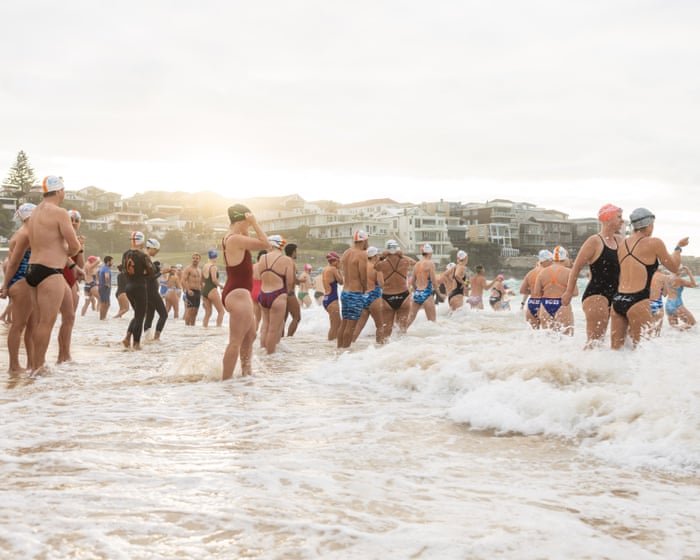
At dawn on Friday, thousands of people returned to the sea, a vibrant gathering of many colors and communities.
“In this time of darkness, let’s spread light, love, and compassion,” the crowd was urged. Then, thousands took surfboards and rescue boards, or simply swam out, joining together in a vast circle in the sea, facing the center of the beach.
That solidarity is holding, for now. In the water, it feels strong and loving.
But back on…Across Sydney and the rest of Australia, a sense of unity feels strained and fragile. Undercurrents of political division, the politicization of a community’s grief, and a fraying social cohesion are now breaking to the surface.
The water helps us forget, but some things cannot be undone.
Fifteen innocent people were shot dead here in minutes with high-powered rifles, allegedly carried by the father and son, Sajid and Naveed Akram. Sajid was shot dead. Naveed was also shot but survived. From his hospital bed, he has been charged with dozens of offences, including terrorism and 15 counts of murder.
The park footbridge at Bondi, a scene of violence less than a week ago, has reopened. On the wall, someone has sketched a menorah in chalk. There is also a bee drawn in remembrance of the youngest victim, 10-year-old Matilda.
But the bridge, once a passage for thousands of innocent visits to the beach each day, will be forever marked now—a stain that cannot be erased, a memory that cannot be forgotten.
The park, too: for years the site of Hanukkah events, children’s birthday parties, work barbecues, and casual games of cricket; where exhausted City to Surf runners sprawl on the grass after Sydney’s classic 14km run, and van-life nomads hang their washing.
Bondi has long been the spiritual home of Sydney’s Jews. Now it will also be a place of remembrance and grief.
A City on High Alert
The attack was recorded on dozens of phone and dashboard cameras. They captured the calm cruelty of the shooters, firing round after pitiless round into a defenceless crowd of men, women, and children lighting candles in celebration of their faith.
At one point, one shooter is seen halting fire at the Hanukkah celebration and turning back toward the road. He appears to gesture at people off-camera, waving them away, but he does not raise his weapon. He does not fire. He turns around and starts firing again.
Dozens of Jewish voices have said an attack of this sort—aimed specifically at Jews, in the heart of a Jewish community—was entirely predictable, if not inevitable.
Australia has seen a surge in antisemitic attacks since 2023, including an arson attack on a Melbourne synagogue. Some are domestic in origin, some allegedly orchestrated by organised crime, others allegedly engineered from Iran.
For many outside Australia’s Jewish community, these were seen as isolated events—the vile work of a deranged fringe, of outliers and the alienated. But for those within the community, it felt very different: a coordinated series of assaults on their very being, overlaid with dark historical memories. There was a shrinking space to be Jewish in this country.
As those attacks roiled the country, Eli Schlanger, assistant rabbi of the Bondi Chabad, urged his congregation: “In the fight against antisemitism, the way forward is to be more Jewish, act more Jewish, and appear more Jewish.” Schlanger organised the Hanukkah by the Sea event on Sunday night. His was the first body to be identified. His youngest child is three months old.
Mass killings are exceedingly rare in Australia. The Bondi attacks have drawn immediate comparison with the Port Arthur massacre in Tasmania in 1996, in which 35 people were killed. But this attack is different, and it has taken place in a different Australia—a place more divided, more politically tribalised, less able to find consensus and common ground.
In the aftermath of Port Arthur, the conservative prime minister, John Howard, had broad political support for sweeping gun control reforms, including bans on semi-automatic and automatic weapons, and a government-funded compulsory buyback that took 650,000 firearms out of circulation.Australia has taken 15,000 firearms off the streets. Prime Minister Anthony Albanese has announced a similar measure, but faces a different political climate. Even before the first funeral, he was being directly and personally blamed for the attack.
Israeli Prime Minister Benjamin Netanyahu said, “Your government did nothing to stop the spread of antisemitism in Australia. You let the disease spread, and the result is the horrific attacks on Jews we saw today.”
Conservative former treasurer Josh Frydenberg—currently out of parliament but considered a future prime ministerial candidate—stated, “Our prime minister has allowed Australia to be radicalized on his watch. It is time for him to accept personal responsibility for the death of 15 innocent people, including a 10-year-old child.”
Sydney remains on high alert. On Thursday night in the city’s southwest, seven men were dramatically arrested—cable-tied on the side of the road—on suspicion they were driving to Bondi with the intent to commit a “violent act.” They were later released pending further investigation.
On Friday, police were called to the funeral of two Bondi victims, Boris and Sofia Gurman, over false reports that a man was carrying a weapon. That same day, the New South Wales premier proposed sweeping anti-protest laws, including the power to effectively ban protests if the government believes they could “add to community disharmony or a combustible situation.”
Floral tributes have been laid at Bondi, where vigils have taken place daily since Sunday’s attack.
Before the gun reform announcement, Albanese’s plans were criticized as an “attempted diversion” by former Prime Minister John Howard himself, despite overwhelming expert opinion that Australia’s gun laws, once a global gold standard, have loosened and fractured.
Sajid Akram held a license for six high-powered rifles. According to police, his son had come to the attention of the Australian Security Intelligence Organisation as long as six years ago due to “associations” with known preachers of Islamist extremism.
On Sunday, Sajid Akram packed four of his six rifles into a car and drove with them to Bondi. Until he opened fire on innocent people, he had not broken any laws.
‘An Aussie Hero’
Amid fierce debates around antisemitism, social cohesion, and political unity, it seemed symbolic that the principal resistor of an attack on a Jewish festival was an Arabic-speaking, Syrian-born Muslim.
As the gunman fired into the crowd, Ahmed al-Ahmed, unarmed but unhesitating, risked his life to save strangers. Phone camera footage shows him lunging at the elder Akram and wrestling his rifle away. Ahmed then menaces the disarmed Akram with the weapon, forcing him backward. But he does not shoot; instead, he gently lays the firearm against a tree.
Ahmed’s actions represent an image Australia has clung to and celebrated—that of the diverse, multicultural country it aspires to be. Prime Minister Albanese said of the father of two, a new citizen, “Ahmed al-Ahmed represents the best of our country.”
At Ahmed’s modest tobacconist shop near a suburban train station, friends have laid flowers with messages: “thank you,” “we love you.” One reads, “you are an Aussie hero.” A sign taped to his door says, “we are so very proud of you.”
The footage of Ahmed’s intervention stands in stark contrast to the savage violence. As he walked toward the gunfire, he turned to his cousin and said, “I’m going to die. Please see my family and tell them that I went down to save people.”Ahmed survived, but he was shot five times. He now faces multiple surgeries and a long recovery.
As dawn broke over Bondi Beach on Friday, Rabbi Yosef Eichenblatt called for resilience in the face of terror. “They want us to be afraid,” he said. “We must respond with greater joy and courage.”
Speaking to those gathered on the sand, he explained that Hanukkah celebrates the triumph of light over darkness. “We must bring more light into the world… even in the darkest times, we can always light a candle.”
Support Resources:
– Australia: Beyond Blue (1300 22 4636), Lifeline (13 11 14), Griefline (1300 845 745)
– UK: Mind (0300 123 3393)
– International: Visit befrienders.org for helplines worldwide.
Frequently Asked Questions
Of course Here is a list of FAQs about A Swim for Unity at Bondi Beach framed around the events context and the surrounding tensions
Event Basics Purpose
Q What is the Swim for Unity event
A Its a community swim held at Bondi Beach to promote togetherness healing and solidarity specifically organized in response to a tragic event
Q What is Sydneys darkest day thats being referenced
A This refers to the devastating stabbing attack that occurred at the Westfield Bondi Junction shopping centre on April 13 2024 which resulted in multiple fatalities and injuries
Q Why hold a swim Why is that significant
A The ocean and beach are central to Sydneys community identity A communal swim is a powerful peaceful act of reclaiming a shared public space symbolizing resilience and collective healing through a common local activity
Q Who is organizing this event
A The event is typically organized by local community groups surf lifesaving clubs or council initiatives in partnership with affected communities and mental health advocates
Participation Details
Q Do I need to be a strong swimmer to participate
A Not necessarily The event often includes options for all abilities from a symbolic paddle in the shallows to a longer swim Always check the specific event details and swim within your limits
Q When and where exactly is it happening
A Check official community boards council websites or local news for the next scheduled event It will be held at Bondi Beach with a specific meeting point
Q Is there a cost to join
A Most community unity events are free but there may be an optional donation to support related charities such as victim support funds or mental health services
Q What should I bring
A Swimwear a towel sunscreen water and optionally a rash vest Also bring respect for the solemn purpose of the event
Context Tensions
Q What are the rising tensions on land mentioned
A Following the attack there has been increased public fear grief and anxiety This can sometimes lead to misplaced community blame heightened security concerns and difficult conversations about safety mental health and social cohesion