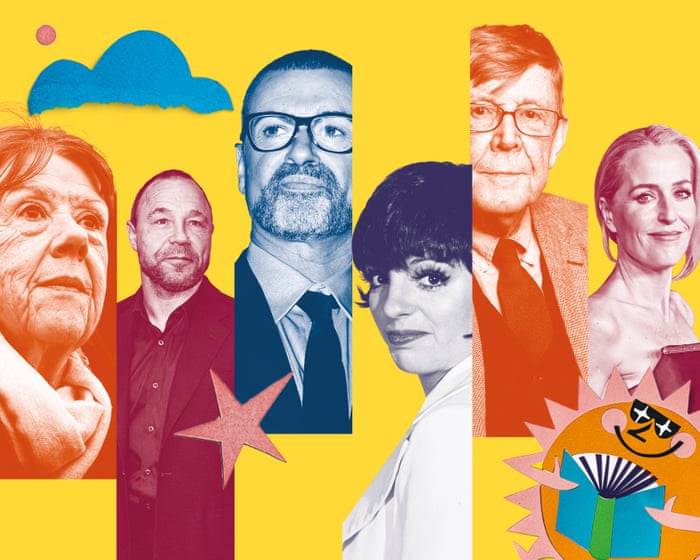
Over the past year, we’ve been spoiled with memoirs from high-profile stars like Cher, Patti Smith, and Anthony Hopkins. But 2026 begins with a very different true story from someone who never sought the spotlight but now hopes some good can come from her horrific experiences. Following the trial that convicted her husband and 50 others of rape or sexual assault, Gisèle Pelicot aims to foster “strength and courage” in other survivors. In A Hymn to Life (Bodley Head, February), she insists that “shame has to change sides.”
Another trial—of the men accused of carrying out the Bataclan massacre—was the subject of Emmanuel Carrère’s most recent book, V13. For his next, Kolkhoze (Fern, September), the French master of autofiction turns his unsparing lens back on himself, focusing on his relationship with his mother Hélène and using it to weave a complex personal history of France, Russia, and Ukraine. Family also comes under the microscope in Ghost Stories (Sceptre, May) by Siri Hustvedt, a memoir of her final years with her husband Paul Auster, who died of cancer in 2024.
Hollywood isn’t completely out of the picture, though: The Steps (Seven Dials, May), Sylvester Stallone’s first autobiography, follows the star from homelessness in early 1970s New York to Rocky‘s triumph at the Oscars later that decade. But does achieving your creative dreams come at a price? Lena Dunham suggests as much in Famesick (4th Estate, April), billed as a typically frank memoir about how her dramatic early success gave way to a debilitating chronic illness. A different kind of frankness is promised in More (Bloomsbury, September), actor Gillian Anderson’s follow-up to her bestselling 2024 anthology of women’s sexual fantasies, Want.
Likely to be somewhat less racy—though just as sharply observed—Alan Bennett’s diaries, Enough Said (Faber, March), span 2016 to 2024, covering momentous events like Brexit and the death of the Queen, as well as a plague of molehills in Bennett’s garden. After stepping down as host of In Our Time, Bennett’s near-contemporary Melvyn Bragg travels back to Another World (Sceptre, February), namely his three years at Oxford in the late 1950s. Curious Incident author Mark Haddon also looks to the past, this time to the 1960s and 70s, in his quirkily illustrated coming-of-age memoir, Leaving Home (Chatto & Windus, February). David Sedaris’s latest essay collection, The Land and Its People (Abacus, July), includes dispatches from his bucolic life in Sussex, such as: “I know you can’t hold animals to human standards … That said, rams are assholes.”
We’ll have to see whether similarly intemperate outbursts are detailed in a major new biography of Gordon Brown (Bloomsbury, February), for which author James Macintyre was granted “unique” access to the former prime minister’s personal archives. For his part, ex-home secretary and chancellor Sajid Javid will avoid dishing dirt on recent governments, focusing instead on his childhood in The Colour of Home (Abacus, February). And following her departure from the cabinet in September, Angela Rayner has decided to write a memoir—currently Untitled (Bodley Head)—reflecting on her tough upbringing and path into politics, set for release in the second half of the year.
Away from life writing, North American heavyweights tackle big ideas: in A World Appears (Allen Lane, February), Michael Pollan, author of How to Change Your Mind, considers the small matter of consciousness—what is it, and how do you measure it? With The Beginning Comes After the End (Granta, March), Rebecca Solnit reminds us how revolutionary the past 60 years have been.In terms of social change, she views the current turn toward authoritarianism as a setback rather than a defeat. Naomi Klein, author of Doppelganger, teams with documentary maker Astra Taylor for End Times Fascism (Allen Lane, September), which examines the “man-made Armageddon complex” built by religious fundamentalists, tech barons, and nationalists that now threatens democracy. Historian Jared Diamond, best known for Guns, Germs, and Steel, returns with his first book in six years, Profits, Prophets, Coaches and Kings (Allen Lane, September), exploring the influence of charismatic individuals in politics, business, sport, and religion. Patrick Radden Keefe, whose Empire of Pain exposed the billionaire dynasty behind the opioid epidemic, investigates a mysterious death in London Falling (Picador, April).
Following the extraordinary success of the Netflix show Adolescence, which depicted the aftermath of a misogynistic killing, teenage masculinity remains in focus. One of its stars, Stephen Graham, has partnered with psychologist Orly Klein to compile Letters to Our Sons (Bloomsbury, October), a collection of fathers’ reflections on “what it means to be a man,” including one from Graham himself. In The Castle (Viking, August), Jon Ronson sets out to discover what led his son Joel to attend a mysterious event at a multimillionaire’s mansion in New England, uncovering “a world of unmoored men on a desperate search for purpose” along the way.
I was going to say Liza Minnelli’s memoir might offer some light relief, but the Cabaret star’s life has contained at least as much tragedy and heartache as spotlights and sequins. Still, readers can learn about both in Kids, Wait Till You Hear This!, “as told to” her friend and singer Michael Feinstein. Those expecting a neutral account may have to wait longer, however, as the book emphasizes “dispelling tabloid myths and setting the record straight.” In a lower-key but no less interesting musical vein, David Byrne releases his first proper book since 2012’s How Music Works with Sleeping Beauties (Canongate, October). The title refers to works of art or inventions ignored in their time but rediscovered later—from Bruegel to antiseptics. Finally, in Tonight the Music Seems So Loud (Picador, June), journalist Sathnam Sanghera takes a break from writing about empire to explore what made the enigmatic pop genius George Michael such an influential cultural figure, ten years after his death at age 53.
To browse and preorder the titles in the 2026 lookahead, visit guardianbookshop.com. Delivery charges may apply.
Frequently Asked Questions
Of course Here is a list of FAQs about upcoming nonfiction books for 2026 designed to sound like questions from a curious reader
General Beginner Questions
Q Where do these books to watch for lists even come from
A They come from publishing industry announcements Publishers and authors often announce books 12 years in advance to build excitement allowing book reviewers booksellers and libraries to plan
Q Why should I care about books coming out in 2026 now
A It helps you get excited about future releases from your favorite authors or on topics you love You can also add them to your wanttoread list early or request them at your local library
Q What kinds of nonfiction books are typically announced this far ahead
A Big books from wellknown authors major biographies investigative journalism projects and sweeping histories often have the longest lead times
Q How accurate are these lists Will all these books definitely come out
A They are based on official announcements but publication dates and even titles can sometimes change or be delayed Think of it as a preview of whats planned
Advanced Specific Questions
Q How can I find these lists for myself
A Follow publishing news in places like Publishers Weekly The New York Times Books section or literary blogs You can also set up Google Alerts for your favorite authors
Q Are there any notable trends for nonfiction in 2026 based on early announcements
A While trends solidify closer to publication early lists often hint at subjects For example after a major event or anniversary youll see related histories and analyses scheduled for years in advance
Q Can I preorder a book announced for 2026
A Usually not immediately Preorders typically open 36 months before the release date Youll see listings on retailer sites with a placeholder cover and date long before you can actually order
Q Whats the benefit for an author in announcing a book so early
A It builds buzz and establishes anticipation It helps secure foreign translation deals attract blurbs from other authors and allows for longer marketing campaigns
Practical Tips Problems