This CSS code defines a custom font family called “Guardian Headline Full” with multiple styles and weights. It includes light, regular, medium, and semibold versions, each in both normal and italic styles. The font files are provided in three formats—WOFF2, WOFF, and TrueType—and are hosted on the Guardian’s servers.@font-face {
font-family: Guardian Headline Full;
src: url(https://assets.guim.co.uk/static/frontend/fonts/guardian-headline/noalts-not-hinted/GHGuardianHeadline-Bold.woff2) format(“woff2”),
url(https://assets.guim.co.uk/static/frontend/fonts/guardian-headline/noalts-not-hinted/GHGuardianHeadline-Bold.woff) format(“woff”),
url(https://assets.guim.co.uk/static/frontend/fonts/guardian-headline/noalts-not-hinted/GHGuardianHeadline-Bold.ttf) format(“truetype”);
font-weight: 700;
font-style: normal;
}
@font-face {
font-family: Guardian Headline Full;
src: url(https://assets.guim.co.uk/static/frontend/fonts/guardian-headline/noalts-not-hinted/GHGuardianHeadline-BoldItalic.woff2) format(“woff2”),
url(https://assets.guim.co.uk/static/frontend/fonts/guardian-headline/noalts-not-hinted/GHGuardianHeadline-BoldItalic.woff) format(“woff”),
url(https://assets.guim.co.uk/static/frontend/fonts/guardian-headline/noalts-not-hinted/GHGuardianHeadline-BoldItalic.ttf) format(“truetype”);
font-weight: 700;
font-style: italic;
}
@font-face {
font-family: Guardian Headline Full;
src: url(https://assets.guim.co.uk/static/frontend/fonts/guardian-headline/noalts-not-hinted/GHGuardianHeadline-Black.woff2) format(“woff2”),
url(https://assets.guim.co.uk/static/frontend/fonts/guardian-headline/noalts-not-hinted/GHGuardianHeadline-Black.woff) format(“woff”),
url(https://assets.guim.co.uk/static/frontend/fonts/guardian-headline/noalts-not-hinted/GHGuardianHeadline-Black.ttf) format(“truetype”);
font-weight: 900;
font-style: normal;
}
@font-face {
font-family: Guardian Headline Full;
src: url(https://assets.guim.co.uk/static/frontend/fonts/guardian-headline/noalts-not-hinted/GHGuardianHeadline-BlackItalic.woff2) format(“woff2”),
url(https://assets.guim.co.uk/static/frontend/fonts/guardian-headline/noalts-not-hinted/GHGuardianHeadline-BlackItalic.woff) format(“woff”),
url(https://assets.guim.co.uk/static/frontend/fonts/guardian-headline/noalts-not-hinted/GHGuardianHeadline-BlackItalic.ttf) format(“truetype”);
font-weight: 900;
font-style: italic;
}
@font-face {
font-family: Guardian Titlepiece;
src: url(https://assets.guim.co.uk/static/frontend/fonts/guardian-titlepiece/noalts-not-hinted/GTGuardianTitlepiece-Bold.woff2) format(“woff2”),
url(https://assets.guim.co.uk/static/frontend/fonts/guardian-titlepiece/noalts-not-hinted/GTGuardianTitlepiece-Bold.woff) format(“woff”),
url(https://assets.guim.co.uk/static/frontend/fonts/guardian-titlepiece/noalts-not-hinted/GTGuardianTitlepiece-Bold.ttf) format(“truetype”);
font-weight: 700;
font-style: normal;
}
@font-face {
font-family: Guardian Headline Full;
src: url(https://assets.guim.co.uk/static/frontend/fonts/guardian-headline/noalts-not-hinted/GHGuardianHeadline-Light.woff2) format(“woff2”),
url(https://assets.guim.co.uk/static/frontend/fonts/guardian-headline/noalts-not-hinted/GHGuardianHeadline-Light.woff) format(“woff”),
url(https://assets.guim.co.uk/static/frontend/fonts/guardian-headline/noalts-not-hinted/GHGuardianHeadline-Light.ttf) format(“truetype”);
font-weight: 300;
font-style: normal;
}
@font-face {
font-family: Guardian Headline Full;
src: url(https://assets.guim.co.uk/static/frontend/fonts/guardian-headline/noalts-not-hinted/GHGuardianHeadline-LightItalic.woff2) format(“woff2”),
url(https://assets.guim.co.uk/static/frontend/fonts/guardian-headline/noalts-not-hinted/GHGuardianHeadline-LightItalic.woff) format(“woff”),
url(https://assets.guim.co.uk/static/frontend/fonts/guardian-headline/noalts-not-hinted/GHGuardianHeadline-LightItalic.ttf) format(“truetype”);
font-weight: 300;
font-style: italic;
}
@font-face {
font-family: Guardian Headline Full;
src: url(https://assets.guim.co.uk/static/frontend/fonts/guardian-headline/noalts-not-hinted/GHGuardianHeadline-Regular.woff2) format(“woff2”),
url(https://assets.guim.co.uk/static/frontend/fonts/guardian-headline/noalts-not-hinted/GHGuardianHeadline-Regular.woff) format(“woff”),
url(https://assets.guim.co.uk/static/frontend/fonts/guardian-headline/noalts-not-hinted/GHGuardianHeadline-Regular.ttf) format(“truetype”);
font-weight: 400;
font-style: normal;
}
@font-face {
font-family: Guardian Headline Full;
src: url(https://assets.guim.co.uk/static/frontend/fonts/guardian-headline/noalts-not-hinted/GHGuardianHeadline-RegularItalic.woff2) format(“woff2”),
url(https://assets.guim.co.uk/static/frontend/fonts/guardian-headline/noalts-not-hinted/GHGuardianHeadline-RegularItalic.woff) format(“woff”),
url(https://assets.guim.co.uk/static/frontend/fonts/guardian-headline/noalts-not-hinted/GHGuardianHeadline-RegularItalic.ttf) format(“truetype”);
font-weight: 400;
font-style: italic;
}The text appears to be a snippet of CSS code defining font faces for the “Guardian Headline Full” font family. It specifies different font weights and styles (like regular, italic, medium, bold, etc.), each linking to specific font file formats (WOFF2, WOFF, TTF) hosted online.The provided text appears to be a mix of CSS font definitions and responsive grid layout rules for a website, likely The Guardian. Here is a fluent, natural English rewrite that simplifies the technical phrasing while preserving the meaning:
This CSS code defines custom fonts and a responsive layout grid for article content.
First, it imports two custom font families from The Guardian’s servers:
Guardian Headline in a heavy black italic style.
Guardian Titlepiece in a standard bold style.
Then, it sets up a flexible grid system for organizing article elements like the title, headline, images, and body text. This grid changes its structure at different screen sizes to ensure the content looks good on all devices:
* On the smallest screens, everything stacks in a single column.
* As the screen gets wider, the layout adjusts. On very large screens, it uses a multi-column design with a main content area and a separate right-hand column.
Specific rules are also included for styling captions on immersive images and for adjusting padding in the main content area at certain breakpoints.For interactive grid figures with immersive captions, the caption padding is set to 4 pixels at the top and 0 elsewhere. Within the article body, interactive content, comment body, and feature body, elements with specific data attributes are positioned in the grid from row 2, column 1 to row 5, column 2. These elements also have a maximum content height and a top margin of 5 pixels, with an additional 18-pixel margin for meta elements.
On larger screens, the grid uses columns of 219 pixels, 1 pixel, 620 pixels, 80 pixels, and 300 pixels.
For iOS and Android devices, article headers use specific fonts and styling: the standfirst text uses Guardian Headline with medium weight, section kickers are displayed as blocks with capitalized first letters, keylines have 12 pixels of top padding, and bylines use Guardian Headline with bold weight. Images within articles have automatic height, and paragraphs following atomic elements have no top margin.
The Guardian Headline Full font is loaded in light and light italic weights from specific URLs.The provided text appears to be a series of CSS font-face rules for a font family named “Guardian Headline Full.” These rules define different font weights and styles (like regular, italic, medium, bold) and specify the web addresses (URLs) where the actual font files (in formats like WOFF2, WOFF, and TTF) can be found for the browser to download and use.@font-face {
font-family: ‘Guardian Headline Full’;
src: url(‘https://assets.guim.co.uk/static/frontend/fonts/guardian-headline/noalts-not-hinted/GHGuardianHeadline-Black.woff2’) format(‘woff2’),
url(‘https://assets.guim.co.uk/static/frontend/fonts/guardian-headline/noalts-not-hinted/GHGuardianHeadline-Black.woff’) format(‘woff’),
url(‘https://assets.guim.co.uk/static/frontend/fonts/guardian-headline/noalts-not-hinted/GHGuardianHeadline-Black.ttf’) format(‘truetype’);
font-weight: 900;
font-style: normal;
}
@font-face {
font-family: ‘Guardian Headline Full’;
src: url(‘https://assets.guim.co.uk/static/frontend/fonts/guardian-headline/noalts-not-hinted/GHGuardianHeadline-BlackItalic.woff2’) format(‘woff2’),
url(‘https://assets.guim.co.uk/static/frontend/fonts/guardian-headline/noalts-not-hinted/GHGuardianHeadline-BlackItalic.woff’) format(‘woff’),
url(‘https://assets.guim.co.uk/static/frontend/fonts/guardian-headline/noalts-not-hinted/GHGuardianHeadline-BlackItalic.ttf’) format(‘truetype’);
font-weight: 900;
font-style: italic;
}
@font-face {
font-family: ‘Guardian Titlepiece’;
src: url(‘https://assets.guim.co.uk/static/frontend/fonts/guardian-titlepiece/noalts-not-hinted/GTGuardianTitlepiece-Bold.woff2’) format(‘woff2’),
url(‘https://assets.guim.co.uk/static/frontend/fonts/guardian-titlepiece/noalts-not-hinted/GTGuardianTitlepiece-Bold.woff’) format(‘woff’),
url(‘https://assets.guim.co.uk/static/frontend/fonts/guardian-titlepiece/noalts-not-hinted/GTGuardianTitlepiece-Bold.ttf’) format(‘truetype’);
font-weight: 700;
font-style: normal;
}
@media (min-width: 71.25em) {
.content__main-column–interactive {
margin-left: 160px;
}
}
@media (min-width: 81.25em) {
.content__main-column–interactive {
margin-left: 240px;
}
}
.content__main-column–interactive .element-atom {
max-width: 620px;
}
@media (max-width: 46.24em) {
.content__main-column–interactive .element-atom {
max-width: 100%;
}
}
.content__main-column–interactive .element-showcase {
margin-left: 0;
}
@media (min-width: 46.25em) {
.content__main-column–interactive .element-showcase {
max-width: 620px;
}
}
@media (min-width: 71.25em) {
.content__main-column–interactive .element-showcase {
max-width: 860px;
}
}
.content__main-column–interactive .element-immersive {
max-width: 1100px;
}
@media (max-width: 46.24em) {
.content__main-column–interactive .element-immersive {
width: calc(100vw – var(–scrollbar-width, 0px));
position: relative;
left: 50%;
right: 50%;
margin-left: calc(-50vw + var(–half-scrollbar-width, 0px)) !important;
margin-right: calc(-50vw + var(–half-scrollbar-width, 0px)) !important;
}
}
@media (min-width: 46.25em) {
.content__main-column–interactive .element-immersive {
transform: translate(-20px);
width: calc(100% + 60px);
}
}
@media (max-width: 71.24em) {
.content__main-column–interactive .element-immersive {
margin-left: 0;
margin-right: 0;
}
}
@media (min-width: 71.25em) {
.content__main-column–interactive .element-immersive {
transform: translate(0);
width: auto;
}
}
@media (min-width: 81.25em) {
.content__main-column–interactive .element-immersive {
max-width: 1260px;
}
}
.content__main-column–interactive p,
.content__main-column–interactive ul {
max-width: 620px;
}
.content__main-column–interactive:before {
position: absolute;
top: 0;
height: calc(100% + 15px);
min-height: 100px;
content: “”;
}
@media (min-width: 71.25em) {
.content__main-column–interactive:before {
border-left: 1px solid #dcdcdc;
z-index: -1;
left: -10px;
}
}
@media (min-width: 81.25em) {
.content__main-column–interactive:before {
border-left: 1px solid #dcdcdc;
left: -11px;
}
}
.content__main-column–interactive .element-atom {
margin-top: 0;
margin-bottom: 0;
padding-bottom: 12px;
padding-top: 12px;
}
.content__main-column–interactive p + .element-atom {
padding-top: 0;
padding-bottom: 0;
margin-top: 12px;
margin-bottom: 12px;
}
.content__main-column–interactive .element-inline {
max-width: 620px;
}
@media (min-width: 61.25em) {
figure[data-spacefinder-role=”inline”].element {
max-width: 620px;
}
}
:root {
–dateline: #606060;
–headerBorder: #dcdcdc;
–captionText: #999;
–captionBackground: hsla(0, 0%, 7%, 0.72);
–feature: #c70000;
–new-pillar-colour: var(–primary-pillar, var(–feature));
}
.content__main-column–interactive .element.element-atom,
.element.element-atom {
padding: 0;
}
#article-body > div .element-atom:first-of-type + p:first-of-type,
#article-body > div .element-atom:first-of-type {The first paragraph after specific elements like sign-in gates, horizontal rules, or initial atoms in article bodies, interactive content, comment sections, and feature articles gets 14 pixels of top padding.
The first letter of that first paragraph in these same areas is styled with a specific headline font, set in bold, 111 pixels in size, with 92 pixels of line height. It floats to the left, is uppercase, and uses a designated color for drop caps, with an 8-pixel margin to the right.
Paragraphs that come directly after a horizontal rule in these content areas have their top padding removed.
Pullquotes within these sections are constrained to a maximum width of 620 pixels.
Captions for showcase elements in main articles, features, standard articles, and comments are positioned normally, spanning the full width up to 620 pixels.
Immersive elements stretch to the full viewport width, minus the scrollbar. On screens smaller than 71.24 ems, these immersive elements are limited to 978 pixels in width, and their captions have inline padding applied.@media (max-width: 71.24em) and (min-width: 30em) {
.element.element–immersive.element-immersive figcaption {
padding-inline: 20px;
}
}
@media (min-width: 46.25em) and (max-width: 61.24em) {
.element.element–immersive.element-immersive {
max-width: 738px;
}
}
@media (max-width: 46.24em) {
.element.element–immersive.element-immersive {
margin-left: -10px !important;
margin-right: 0 !important;
left: 0;
}
}
@media (max-width: 46.24em) and (min-width: 30em) {
.element.element–immersive.element-immersive {
margin-left: -20px !important;
}
.element.element–immersive.element-immersive figcaption {
padding-inline: 20px;
}
}
@media (min-width: 61.25em) {
.furniture-wrapper {
display: grid;
grid-column-gap: 20px;
grid-row-gap: 0px;
grid-template-columns: [title-start headline-start meta-start standfirst-start] repeat(5, 1fr) [title-end headline-end meta-end standfirst-end portrait-start] repeat(5, 1fr) [portrait-end];
grid-template-rows: [title-start portrait-start] .25fr [title-end headline-start] 1fr [headline-end standfirst-start] .75fr [standfirst-end meta-start] auto [meta-end portrait-end];
}
.furniture-wrapper #headline > div:first-child,
.furniture-wrapper [data-gu-name=headline] > div:first-child,
.furniture-wrapper .headline > div:first-child {
border-top: 1px solid var(–headerBorder);
}
.furniture-wrapper #meta,
.furniture-wrapper [data-gu-name=meta] {
position: relative;
padding-top: 2px;
margin-right: 0;
}
.furniture-wrapper .standfirst .content__standfirst,
.furniture-wrapper #standfirst .content__standfirst,
.furniture-wrapper [data-gu-name=standfirst] .content__standfirst {
margin-bottom: 4px;
}
.furniture-wrapper .standfirst ul li,
.furniture-wrapper #standfirst ul li,
.furniture-wrapper [data-gu-name=standfirst] ul li {
font-size: 20px;
}
.furniture-wrapper .standfirst li a,
.furniture-wrapper .standfirst a,
.furniture-wrapper #standfirst li a,
.furniture-wrapper #standfirst a,
.furniture-wrapper [data-gu-name=standfirst] li a,
.furniture-wrapper [data-gu-name=standfirst] a {
border-bottom: none;
background-image: none !important;
text-decoration: underline;
text-underline-offset: 6px;
text-decoration-color: var(–headerBorder, #dcdcdc);
}
.furniture-wrapper .standfirst li a:hover,
.furniture-wrapper .standfirst a:hover,
.furniture-wrapper #standfirst li a:hover,
.furniture-wrapper #standfirst a:hover,
.furniture-wrapper [data-gu-name=standfirst] li a:hover,
.furniture-wrapper [data-gu-name=standfirst] a:hover {
text-decoration-color: var(–new-pillar-colour);
}
.furniture-wrapper .standfirst p:first-of-type,
.furniture-wrapper #standfirst p:first-of-type,
.furniture-wrapper [data-gu-name=standfirst] p:first-of-type {
border-top: 1px solid var(–headerBorder);
padding-bottom: 0;
}
}
@media (min-width: 61.25em) and (min-width: 71.25em) {
.furniture-wrapper .standfirst p:first-of-type,
.furniture-wrapper #standfirst p:first-of-type,
.furniture-wrapper [data-gu-name=standfirst] p:first-of-type {
border-top: unset;
}
}
@media (min-width: 61.25em) {
.furniture-wrapper figure {
margin: 0 0 0 -10px;
}
.furniture-wrapper figure[data-spacefinder-role=inline].element {
max-width: 630px;
}
}
@media (min-width: 71.25em) {
.furniture-wrapper {
grid-template-columns: [title-start headline-start meta-start] repeat(2, 1fr) [meta-end standfirst-start] repeat(5, 1fr) [title-end headline-end standfirst-end portrait-start] repeat(7, 1fr) [portrait-end];
grid-template-rows: [title-start portrait-start] 80px [title-end headline-start] auto [headline-end standfirst-start meta-start] auto [standfirst-end meta-end portrait-end];
}
.furniture-wrapper #meta:before,
.furniture-wrapper [data-gu-name=meta]:before {
content: “”;
width: 540px;
position: absolute;
top: 0;
background-color: var(–headerBorder);
height: 1px;
}
.furniture-wrapper .standfirst p,
.furniture-wrapper #standfirst p,
.furniture-wrapper [data-gu-name=standfirst] p {
border-top: unset;
}
.furniture-wrapper .standfirst:before,
.furniture-wrapper #standfirst:before,
.furniture-wrapper [data-gu-name=standfirst]:before {
content: “”;
width: 1px;
background-color: var(–headerBorder);
height: 100%;
position: absolute;
top: 0;
left: .5px;
}
}
@media (min-width: 81.25em) {
.furniture-wrapper {
grid-template-columns: [title-start headline-start meta-start] repeat(3, 1fr) [meta-end standfirst-start];
}
}The grid layout uses five equal-width columns for the title, headline, and standfirst sections, followed by eight equal-width columns for the portrait section. The rows are defined with specific starting and ending points for each section.
For the meta and standfirst elements, certain widths and positions are set, with adjustments for larger screens. Headlines have a maximum width and font size, which increase on wider screens. Some decorative lines are hidden on larger displays, and their color is controlled by a CSS variable.
Social and comment elements in the meta section use the same border color variable. Certain interactive components within the meta container are hidden. The standfirst section has a negative left margin and internal padding, with its paragraph text styled for weight and size.
The main media area is positioned within the grid and has full width. Its margins adjust based on screen size, and on very small screens, it can extend to the full viewport width. Captions are absolutely positioned at the bottom with a background color and text color defined by variables. The caption text color and icon fill also use these variables, with the first span hidden and the second displayed.
A caption toggle button is positioned at the bottom right. On very large screens, an interactive content column has an adjusted top position and height.The main column for interactive content has a maximum width of 620 pixels for h2 headings. On iOS and Android devices, the dark background color is set to #1a1a1a, with specific feature colors defined for light and dark modes. In dark mode, the pillar color adjusts to a designated dark mode variant.
For iOS and Android, the first letter of the first paragraph in various article containers is styled with a secondary pillar color. The article header height is set to zero, and the furniture wrapper receives specific padding. Labels within the furniture wrapper use a bold, capitalized font with the new pillar color, while headlines are set to 32px, bold, with bottom padding and a dark gray color.For iOS and Android devices, the image elements within furniture wrappers across feature, standard, and comment article containers are styled with a relative position, a top margin of 14px, a left offset of -10px, and a width that fills the viewport minus the scrollbar. Their inner elements, images, and links have a transparent background and the same full-width dimensions.
The standfirst sections in these containers have top and bottom padding and a right margin offset. The paragraphs within use the Guardian’s headline font family, and the links inside them are styled consistently.For comment articles, links within the standfirst section should use the site’s main color, have an underline with a specific offset and color, and no background image or bottom border. On iOS and Android devices, when hovering over these links in feature, standard, or comment articles, the underline color should change to the main color. Also, on these devices, the metadata area for these article types should have no margin, the author and byline text should be in the main color, and the miscellaneous metadata section should have no padding.For iOS and Android devices, the following CSS rules apply across feature, standard, and comment article containers:
– SVG icons within the meta misc section use the new pillar color for their stroke.
– The caption button in showcase elements is displayed as a flex container, centered with 5px padding, and positioned 14px from the right, measuring 28px by 28px.
– The article body has 12px of horizontal padding.
– Non-thumbnail, non-immersive image figures within the article body have no margin, a width calculated as the viewport width minus 24px and the scrollbar width, and an automatic height. Their captions have no padding.
– Immersive image figures have a width calculated as the viewport width minus the scrollbar width.
– Quoted blockquotes within the article body’s prose have a `:before` pseudo-element applied.For iOS and Android devices, quoted text in articles will use the new pillar color. Links within articles will be styled with the primary pillar color, underlined with a 6px offset, and use the header border color for the underline. On hover, the underline color changes to the new pillar color.
In dark mode, the article header background becomes dark gray (#1a1a1a). Labels use the new pillar color, while headlines and standfirst text adopt the header border color. Links within the standfirst and author bylines also follow this styling.This appears to be CSS code for styling web pages on Android and iOS devices. It sets colors for author names, icons, image captions, and blockquotes using custom color variables. It also applies a dark background to various article content containers.This appears to be a CSS selector targeting the first letter of paragraphs in specific containers on iOS and Android devices. The selector applies to various article containers (feature, standard, comment) and looks for paragraphs following certain elements like `.element-atom`, `.sign-in-gate`, or `#sign-in-gate`.For Android and iOS devices, the first letter of paragraphs following specific elements in various article containers will be styled with a custom color variable.For comment articles on iOS and Android, the standfirst section has a top padding of 24 pixels and no top margin. The main heading (h2) in the article text is set to 24 pixels in size.
On iOS, the caption button for feature, standard, and comment articles has specific padding. On Android, the same button has slightly different padding.
In dark mode, the color scheme adjusts various text and link colors to use lighter shades and specific dark mode pillar colors.
When the page includes a Guardian organization logo, the branding element is forced to display.
For iOS and Android, the labels and main headline (h1) in feature, standard, and comment articles are set to a medium font weight (500). This also applies to the headline and standfirst paragraphs within the furniture wrapper.
The page uses a custom background color (#fff4f2) for a weekend essay theme, which is applied to the body and specific article sections.
The lines element is hidden. The furniture wrapper is positioned relatively and uses a specific grid layout on larger screens.
Within the furniture wrapper, the article header or title section has a fixed height. It contains labels with a background GIF image (a book animation) positioned in the bottom right corner. The size of this image increases on larger screens.
A horizontal line is added below the labels, spanning the viewport width. On medium screens and above, this line’s width and position are adjusted.For screens with a minimum width of 61.25em, the content labels within the article header and title sections of the furniture wrapper will have their after-elements hidden. When the screen reaches at least 71.25em, the article header and title areas will have a fixed height of 80px. This height increases to 125px at 81.25em. Also at 81.25em, the headline, its data-gu-name counterpart, and the headline class will have a top margin of -2px.
Within the furniture wrapper, the headline, its data-gu-name equivalent, and the headline class have inner divs with no bottom padding. The portrait main media headline wrapper inside these sections takes up full height, uses relative positioning, hides overflow, and adds 24px of bottom padding. The h1, a, and byline span elements inside this wrapper have no maximum width, a line height of 115%, a font weight of 500, and a font size of 36px. On hover, the h1 and a tags get a 2px thick underline with a 6px offset. At 71.25em, the font size for these text elements increases to 50px.
The standfirst section, its ID, and data-gu-name equivalent in the furniture wrapper are positioned relatively with 4px top padding. This padding is removed at 61.25em and becomes 2px at 71.25em.
Within the meta section, the branding island inside the content meta container is set to display as a block..furniture-wrapper [data-gu-name=media] {
position: relative;
}
@media (min-width: 61.25em) {
.furniture-wrapper #main-media,
.furniture-wrapper [data-gu-name=media] {
grid-area: portrait;
}
}
.furniture-wrapper #main-media > div,
.furniture-wrapper [data-gu-name=media] > div {
position: relative;
}
.furniture-wrapper #main-media div + span,
.furniture-wrapper [data-gu-name=media] div + span {
display: block;
}
.furniture-wrapper #main-media figure,
.furniture-wrapper [data-gu-name=media] figure {
height: 100%;
margin-left: 10px;
}
.furniture-wrapper #main-media figure picture img,
.furniture-wrapper #main-media figure figcaption,
.furniture-wrapper [data-gu-name=media] figure picture img,
.furniture-wrapper [data-gu-name=media] figure figcaption {
width: calc(100vw – 40px – var(–scrollbar-width, 0px));
height: auto;
margin-left: 10px;
padding: 10px 0;
}
.furniture-wrapper #main-media figure figcaption,
.furniture-wrapper [data-gu-name=media] figure figcaption {
margin-bottom: 10px;
padding: 10px;
}
.furniture-wrapper #main-media figure:before,
.furniture-wrapper [data-gu-name=media] figure:before {
content: “”;
display: block;
width: calc(100vw – 20px – var(–scrollbar-width, 0px));
background-image: url(https://interactive.guim.co.uk/atoms/2025/04/2025-weekend-essay-test/assets/v/1764331689/frame.png);
background-size: contain;
background-position: center;
background-repeat: no-repeat;
position: absolute;
top: 0;
left: 10px;
height: inherit;
}
@media (min-width: 46.25em) {
.furniture-wrapper #main-media figure,
.furniture-wrapper [data-gu-name=media] figure {
margin-left: 0;
}
.furniture-wrapper #main-media figure picture img,
.furniture-wrapper [data-gu-name=media] figure picture img {
width: 670px;
height: auto;
margin-left: 5px;
padding: 15px 10px;
}
.furniture-wrapper #main-media figure:before,
.furniture-wrapper [data-gu-name=media] figure:before {
width: 700px;
left: -10px;
}
.furniture-wrapper #main-media figure figcaption,
.furniture-wrapper [data-gu-name=media] figure figcaption {
width: 650px;
margin-left: 15px;
margin-bottom: 15px;
padding: 15px 10px;
}
}
@media (min-width: 61.25em) {
.furniture-wrapper #main-media figure:before,
.furniture-wrapper [data-gu-name=media] figure:before {
width: 470px;
}
.furniture-wrapper #main-media figure picture img,
.furniture-wrapper #main-media figure figcaption,
.furniture-wrapper [data-gu-name=media] figure picture img,
.furniture-wrapper [data-gu-name=media] figure figcaption {
width: 450px;
margin-left: 0;
}
.furniture-wrapper #main-media figure picture img,
.furniture-wrapper [data-gu-name=media] figure picture img {
padding: 10px 0;
}
.furniture-wrapper #main-media figure figcaption,
.furniture-wrapper [data-gu-name=media] figure figcaption {
margin-bottom: 10px;
}
}
@media (min-width: 71.25em) {
.furniture-wrapper #main-media figure:before,
.furniture-wrapper [data-gu-name=media] figure:before {
width: 550px;
}
.furniture-wrapper #main-media figure picture img,
.furniture-wrapper [data-gu-name=media] figure picture img {
width: 520px;
margin-left: 5px;
padding: 10px 5px;
}
.furniture-wrapper #main-media figure figcaption,
.furniture-wrapper [data-gu-name=media] figure figcaption {
width: 510px;
margin-left: 10px;
margin-bottom: 10px;
}
}
@media (min-width: 81.25em) {
.furniture-wrapper #main-media figure:before,
.furniture-wrapper [data-gu-name=media] figure:before {
width: 630px;
}
.furniture-wrapper #main-media figure picture img,
.furniture-wrapper [data-gu-name=media] figure picture img {
width: 600px;
padding: 15px 0;
}
.furniture-wrapper #main-media figure figcaption,
.furniture-wrapper [data-gu-name=media] figure figcaption {
width: 600px;
margin-left: 5px;
margin-bottom: 15px;
}
}
.furniture-wrapper #main-media #caption-button,
.furniture-wrapper [data-gu-name=media] #caption-button {
right: 15px;
bottom: 20px;
}
@media (min-width: 46.25em) {
.furniture-wrapper #main-media #caption-button,
.furniture-wrapper [data-gu-name=media] #caption-button {
right: 45px;
bottom: 30px;
}
}
@media (min-width: 61.25em) {
.furniture-wrapper #main-media #caption-button,
.furniture-wrapper [data-gu-name=media] #caption-button {
right: 15px;
bottom: 20px;
}
}
@media (min-width: 71.25em) {
.furniture-wrapper #main-media #caption-button,
.furniture-wrapper [data-gu-name=media] #caption-button {
right: 20px;
}
}
@media (min-width: 81.25em) {
.furniture-wrap
}For the main media caption button and furniture wrapper with media data, the button is positioned 30px from the bottom. Within the furniture wrapper, if there’s no media, a centered div displays with a large, bold, underlined text.
On larger screens, the interactive main column aligns to the left without a preceding element. Supporting content with blockquotes has a light background. The first letter of the opening paragraph is styled as a large, uppercase drop cap in a headline font, with specific sizing and color.
Headings at level two are colored and sized for emphasis, with adjustments for bold text. Figures containing iframes share the same light background. On apps and mobile platforms, author follow elements are displayed with adjusted text size, and media elements fit their content width.
In dark mode, the background colors for article sections and weekend essays switch to a dark shade, and decorative lines after headers are hidden.[data-app-os=android] .furniture-wrapper .article-header:after,
[data-app-os=android] .furniture-wrapper [data-gu-name=title] .content__labels:after {
background-image: url(https://interactive.guim.co.uk/atoms/2025/04/2025-weekend-essay-test/assets/v/1764331689/book-white.gif)
}
[data-rendering-target=apps] .furniture-wrapper .meta__byline gu-island[name=FollowWrapper] svg path,
[data-rendering-target=apps] .furniture-wrapper [data-component=meta-byline] gu-island[name=FollowWrapper] svg path,
[data-app-os=ios] .furniture-wrapper .meta__byline gu-island[name=FollowWrapper] svg path,
[data-app-os=ios] .furniture-wrapper [data-component=meta-byline] gu-island[name=FollowWrapper] svg path,
[data-app-os=android] .furniture-wrapper .meta__byline gu-island[name=FollowWrapper] svg path,
[data-app-os=android] .furniture-wrapper [data-component=meta-byline] gu-island[name=FollowWrapper] svg path {
fill: var(–byline-anchor, #ffffff) !important
}
[data-rendering-target=apps] .furniture-wrapper #main-media figure:before,
[data-rendering-target=apps] .furniture-wrapper [data-gu-name=media] figure:before,
[data-app-os=ios] .furniture-wrapper #main-media figure:before,
[data-app-os=ios] .furniture-wrapper [data-gu-name=media] figure:before,
[data-app-os=android] .furniture-wrapper #main-media figure:before,
[data-app-os=android] .furniture-wrapper [data-gu-name=media] figure:before {
background-image: url(https://interactive.guim.co.uk/atoms/2025/04/2025-weekend-essay-test/assets/v/1764331689/frame-white.png) !important
}
body.ios,
body.android {
background-color: #fff
}
body.ios #feature-article-container .furniture-wrapper .content__labels,
body.ios #standard-article-container .furniture-wrapper .content__labels,
body.ios #comment-article-container .furniture-wrapper .content__labels,
body.android #feature-article-container .furniture-wrapper .content__labels,
body.android #standard-article-container .furniture-wrapper .content__labels,
body.android #comment-article-container .furniture-wrapper .content__labels,
body.ios #feature-article-container .furniture-wrapper h1.headline,
body.ios #standard-article-container .furniture-wrapper h1.headline,
body.ios #comment-article-container .furniture-wrapper h1.headline,
body.android #feature-article-container .furniture-wrapper h1.headline,
body.android #standard-article-container .furniture-wrapper h1.headline,
body.android #comment-article-container .furniture-wrapper h1.headline {
font-weight: 500
}
@media (prefers-color-scheme: light) {
html:has(body.ios, body.android) {
background-color: var(–weekend-essay-bg, #fff4f2)
}
}
html:has(body.ios, body.android) body.ios,
html:has(body.ios, body.android) body.android {
–opinion-primary: #c74600;
–byline-anchor: var(–opinion-primary, #c74600);
–primary-pillar: var(–opinion-primary, #c74600)
}
@media (prefers-color-scheme: light) {
html:has(body.ios, body.android) body.ios,
html:has(body.ios, body.android) body.android {
background-color: var(–weekend-essay-bg, #fff4f2)
}
}
@media (prefers-color-scheme: dark) {
html:has(body.ios, body.android) body.ios,
html:has(body.ios, body.android) body.android {
–weekend-essay-bg: #1a1a1a;
–opinion-primary: #ff7f0f
}
html:has(body.ios, body.android) .garnett–pillar-opinion:not(.garnett–type-media).ios .article__body,
html:has(body.ios, body.android) .garnett–pillar-opinion:not(.garnett–type-media).ios .tags {
background-color: unset
}
}
body.ios #feature-article-container,
body.ios #standard-article-container,
body.ios #comment-article-container,
body.android #feature-article-container,
body.android #standard-article-container,
body.android #comment-article-container {
background-color: var(–weekend-essay-bg, #fff4f2)
}
@media (min-width: 61.25em) {
body.ios #feature-article-container .furniture-wrapper,
body.ios #standard-article-container .furniture-wrapper,
body.ios #comment-article-container .furniture-wrapper,
body.android #feature-article-container .furniture-wrapper,
body.android #standard-article-container .furniture-wrapper,
body.android #comment-article-container .furniture-wrapper {
grid-column-gap: 20px;
grid-row-gap: 0px;
grid-template-columns: [title-start headline-start meta-start standfirst-s
}
}The grid is set up with five equal-width columns, starting at “tart” and ending at “portrait-end”. The rows are defined with specific heights for the title, headline, standfirst, and meta sections, with the portrait spanning from the title start to the meta end.
For both iOS and Android devices, the title and GIF wrapper within the furniture container of feature, standard, and comment articles uses flexbox. It arranges items in a row without wrapping, spaces them apart, and is positioned relatively.
Within this wrapper, content labels have a font size of 17px, normal style, bold weight, and a line height of 115%. Links inside these labels use a custom color variable (defaulting to #c74600) and have no text transformation.
The GIF container and its images are set to 70px in both width and height. If the container or image has the class “book-gif-white”, the same dimensions apply.For Android devices, hide the white book GIF elements in feature, standard, and comment article containers.
In dark mode:
– On iOS and Android, hide the regular book GIF elements in feature, standard, and comment article containers.
– On iOS and Android, show the white book GIF elements in those same containers.
For iOS and Android, add a thin gray line at the bottom of the title and GIF wrapper in feature, standard, and comment article containers.
On larger screens (61.25em and above), apply specific styles to the title and GIF wrapper for iOS in feature and standard article containers.The title-and-gif-wrapper element is assigned to the grid area named “title” for various article containers on iOS and Android. For iOS devices, after this wrapper in feature, standard, and comment articles, its width is set to 50 viewport width units.
In dark mode, the background color after these wrappers changes to #606060 for the same article types on both iOS and Android.
On larger screens (61.25em and above), the portrait-mainmedia__headline-wrapper is placed in the “headline” grid area for feature, standard, and comment articles on iOS and Android.
For headlines, bylines, and their links within the furniture-wrapper of feature, standard, and comment articles on iOS and Android, the text styling is set to: font size 36px, normal style, medium weight (500), and 115% line height. This styling also applies to the byline elements within these containers.For feature, standard, and comment articles on iOS and Android, the byline text and links are set to a red color (#c70000) or a custom variable. In dark mode, this changes to a darker orange (#c74600). Avatars are hidden in the byline area. The article headline has no bottom margin or padding. The byline text is displayed in italics.For iOS and Android devices, the author’s byline in feature, standard, and comment articles should be displayed in a normal font style, not italicized.
In these same article types and on both platforms, the main media container should have an automatic height, a 4:5 aspect ratio, and a transparent background. Any figure elements within this container should take up the full height and have no left margin.
Inside these figures, the inner containers should be positioned normally at the top-left, with a transparent background, no padding, and visible overflow. All images within these elements should have a width equal to the full viewport width minus 40 pixels, with 20 pixels of left margin and 25 pixels of top margin.The CSS code sets specific styles for images and captions within article containers on iOS and Android devices. Images get a 13px top margin, while captions have adjustable height and display as blocks with relative positioning and a gray text color. On screens wider than 46.25em, figures expand to their full width and have a left-aligned decorative element.For iOS and Android devices, the image width within article containers is set to the full viewport width minus 60 pixels, with a left margin of 30 pixels and a top margin of 40 pixels.
On larger screens (61.25em and above), the width adjusts to half the viewport width minus 40 pixels and the scrollbar width, with a reduced left margin of 18 pixels and a top margin of 10 pixels. The image height is set to auto, and padding is removed.
For even larger screens (71.25em and above), a slight upward adjustment is applied.
On the largest screens (81.25em and above), the width is further reduced to half the viewport width minus 90 pixels and the scrollbar width, with a left margin of 12 pixels, a negative top margin of -10 pixels, and a top padding of 21 pixels.
In dark mode, specific styles are applied for iOS devices.For iOS and Android devices, apply a background image to specific figure elements within article containers. For the first image in these figures, adjust the width and positioning on various screen sizes. On larger screens, modify the image width, margins, and padding accordingly.For the main media figure element that is the first image, set the height to 100% and the maximum width to 620px as important.
On iOS and Android devices, for feature, standard, and comment article containers, before the main media figure element that is the first image, set the width to half the viewport width minus 20px and the scrollbar width, align it to the left, and set the height to 100%.
For viewports at least 81.25em wide, adjust the left position of that pseudo-element to -20px.
For viewports at least 46.25em wide, position the caption button 45px from the bottom.
For viewports at least 61.25em wide, set the main media area to portrait, limit its maximum width to 620px as important, and allow the height to adjust automatically.
For figure elements within the furniture wrapper, set their position as relative and remove the top margin.
For the inner figure container, position it absolutely 15px from the top and 20px from the left, with a width equal to the viewport width minus 40px, and an automatic height.
For images inside that inner container, ensure they display correctly.Images within figure elements are set to cover their containers fully. On iOS and Android devices, caption buttons in article containers are positioned 24px from the right and 20px from the bottom.
For screens wider than 46.25em, the inner figure dimensions adjust to 680px wide with automatic height, positioned 10px from the top and left, while caption buttons move to 25px from the bottom.
On screens wider than 61.25em, figures themselves become half the viewport width minus 20px and the scrollbar width.
Standfirst sections in these article containers have no top margin, 8px top padding, and 10px right padding, with their before pseudo-elements hidden. Paragraphs, links, and list items within the standfirst inner container maintain consistent styling.For Android devices, links, list items, and paragraphs within the standfirst section of feature, standard, and comment articles have a font size of 20px, normal style, medium weight, 115% line height, and no bottom padding.
On screens wider than 61.25em, the standfirst section for iOS and Android is placed in the grid area named ‘standfirst’.
For both iOS and Android, the meta section in these article types has no top padding. The published date within the meta section is positioned relatively and has a thin gray line below it, extending the full viewport width on smaller screens.
On screens wider than 61.25em, the meta section is placed in the grid area named ‘meta’ and displayed as a block. The line below the published date then only extends half the viewport width.
On screens wider than 81.25em, the miscellaneous meta information section is styled for both operating systems.For iOS and Android devices, the following styles apply:
– The left margin for `.meta .meta__misc` is removed.
– In dark mode, the background color after the published date in article containers is set to #606060.
– The `:before` pseudo-elements for `.meta` and `.keyline` are hidden.
– Rich link elements are hidden.
– The cutout container in comment headers is hidden.
– The article body background uses a custom variable (defaulting to #fff4f2) with a top margin of 6px.
– Horizontal rules are styled with a height of 1px, no border, specific margins, a background color of #dcdcdc, a width of 150px, and left alignment.
– The first letter of the first paragraph (or the paragraph after a horizontal rule) is styled with a specific font, weight, size, line height, float, text transform, box model, margin, vertical alignment, and color using custom properties.
– Headings (h2) containing strong or bold text, or with strong/bold elements inside, have a font weight of 500.
These styles are applied to feature, standard, and comment article containers.When the user’s device is set to dark mode, the CSS adjusts various elements for better visibility. For example, horizontal rules in articles and features on iOS and Android devices change to a gray background. The first letter after these rules in paragraphs is styled with a specific accent color. Links within paragraphs have their underlines removed.
Additionally, the first letter of the first paragraph following certain elements is given a medium font weight. In comment sections, similar first letters are styled with a lighter font weight and adjusted padding. Headings (h2) are set to a dark orange color with specific typography and spacing. On Android, a container with the ID “cutout-container” is hidden.
In dark mode, additional styles are applied: gradient backgrounds are added to certain wrappers, first letters in comment paragraphs turn white, and comment headings adopt a variable color. When scripting is enabled, certain interactive elements start as invisible and fade in smoothly once the page has fully loaded.
The attack on Venezuela and the seizure of its president made for a shocking start to 2026. However, it was only the next day, as the smoke cleared and Donald Trump flew triumphantly from Florida to Washington D.C., that the true scale of the shift became apparent. The world had entered a new era.
Aboard Air Force One, the U.S. president leaned against a bulkhead, dressed in a charcoal suit and gold tie. He regaled reporters with insider details of Nicolás Maduro’s abduction, claiming his administration was now “in charge” of Venezuela and that U.S. companies were ready to tap into the country’s oil reserves.
Giddy from the operation’s success—achieved without a single American casualty, though several Venezuelan and Cuban lives were lost—Trump then issued a warning to a string of other…Other nations could face a similar fate. “Cuba is ready to fall,” he said. He described Colombia’s leader as a “sick man” who sells cocaine to the U.S. but wouldn’t “be doing it for very long.”
Trump, speaking to reporters on Air Force One the day after the seizure of Nicolás Maduro, indicated he would delay discussions about acquiring Greenland from Denmark, a NATO ally, for 20 days to two months. However, he made clear his determination to take it for U.S. “national security.”
To underscore the scale of Trump’s territorial ambitions, his administration posted a stark message on social media in capital letters, some in red. “This is OUR hemisphere,” the State Department declared on X, above a black-and-white photo of a determined-looking Trump.
White House deputy chief of staff Stephen Miller appeared on CNN to explain the rationale behind Trump’s new foreign policy approach. “We live in a world, in the real world, Jake, that is governed by strength, that is governed by force, that is governed by power. These are the iron laws of the world since the beginning of time,” he said.
Miller, one of the few aides to hold high positions in both Trump administrations, has become the chief ideologue, shaping the president’s impulses into policy. In a social media post, he argued it was time for the West to stop apologizing for its imperialist past.
“Not long after World War II the West dissolved its empires and colonies and began sending colossal sums of taxpayer-funded aid to these former territories (despite having already made them far wealthier and more successful),” Miller wrote. “The neoliberal experiment, at its core, has been a long self-punishment of the places and peoples that built the modern world.”
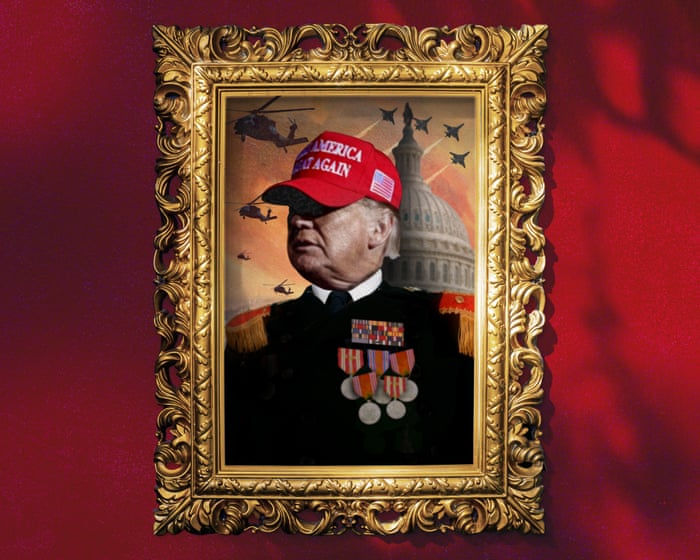
While the U.S. has invaded numerous countries and orchestrated regime changes over recent decades, this marks the first time since World War II it has done so as a self-proclaimed imperialist endeavor. This dramatic shift in rhetoric means all three of the world’s military superpowers are now openly pursuing revanchist goals to reclaim lost imperial greatness.
Vladimir Putin has embraced the legacy of Peter and Catherine the Great in restoring historical Russian lands, at a cost of roughly a million Russian troops killed or injured in Ukraine, according to the British Ministry of Defence. This follows earlier conquests in Chechnya and Georgia.
Xi Jinping is dedicated to China’s “great rejuvenation,” which includes recovering the territorial extent of the Qing empire at its peak, before the “century of humiliation” by foreign powers from the mid-19th to mid-20th centuries. China’s military expansion in the South China Sea stems from this rationale, and Xi has consistently stated that the mission will not be complete until Taiwan is under Beijing’s control.
Like the other two aging autocrats, Trump’s vision for America looks back to an imperial past. His favorite president is William McKinley, who oversaw a wave of territorial expansion in the late 19th century, including the takeover of Cuba and the annexation of Hawaii, Puerto Rico, Guam, the Philippines, and American Samoa.
Trump has also drawn inspiration from the early 19th century, particularly the Monroe Doctrine. “It was very important, but we fo…”We don’t forget about it anymore,” the president said on Saturday. This statement not only revealed Trump’s simplified view of history, but also highlighted the evolving relationship between the United States and the concept of empire.
The U.S. was founded in opposition to British imperialism. When President James Monroe introduced his doctrine in 1823, asserting U.S. leadership in the Americas, its purpose was to prevent further European colonialism. However, the version Trump seems to favor is the “Roosevelt corollary” from 1904, a time when the U.S. was actively engaged in traditional imperialism. Under this interpretation, the U.S. positioned itself as a regional “police power,” intervening in countries it deemed guilty of “flagrant cases of wrongdoing or impotence.”
In its national security strategy published in November, which outlined expansionist goals for early 2026, the White House introduced a “Trump corollary” to the Monroe Doctrine aimed at “restoring American pre-eminence in the western hemisphere.” Trump calls it the “Donroe doctrine,” borrowing from a New York Post headline from the previous year. He boasted that this version would be far bigger and better than the original, which he called “a big deal,” adding, “We’ve superseded it by a lot, by a real lot.”
Despite the heightened rhetoric and talk of doctrine from the White House, it remains unclear how the administration plans to proceed in Venezuela. There appears to be internal disagreement—to the extent that detailed discussions are even taking place—on how to translate the president’s vision of hemispheric dominance into concrete action. Until then, Trump’s approach to Venezuela arguably aligns with longstanding U.S. practices, particularly in the Americas, even during the era of the post-1945 “rules-based order.”
Some argue that, from the perspective of the Global South, U.S. imperialism has been a constant, and Trump has merely removed the veil of hypocrisy. “The idea that this is new is ridiculous,” said Kehinde Andrews, a professor of Black Studies at Birmingham City University in the UK and author of The New Age of Empire: How Racism and Colonialism Still Rule the World. “The U.S. has been doing this all along, but the only difference here is it’s just brazen. There’s nothing new about this at all. This is what the West does; Trump’s just honest about it. I actually find it refreshing, to be honest.”
Andrews added that if Trump followed through on his threat to seize Greenland—directing his imperial ambitions toward another Western state and potentially crippling NATO—it would mark a significant departure from past behavior. However, for that very reason, he doubted it would happen. “If it was a Black or brown place, it would have happened already,” Andrews said.
Daniel Immerwahr, a historian and humanities professor at Northwestern University in Illinois and author of How to Hide an Empire, agreed that “the U.S. empire never really ended.” He noted that the U.S. still controls five permanently inhabited territories—Puerto Rico, the U.S. Virgin Islands, Guam, the Northern Mariana Islands, and American Samoa—and maintains 750 military bases worldwide.
On the other hand, Immerwahr argued that, despite U.S. hypocrisy and double standards under the “rules-based international order,” the current era remains distinct from the age of traditional imperialism. “The notion that as the U.S. got more powerful it would grow larger—that was largely broken by the end of World War Two,” Immerwahr said. While the liberal international order did…While it hasn’t stopped invasions and wars, “it is also true that the post-1945 era has seen far more decolonization than imperial expansion, in terms of territory. And that has helped bring down war deaths enormously,” he said.
Historically, the left has condemned the post-1945 global order for cementing Western advantage, while more extreme elements on the right have despised it for involving the surrender of colonial assets and helping old adversaries recover from the war.
Donald Trump spent much of his career as a property developer railing against Japanese competition, an antipathy he has since broadened to include China. Much of his rhetoric regarding Venezuela and other potential imperial targets revolves around reclaiming assets, such as oil industry infrastructure, that he claims were “stolen” from the US. In Trump’s view, making America truly great again inevitably demands a return to expansion. Similarly, Vladimir Putin and Xi Jinping are bent on making Russia and China great again, driven by comparable motives.
Potential Clash of Empires
The US seizure this week of an oil tanker, the Marinera—despite it being Russian-flagged and escorted by a Russian submarine—brought into urgent focus the question of whether, and for how long, the ambitions of these three superpowers can be reconciled without major conflict.
“There can be really rather a protracted period of time in which empires can coexist,” said Nathalie Tocci, director of Italy’s Institute of International Affairs. “It’s not as if Trump is saying: ‘I want to be the only empire’; Trump is basically signaling and acting as if he’s absolutely fine with Russia and China being empires.”
“In the short to medium term, I would say that the greater risk is not the empires clashing with one another, but the subjugation of the colonies,” she added.
Putin and Xi would certainly be content with a world divided into spheres of influence. During Trump’s first administration, Russia informally floated the idea that the US could have a free hand in Venezuela in exchange for Russia holding sway over Ukraine within its sphere.
Fiona Hill, who served in the Trump White House at the time as the National Security Council director for Russian and European affairs, said: “The Russians were trying it on. It was all vague and a matter of hint-hint, wink-wink, saying: ‘Let’s talk about the Monroe Doctrine,’ and then giving a meaningful look.”
Hill said the first Trump administration rejected the suggestion of any such deal, but she acknowledged that the president’s views on empire had clearly evolved.
“I remember actually telling people before that he was a real estate mogul. He didn’t want to own your country, just put up his buildings on it,” she said. “But I suppose it’s a quick jump for him from real estate to state acquisition, and that’s what we weren’t anticipating before.”
Hill is not confident that the three great revanchist empires can stay out of each other’s way. In his newly whetted appetite for US expansionism, Trump has reserved the right to act far beyond his own hemisphere, mentioning actions like bombing Iran or even intervening in Gaza.
“He’s saying: ‘Hands off and keep away from the western hemisphere,’ but he’s not necessarily going to leave China unchecked in the Asia-Pacific,” Hill said. “The US is still supposed to be an Asia-Pacific power, and part of the western hemisphere is in the Pacific.”
“This world is much more complex now,” she added. “It’s all very fragile, especially because we don’t know what mistakes he’s going to make.”
Domestic Considerations
Trump’s imperial impulses may be constrained, to some extent, by US domestic politics. Polling after the Venezuela intervention suggested that large majorities, among both Democrats and Republicans, were opposed to any long-term involvement in the country.
However, Trump’s “Make America Great Again” base…The success of the operation thrilled the president, giving his long-sagging popularity a minor bump. For a leader seeking to divert attention from an intractable cost-of-living crisis at home and the looming threat of further child-trafficking revelations in the Epstein files, that may be enough to pursue other quick military spectacles abroad.
With the guardrails of the old order demolished, Trump’s America would become an even more chaotic force in the world—not coherent enough to be called an empire, yet imperial in how it allows the strong to impose suffering on the weak.
Writing in Mother Jones this week, the magazine’s Washington editor, David Corn, suggested this is the essence of the real Trump doctrine: “Violence is ours to use, at home and abroad, to get what we want.”
What was the Monroe Doctrine?
The Trump administration has revived the 203-year-old Monroe Doctrine, making it the cornerstone of its newly aggressive policy in the Americas.
The U.S. National Security Strategy published in November stated: “After years of neglect, the United States will reassert and enforce the Monroe Doctrine to restore American pre-eminence in the western hemisphere.”
Trump himself has used the term, characteristically adapting it to the “Donroe Doctrine”—a play on his first name to emphasize his ownership of the idea.
The original doctrine, put forward by President James Monroe in 1823, meant something quite different. He proposed that the recently established United States act as a guarantor against European imperialism in the region, declaring that the nations of the American continents were “not to be considered as subjects for future colonization by any European powers.”
In 1904, however, the doctrine was updated by President Theodore “Teddy” Roosevelt to suit the enthusiasm for U.S. colonialism at the time, following the Spanish-American War. The “Roosevelt Corollary” bestowed “international police power” on Washington to intervene anywhere in the Americas where it perceived “chronic wrongdoing” by a sovereign government.
The National Security Strategy declares a new “Trump Corollary” to the doctrine, signaling a return to colonial ambitions and the president’s focus on natural resources. It states that no outside power has the right to “own or control strategically vital assets.”
Frequently Asked Questions
Of course Here is a list of FAQs about the topic of Trumps territorial ambitions framed around the question of whether they represent a new imperialism or an illusion of power
BeginnerLevel Questions
1 What does territorial ambition even mean in this context
It refers to the desire to expand a countrys control influence or physical presence beyond its current borders In the modern era this is less about outright conquering land and more about economic dominance political sway and military positioning
2 Did Donald Trump actually try to buy or take over other countries
No there were no formal attempts to purchase or annex sovereign nations like in the 19th century The discussion centers on his rhetoric his transactional view of alliances and policies that expanded US military and economic pressure abroad
3 Whats the illusion of power part
Critics argue that while Trumps America First posture projected strength it often weakened traditional alliances emboldened rivals and eroded US diplomatic influenceultimately creating an illusion of unilateral power while diminishing real cooperative global leadership
4 Can you give a clear example of this new imperialism
A key example is the approach to the Middle East The brokering of the Abraham Accords normalized relations between Israel and several Arab states which expanded US diplomatic influence in the region Supporters saw this as smart dealmaking critics saw it as a form of diplomatic imperialism that sidelined the Palestinian issue to serve a UScentric strategy
Advanced Practical Questions
5 How did Trumps economic policies reflect imperial ambitions
Through aggressive trade wars and the use of sanctions Policies like tariffs were tools to force other nations to renegotiate trade terms on US preferences aiming to reorient global supply chains and assert American economic dominancea form of economic coercion some label as economic imperialism
6 Was the America First foreign policy genuinely isolationist or imperialist
It was a hybrid It was isolationist in pulling back from multilateral agreements and demanding allies pay more for their own defense However it was imperial in