It all began with a bold social media reply to the US Secretary of Homeland Security. Months later, a Europe-based effort to expose US Immigration and Customs Enforcement (ICE) agents has gained millions of views and attracted hundreds of volunteers.
“What we’re doing is a response to a troubling system,” said Dominick Skinner, the Irish creator of the website ICE List, who is based in the Netherlands. The site aims to strip away the anonymity many armed federal agents have while operating in US cities.
The idea for the website originated in June, when Homeland Security Secretary Kristi Noem warned that Americans who publicly identified ICE agents would face arrest. “I reposted that and said, ‘Well, we’re not in the US, so send them to us,'” recalled Skinner, 31. “By that evening, private investigators were messaging me, and within a week we had a plan in place.”
The site now functions as a crowdsourced wiki, relying on around 500 volunteers to sift through public tips. As tensions rise over ICE’s presence on American streets, another 300 people have shown interest in volunteering, Skinner added.
The concept is straightforward: the site publishes the names, positions, and sometimes photos of ICE agents and others involved in the Trump administration’s strict immigration policies. Skinner noted that the listings do not include home addresses or phone numbers.
This initiative has thrust Skinner and his six-person team into the heated debate over how much the Trump administration has allowed federal agents to conceal their identities.
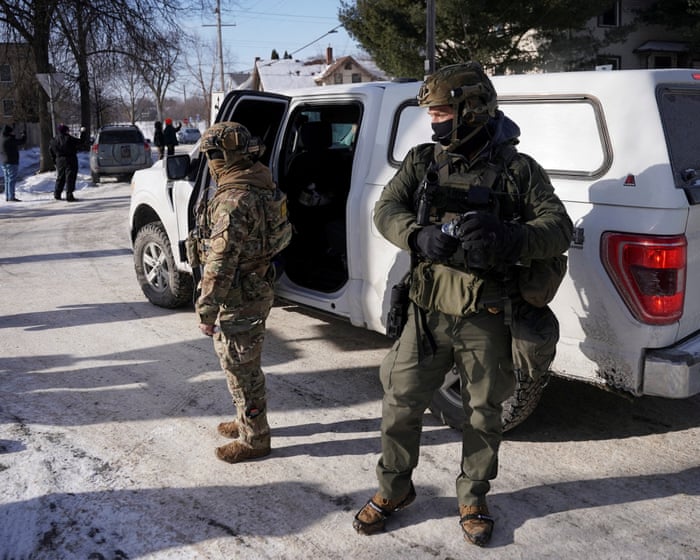
Armed officers have increasingly worn balaclavas, masks, and sunglasses to hide their faces, and they often lack the name tags typically worn by US law enforcement. At times, it’s even difficult to tell which agency they belong to.
In late January, Senate Democratic leader Chuck Schumer stated that Democrats would block funding for the Department of Homeland Security (DHS) and other agencies unless demands were met, such as requiring ICE agents to remove masks, wear body cameras, and carry proper identification.
The DHS has argued that masks are necessary to protect agents, claiming—without evidence—that they are facing a significant increase in violence.
In an interview with the Guardian, Skinner questioned the DHS’s claims about rising violence. “I always say that ICE isn’t actually afraid for their safety,” he remarked. “What they’re afraid of is not being invited to baseball games or to the pub with friends. Community exclusion—that’s what they fear.”
The website has gathered tips on agents’ identities from various sources, ranging from large-scale leaks to reports from neighbors, hotel staff, and bartenders who have seen ID cards. A small number of agents have also been identified using AI and facial recognition technology, Skinner said.
The information is then verified using publicly available data, much of which comes from the agents themselves. “Over 90% of the people we’ve identified were found through information they made public,” he explained, citing platforms like LinkedIn. “All we do is amplify already public information.”
Of the more than 1,500 people identified, five listings have been removed—some due to inaccuracies, others because the individuals had left the agency.
Skinner maintains that the site serves the public interest, dismissing Noem’s claims that identifying ICE agents is a crime and her threats of prosecution.
With polls indicating that most Americans disapprove of ICE’s handling of its duties, Skinner said the site’s goal is to foster an atmosphere similar to 1920s Chicago, when…Publicly naming members of the Ku Klux Klan caused many of them to be shunned by their communities. “There were no attacks on KKK members, but they were boycotted in public life,” he explained. “Gradually, the KKK faded away in Chicago. That’s essentially what we’re aiming for here—simply letting people know which of their neighbors are involved in this.”
Frequently Asked Questions
Of course Here is a list of FAQs about ICE List designed to answer questions from basic to more advanced
Beginner Definition Questions
1 What is the ICE List website
Its a small independent website based in Europe that publishes information about US Immigration and Customs Enforcement agents officers and contractors as well as their associates
2 Why does this website exist
The creators state it exists for public accountability and transparency They argue that because ICE agents actions have significant public impact the public has a right to know who they are It positions itself as a counter to the anonymity of immigration enforcement
3 Is this website legal
It operates from Europe where different privacy and data protection laws apply While publishing this information is controversial its European base generally shields it from direct US legal action though it has faced pressure and attempts to be taken offline
4 What kind of information does it publish
Typically it publishes names photos work affiliations social media profiles and sometimes professional details of individuals connected to ICE and related agencies
Usage Practical Questions
5 Who uses this site and why
Its used by journalists researchers activists and affected communities to identify agents involved in specific operations track agency personnel changes or conduct public interest research
6 Is it safe to visit the website
Accessing the site is generally legal in most places but it may be monitored by certain organizations or employers Using standard privacy tools is common for visitors who wish to remain anonymous
7 How does the site get its information
It aggregates publicly available data from sources like LinkedIn government directories court records news articles and social media compiling it into dedicated profiles
8 Can someone request their information to be removed
The site has a removal request process but it is selective They generally do not remove profiles of current agents or highranking officials citing public interest
Advanced Ethical Questions
9 What are the main criticisms of the ICE List
Critics call it unethical and dangerous arguing it
Harasses and intimidates individual officers and their families
Creates security risks by exposing personal details