Even before U.S. and Israeli missiles began to fall, observers who sensed a shift in the air were predicting a “Berlin Wall moment” for Iran. The massive nationwide protests in January—though brutally suppressed, with an estimated tens of thousands killed—were viewed as signs of an impending reckoning for the country’s ruling clerics. This echoed how the popular breach of the Berlin Wall, that fearsome symbol of Cold War division, heralded the collapse of East Germany’s communist regime in 1989.
Now, the sudden death of Iran’s most powerful figure, Supreme Leader Ayatollah Ali Khamenei, has further fueled the belief that a profound transformation is near. Khamenei, along with his wife, was killed in an Israeli missile strike on his supposedly secure compound in Tehran last Saturday.
“I think the death of Khamenei is close to a Berlin Wall moment, in the sense that it marks the end of an era,” said Abbas Milani, director of Iranian studies at Stanford University. “The psychological effect is profound.”
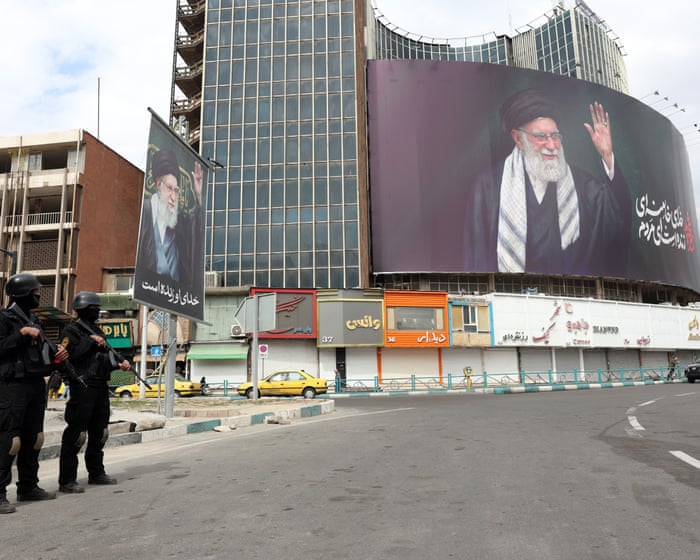
Khamenei, 86, stood atop Iran’s Islamic power structure for 37 years—nearly a decade longer than the Berlin Wall stood. As the senior religious authority in Iran’s system of velayat-e faqih (rule by Islamic jurisprudence, established after the 1979 revolution), he had the final say on all state matters. This included decisions on negotiating with the U.S. over Iran’s nuclear program, recognizing Israel, women’s dress codes, and whether to bow to public demands for liberalizing social reforms. Khamenei consistently leaned toward intransigence on these and many other issues.
While some analysts argue that the Islamic Republic is not a personal dictatorship and can therefore survive a leadership change, Milani—author of numerous books on Iran—disagrees. “It was a personalized leadership,” he said. “If you read what [former President Hassan] Rouhani and [former Foreign Minister Mohammad Javad] Zarif were saying in recent months, every time they mentioned higher powers rejecting their warnings that Iran was on the wrong path and couldn’t fight the United States and Israel together, everyone knew they were talking about Khamenei.”
His sudden and violent removal has created a political vacuum that current regime members may struggle to fill, despite a succession plan being in place and already underway. Khamenei’s son, Mojtaba, has emerged as a frontrunner to succeed him.
“What’s the Mike Tyson quote? Everyone has a plan until they get punched in the face,” said Naysan Rafati, senior Iran analyst at the International Crisis Group. “His death and replacement would have been challenging under any circumstances. But it’s happening under the most violent conditions the state could have anticipated, with the potential targeting of anyone announced as his successor, as well as members of the transition council meant to steer the process.”
There have been abundant signs of the regime straining under pressure. Khamenei’s funeral, an event the authorities would typically hype for maximum propaganda effect, has been postponed. This is to avoid giving U.S. and Israeli forces an opportunity to target senior officials attending, adding to the number of regime figures already killed.
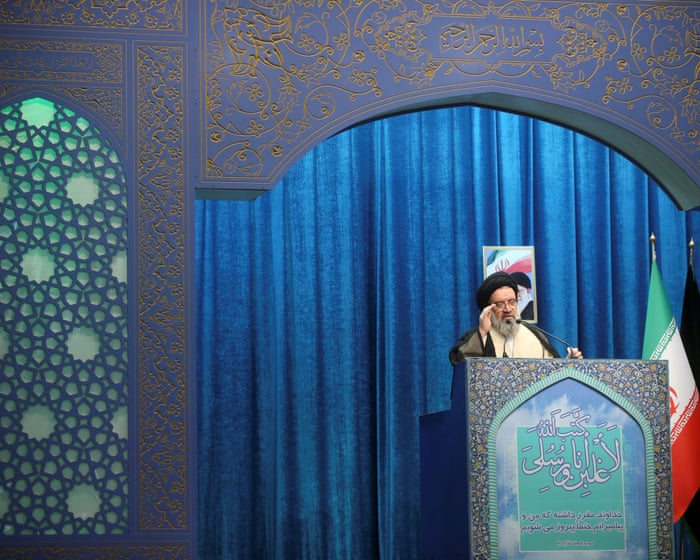
For the same reason, the Assembly of Experts—the 88-member clerical body responsible for electing a new leader—met remotely this week instead of at its headquarters in the shrine city of Qom, which was bombed on Tuesday.
Within the penal system, authorities have intensified pressure on political prisoners, even while releasing other inmates on bail amid reports that some prisons have been hit in the bombardment. Prisoners in Ward 209, a special high-security section…Political prisoners held in a section of Tehran’s notorious Evin prison, which is run by Iran’s intelligence ministry, have reportedly been moved to other locations. This appears to be a precaution in case the facility is bombed, as it was by Israel during a 12-day war last June.
Following reports of celebrations upon news of Khamenei’s death, security forces are said to have fired live rounds at the windows of homes from which anti-regime slogans were shouted—a common occurrence during the recent unrest. In what seems to be an attempt to intimidate opponents while boosting their own morale, members of the hardline Basij militia have reportedly been driving through residential neighborhoods, blaring pro-regime slogans from their cars.
Despite these measures, some analysts doubt the regime’s ability to retain power if it clings to its previous rigid principles without the unyielding presence of Khamenei, who is accused of painting it into a corner by blocking attempts to evolve.
“Khamenei, through his intransigence, dogmatism, and by ordering this mass murder of protesters, made it impossible for any version of this regime to survive,” said Milani, arguing that the velayat-e faqih system is “completely dead” regardless of who replaces Khamenei. “I think he resented the idea that there might be an Iran without him, or a regime without him.”
However, Alex Vatanka, director of the Iran Program at the Middle East Institute in Washington, suggested that the Islamic Revolutionary Guard Corps (IRGC)—the elite force Khamenei empowered by granting it control over large parts of the economy in exchange for its support—could redeem itself. This could involve easing the domestic repression favored by Khamenei, an approach that would likely require a more pliable successor than Mojtaba Khamenei, to placate a population still angry over the recent violent crackdown on protests.
At the same time, they could play the nationalist card by invoking the traditional Iranian Shia spirit of martyrdom, rooted in the seventh-century Battle of Karbala, to defend the country from U.S. and Israeli threats—a stance that aligns closely with the ideology of the regime’s staunchest supporters.
“This is the part that Donald Trump certainly does not understand,” Vatanka said. “For many of these people, this is something they may have been waiting for. It’s a way out from being held accountable for all their crimes against their own people. Suddenly, they go from being accused of killing protesters just a few weeks ago to, in the eyes of some Iranians at least, defending the homeland.”
Milani argued that the regime’s surviving elements no longer possess the means or the power to intimidate the populace enough to hold power through fear alone. “You need an apparatus of oppression,” he said. “They don’t have enough people willing to kill for them. They still have some, but they have lost that focused will that allowed, for example, the Communist Party in China to survive after Tiananmen Square. And you need a population that is frightened. Fear has dissipated. In Iran, when fear dissipates, authoritarian and pseudo-totalitarian regimes can’t survive.”
Frequently Asked Questions
Of course Here is a list of FAQs about the framing of Ayatollah Khameneis death as an end of an era and a potential turning point for Iran
BeginnerLevel Questions
1 Who is Ayatollah Khamenei and why is his position so important
Ayatollah Ali Khamenei is the Supreme Leader of Iran the highest political and religious authority in the country He has held this position since 1989 making him the longestserving head of state in the Middle East He has ultimate control over the military judiciary foreign policy and media
2 What does end of an era mean in this context
It refers to the end of the foundational period of the Islamic Republic which was shaped by its first Supreme Leader Ayatollah Ruhollah Khomeini and solidified by Khamenei Khameneis death would mark the first transition of this supreme power since 1989 closing a chapter defined by the IranIraq War confrontation with the West and a specific ideological vision
3 Why are people comparing it to the fall of the Berlin Wall
The Berlin Walls fall symbolized the dramatic and unexpected collapse of an entrenched political system Analysts use this comparison to suggest that Khameneis death could potentially trigger a similar rapid and fundamental change in Irans political system though it is not a prediction of collapse
4 Could his death really change Iran that much
It creates a significant moment of uncertainty and potential instability The system he oversaw was built around his authority His absence will test all of Irans institutionsthe Revolutionary Guards the clerical establishment and the presidencyand could expose or intensify existing internal divisions
Advanced Practical Questions
5 What is the process for choosing the next Supreme Leader
The Assembly of Experts an 88member clerical body elected by the public is constitutionally tasked with selecting the next Supreme Leader In practice the decision will likely be the result of intense behindthescenes bargaining among powerful factions within the political and military elite
6 What are the main factions that will be vying for influence after his death
The main power centers include