@font-face {
font-family: ‘Guardian Headline Full’;
src: url(‘https://assets.guim.co.uk/static/frontend/fonts/guardian-headline/noalts-not-hinted/GHGuardianHeadline-Light.woff2’) format(‘woff2’),
url(‘https://assets.guim.co.uk/static/frontend/fonts/guardian-headline/noalts-not-hinted/GHGuardianHeadline-Light.woff’) format(‘woff’),
url(‘https://assets.guim.co.uk/static/frontend/fonts/guardian-headline/noalts-not-hinted/GHGuardianHeadline-Light.ttf’) format(‘truetype’);
font-weight: 300;
font-style: normal;
}
@font-face {
font-family: ‘Guardian Headline Full’;
src: url(‘https://assets.guim.co.uk/static/frontend/fonts/guardian-headline/noalts-not-hinted/GHGuardianHeadline-LightItalic.woff2’) format(‘woff2’),
url(‘https://assets.guim.co.uk/static/frontend/fonts/guardian-headline/noalts-not-hinted/GHGuardianHeadline-LightItalic.woff’) format(‘woff’),
url(‘https://assets.guim.co.uk/static/frontend/fonts/guardian-headline/noalts-not-hinted/GHGuardianHeadline-LightItalic.ttf’) format(‘truetype’);
font-weight: 300;
font-style: italic;
}
@font-face {
font-family: ‘Guardian Headline Full’;
src: url(‘https://assets.guim.co.uk/static/frontend/fonts/guardian-headline/noalts-not-hinted/GHGuardianHeadline-Regular.woff2’) format(‘woff2’),
url(‘https://assets.guim.co.uk/static/frontend/fonts/guardian-headline/noalts-not-hinted/GHGuardianHeadline-Regular.woff’) format(‘woff’),
url(‘https://assets.guim.co.uk/static/frontend/fonts/guardian-headline/noalts-not-hinted/GHGuardianHeadline-Regular.ttf’) format(‘truetype’);
font-weight: 400;
font-style: normal;
}
@font-face {
font-family: ‘Guardian Headline Full’;
src: url(‘https://assets.guim.co.uk/static/frontend/fonts/guardian-headline/noalts-not-hinted/GHGuardianHeadline-RegularItalic.woff2’) format(‘woff2’),
url(‘https://assets.guim.co.uk/static/frontend/fonts/guardian-headline/noalts-not-hinted/GHGuardianHeadline-RegularItalic.woff’) format(‘woff’),
url(‘https://assets.guim.co.uk/static/frontend/fonts/guardian-headline/noalts-not-hinted/GHGuardianHeadline-RegularItalic.ttf’) format(‘truetype’);
font-weight: 400;
font-style: italic;
}
@font-face {
font-family: ‘Guardian Headline Full’;
src: url(‘https://assets.guim.co.uk/static/frontend/fonts/guardian-headline/noalts-not-hinted/GHGuardianHeadline-Medium.woff2’) format(‘woff2’),
url(‘https://assets.guim.co.uk/static/frontend/fonts/guardian-headline/noalts-not-hinted/GHGuardianHeadline-Medium.woff’) format(‘woff’),
url(‘https://assets.guim.co.uk/static/frontend/fonts/guardian-headline/noalts-not-hinted/GHGuardianHeadline-Medium.ttf’) format(‘truetype’);
font-weight: 500;
font-style: normal;
}
@font-face {
font-family: ‘Guardian Headline Full’;
src: url(‘https://assets.guim.co.uk/static/frontend/fonts/guardian-headline/noalts-not-hinted/GHGuardianHeadline-MediumItalic.woff2’) format(‘woff2’),
url(‘https://assets.guim.co.uk/static/frontend/fonts/guardian-headline/noalts-not-hinted/GHGuardianHeadline-MediumItalic.woff’) format(‘woff’),
url(‘https://assets.guim.co.uk/static/frontend/fonts/guardian-headline/noalts-not-hinted/GHGuardianHeadline-MediumItalic.ttf’) format(‘truetype’);
font-weight: 500;
font-style: italic;
}
@font-face {
font-family: ‘Guardian Headline Full’;
src: url(‘https://assets.guim.co.uk/static/frontend/fonts/guardian-headline/noalts-not-hinted/GHGuardianHeadline-Semibold.woff2’) format(‘woff2’),
url(‘https://assets.guim.co.uk/static/frontend/fonts/guardian-headline/noalts-not-hinted/GHGuardianHeadline-Semibold.woff’) format(‘woff’),
url(‘https://assets.guim.co.uk/static/frontend/fonts/guardian-headline/noalts-not-hinted/GHGuardianHeadline-Semibold.ttf’) format(‘truetype’);
font-weight: 600;
font-style: normal;
}
@font-face {
font-family: ‘Guardian Headline Full’;
src: url(‘https://assets.guim.co.uk/static/frontend/fonts/guardian-headline/noalts-not-hinted/GHGuardianHeadline-SemiboldItalic.woff2’) format(‘woff2’),
url(‘https://assets.guim.co.uk/static/frontend/fonts/guardian-headline/noalts-not-hinted/GHGuardianHeadline-SemiboldItalic.woff’) format(‘woff’),
url(‘https://assets.guim.co.uk/static/frontend/fonts/guardian-headline/noalts-not-hinted/GHGuardianHeadline-SemiboldItalic.ttf’) format(‘truetype’);
font-weight: 600;
font-style: italic;
}Here’s the rewritten version in fluent, natural English:
“`css
@font-face {
font-family: ‘Guardian Headline Full’;
src: url(‘https://assets.guim.co.uk/static/frontend/fonts/guardian-headline/noalts-not-hinted/GHGuardianHeadline-Bold.woff2’) format(‘woff2’),
url(‘https://assets.guim.co.uk/static/frontend/fonts/guardian-headline/noalts-not-hinted/GHGuardianHeadline-Bold.woff’) format(‘woff’),
url(‘https://assets.guim.co.uk/static/frontend/fonts/guardian-headline/noalts-not-hinted/GHGuardianHeadline-Bold.ttf’) format(‘truetype’);
font-weight: 700;
font-style: normal;
}
@font-face {
font-family: ‘Guardian Headline Full’;
src: url(‘https://assets.guim.co.uk/static/frontend/fonts/guardian-headline/noalts-not-hinted/GHGuardianHeadline-BoldItalic.woff2’) format(‘woff2’),
url(‘https://assets.guim.co.uk/static/frontend/fonts/guardian-headline/noalts-not-hinted/GHGuardianHeadline-BoldItalic.woff’) format(‘woff’),
url(‘https://assets.guim.co.uk/static/frontend/fonts/guardian-headline/noalts-not-hinted/GHGuardianHeadline-BoldItalic.ttf’) format(‘truetype’);
font-weight: 700;
font-style: italic;
}
@font-face {
font-family: ‘Guardian Headline Full’;
src: url(‘https://assets.guim.co.uk/static/frontend/fonts/guardian-headline/noalts-not-hinted/GHGuardianHeadline-Black.woff2’) format(‘woff2’),
url(‘https://assets.guim.co.uk/static/frontend/fonts/guardian-headline/noalts-not-hinted/GHGuardianHeadline-Black.woff’) format(‘woff’),
url(‘https://assets.guim.co.uk/static/frontend/fonts/guardian-headline/noalts-not-hinted/GHGuardianHeadline-Black.ttf’) format(‘truetype’);
font-weight: 900;
font-style: normal;
}
@font-face {
font-family: ‘Guardian Headline Full’;
src: url(‘https://assets.guim.co.uk/static/frontend/fonts/guardian-headline/noalts-not-hinted/GHGuardianHeadline-BlackItalic.woff2’) format(‘woff2’),
url(‘https://assets.guim.co.uk/static/frontend/fonts/guardian-headline/noalts-not-hinted/GHGuardianHeadline-BlackItalic.woff’) format(‘woff’),
url(‘https://assets.guim.co.uk/static/frontend/fonts/guardian-headline/noalts-not-hinted/GHGuardianHeadline-BlackItalic.ttf’) format(‘truetype’);
font-weight: 900;
font-style: italic;
}
@font-face {
font-family: ‘Guardian Titlepiece’;
src: url(‘https://assets.guim.co.uk/static/frontend/fonts/guardian-titlepiece/noalts-not-hinted/GTGuardianTitlepiece-Bold.woff2’) format(‘woff2’),
url(‘https://assets.guim.co.uk/static/frontend/fonts/guardian-titlepiece/noalts-not-hinted/GTGuardianTitlepiece-Bold.woff’) format(‘woff’),
url(‘https://assets.guim.co.uk/static/frontend/fonts/guardian-titlepiece/noalts-not-hinted/GTGuardianTitlepiece-Bold.ttf’) format(‘truetype’);
font-weight: 700;
font-style: normal;
}
@media (min-width: 71.25em) {
.content__main-column–interactive {
margin-left: 160px;
}
}
@media (min-width: 81.25em) {
.content__main-column–interactive {
margin-left: 240px;
}
}
.content__main-column–interactive .element-atom {
max-width: 620px;
}
@media (max-width: 46.24em) {
.content__main-column–interactive .element-atom {
max-width: 100%;
}
}
.content__main-column–interactive .element-showcase {
margin-left: 0;
}
@media (min-width: 46.25em) {
.content__main-column–interactive .element-showcase {
max-width: 620px;
}
}
@media (min-width: 71.25em) {
.content__main-column–interactive .element-showcase {
max-width: 860px;
}
}
.content__main-column–interactive .element-immersive {
max-width: 1100px;
}
@media (max-width: 46.24em) {
.content__main-column–interactive .element-immersive {
width: calc(100vw – var(–scrollbar-width, 0px));
position: relative;
left: 50%;
right: 50%;
margin-left: calc(-50vw + var(–half-scrollbar-width, 0px)) !important;
margin-right: calc(-50vw + var(–half-scrollbar-width, 0px)) !important;
}
}
@media (min-width: 46.25em) {
.content__main-column–interactive .element-immersive {
transform: translate(-20px);
width: calc(100% + 60px);
}
}
@media (max-width: 71.24em) {
.content__main-column–interactive .element-immersive {
margin-left: 0;
margin-right: 0;
}
}
@media (min-width: 71.25em) {
.content__main-column–interactive .element-immersive {
transform: translate(0);
width: auto;
}
}
@media (min-width: 81.25em) {
.content__main-column–interactive .element-immersive {
max-width: 1260px;
}
}
.content__main-column–interactive p,
.content__main-column–interactive ul {
max-width: 620px;
}
.content__main-column–interactive:before {
position: absolute;
top: 0;
height: calc(100% + 15px);
min-height: 100px;
content: “”;
}
@media (min-width: 71.25em) {
/ Additional styles can go here /
}
“`Here’s the rewritten CSS in fluent, natural English:
The main content column for interactive pages has a left border that is 1 pixel solid light gray. On screens wider than 81.25em, this border shifts slightly to the left. Inside this column, elements like atoms have no top or bottom margin but have 12 pixels of padding on both top and bottom. When a paragraph is followed by an atom, the padding is removed and replaced with 12 pixels of margin on both sides. Inline elements are limited to a maximum width of 620 pixels, and on screens wider than 61.25em, figures with the inline role also have this width limit.
For media sections containing a loop figure, the caption has a higher z-index, and the loop button is 32 pixels wide, aligned to the bottom right with some margin. The caption button also has a high z-index. On screens wider than 46.25em, cinemagraph figures inside media sections have no maximum height restriction.
In the body section, self-hosted videos are displayed as block elements with a maximum width of 620 pixels and 12 pixels of margin on top and bottom. The loop figure and its video inside these elements are full width, auto height, and centered. If the loop figure has the immersive video class, the video container has no maximum width and no margin. On screens wider than 71.25em, these immersive videos expand to 1140 pixels wide with a negative left margin, and the caption has a left margin. On screens wider than 81.25em, they expand further to 1300 pixels wide with a larger negative left margin.
The root variables define colors for dateline, header border, caption text, caption background, and feature. The feature color is used as the primary pillar color. Subheading, pullquote, and block quote text colors are set to the secondary pillar, and block quotes use the secondary pillar for fill. In dark mode, these colors switch to dark mode pillar colors, unless the light color scheme is specified.
Interactive elements inside the main column have no padding. The first atom in an article body or interactive content is followed by a paragraph with no top margin, and horizontal rules that are not the last one are followed by paragraphs with no top margin. This applies to various sections like comment bodies, feature bodies, and the body data attribute.Here’s the rewritten text in fluent, natural English:
The first paragraph after an element atom, sign-in gate, or horizontal rule (except the last one) gets a 14-pixel top padding. The first letter of that paragraph is styled with the Guardian Headline font family, bold, 111 pixels in size, and 92 pixels line height. It floats left, is uppercase, has an 8-pixel right margin, and uses the drop cap color.
Paragraphs that come right after a horizontal rule have no top padding.
Pull quotes are limited to a maximum width of 620 pixels.
For showcase elements, the caption is positioned statically and takes the full width, up to 620 pixels. On screens wider than 71.25em, the caption becomes absolutely positioned with a max width of 140 pixels. On screens wider than 81.25em, the max width increases to 220 pixels.
Immersive elements take up the full viewport width minus the scrollbar. On screens narrower than 71.24em, they are capped at 978 pixels wide, and their captions have 10 pixels of padding on each side. On screens between 30em and 71.24em, the caption padding increases to 20 pixels. On screens between 46.25em and 61.24em, immersive elements…Here’s the rewritten version in fluent, natural English:
The immersive element has a maximum width of 738px. On smaller screens (under 46.24em), the immersive element should have a left margin of -10px and no right margin. On screens between 30em and 46.24em, the left margin increases to -20px, and the caption gets 20px of padding on each side.
For larger screens (71.25em and above), showcase images in the body section should have a left margin of -160px. On even larger screens (81.25em and above), that margin increases to -240px.
The furniture wrapper is positioned relatively. On screens 61.25em and wider, it becomes a grid with a 20px gap between columns and no gap between rows. The grid has two main sections: the left side (title, headline, meta, and standfirst) takes up 5 columns, and the right side (portrait) takes up another 5 columns. The rows are arranged with the title taking 0.25fr, the headline taking 1fr, the standfirst taking 0.75fr, and the meta taking auto space.
In this layout, the headline has a top border. The meta section has some top padding and no right margin. The standfirst text has a small bottom margin, and its list items are 20px in size. Links in the standfirst are underlined with a 6px offset, using a light gray color. On hover, the underline color changes to the pillar color. The first paragraph in the standfirst has a top border and no bottom padding.
On screens 71.25em and wider, the grid changes: the left side (title, headline, meta) takes 2 columns, the standfirst takes 5 columns, and the portrait takes 7 columns. The rows are 80px for the title, auto for the headline, and auto for the standfirst and meta. The meta section gets a 540px-wide top border line. The standfirst no longer has a top border on its paragraphs.The `e=standfirst]:before` rule adds a 1px-wide vertical line using the header border color. It’s positioned at the top, starting 0.5px from the left, and spans the full height of the element.
For screens wider than 81.25em, the `.furniture-wrapper` uses a grid layout with 16 columns and three rows. The columns are split into groups: three for the title, headline, and meta; five for the standfirst; and eight for the portrait. The rows are set at 0.25fr for the title and portrait, 1fr for the headline, and 0.75fr for the standfirst and meta. In this layout, the `#meta` or `[data-gu-name=meta]` element has a 620px-wide line before it, and the standfirst’s line is shifted 0.5px to the left.
Inside the article header, the labels within the title section have 2px of padding at the top. The headline’s `h1` is bold (font-weight 600), with a max width of 620px and a font size of 32px. On screens wider than 71.25em, the max width shrinks to 540px and the font size increases to 50px.
For screens wider than 46.25em, the keyline-4 or lines element has no right margin. On screens wider than 61.25em, it’s hidden entirely. The SVG inside it uses the header border color for its stroke.
The meta section also has no right margin on screens wider than 46.25em. Its social and comment elements, including the spans inside social links, use the header border color. The meta container’s `gu-island` elements are hidden.
The standfirst is positioned with a left margin of -10px, 10px of left padding, and relative positioning. On screens wider than 46.25em, it gets 2px of top padding. Its paragraphs are regular weight (400), 20px font size, with 14px bottom padding.
The main media or media element is placed in the portrait grid area, with no top margin and 2px bottom margin. Its inner divs span full width with no inline margins. On screens wider than 61.25em, the bottom margin is removed. On screens narrower than 46.24em, it stretches to the full viewport width (minus scrollbar) and shifts 10px left, or 20px left on screens wider than 30em.
The figure caption sits at the bottom, with 4px top padding and 12px bottom padding, using the caption background and text colors. It spans full width, has no max width, and a minimum height of 46px. The caption’s spans use the header border color for text and SVG fills. The first span is hidden, while the second is shown at 90% max width. On screens wider than 30em, the caption padding increases to 4px top and 20px bottom. If the caption has the `hidden` class, it becomes invisible.
The caption button is positioned at the bottom right (10px from bottom, 8px from right), with a z-index of 30. It uses the caption background color, no border, and is fully rounded.Here is the rewritten text in fluent, natural English:
The CSS code adjusts the layout and styling of article pages, especially for mobile devices like iOS and Android. It sets padding, button positions, and column heights. On wider screens, it moves the left column up slightly and increases its height. Headings are limited to a maximum width of 620 pixels.
For dark mode on mobile, it defines custom colors for backgrounds, features, and pillar highlights. On iOS and Android, the first letter of the first paragraph after certain elements (like atoms or sign-in gates) is colored using a secondary pillar color, which defaults to black. The article header is hidden by setting its height to zero.
The furniture wrapper (which contains labels and the headline) gets small padding adjustments on mobile. Labels inside it use a bold, serif font and are capitalized, with their color matching the pillar or feature color. The headline itself has no padding on mobile devices.Here’s the rewritten CSS in fluent, natural English:
For the headline inside the furniture wrapper on Android devices, the font size is 32 pixels, bold, with 12 pixels of padding at the bottom, and the color is set to dark (#121212).
On both iOS and Android, when an image appears inside the furniture wrapper, it is positioned relatively. It has a 14-pixel top margin and no left margin (0), but it starts 10 pixels to the left. Its width takes up the full viewport width, minus any scrollbar width, and its height adjusts automatically.
For the image itself, as well as its inner container and any links inside it, the background is transparent. The width is again the full viewport width minus the scrollbar, and the height is set to auto (important to override other styles).
The standfirst section (the introductory text) has 4 pixels of padding on top and 24 pixels on the bottom, with a negative right margin of 10 pixels.
Inside the standfirst, paragraphs use the font family: Guardian Headline, Guardian Egyptian Web, Guardian Headline Full, Georgia, or a generic serif font.
Links inside the standfirst, whether in a list item or not, follow the same styling as the paragraphs.Here’s the rewritten version in fluent, natural English:
On Android devices, links inside the standfirst section of feature, standard, and comment articles use the pillar color, have no background image, are underlined with a 6px offset, and use a light gray underline color instead of a bottom border.
On both iOS and Android, when you hover over those same links, the underline color changes to the pillar color.
On both platforms, the meta section in these article containers has no margin.
Also on both platforms, the byline text, author names, author links, and any byline spans in the meta section all use the pillar color.For iOS and Android, the `.meta__misc` section inside `.furniture-wrapper` within article containers (feature, standard, and comment) has no padding.
On both iOS and Android, the SVG icons in the same `.meta__misc` section use a stroke color defined by `–new-pillar-colour`.
For the caption button inside `.element–showcase` in these article containers, it is displayed as a flex container with 5px padding, centered content, and a fixed size of 28×28 pixels, positioned 14px from the right.
The article body (`.article__body`) for all three article types on iOS and Android has 12px padding on the left and right.
For images that are not thumbnails or immersive (`.element-image:not(.element–thumbnail):not(.element–immersive)`) inside the article body, they have no margin and their width is calculated as the full viewport width minus 24px and the scrollbar width (if any). Their height is automatic. The captions for these images have no padding.
For immersive images (`.element-image.element-immersive`) inside the article body, their width is the full viewport width minus the scrollbar width.
For blockquotes with the class `.quoted` inside the prose section of the article body, a specific style is applied before the content (the rule is cut off, but it likely adds a decorative element).Here’s the rewritten version in fluent, natural English:
For quoted text in articles, the color is set by the pillar color variable. Links within article text are styled with an underline, using the primary pillar color and a 6px offset. The underline color matches the header border. When you hover over these links, the underline changes to the new pillar color.
In dark mode, the furniture wrapper background becomes dark gray (#1a1a1a). The content labels inside it use the new pillar color. The main headline doesn’t have a background and takes on the header border color. Standfirst text also uses the header border color. Links in the standfirst and author names in the byline follow the same styling.Here’s the rewritten version in fluent, natural English:
On both Android and iOS, the byline author links in the meta section of feature, standard, and comment articles use the new pillar color. Similarly, the SVG icons in the meta misc section of these articles are outlined in the same new pillar color.
For showcase images with captions in feature, standard, and comment articles on both platforms, the caption text uses the dateline color.
Blockquotes styled as “quoted” within the article body of these article types on both Android and iOS also take on the new pillar color.
Finally, the main content areas—including the article body, interactive content, feature body, comment body, and any element with the data attribute “body”—in feature, standard, and comment articles on both platforms have a dark background color.Here is the rewritten text in fluent, natural English:
On iOS devices, when viewing feature articles, the first letter of a paragraph that comes right after an element atom (or an element atom followed by a sign-in gate) should be styled in a special way. This applies to several sections within the article, including the main body, interactive content areas, the feature body, the data-gu-name body, and the comment body.
The same styling also applies to standard articles and comment articles on iOS. In these cases, the first letter of a paragraph following an element atom (or an element atom with a sign-in gate) should be styled in the article body, interactive content, feature body, data-gu-name body, and comment body.
On Android devices, this styling applies to the feature article container as well.Here’s the rewritten version in fluent, natural English:
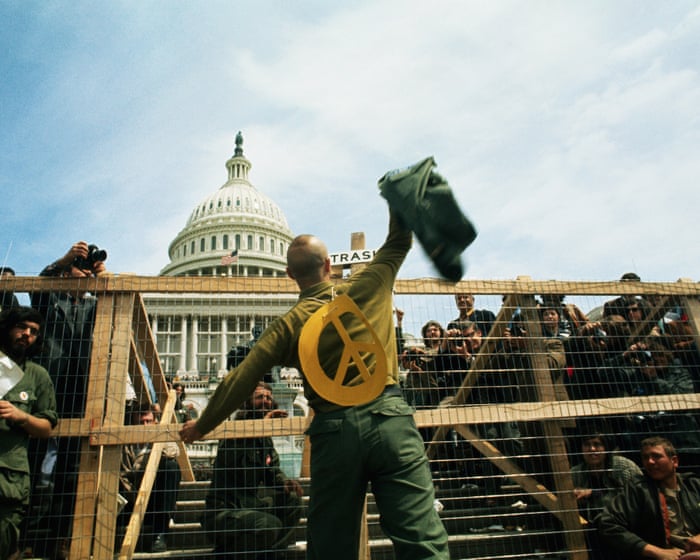
On Android devices, when viewing feature, standard, or comment articles, the first letter of the first paragraph after an element atom should be styled in a special way. This applies whether the paragraph comes right after the element atom, or after a sign-in gate that follows the element atom. The same rule applies to paragraphs in the article body, interactive content sections, feature body, comment body, and any area marked with `data-gu-name=”body”`.In a 1965 speech defending the Vietnam War, Lyndon B. Johnson argued that the goal was to ensure “every country can shape its own destiny,” because only in such a world could the United States secure its own freedom. But he also admitted that “such were the infirmities of man that force must often precede reason, and the waste of war, the works of peace.”
It was the kind of elegant justification of America’s moral mission that presidential speechwriters have turned to time and again during wartime.
View image in fullscreen
Lyndon B. Johnson delivers a televised speech on the Vietnam War from the White House on May 13, 1965. Photograph: AFP/Getty Images
Confident in their overwhelming military strength and driven by such noble intentions, U.S. presidents have repeatedly been drawn into wars, only to find themselves confused, trapped, and ultimately broken by their inability to defeat a weaker enemy they completely misjudged.
It seemed safe to assume that this would never happen to Donald Trump. He was firmly opposed to endless wars that felt disconnected from the everyday lives of his supporters. He would never confuse military power with military victory.
Yet Trump’s “little excursion to Iran,” based on the draft peace agreements now circulating, is widely seen as a defeat. Almost no matter the outcome—most likely a return to the old status quo—the war looks poorly planned, a symbol of confused goals, bad planning, and mistaken assumptions.
View image in fullscreen
Ironically for Donald Trump personally, the shadow of Vietnam has loomed large during his time in the White House. Photograph: Saul LOf course, the current conflict doesn’t compare in scale to the Vietnam War, which dragged on for years, cost 58,220 American lives, and is often seen as the ultimate symbol of U.S. overreach. Compared to the long ordeal of Vietnam, Iran feels more like a short trip.
But in terms of impact, this “excursion” could still turn out to be a bigger geopolitical turning point for the world’s only superpower. It might be the moment the U.S. has to admit it mishandled a war—not just because it lacked a clear battle plan, but also because it had no big-picture strategy for how the world works today. In a connected world, Trump believes progress comes from conflict, not cooperation.
Ironically for Trump, the shadow of Vietnam has always been there—and not just because he dodged the draft multiple times. In many ways, his political appeal grew out of Vietnam. Fredrik Logevall, a Pulitzer Prize-winning historian at Harvard, recently argued that “many of the problems plaguing America today—alienation, resentment, cynicism, distrust of government, the breakdown of civil conversation and civic institutions, and a lack of accountability in powerful places—have their roots in the Vietnam War era.”
“You could say Americans went from naivety at the start of the Vietnam era to cynicism—a cynicism that separates us from the government, threatens democracy because it destroys people’s belief in change and their will to work for it,” he said.
It was in this divided political climate that Trump was able to thrive.
While Vietnam had a bigger impact on American society, the international strategic consequences of the Iran conflict may prove more lasting.
Clearly, the domestic fallout from Iran will never match Vietnam. True, the war was unpopular from the start, but it hasn’t torn society apart. Only 13 body bags—each a personal tragedy—have come home. At most, inflation from the energy shock will ensure an already unpopular president is punished in the midterms, something he claims doesn’t bother him.
But it’s possible that the international consequences of the Iran war could be more lasting. The fall of Saigon in April 1975 didn’t cause the global fallout many predicted. The feared “domino effect” of communism spreading across Southeast Asia, which Henry Kissinger and Johnson worried about, didn’t happen—except in Cambodia and Laos.
In contrast, Trump’s chosen war looks like a sign of defeat that will have ripple effects in several areas.
It marks the collapse of Israel’s 20-year Iran strategy aimed at regime change, and will speed up the already rapid decline of this Israeli government’s influence in Washington. Danny Citrinowicz, a former head of an Iran branch in Israeli military intelligence, calls the war an operational success but a strategic disaster for Israel.
The war is also pushing Gulf monarchies to deeply rethink their geopolitical ties, including whether having U.S. bases provides the security they need to diversify their economies. Mojtaba Khamenei, Iran’s new supreme leader, might be wishful in saying there’s no going back to supporting U.S. bases. But equally, Trump’s claims that countries like Saudi Arabia or Qatar would now normalize relations with Israel or join the Abraham Accords sound ridiculous—as former U.S. ambassador to Israel Dan Shapiro put it, “as delusional as a moon made of green cheese.”
The Gulf states would prefer an imperfect peace.Because they see no other way out, Barbara Leaf, a former US undersecretary for the Middle East, said at a seminar last week.
For students of war, the role of cheap drones as the great equalizer in modern conflict has been confirmed. It’s a lesson Iran learned from the Ukraine war better than the Pentagon did. US Defense Secretary Pete Hegseth promised “death and destruction from the sky,” hitting 13,000 targets in the first month alone. But that didn’t bring victory—only a worrying drain on US missile stockpiles and the treasury.
The fallout is likely to hit Europe hard. As living standards come under pressure across the global economy over the next year, centrist leaders in France, Germany, and the UK could face a major electoral backlash that weakens the EU’s structure. Their job will be even harder if Trump follows through on his threat to pull US troops out of NATO countries as punishment for their “cowardly” refusal to support him.
The Tehran regime survived the chaos of the wave of assassinations of its leaders at the start of the war, including the loss of its supreme leader.
For the US foreign policy establishment—especially the Council on Foreign Relations—the mistakes in Iran are the final proof that Trump’s highly personal, instinctive style of predatory diplomacy only creates more disorder.
Last week, the CFR launched a major review of US strategy after Trump. Its organizer, Rebecca Lissner, has already warned that the war “has dealt a potentially fatal blow to a US-led international order that was already on life support.” Allies are hedging their bets, middle powers are forming their own coalitions, and regions once firmly in Washington’s orbit are moving toward new power centers, she said. Former State Department official Mira Rapp-Hooper was even harsher at Chatham House, calling it superpower suicide.
In the short term, two questions from the Iran war have been forced on the Democrats, and they’ve essentially already been answered. Has the US interest been served by being so close to Israel and its leadership? Wouldn’t the US be more powerful if it returned to alliances based on values, law, and self-interest?
In the Strait of Hormuz, Iran has realized how geography and globalization have given it an enormous advantage.
For Iran—weakened, impoverished, but also emboldened—the path ahead is unclear. Tehran may still have to make concessions in talks about its nuclear program, including many it was close to offering in Geneva in February. Iran’s internal politics are unpredictable, but this is a more military-focused government, and at the same time, the hardest hardliners in parliament have been pushed aside. Ali Vaez from the International Crisis Group says the war has given Iran three gifts: a renewed sense of purpose, a loss of credibility for foreign military intervention inside Iran, and a restored deterrence strategy. The US used its ultimate deterrent against Iran—war—and it didn’t work. In the Strait of Hormuz, Iran has realized how geography and globalization have given it an invaluable asset, one that will take years of new pipeline construction to devalue.
Unsurprisingly, global opinion on Trump’s war is so universally negative that he hesitates and balks at signing a document that will essentially take him back to where he started, at a cost of $50 billion. His situation is similar to the one Johnson described to his wife, Lady Bird, in 1965: “I have the choice to go in with great casualty lists or to get out with disgrace. It’s like being in an airplane and I have to choose between crashing the plane or jumping out. I do not have a parachute.”Trump’s backup argument—that Iran must never get a nuclear weapon—had several problems. (Photo: Michael Nagle/Bloomberg/Getty Images)
In fact, Trump seems to have rushed through the stages of grief that Vietnam caused, according to Gideon Rose from the Council on Foreign Relations, writing in Foreign Affairs. Rose says Trump first repeated Johnson’s Vietnam pattern of “entry, escalation, frustrated stalemate, and negotiations.” Then he moved on to the Nixon-Kissinger approach of “blustery threats, followed by a gradual realization that you need to get out through an unsatisfying, fudged deal.”
Trump’s repeated threats to blow up countries are eerily similar to Richard Nixon’s madness, as described by former White House Chief of Staff H.R. Haldeman in his memoirs. Haldeman recalled Nixon explaining that he “could force the North Vietnamese into legitimate peace negotiations. The threat was the key, and Nixon coined a phrase for his theory… He said: ‘I call it the Madman Theory, Bob. I want the North Vietnamese to believe I’ve reached the point where I might do anything to stop the war. We’ll just slip the word to them that, “for God’s sake, you know Nixon is obsessed about communism. We can’t restrain him when he’s angry – and he has his hand on the nuclear button” – and Ho Chi Minh himself will be in Paris in two days begging for peace.'”
(Photo: Richard Nixon and Henry Kissinger. Kissinger expressed frustration with North Vietnam’s defiance of US power in 1969. Today, resistance is part of Iranian national culture. Photograph: Bettmann/Getty Images)
Trump also shares Kissinger’s belief that countries like Iran and Vietnam can’t resist forever. “I can’t believe,” Kissinger told his team in 1969, “that a little fourth-rate power like North Vietnam doesn’t have a breaking point.” He wanted an “all-out punishing blow,” and his team presented various attack plans, including using a nuclear weapon to close the main supply route from China.
For Vietnam, look at Iran. Once the regime survived the chaos of the wave of assassinations of its leaders, including the loss of its supreme leader, it felt it had no breaking point. In fact, resistance is part of Iranian national culture. Iran’s leadership was also helped by Trump’s focus on applying the Venezuela model—finding someone inside the country to take over—rather than encouraging a broader, messier general uprising that might have led to civil war. As unlikely as it first sounded, it now seems Israel genuinely considered Mahmoud Ahmadinejad, the former firebrand president, taking over, preferring him to Reza Pahlavi, the exiled shah’s son.
(Photo: US veterans marching against the Iran war and Trump in Chicago this week. Photograph: Stacey Wescott/TNS/Zuma Press/Shutterstock)
Trump thought the regime would fall within days, making the war self-explanatory. When that didn’t happen, he flipped through a Rolodex of justifications, not giving a TV address on the war until April 2. By then, much of his audience, focused on gas prices, had tuned out.
Johnson at least felt a strong need to explain why US servicemen were being sent abroad, and he saw it as his duty to try to unite the country behind that cause. In fact, he gave up the presidency once he realized he was an obstacle to the country healing its wounds.
(Photo: US forces patrol the Arabian Sea, enforcing the US naval blockade of the Strait of Hormuz. Photograph: US Central Command)
Trump’s backup argument—that Iran must never have a nuclear weapon—had several drawbacks. Iran had agreed to this in the 2015 deal, which Trump pulled out of during his first term. What’s more, Trump said he had completely and totally destroyed Iran’s ability to make such weapons in the attacks during the brief war.June 2025. A series of experts, including Federica Mogherini, the former EU negotiator for the 2015 deal, strongly criticized Trump’s claim that Iran was close to having a nuclear bomb. “There was no evidence that Tehran posed an immediate nuclear threat or that diplomacy had failed,” she said. As a result, she argued the war was illegal and reckless from the start. “Analysts predicted that going to war with Iran would empower the country’s most conservative hardliners, spread conflict across the region, and drive global energy prices to punishing levels,” she added. Those analysts were largely right.
Increasingly frustrated White House officials pointed to Benjamin Netanyahu’s role in persuading Trump to attack Iran. In a recent 60 Minutes interview, the Israeli prime minister insisted it was misleading to say he had forced Trump into war. He said both he and Trump weighed the risks together, but admitted, “the problem of the Hormuz strait became understood as the war went on.”
The potential for Iran to close the Strait of Hormuz—a common doomsday scenario—seemed to have been overlooked by the Trump administration. This was a surprising admission. Fatih Birol, the head of the International Energy Agency, recently revealed that in job interviews at the IEA, after asking candidates why they want to work there, the second question is: “What would you do if the Strait of Hormuz was closed?” It was a well-known worst-case scenario, yet the US had to come up with a response on the fly.
Similarly, few in the Pentagon anticipated how much Iran would rely on “triangular coercion”—attacking oil and gas facilities in Gulf states, as well as exposed US bases. International relations literature describes this as a relatively understudied phenomenon where “a coercer who lacks direct power over a resilient target pressures a third party who does have power over the target, and to whom the target is vulnerable, and manipulates that third party into a conflict with the target.”
In short, the war might not directly affect the US, but it could reach those who could influence it. It was the alliance of Saudi Arabia, Turkey, Qatar, Egypt, and Pakistan that last weekend prevented Trump from returning to conflict. They now hold the reins in the Middle East, and what matters is the relationship they can build with Iran, independent of the US.
Frequently Asked Questions
Here is a list of FAQs addressing the comparison between Trumps Iran policy and the Vietnam War ranging from basic definitions to deeper strategic analysis
BeginnerLevel Questions
1 What exactly is meant by Trumps Iran adventure
This refers to the US policy under President Trump from 2018 to 2020 which included pulling out of the Iran nuclear deal reimposing harsh economic sanctions and ultimately ordering the drone strike that killed Iranian General Qasem Soleimani in January 2020
2 Why are people comparing this to the Vietnam War
Both events represent major US foreign policy shifts that escalated tensions dramatically Vietnam started as a small advisory mission and turned into a costly divisive war The fear is that Trumps aggressive moves against Iran could trigger a similar unintended spiral into a long openended conflict in the Middle East
3 Did the US actually go to war with Iran under Trump
No There was no formal declaration of war or largescale ground invasion However the US and Iran came extremely close to a direct military conflict after the Soleimani strike with Iran launching missiles at US bases in Iraq The comparison is about the potential for a turning point not a literal war
4 What was the Iran nuclear deal and why did Trump leave it
The deal was a 2015 agreement where Iran limited its nuclear program in exchange for lifted sanctions Trump left it because he argued it was too weak didnt address Irans ballistic missiles or support for militant groups and gave Iran too much money
5 Which one was a bigger deal for the average American
Vietnam was a much bigger deal for the average American It involved a draft 58000 US deaths and massive social upheaval Trumps Iran policy caused economic pain and anxiety about a new war but it didnt directly affect most Americans daily lives in the same way
IntermediateLevel Questions
6 How could Trumps policy be a bigger global turning point than Vietnam
Vietnam changed US domestic politics and military strategy But Trumps Iran policy could be a bigger global turning point because it