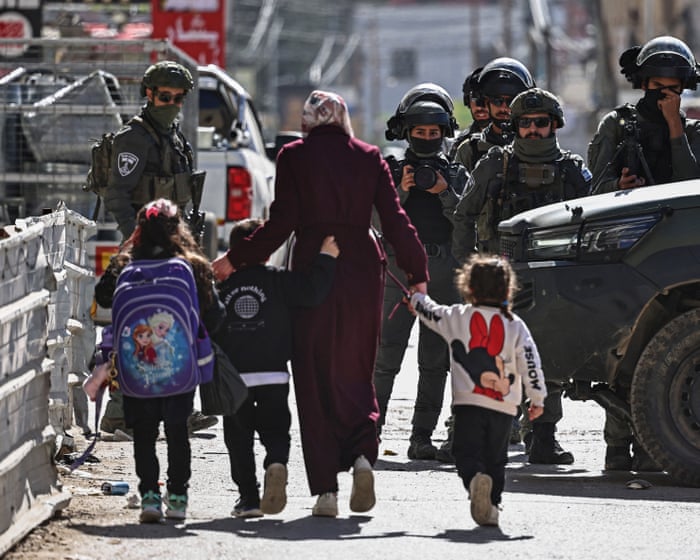
An Israeli court has denied a request to allow a five-year-old Palestinian boy with aggressive cancer to enter Israel for urgent medical care, citing a policy that prevents anyone registered as a resident of Gaza from crossing the border—even if they no longer live there.
In a Sunday ruling, the Jerusalem district court rejected a petition to transfer the child from Ramallah to Tel HaShomer hospital near Tel Aviv for a bone marrow transplant, a procedure not available in Gaza or the occupied West Bank. The boy has been in the West Bank since 2022 receiving medical care unavailable in Gaza, and his doctors say he now urgently needs antibody immunotherapy.
The decision reflects Israel’s broad ban on entry from Gaza following the Hamas attacks of October 7, 2023, which has also blocked cancer patients who were previously able to access life-saving treatment in Jerusalem.
“I have lost my last hope,” the boy’s mother told Haaretz, calling the ruling a death sentence for her son. She added that the boy’s father died of cancer three years ago.
In his decision, Judge Ram Winograd described the petition as an indirect challenge to post-October 7 security restrictions that bar Gaza residents from entering Israel for medical care. While acknowledging that thousands of children in Gaza need urgent treatment, he argued there was no meaningful difference between this boy’s case and others blocked by the policy.
“The petitioners failed to demonstrate a real and relevant difference,” Winograd wrote, stating that the child’s presence in Ramallah did not justify an exception to the blanket ban.
The Israeli human rights group Gisha, which has been involved in legal proceedings on the case since November 2025, said the situation reveals the cruelty of a rigid system that prioritizes registry data over medical need.
“This case once again illustrates the devastating consequences of a sweeping policy that denies Palestinians access to life-saving medical care solely based on their registered address in Gaza, even when they no longer live there and no security allegations are raised against them,” Gisha said in a statement. “The court is backing an unlawful policy that effectively condemns children to death, even when treatment is within reach.”
Around 11,000 Palestinian cancer patients remain trapped in Gaza despite the recent reopening of the Rafah crossing. Doctors report that cancer-related deaths in the territory have tripled since the war began, as Israel continues to block most patients from leaving and restricts the entry of chemotherapy drugs. While some patients have been able to exit, they are far outnumbered by those still waiting.
Gaza health officials say about 4,000 people with official referrals for treatment abroad are unable to cross the border. According to the World Health Organization, 900 people—including children and cancer patients—have already died while waiting for evacuation.
Frequently Asked Questions
FAQs Israeli Court Denies Cancer Treatment for 5YearOld from Gaza
BeginnerLevel Questions
What happened in this case
An Israeli court denied a request for a 5yearold boy from Gaza to leave for urgent lifesaving cancer treatment that was unavailable locally
Why was the request denied
The court cited security concerns as the boys father was reportedly a member of Hamas The ruling prioritized these security assessments over the childs medical need
Was the boys father the one needing treatment
No The patient was the 5yearold son The denial was based on the fathers alleged affiliations not the childs actions
Is this a common occurrence
While each case is unique there is a documented history of complex security and bureaucratic procedures affecting medical transfers for Palestinians from Gaza especially when family members have alleged ties to armed groups
Couldnt he be treated in Gaza or the West Bank
According to reports the specific advanced cancer treatment he required was not available in Gazas hospitals due to the longstanding blockade and limited medical infrastructure
Advanced Contextual Questions
What legal or ethical frameworks are in conflict here
The case highlights a tension between international humanitarian law and a states right to enforce security protocols Ethically it pits the principle of nondiscrimination and the best interests of the child against collective security measures
What is the Coordination and Liaison Administration and what role does it play
Its an Israeli military body that oversees permits for Gazans to enter Israel or travel via Israel for medical care work or other reasons Its decisions are often based on security checks and can be appealed in Israeli courts as was done in this case
Does Israel have a legal obligation to provide medical care to Gazans
As the occupying power controlling Gazas borders airspace and maritime access Israel has obligations under the Fourth Geneva Convention These include ensuring the populations access to medical care and allowing the passage of medical consignments The interpretation and fulfillment of these obligations are highly contested and politicized
What happens to medical neutrality in such cases
Medical neutralitythe principle that healthcare should be provided impartially and not be obstructed for political or military reasonsis considered severely compromised Denying treatment based