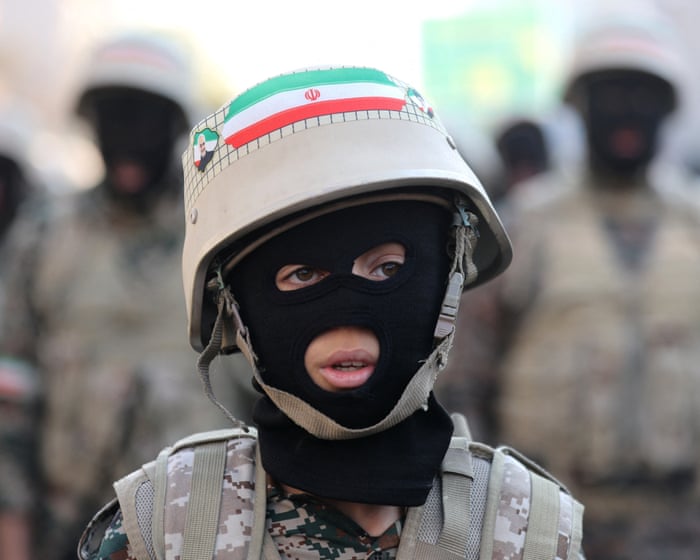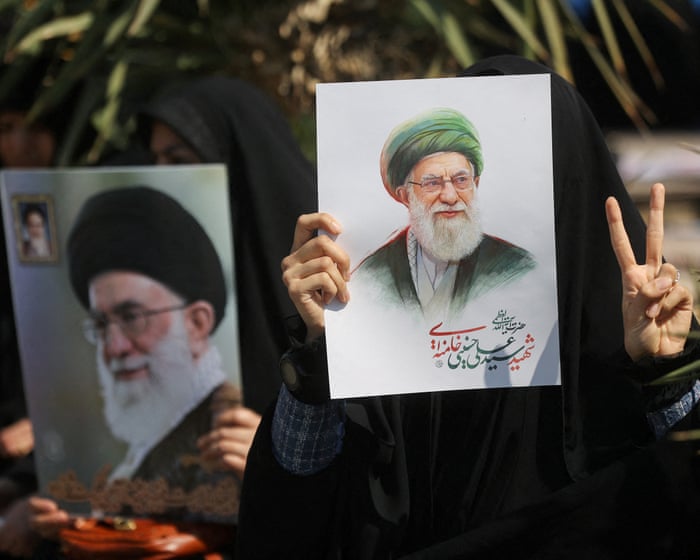
Iran’s body responsible for selecting a new supreme leader says it has reached a decision, though the name has not yet been announced. Israel has warned it will target anyone chosen to replace Ali Khamenei, who was killed in joint U.S.-Israeli strikes at the start of the war with Iran.
“The most suitable candidate, approved by the majority of the Assembly of Experts, has been determined,” said Mohsen Heydari, a member of the selection body, according to Iran’s ISNA news agency. Another member, Mohammad Mehdi Mirbagheri, confirmed in a video carried by Fars news agency that “a firm opinion reflecting the majority view has been reached.”
Ayatollah Mohsen Heidari Alekasir suggested the chosen successor would likely be someone opposed by Washington. He said the “Great Satan”—Iran’s term for the U.S.—had inadvertently done the assembly “a kind of service” by publicly criticizing certain candidates, an apparent reference to comments by Donald Trump, who said it would be unacceptable for clerics to select Khamenei’s son Mojtaba as successor.
“Someone opposed by the enemy is more likely to benefit Iran and Islam,” Heidari Alekasir said.
The Israeli military warned it would continue pursuing every successor of Iran’s late supreme leader, as well as anyone involved in appointing Khamenei’s replacement.
In recent days, Mojtaba Khamenei, 56, emerged as an early frontrunner, though his appointment is far from certain. Critics would view the move as entrenching a regime accused by rights groups of killing at least 7,000 people in recent months. A father-to-son succession is also frowned upon within Iran’s Shia clerical establishment, especially in a republic born from the overthrow of a monarchy in 1979.
Under Iran’s constitution, the 88-member Assembly of Experts selects the supreme leader. Khamenei, who ruled for 37 years, was killed in a U.S.-Israeli strike on Tehran on February 28.
The clerical meeting to appoint a new leader took place as fighting between Israel and Iran intensified over the weekend. Iranian strikes have hit energy infrastructure across the Gulf, while Israeli attacks have targeted oil storage and fuel facilities inside Iran.
A fresh wave of Iranian strikes hit the Gulf on Sunday, with Saudi Arabia, the UAE, Qatar, Bahrain, and Kuwait all reporting attacks. Saudi Arabia said it intercepted 15 drones, while strikes in Bahrain caused “material damage” to a key desalination plant.
According to reporting by the Washington Post, Fox News, and other U.S. outlets, Russia has been providing Iran with intelligence to help target U.S. military assets in the region. The Guardian cannot confirm this.
The recent attacks on Gulf states appear to highlight a clash within Iran’s leadership, contradicting remarks made on Saturday by President Masoud Pezeshkian, who apologized to countries on the Arabian Peninsula and suggested strikes would end if their airspace and U.S. bases were not used against Iran.
Analysts say Pezeshkian’s pledge exposed rare public rifts within the ruling elite, with officials scrambling to reinterpret his words, which appeared to anger more conservative factions. Nonetheless, the Iranian military continued striking neighboring countries overnight.An Iranian official reported that U.S. and Israeli strikes targeted five oil facilities near Tehran, causing damage but with fires now under control. Explosions in the nearby city of Karaj echoed across the region, blanketing the area in smoke. Early Sunday, fuel depots on the outskirts of Tehran were set ablaze as U.S. and Israeli forces expanded their campaign against Iranian infrastructure.
According to a report by Axios citing four informed sources, the U.S. and Israel have discussed deploying special forces into Iran at a later stage of the conflict to secure its stockpile of highly enriched uranium.
Throughout the day, Iran launched intermittent barrages of ballistic missiles toward Tel Aviv and central Israel. The country’s ambulance service, Magen David Adom, reported that at least one person was seriously injured when a residential building was struck. Most missiles were intercepted by Israeli air defenses, resulting in no further casualties.
Meanwhile, Israel’s multi-front war continued, with the Israel Defense Forces conducting intense strikes on Lebanon, the base of the Iran-backed armed group Hezbollah.
Israel’s assault on Lebanon killed four people in a hotel explosion in Beirut and an additional 12 in strikes on southern areas of the country. Israel stated it was targeting “key commanders” in the Iranian military’s Quds Force.
Lebanon’s health ministry reported at least 339 people killed in the conflict. The Norwegian Refugee Council said approximately 300,000 people have fled their homes.
AFP contributed to this report.
Frequently Asked Questions
Of course Here is a list of FAQs about the selection of a new Supreme Leader in Iran designed to be clear and accessible
BeginnerLevel Questions
1 What is the Supreme Leader in Iran
The Supreme Leader is the highestranking political and religious authority in Iran He is the head of state and commanderinchief with ultimate authority over the government military judiciary and media
2 Who chooses the new Supreme Leader
A special 88member clerical body called the Assembly of Experts is responsible for appointing supervising and if necessary dismissing the Supreme Leader
3 How is the Assembly of Experts chosen
Its members are elected by the public for 8year terms However all candidates are vetted by the Guardian Council a powerful body of clerics and jurists ensuring they are aligned with the systems principles
4 What happens when the current Supreme Leader passes away
The Assembly of Experts convenes as soon as possible to begin the process of selecting a successor In the interim a temporary leadership council assumes daytoday duties
5 What are the qualifications to become Supreme Leader
The candidate must be a highranking Shiite cleric with expertise in Islamic law justice political and social wisdom and a proven commitment to Irans Islamic system
Advanced Practical Questions
6 Is the selection process democratic
It is a hybrid process The public elects the Assembly of Experts but the candidate pool for both the Assembly and the Supreme Leader himself is tightly controlled by unelected clerical bodies limiting direct public choice over the final selection
7 How long does the Supreme Leader serve
The position is for life There is no fixed term limit
8 Who are the likely candidates to succeed the current Supreme Leader
While not officially declared names frequently discussed include
Ayatollah Ebrahim Raisi
Ayatollah Ahmad Jannati