This CSS code defines a custom font family called “Guardian Headline Full” with multiple font weights and styles. It includes light, regular, medium, and semibold weights, each with normal and italic versions. The fonts are loaded from the Guardian’s servers in three different file formats: WOFF2, WOFF, and TrueType.@font-face {
font-family: Guardian Headline Full;
src: url(https://assets.guim.co.uk/static/frontend/fonts/guardian-headline/noalts-not-hinted/GHGuardianHeadline-Bold.woff2) format(“woff2”),
url(https://assets.guim.co.uk/static/frontend/fonts/guardian-headline/noalts-not-hinted/GHGuardianHeadline-Bold.woff) format(“woff”),
url(https://assets.guim.co.uk/static/frontend/fonts/guardian-headline/noalts-not-hinted/GHGuardianHeadline-Bold.ttf) format(“truetype”);
font-weight: 700;
font-style: normal;
}
@font-face {
font-family: Guardian Headline Full;
src: url(https://assets.guim.co.uk/static/frontend/fonts/guardian-headline/noalts-not-hinted/GHGuardianHeadline-BoldItalic.woff2) format(“woff2”),
url(https://assets.guim.co.uk/static/frontend/fonts/guardian-headline/noalts-not-hinted/GHGuardianHeadline-BoldItalic.woff) format(“woff”),
url(https://assets.guim.co.uk/static/frontend/fonts/guardian-headline/noalts-not-hinted/GHGuardianHeadline-BoldItalic.ttf) format(“truetype”);
font-weight: 700;
font-style: italic;
}
@font-face {
font-family: Guardian Headline Full;
src: url(https://assets.guim.co.uk/static/frontend/fonts/guardian-headline/noalts-not-hinted/GHGuardianHeadline-Black.woff2) format(“woff2”),
url(https://assets.guim.co.uk/static/frontend/fonts/guardian-headline/noalts-not-hinted/GHGuardianHeadline-Black.woff) format(“woff”),
url(https://assets.guim.co.uk/static/frontend/fonts/guardian-headline/noalts-not-hinted/GHGuardianHeadline-Black.ttf) format(“truetype”);
font-weight: 900;
font-style: normal;
}
@font-face {
font-family: Guardian Headline Full;
src: url(https://assets.guim.co.uk/static/frontend/fonts/guardian-headline/noalts-not-hinted/GHGuardianHeadline-BlackItalic.woff2) format(“woff2”),
url(https://assets.guim.co.uk/static/frontend/fonts/guardian-headline/noalts-not-hinted/GHGuardianHeadline-BlackItalic.woff) format(“woff”),
url(https://assets.guim.co.uk/static/frontend/fonts/guardian-headline/noalts-not-hinted/GHGuardianHeadline-BlackItalic.ttf) format(“truetype”);
font-weight: 900;
font-style: italic;
}
@font-face {
font-family: Guardian Titlepiece;
src: url(https://assets.guim.co.uk/static/frontend/fonts/guardian-titlepiece/noalts-not-hinted/GTGuardianTitlepiece-Bold.woff2) format(“woff2”),
url(https://assets.guim.co.uk/static/frontend/fonts/guardian-titlepiece/noalts-not-hinted/GTGuardianTitlepiece-Bold.woff) format(“woff”),
url(https://assets.guim.co.uk/static/frontend/fonts/guardian-titlepiece/noalts-not-hinted/GTGuardianTitlepiece-Bold.ttf) format(“truetype”);
font-weight: 700;
font-style: normal;
}
@font-face {
font-family: Guardian Headline Full;
src: url(https://assets.guim.co.uk/static/frontend/fonts/guardian-headline/noalts-not-hinted/GHGuardianHeadline-Light.woff2) format(“woff2”),
url(https://assets.guim.co.uk/static/frontend/fonts/guardian-headline/noalts-not-hinted/GHGuardianHeadline-Light.woff) format(“woff”),
url(https://assets.guim.co.uk/static/frontend/fonts/guardian-headline/noalts-not-hinted/GHGuardianHeadline-Light.ttf) format(“truetype”);
font-weight: 300;
font-style: normal;
}
@font-face {
font-family: Guardian Headline Full;
src: url(https://assets.guim.co.uk/static/frontend/fonts/guardian-headline/noalts-not-hinted/GHGuardianHeadline-LightItalic.woff2) format(“woff2”),
url(https://assets.guim.co.uk/static/frontend/fonts/guardian-headline/noalts-not-hinted/GHGuardianHeadline-LightItalic.woff) format(“woff”),
url(https://assets.guim.co.uk/static/frontend/fonts/guardian-headline/noalts-not-hinted/GHGuardianHeadline-LightItalic.ttf) format(“truetype”);
font-weight: 300;
font-style: italic;
}
@font-face {
font-family: Guardian Headline Full;
src: url(https://assets.guim.co.uk/static/frontend/fonts/guardian-headline/noalts-not-hinted/GHGuardianHeadline-Regular.woff2) format(“woff2”),
url(https://assets.guim.co.uk/static/frontend/fonts/guardian-headline/noalts-not-hinted/GHGuardianHeadline-Regular.woff) format(“woff”),
url(https://assets.guim.co.uk/static/frontend/fonts/guardian-headline/noalts-not-hinted/GHGuardianHeadline-Regular.ttf) format(“truetype”);
font-weight: 400;
font-style: normal;
}
@font-face {
font-family: Guardian Headline Full;
src: url(https://assets.guim.co.uk/static/frontend/fonts/guardian-headline/noalts-not-hinted/GHGuardianHeadline-RegularItalic.woff2) format(“woff2”),
url(https://assets.guim.co.uk/static/frontend/fonts/guardian-headline/noalts-not-hinted/GHGuardianHeadline-RegularItalic.woff) format(“woff”),
url(https://assets.guim.co.uk/static/frontend/fonts/guardian-headline/noalts-not-hinted/GHGuardianHeadline-RegularItalic.ttf) format(“truetype”);
font-weight: 400;
font-style: italic;
}The font “Guardian Headline Full” is available in several styles and weights. The regular italic style uses font-weight 400 and includes files in woff2, woff, and ttf formats. The medium style has a font-weight of 500 and is normal (not italic). The medium italic style also uses font-weight 500 but is italic. The semibold style is normal with a font-weight of 600, and its italic version is also weight 600. The bold style is normal with a font-weight of 700, and the bold italic is italic at the same weight. Finally, the black style is normal with a font-weight of 900.The text appears to be a mix of CSS code and media queries, likely from a website’s stylesheet. It defines font faces for “Guardian Headline” and “Guardian Titlepiece” with various font weights and styles, specifying their source files in different formats. The code also sets up a responsive grid layout for different content areas, adjusting the grid structure and element placement based on screen size using media queries for various breakpoints (like 30em, 46.25em, 61.25em, and 71.25em). The layout organizes sections such as title, headline, standfirst, media, and body into designated grid areas.For interactive grid figures with immersive captions, the caption padding is set to 4 pixels at the top and 0 elsewhere. In various content areas, elements like lines and meta are positioned within a grid area spanning from row 2 to 5 and column 1 to 2. The lines element has a height that adjusts to its content with a top margin of 5 pixels, while the meta element has a top margin of 18 pixels.
On larger screens, the interactive grid uses a five-column layout with specific widths.
For iOS and Android devices, article headers use specific fonts and styling: the standfirst text uses a serif font with medium weight, section kickers are displayed as blocks with the first letter capitalized, keylines have adjusted padding, and bylines use a bold serif font. Images within articles have automatic height, and paragraphs following atomic elements have no top margin.
Additionally, custom font faces are defined for Guardian Headline Full in light and light italic weights, sourced from specific URLs in various formats.The provided text appears to be a series of CSS font-face rules for a font family named “Guardian Headline Full.” These rules define different font weights and styles (like regular, italic, medium, bold) and specify the web addresses (URLs) where the actual font files (in formats like WOFF2, WOFF, and TTF) are located for the browser to download and use.@font-face {
font-family: ‘Guardian Headline Full’;
src: url(‘https://assets.guim.co.uk/static/frontend/fonts/guardian-headline/noalts-not-hinted/GHGuardianHeadline-Black.woff2’) format(‘woff2’),
url(‘https://assets.guim.co.uk/static/frontend/fonts/guardian-headline/noalts-not-hinted/GHGuardianHeadline-Black.woff’) format(‘woff’),
url(‘https://assets.guim.co.uk/static/frontend/fonts/guardian-headline/noalts-not-hinted/GHGuardianHeadline-Black.ttf’) format(‘truetype’);
font-weight: 900;
font-style: normal;
}
@font-face {
font-family: ‘Guardian Headline Full’;
src: url(‘https://assets.guim.co.uk/static/frontend/fonts/guardian-headline/noalts-not-hinted/GHGuardianHeadline-BlackItalic.woff2’) format(‘woff2’),
url(‘https://assets.guim.co.uk/static/frontend/fonts/guardian-headline/noalts-not-hinted/GHGuardianHeadline-BlackItalic.woff’) format(‘woff’),
url(‘https://assets.guim.co.uk/static/frontend/fonts/guardian-headline/noalts-not-hinted/GHGuardianHeadline-BlackItalic.ttf’) format(‘truetype’);
font-weight: 900;
font-style: italic;
}
@font-face {
font-family: ‘Guardian Titlepiece’;
src: url(‘https://assets.guim.co.uk/static/frontend/fonts/guardian-titlepiece/noalts-not-hinted/GTGuardianTitlepiece-Bold.woff2’) format(‘woff2’),
url(‘https://assets.guim.co.uk/static/frontend/fonts/guardian-titlepiece/noalts-not-hinted/GTGuardianTitlepiece-Bold.woff’) format(‘woff’),
url(‘https://assets.guim.co.uk/static/frontend/fonts/guardian-titlepiece/noalts-not-hinted/GTGuardianTitlepiece-Bold.ttf’) format(‘truetype’);
font-weight: 700;
font-style: normal;
}
@media (min-width: 71.25em) {
.content__main-column–interactive {
margin-left: 160px;
}
}
@media (min-width: 81.25em) {
.content__main-column–interactive {
margin-left: 240px;
}
}
.content__main-column–interactive .element-atom {
max-width: 620px;
}
@media (max-width: 46.24em) {
.content__main-column–interactive .element-atom {
max-width: 100%;
}
}
.content__main-column–interactive .element-showcase {
margin-left: 0;
}
@media (min-width: 46.25em) {
.content__main-column–interactive .element-showcase {
max-width: 620px;
}
}
@media (min-width: 71.25em) {
.content__main-column–interactive .element-showcase {
max-width: 860px;
}
}
.content__main-column–interactive .element-immersive {
max-width: 1100px;
}
@media (max-width: 46.24em) {
.content__main-column–interactive .element-immersive {
width: calc(100vw – var(–scrollbar-width, 0px));
position: relative;
left: 50%;
right: 50%;
margin-left: calc(-50vw + var(–half-scrollbar-width, 0px)) !important;
margin-right: calc(-50vw + var(–half-scrollbar-width, 0px)) !important;
}
}
@media (min-width: 46.25em) {
.content__main-column–interactive .element-immersive {
transform: translate(-20px);
width: calc(100% + 60px);
}
}
@media (max-width: 71.24em) {
.content__main-column–interactive .element-immersive {
margin-left: 0;
margin-right: 0;
}
}
@media (min-width: 71.25em) {
.content__main-column–interactive .element-immersive {
transform: translate(0);
width: auto;
}
}
@media (min-width: 81.25em) {
.content__main-column–interactive .element-immersive {
max-width: 1260px;
}
}
.content__main-column–interactive p,
.content__main-column–interactive ul {
max-width: 620px;
}
.content__main-column–interactive:before {
position: absolute;
top: 0;
height: calc(100% + 15px);
min-height: 100px;
content: “”;
}
@media (min-width: 71.25em) {
.content__main-column–interactive:before {
border-left: 1px solid #dcdcdc;
z-index: -1;
left: -10px;
}
}
@media (min-width: 81.25em) {
.content__main-column–interactive:before {
border-left: 1px solid #dcdcdc;
left: -11px;
}
}
.content__main-column–interactive .element-atom {
margin-top: 0;
margin-bottom: 0;
padding-bottom: 12px;
padding-top: 12px;
}
.content__main-column–interactive p + .element-atom {
padding-top: 0;
padding-bottom: 0;
margin-top: 12px;
margin-bottom: 12px;
}
.content__main-column–interactive .element-inline {
max-width: 620px;
}
@media (min-width: 61.25em) {
figure[data-spacefinder-role=”inline”].element {
max-width: 620px;
}
}
:root {
–dateline: #606060;
–headerBorder: #dcdcdc;
–captionText: #999;
–captionBackground: hsla(0, 0%, 7%, 0.72);
–feature: #c70000;
–new-pillar-colour: var(–primary-pillar, var(–feature));
}
.content__main-column–interactive .element.element-atom,
.element.element-atom {
padding: 0;
}
#article-body > div .element-atom:first-of-type + p:first-of-type,
#article-body > div .element-atom:first-of-type {The first paragraph after certain elements like sign-in gates, horizontal rules, or specific containers gets a top padding of 14 pixels.
For the first letter of that first paragraph, the styling changes to a large, bold, uppercase drop cap using specific headline fonts. It floats to the left, has a size of 111px, a line height of 92px, a right margin of 8px, and uses a custom color property.
Paragraphs that come directly after a horizontal rule have their top padding removed.
Elements with the attribute `data-gu-name=”pullquote”` are given a maximum width of 620 pixels.
For showcase elements within the main article containers, the figure caption is positioned statically with a full width, also capped at 620 pixels.
Immersive elements span the full viewport width, minus the scrollbar. On screens smaller than 71.24em, these immersive elements are limited to a maximum width of 978 pixels, and their captions receive internal padding.@media (max-width: 71.24em) and (min-width: 30em) {
.element.element–immersive.element-immersive figcaption {
padding-inline: 20px;
}
}
@media (min-width: 46.25em) and (max-width: 61.24em) {
.element.element–immersive.element-immersive {
max-width: 738px;
}
}
@media (max-width: 46.24em) {
.element.element–immersive.element-immersive {
margin-left: -10px !important;
margin-right: 0 !important;
left: 0;
}
}
@media (max-width: 46.24em) and (min-width: 30em) {
.element.element–immersive.element-immersive {
margin-left: -20px !important;
}
.element.element–immersive.element-immersive figcaption {
padding-inline: 20px;
}
}
@media (min-width: 61.25em) {
.furniture-wrapper {
display: grid;
grid-column-gap: 20px;
grid-row-gap: 0px;
grid-template-columns: [title-start headline-start meta-start standfirst-start] repeat(5, 1fr) [title-end headline-end meta-end standfirst-end portrait-start] repeat(5, 1fr) [portrait-end];
grid-template-rows: [title-start portrait-start] .25fr [title-end headline-start] 1fr [headline-end standfirst-start] .75fr [standfirst-end meta-start] auto [meta-end portrait-end];
}
.furniture-wrapper #headline > div:first-child,
.furniture-wrapper [data-gu-name=headline] > div:first-child,
.furniture-wrapper .headline > div:first-child {
border-top: 1px solid var(–headerBorder);
}
.furniture-wrapper #meta,
.furniture-wrapper [data-gu-name=meta] {
position: relative;
padding-top: 2px;
margin-right: 0;
}
.furniture-wrapper .standfirst .content__standfirst,
.furniture-wrapper #standfirst .content__standfirst,
.furniture-wrapper [data-gu-name=standfirst] .content__standfirst {
margin-bottom: 4px;
}
.furniture-wrapper .standfirst ul li,
.furniture-wrapper #standfirst ul li,
.furniture-wrapper [data-gu-name=standfirst] ul li {
font-size: 20px;
}
.furniture-wrapper .standfirst li a,
.furniture-wrapper .standfirst a,
.furniture-wrapper #standfirst li a,
.furniture-wrapper #standfirst a,
.furniture-wrapper [data-gu-name=standfirst] li a,
.furniture-wrapper [data-gu-name=standfirst] a {
border-bottom: none;
background-image: none !important;
text-decoration: underline;
text-underline-offset: 6px;
text-decoration-color: var(–headerBorder, #dcdcdc);
}
.furniture-wrapper .standfirst li a:hover,
.furniture-wrapper .standfirst a:hover,
.furniture-wrapper #standfirst li a:hover,
.furniture-wrapper #standfirst a:hover,
.furniture-wrapper [data-gu-name=standfirst] li a:hover,
.furniture-wrapper [data-gu-name=standfirst] a:hover {
text-decoration-color: var(–new-pillar-colour);
}
.furniture-wrapper .standfirst p:first-of-type,
.furniture-wrapper #standfirst p:first-of-type,
.furniture-wrapper [data-gu-name=standfirst] p:first-of-type {
border-top: 1px solid var(–headerBorder);
padding-bottom: 0;
}
}
@media (min-width: 61.25em) and (min-width: 71.25em) {
.furniture-wrapper .standfirst p:first-of-type,
.furniture-wrapper #standfirst p:first-of-type,
.furniture-wrapper [data-gu-name=standfirst] p:first-of-type {
border-top: unset;
}
}
@media (min-width: 61.25em) {
.furniture-wrapper figure {
margin: 0 0 0 -10px;
}
.furniture-wrapper figure[data-spacefinder-role=inline].element {
max-width: 630px;
}
}
@media (min-width: 71.25em) {
.furniture-wrapper {
grid-template-columns: [title-start headline-start meta-start] repeat(2, 1fr) [meta-end standfirst-start] repeat(5, 1fr) [title-end headline-end standfirst-end portrait-start] repeat(7, 1fr) [portrait-end];
grid-template-rows: [title-start portrait-start] 80px [title-end headline-start] auto [headline-end standfirst-start meta-start] auto [standfirst-end meta-end portrait-end];
}
.furniture-wrapper #meta:before,
.furniture-wrapper [data-gu-name=meta]:before {
content: “”;
width: 540px;
position: absolute;
top: 0;
background-color: var(–headerBorder);
height: 1px;
}
.furniture-wrapper .standfirst p,
.furniture-wrapper #standfirst p,
.furniture-wrapper [data-gu-name=standfirst] p {
border-top: unset;
}
.furniture-wrapper .standfirst:before,
.furniture-wrapper #standfirst:before,
.furniture-wrapper [data-gu-name=standfirst]:before {
content: “”;
width: 1px;
background-color: var(–headerBorder);
height: 100%;
position: absolute;
top: 0;
left: .5px;
}
}
@media (min-width: 81.25em) {
.furniture-wrapper {
grid-template-columns: [title-start headline-start meta-start] repeat(3, 1fr) [meta-end standfirst-start];
}
}The grid layout uses five equal-width columns for the title, headline, and standfirst sections, followed by eight equal-width columns for the portrait section. The rows are defined with specific starting and ending points for each section.
For the meta and standfirst sections, certain elements have a fixed width or positioning. Labels within the title area have a small top padding.
The main headline uses a semi-bold font with a maximum width and specific font size, which adjusts on larger screens. Some decorative lines are hidden on medium to large screens and use a custom border color.
Social and comment elements in the meta section share the same border color, and certain components are hidden. The standfirst section has adjusted margins and padding, with its text styled in a regular weight and specific size.
The main media area is positioned within the grid, with full width and adjusted margins on smaller screens. Captions are absolutely positioned at the bottom with a custom background and text color, and some caption elements are hidden or conditionally displayed.
A caption toggle button is positioned at the bottom right with a circular design. On very large screens, the main content column has adjusted spacing.The main column for interactive content has a maximum width of 620 pixels for h2 headings. On iOS and Android devices, the dark background color is set to #1a1a1a, with a feature color of #c70000 and a dark mode feature color of #ff5943. The new pillar color uses the primary pillar variable, defaulting to the feature color.
In dark mode on these devices, the new pillar color switches to the dark mode pillar variable, defaulting to the dark mode feature color.
For iOS and Android, the first letter of the first paragraph following specific elements in article containers is styled with the secondary pillar color (defaulting to black). The article header height is set to zero, and the furniture wrapper has padding of 4 pixels at the top, 10 pixels on the sides, and no padding at the bottom. Labels within the furniture wrapper use a bold, specific font family, adopt the new pillar color, and are capitalized. Headlines (h1) in the furniture wrapper are 32 pixels in size, bold, have 12 pixels of bottom padding, and use the color #121212.For iOS and Android devices, the image elements within furniture wrappers across feature, standard, and comment article containers are styled with a relative position, a top margin of 14px, a left offset of -10px, and a width that fills the viewport minus the scrollbar. Their inner elements, images, and links have a transparent background and the same responsive width.
The standfirst sections in these containers have top and bottom padding and a right margin offset. The paragraphs within use the Guardian’s headline font family, and the links inside them are also styled consistently.For comment articles, links in the standfirst section are styled with a specific color, an underline, and no background image. On iOS and Android devices, when users hover over these links in feature, standard, or comment articles, the underline color changes. Also, on these devices, the metadata area in these article types has no margin, the author and byline text uses a specific color, and the miscellaneous metadata section has no padding.For iOS and Android devices, the following CSS rules apply across feature, standard, and comment article containers:
– SVG icons within the meta miscellaneous section use the new pillar color for strokes.
– The caption button in showcase elements is displayed as a flex container, centered with 5px padding, 28px width and height, and positioned 14px from the right.
– The article body has 12px horizontal padding.
– Non-thumbnail, non-immersive image figures within the article body have no margin, a width calculated as 100vw minus 24px and the scrollbar width, and an automatic height. Their captions have no padding.
– Immersive image figures have a width calculated as 100vw minus the scrollbar width.
– Quoted blockquotes within the article body prose have a `:before` pseudo-element applied.For quoted blockquotes in the article body on iOS and Android, the color before the quote uses the new pillar color.
On iOS and Android, links within the article body for feature, standard, and comment articles are styled with the primary pillar color. They have an underline with an offset of 6px, using the header border color for the underline. On hover, the underline color changes to the new pillar color.
In dark mode, the furniture wrapper background for these article types on iOS and Android changes to #1a1a1a. Within it, content labels use the new pillar color, headlines have no background and use the header border color for text, and standfirst paragraphs also use the header border color. Links in the standfirst, author names, and author links within the meta section are styled accordingly.This appears to be CSS code for styling web articles on Android and iOS devices. The code sets colors for author bylines, icons, image captions, and blockquotes using custom color variables. It also applies a dark background to article content containers. The styling targets different article types (feature, standard, comment) across both mobile operating systems.This appears to be a CSS selector targeting the first letter of paragraphs in specific containers on iOS and Android devices. The selector applies to various article containers and body sections, looking for paragraphs that follow certain elements like `.element-atom`, `.sign-in-gate`, or `#sign-in-gate`.For Android and iOS devices, the first letter of paragraphs following specific elements in various article containers should be styled with a custom color variable.For comment articles on Android devices using the Garnett design, the standfirst section has a top padding of 24 pixels and no top margin. All second-level headings in the prose are set to a font size of 24 pixels.
On iOS devices, the caption button for feature, standard, and comment articles has a padding of 6 pixels on top, 5 pixels on the sides, and 0 on the bottom. On Android devices, the same button has 4 pixels of padding on the top and sides, and 0 on the bottom.
When the system’s dark mode is active, the color scheme adjusts several custom properties. The follow text and standfirst text become a light gray (#dcdcdc). The colors for the follow icon, standfirst links, and bylines are set to use the dark mode pillar color.
When the furniture wrapper includes a Guardian organization logo, the branding component is displayed.
On iOS and Android devices, the content labels and main headline (h1) within the furniture wrapper for feature, standard, and comment articles are given a medium font weight (500). This same weight is also applied to the main headline and the paragraph text within the standfirst section when targeted through various selectors.
The root color scheme defines a weekend essay background color (#fff4f2). This color is applied to the page body and is also used for the article section and sub-meta backgrounds.
The element with the name “lines” is hidden. The furniture wrapper is set to a relative position.
On larger screens (min-width: 81.25em), the furniture wrapper uses a grid layout with specific row definitions for the title, headline, standfirst, and meta sections.
Within the furniture wrapper, the article header (or title element) has a relative position and a fixed height of 70 pixels. Its content labels section inherits this height.
A pseudo-element is added after the content labels. It displays a 70×70 pixel animated book GIF, positioned at the bottom right. On larger screens, this GIF is enlarged to 110×110 pixels.
The direct child div of the content labels section takes up the full height. Another pseudo-element is added after this div, creating a full-width horizontal line (#dcdcdc) at the bottom. On medium-sized screens and above, this line’s width and left position are adjusted.For screens wider than 1140px, hide the decorative lines after labels in the article header and title sections. At 1140px and above, set the height of the article header and title to 80px. For screens 1300px and wider, increase that height to 125px.
Also at 1300px and above, adjust the headline, its data attribute, and headline class to have a top margin of -2px. For the headline and its related elements, remove bottom padding. The main headline wrapper should take full height, be positioned relatively, hide overflow, and have 24px of bottom padding.
Headline text and links within this wrapper should not have a maximum width. On hover, the underline should be 2px thick and offset by 6px. The headline text, links, and byline should have a line-height of 115%, a medium font weight (500), and a font size of 36px. On screens 1140px and wider, increase this font size to 50px.
The standfirst section should be positioned relatively with 4px of top padding. On screens 980px and wider, remove this top padding. On screens 1140px and wider, set the top padding to 2px.
Display the branding component within the meta section’s container..furniture-wrapper [data-gu-name=media] {
position: relative;
}
@media (min-width: 61.25em) {
.furniture-wrapper #main-media,
.furniture-wrapper [data-gu-name=media] {
grid-area: portrait;
}
}
.furniture-wrapper #main-media > div,
.furniture-wrapper [data-gu-name=media] > div {
position: relative;
}
.furniture-wrapper #main-media div + span,
.furniture-wrapper [data-gu-name=media] div + span {
display: block;
}
.furniture-wrapper #main-media figure,
.furniture-wrapper [data-gu-name=media] figure {
height: 100%;
margin-left: 10px;
}
.furniture-wrapper #main-media figure picture img,
.furniture-wrapper #main-media figure figcaption,
.furniture-wrapper [data-gu-name=media] figure picture img,
.furniture-wrapper [data-gu-name=media] figure figcaption {
width: calc(100vw – 40px – var(–scrollbar-width, 0px));
height: auto;
margin-left: 10px;
padding: 10px 0;
}
.furniture-wrapper #main-media figure figcaption,
.furniture-wrapper [data-gu-name=media] figure figcaption {
margin-bottom: 10px;
padding: 10px;
}
.furniture-wrapper #main-media figure:before,
.furniture-wrapper [data-gu-name=media] figure:before {
content: “”;
display: block;
width: calc(100vw – 20px – var(–scrollbar-width, 0px));
background-image: url(https://interactive.guim.co.uk/atoms/2025/04/2025-weekend-essay-test/assets/v/1764331689/frame.png);
background-size: contain;
background-position: center;
background-repeat: no-repeat;
position: absolute;
top: 0;
left: 10px;
height: inherit;
}
@media (min-width: 46.25em) {
.furniture-wrapper #main-media figure,
.furniture-wrapper [data-gu-name=media] figure {
margin-left: 0;
}
.furniture-wrapper #main-media figure picture img,
.furniture-wrapper [data-gu-name=media] figure picture img {
width: 670px;
height: auto;
margin-left: 5px;
padding: 15px 10px;
}
.furniture-wrapper #main-media figure:before,
.furniture-wrapper [data-gu-name=media] figure:before {
width: 700px;
left: -10px;
}
.furniture-wrapper #main-media figure figcaption,
.furniture-wrapper [data-gu-name=media] figure figcaption {
width: 650px;
margin-left: 15px;
margin-bottom: 15px;
padding: 15px 10px;
}
}
@media (min-width: 61.25em) {
.furniture-wrapper #main-media figure:before,
.furniture-wrapper [data-gu-name=media] figure:before {
width: 470px;
}
.furniture-wrapper #main-media figure picture img,
.furniture-wrapper #main-media figure figcaption,
.furniture-wrapper [data-gu-name=media] figure picture img,
.furniture-wrapper [data-gu-name=media] figure figcaption {
width: 450px;
margin-left: 0;
}
.furniture-wrapper #main-media figure picture img,
.furniture-wrapper [data-gu-name=media] figure picture img {
padding: 10px 0;
}
.furniture-wrapper #main-media figure figcaption,
.furniture-wrapper [data-gu-name=media] figure figcaption {
margin-bottom: 10px;
}
}
@media (min-width: 71.25em) {
.furniture-wrapper #main-media figure:before,
.furniture-wrapper [data-gu-name=media] figure:before {
width: 550px;
}
.furniture-wrapper #main-media figure picture img,
.furniture-wrapper [data-gu-name=media] figure picture img {
width: 520px;
margin-left: 5px;
padding: 10px 5px;
}
.furniture-wrapper #main-media figure figcaption,
.furniture-wrapper [data-gu-name=media] figure figcaption {
width: 510px;
margin-left: 10px;
margin-bottom: 10px;
}
}
@media (min-width: 81.25em) {
.furniture-wrapper #main-media figure:before,
.furniture-wrapper [data-gu-name=media] figure:before {
width: 630px;
}
.furniture-wrapper #main-media figure picture img,
.furniture-wrapper [data-gu-name=media] figure picture img {
width: 600px;
padding: 15px 0;
}
.furniture-wrapper #main-media figure figcaption,
.furniture-wrapper [data-gu-name=media] figure figcaption {
width: 600px;
margin-left: 5px;
margin-bottom: 15px;
}
}
.furniture-wrapper #main-media #caption-button,
.furniture-wrapper [data-gu-name=media] #caption-button {
right: 15px;
bottom: 20px;
}
@media (min-width: 46.25em) {
.furniture-wrapper #main-media #caption-button,
.furniture-wrapper [data-gu-name=media] #caption-button {
right: 45px;
bottom: 30px;
}
}
@media (min-width: 61.25em) {
.furniture-wrapper #main-media #caption-button,
.furniture-wrapper [data-gu-name=media] #caption-button {
right: 15px;
bottom: 20px;
}
}
@media (min-width: 71.25em) {
.furniture-wrapper #main-media #caption-button,
.furniture-wrapper [data-gu-name=media] #caption-button {
right: 20px;
}
}
@media (min-width: 81.25em) {
.furniture-wrap
}For the main media caption button, set the bottom position to 30px. In the furniture wrapper, center the content within the no-media-div both horizontally and vertically, making it full width. Style the paragraph inside with a 24px font, bold weight, underlined, and a specific color.
For interactive content columns wider than 71.25em, remove the left margin and hide the before pseudo-element. Style blockquotes within supporting asides with a light background. For the first letter of the first paragraph, use a light font weight. For drop caps following specific elements, use a large, uppercase, serif font in a specific color with specific spacing.
Style level-two headings with a burnt orange color, light font weight, and specific sizes and spacing. If the heading contains strong text, make it medium weight. Set a light background for figures containing iframes.
On apps and specific mobile operating systems, display the follow wrapper with a top margin and set its span text to 14px. Ensure media elements like divs, figures, and pictures fit their content. In dark mode, set the body and specific elements to a dark gray background.[data-app-os=android] .furniture-wrapper .article-header:after,
[data-app-os=android] .furniture-wrapper [data-gu-name=title] .content__labels:after {
background-image: url(https://interactive.guim.co.uk/atoms/2025/04/2025-weekend-essay-test/assets/v/1764331689/book-white.gif)
}
[data-rendering-target=apps] .furniture-wrapper .meta__byline gu-island[name=FollowWrapper] svg path,
[data-rendering-target=apps] .furniture-wrapper [data-component=meta-byline] gu-island[name=FollowWrapper] svg path,
[data-app-os=ios] .furniture-wrapper .meta__byline gu-island[name=FollowWrapper] svg path,
[data-app-os=ios] .furniture-wrapper [data-component=meta-byline] gu-island[name=FollowWrapper] svg path,
[data-app-os=android] .furniture-wrapper .meta__byline gu-island[name=FollowWrapper] svg path,
[data-app-os=android] .furniture-wrapper [data-component=meta-byline] gu-island[name=FollowWrapper] svg path {
fill: var(–byline-anchor, #ffffff) !important
}
[data-rendering-target=apps] .furniture-wrapper #main-media figure:before,
[data-rendering-target=apps] .furniture-wrapper [data-gu-name=media] figure:before,
[data-app-os=ios] .furniture-wrapper #main-media figure:before,
[data-app-os=ios] .furniture-wrapper [data-gu-name=media] figure:before,
[data-app-os=android] .furniture-wrapper #main-media figure:before,
[data-app-os=android] .furniture-wrapper [data-gu-name=media] figure:before {
background-image: url(https://interactive.guim.co.uk/atoms/2025/04/2025-weekend-essay-test/assets/v/1764331689/frame-white.png) !important
}
body.ios,
body.android {
background-color: #fff
}
body.ios #feature-article-container .furniture-wrapper .content__labels,
body.ios #standard-article-container .furniture-wrapper .content__labels,
body.ios #comment-article-container .furniture-wrapper .content__labels,
body.android #feature-article-container .furniture-wrapper .content__labels,
body.android #standard-article-container .furniture-wrapper .content__labels,
body.android #comment-article-container .furniture-wrapper .content__labels,
body.ios #feature-article-container .furniture-wrapper h1.headline,
body.ios #standard-article-container .furniture-wrapper h1.headline,
body.ios #comment-article-container .furniture-wrapper h1.headline,
body.android #feature-article-container .furniture-wrapper h1.headline,
body.android #standard-article-container .furniture-wrapper h1.headline,
body.android #comment-article-container .furniture-wrapper h1.headline {
font-weight: 500
}
@media (prefers-color-scheme: light) {
html:has(body.ios, body.android) {
background-color: var(–weekend-essay-bg, #fff4f2)
}
}
html:has(body.ios, body.android) body.ios,
html:has(body.ios, body.android) body.android {
–opinion-primary: #c74600;
–byline-anchor: var(–opinion-primary, #c74600);
–primary-pillar: var(–opinion-primary, #c74600)
}
@media (prefers-color-scheme: light) {
html:has(body.ios, body.android) body.ios,
html:has(body.ios, body.android) body.android {
background-color: var(–weekend-essay-bg, #fff4f2)
}
}
@media (prefers-color-scheme: dark) {
html:has(body.ios, body.android) body.ios,
html:has(body.ios, body.android) body.android {
–weekend-essay-bg: #1a1a1a;
–opinion-primary: #ff7f0f
}
html:has(body.ios, body.android) .garnett–pillar-opinion:not(.garnett–type-media).ios .article__body,
html:has(body.ios, body.android) .garnett–pillar-opinion:not(.garnett–type-media).ios .tags {
background-color: unset
}
}
body.ios #feature-article-container,
body.ios #standard-article-container,
body.ios #comment-article-container,
body.android #feature-article-container,
body.android #standard-article-container,
body.android #comment-article-container {
background-color: var(–weekend-essay-bg, #fff4f2)
}
@media (min-width: 61.25em) {
body.ios #feature-article-container .furniture-wrapper,
body.ios #standard-article-container .furniture-wrapper,
body.ios #comment-article-container .furniture-wrapper,
body.android #feature-article-container .furniture-wrapper,
body.android #standard-article-container .furniture-wrapper,
body.android #comment-article-container .furniture-wrapper {
grid-column-gap: 20px;
grid-row-gap: 0px;
grid-template-columns: [title-start headline-start meta-start standfirst-sThe grid is set up with five equal-width columns, starting from the title and ending at the portrait. The rows are arranged so that the title and portrait begin together, followed by the headline, standfirst, and metadata, with the portrait ending last.
For both iOS and Android devices, the title and GIF wrapper within the furniture container for feature, standard, and comment articles uses a flexible row layout with space-between alignment and relative positioning.
The content labels inside these wrappers have a font size of 17px, normal style, bold weight, and 115% line height.
Links within these content labels are colored using a custom variable (with a fallback to #c74600) and have no text transformation.
The GIF container and its images are set to 70px in both width and height. If the GIF container or image has the class “book-gif-white,” the same dimensions apply.For Android devices, hide the white book GIFs in feature, standard, and comment article containers. When dark mode is active, hide the regular book GIFs and show the white versions instead on both iOS and Android. On iOS and Android, add a light gray horizontal line at the bottom of the title and GIF wrapper in these article containers. For larger screens, adjust the layout of the title and GIF wrapper in iOS feature and standard articles.The title-and-gif-wrapper for furniture is set to the grid area named “title” across various article containers on iOS and Android. For iOS devices, after this wrapper in feature, standard, and comment articles, the width is set to 50 viewport width units.
In dark mode, the background color after these wrappers changes to #606060 for the same article types on both iOS and Android.
On larger screens (61.25em and above), the portrait-mainmedia headline wrapper is assigned to the “headline” grid area for feature, standard, and comment articles on iOS and Android.
For headlines, bylines, and their links within the furniture wrapper of feature, standard, and comment articles on both iOS and Android, the font size is 36px with normal style, medium weight (500), and a line height of 115%.For feature, standard, and comment articles on iOS and Android, the byline text and links are set to a red color (#c70000) or a custom variable. In dark mode, this changes to a darker orange (#c74600). Avatars are hidden, headlines have no bottom margin or padding, and bylines appear in italics.For iOS and Android devices, the author’s byline in feature, standard, and comment articles should be displayed in a normal font style, not italicized.
For the main media container in these articles, set the height to adjust automatically with an aspect ratio of 4:5 and a transparent background.
Within this container, ensure the figure element takes up the full height and has no left margin. Position its inner figure wrapper at the top left.
The inner element of the figure should have a transparent background, no padding, and allow overflow to be visible.
Finally, for images inside this figure element, set the width to the full viewport width minus 40 pixels, with a left margin of 20 pixels and a top margin of 25 pixels.The CSS code sets specific styles for images and captions within article containers on iOS and Android devices. Images get a 13px top margin, while captions are set to auto height with block display and a gray text color. On screens wider than 46.25em, figures expand to full width and have a left-aligned decorative element.For iOS and Android devices, the image width within article containers is set to the full viewport width minus 60 pixels, with a left margin of 30 pixels and a top margin of 40 pixels.
On larger screens (61.25em and above), the width adjusts to half the viewport width minus 40 pixels and the scrollbar width, with a left margin of 18 pixels and a top margin of 10 pixels.
For even larger screens (81.25em and above), the width becomes half the viewport width minus 90 pixels and the scrollbar width, with a left margin of 12 pixels, a top margin of -10 pixels, and a top padding of 21 pixels.
In dark mode, additional styles are applied to the figure element.For iOS and Android devices, the first image in articles (feature, standard, or comment types) has specific styling. A white frame background is applied to the image element.
On smaller screens, this first image spans almost the full viewport width, accounting for scrollbars, with no left margin and 10px of padding.
On wider screens (above 61.25em), the image width reduces to roughly half the viewport, gains a small left margin, and has auto height with top padding.
On even wider screens (above 81.25em), the width adjusts again, and the image is moved slightly upward with a negative top margin.For the main media figure element that is the first image, set the height to 100% and the maximum width to 620px as important.
On iOS and Android devices, for feature, standard, and comment article containers, add a pseudo-element before the first image in the main media figure. Set its width to half the viewport width minus 20px and the scrollbar width, align it to the left, and set its height to 100%.
For viewports at least 81.25em wide, adjust the left position of this pseudo-element to -20px.
For viewports at least 46.25em wide, position the caption button in the main media 45px from the bottom.
For viewports at least 61.25em wide, set the main media area to portrait, limit its maximum width to 620px as important, and set its height to auto.
For figure elements within the furniture wrapper, set their position to relative and remove the top margin.
For the inner figure container, position it absolutely 15px from the top and 20px from the left. Set its width to the full viewport width minus 40px and its height to auto.Images within figure elements are set to cover their containers fully. On iOS and Android devices, caption buttons in article containers are positioned 24px from the right and 20px from the bottom.
For screens wider than 46.25em, the inner figure container adjusts to 680px wide with automatic height, positioned 10px from the top and left, while caption buttons move to 25px from the bottom.
On screens wider than 61.25em, the figure element itself takes up half the viewport width, minus 20px and any scrollbar width.
Standfirst sections in these article containers have no top margin, with 8px top padding and 10px right padding, and their before pseudo-elements are hidden. Paragraphs, links, and list items within the standfirst inner container maintain consistent styling.For Android devices, links, list items, and paragraphs within the standfirst section of feature, standard, and comment articles will have a font size of 20px, a normal style, medium weight, 115% line height, and no bottom padding.
On screens wider than 61.25em, the standfirst section for these article types on both iOS and Android will be placed in the grid area named ‘standfirst’.
For both iOS and Android, the meta section in these article types will have no top padding. The published date within the meta section will be positioned relatively. A thin gray line will appear below the published date, extending the full viewport width on smaller screens. On screens wider than 61.25em, this line will only extend half the viewport width, and the meta section will be displayed as a block element in the grid area named ‘meta’.
On screens wider than 81.25em, the miscellaneous meta information will be styled for both operating systems.For iOS and Android devices, the following styles apply:
– The left margin for `.meta .meta__misc` is removed.
– In dark mode, the background color after the published date in article containers is set to #606060.
– The `:before` pseudo-elements for `.meta` and `.keyline` are hidden.
– Rich link elements are hidden.
– The cutout container in comment headers is hidden.
– The article body background uses a custom variable for weekend essay background, defaulting to #fff4f2, with a top margin of 6px.
– Horizontal rules are styled with a height of 1px, no border, a bottom margin of 3px, a background color of #dcdcdc, a width of 150px, left margin removed, and a top margin of 48px.
– The first letter of the first paragraph (or the paragraph after a horizontal rule) is styled with specific font settings, size, line height, float, text transform, box sizing, right margin, vertical alignment, and color using custom properties.
– Headings (h2) containing strong or b elements, or within prose, have a font weight of 500.
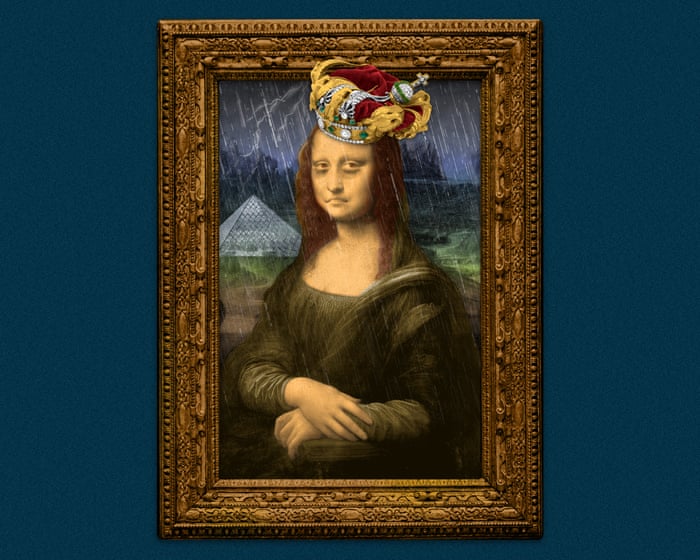
These styles are applied across feature, standard, and comment article containers.Just over a year ago, Laurence des Cars, the intellectually brilliant though famously prickly former head of the world’s largest and most-visited museum, wrote a somewhat alarming note to her boss, France’s culture minister. Des Cars, who on Tuesday resigned as president of the Louvre, lamented the advanced state of disrepair of the iconic museum’s buildings and galleries. The Louvre was overcrowded, she said. Facilities were substandard, technologies hopelessly outdated. Water was coming through the ceilings. Violent temperature swings were damaging artworks. The museum had reached a “worrying level of obsolescence.” But she had the answer. Barely a week later, the first woman to run France’s most prized cultural institution…Laurence des Cars stood beside Emmanuel Macron in front of the Louvre’s biggest attraction, the Mona Lisa, as the French president proudly unveiled “Louvre: New Renaissance”—a radical, ambitious €1 billion renovation plan for the museum.
At that moment, des Cars’ immediate future, and that of the Louvre, seemed secure. But the year ahead had other plans. A series of challenges emerged: rolling staff strikes, a decade-long ticket scam, a cascade of aging infrastructure issues, and—most strikingly—a daring daylight heist of €88 million worth of crown jewels.
Many in the art world believe Laurence des Cars remained in her position as long as she did due to Macron’s concern for a legacy project. No one disputes that the Louvre needs work. Spread across a sprawling 360,000-square-meter site, it is a city within a city. Originally a solid 12th-century fortress, it expanded into a gilded royal palace in the 16th century and, after the French Revolution, became a museum in 1793.
Its multilayered architecture contains more than 400 rooms and about nine miles of corridors. The collection holds over 600,000 items, with around 35,000 on permanent display. As the world’s largest museum, it was never designed for that purpose.
In its current form, the Louvre is intended to handle about 4 million visitors annually. Last year, helped by star attractions like the Mona Lisa, the Venus de Milo, and the Winged Victory of Samothrace, it drew 9 million.
Undeniably, something had to be done. The question is what—and to what extent it should be driven by the projection of state cultural power (and the polishing of a French president’s ego).
Beyond necessary repairs and visitor improvements, des Cars’ project—enthusiastically backed by Macron—includes giving Leonardo da Vinci’s celebrated portrait a room of its own, with independent access. This will involve excavating vast new exhibition spaces beneath the Cour Carrée, the museum’s eastern courtyard. The Louvre will also gain a “new grand entrance” at the Colonnade de Perrault, also on the eastern side.
The project’s many critics call it pharaonic. The estimated cost of over €1.1 billion has drawn heavy criticism from the state auditor and Louvre staff, who feel the money could be far better spent. Experts question its true purpose.
“It’s unnecessary, and it’s harmful,” said Didier Rykner, editorial director of the art news website La Tribune de l’Art. “But des Cars convinced Macron. He sees it as the kind of grand legacy project that French presidents love to leave behind them.”
The Louvre’s last major refurbishment, in the 1980s, was commissioned by the late president François Mitterrand and included the striking glass pyramid designed by Chinese-American architect I. M. Pei, which serves as the museum’s current entrance.
Previous leaders have given France such museum-monuments as the Pompidou Centre (Georges Pompidou), a new national library and an opera house (Mitterrand), and the Indigenous arts museum on the Quai Branly (Jacques Chirac).
Macron has an affinity with the Louvre. He chose it as the backdrop for his presidential victory speech in 2017. But the fate of what the current president has come to see as his signature cultural legacy is starting to look a little less certain.
Many in the French arts world openly believe that is why des Cars survived as long as she did: Macron, who leaves office next spring, did not want to risk his flagship legacy project, despite the many and varied misfortunes that piled up.
The museum’s decaying infrastructure saw two water pipes burst this month alone, including in the Denon wing, home to the Mona Lisa. In November, more than 300 documents in the Library of Egyptian Antiquities were soaked by another flood. The Campana gallery, famed for its Greek ceramics, was also affected.The Amics gallery, closed late last year due to structural weaknesses in the supporting beams, is just one of the Louvre’s recent troubles. Offices in another part of the Sully wing have been relocated over fears of a floor collapse. However, since former director Laurence des Cars submitted her resignation to Culture Minister Rachida Dati—who also stepped down this week to run for mayor of Paris—repair and maintenance have become the least of the museum’s concerns.
Morale among the Louvre’s 2,300 employees has hit a record low, with staff describing conditions as “untenable,” citing severe understaffing and poor pay. Strikes have forced full or partial closures more than a dozen times since last summer. Employee unions recently stated that “staff feel like they are the last bastion before collapse,” while union spokespeople refer to a “catastrophic” situation, unbearable tensions, and “absurd and irresponsible” management decisions.
This month, police arrested nine people, including two museum employees and two guides, in connection with a suspected ticket fraud scheme targeting Chinese tour groups. The scam may have cost the museum over €10 million (£8.7 million) over the past decade.
Most dramatically, one Sunday in October, a gang of four broke into the museum’s Apollo gallery and stole €88 million (£77 million) worth of diamond-studded Napoleonic jewellery in France’s most spectacular heist in decades. Using a stolen truck with an extendable ladder to reach an unsecured first-floor window, they smashed display cases, grabbed the jewels, and escaped on motorbikes—all within seven minutes. The brazen raid made global headlines. Four men have been arrested and are under investigation, but the jewels remain missing.
Even with President Macron’s support, it was inevitable that des Cars would eventually step down amid this cascade of reputational blows. Alexandre Portier, the conservative chair of a parliamentary inquiry on museum security, noted, “Quite clearly, here is a list of failings that, in many countries and many institutions, would have already led to her departure a long time ago.”
After resigning, des Cars told Le Figaro that while she accepted at least partial blame for the security lapses that enabled the heist, she felt she “may be paying the price today” for her earlier “clear-sighted” warnings and proposed solutions. She expressed pride in her work since 2021 but said she had endured “an unprecedented media and political storm,” adding, “staying the course is not enough. You need to move forward. And conditions for that are no longer in place.”
Her successor, Christophe Leribault, 62, now faces a monumental task. After two years leading the Palace of Versailles and previously directing the Musée d’Orsay, Leribault is admired for revitalizing the Petit Palais in Paris with innovative exhibitions that boosted attendance. His challenge at the Louvre, however, is of a different—and politically charged—scale.
The culture ministry states that priorities include “strengthening the safety and security of the building, its collections and people,” restoring trust, and advancing “necessary transformations.” Art historian Didier Rykner is more specific: “He needs to get essential repairs done, calm down the staff unions, hire more people. That’s not easy. He needs some new heads of department. And he has to develop a coherent acquisitions policy. It’s a huge job.”
Where the Louvre’s “New Renaissance” plan fits into all this remains unclear. The museum’s staff unions continue to voice their concerns.They have condemned a “phantasmagorical” project they call “out of touch,” “incomprehensible,” and “far removed from the reality and needs of the Louvre.” France’s state auditor, the Cour des Comptes, which has called security and repairs “indispensable,” is equally critical. It describes the project as “a significant financial risk” and argues the funds should be directed toward urgent repairs and upgrades instead.
More concretely, the financing is uncertain. The Louvre has stated that €200 million to €300 million will come from licensing fees for its Abu Dhabi franchise, with the rest expected mainly from international donors—who, particularly in the United States, seem very hesitant.
The schedule is tight. A shortlist of architects was supposed to be chosen by April of this year, with the project launched by early 2027, before the presidential election when Macron will leave office. However, that process was halted in February.
According to Rykner, the Louvre has the funds from its Abu Dhabi revenue, cash reserves, ticket sales, and state subsidies to undertake essential repairs, maintenance, and a more modest modernization. Anything beyond that risks damaging France’s heritage.
He also said the project is unnecessary. “Certainly, the pressure on the Pyramid and the Denon wing needs to be relieved. The Mona Lisa has to move,” he said. “But three smaller additional entrances would be perfectly feasible—and there are other options for displaying the Mona Lisa.”
Rykner added that the Louvre could use the Grand Palais, renovated for the Olympics at a cost of over €500 million, for exhibition space. “New Renaissance is a pure vanity project,” he said. “Leribault should resist it until the president has gone.”
Frequently Asked Questions
Of course Here is a list of FAQs about the Louvres recent challenges and future designed to sound like questions from a real visitor or interested observer
General Beginner Questions
1 Why was it a difficult year for the Louvre What happened
The Louvre faced several major challenges a significant drop in visitor numbers due to concerns over bedbugs in Paris the logistical issues of hosting events for the 2024 Olympics and ongoing staffing strikes over management and working conditions that forced it to close for a daya very rare event
2 Are there still bedbugs at the Louvre Is it safe to visit
There is no current infestation at the museum The scare was part of a broader mediadriven concern about bedbugs in Paris The Louvre like all major public venues has rigorous and ongoing pest control protocols It is considered safe to visit
3 I have tickets for an upcoming trip Should I be worried about sudden closures
While strikes can be unpredictable fullday closures are extremely rare Its always a good idea to check the official Louvre website the day before and morning of your visit for any urgent announcements Your tickets are typically valid for a rescheduled time if a closure occurs
4 What is the Louvre doing to prepare for the 2024 Paris Olympics
The museum is a key cultural partner Preparations include managing expected large crowds hosting the Olympic Committees hospitality events and creating special athleticthemed visitor trails connecting art and sport
Advanced FutureOriented Questions
5 Beyond the recent issues what are the longterm challenges facing the Louvre
Its core challenges are balancing mass tourism with the quality of the visitor experience preserving an aging palace and its collection amid huge crowds securing sustainable funding and evolving its role in a global conversation about art history and cultural restitution
6 How did the staff strikes affect the museums operations and reputation
The strikes highlighted internal tensions over visitor management resource allocation and staff wellbeing While damaging to its public image in the short term they forced a public conversation about the future of the museum and the pressure of being the worlds most visited
7 What is the Pyramid renovation project and why is it important
The museum is undertaking a major renovation of its iconic IM