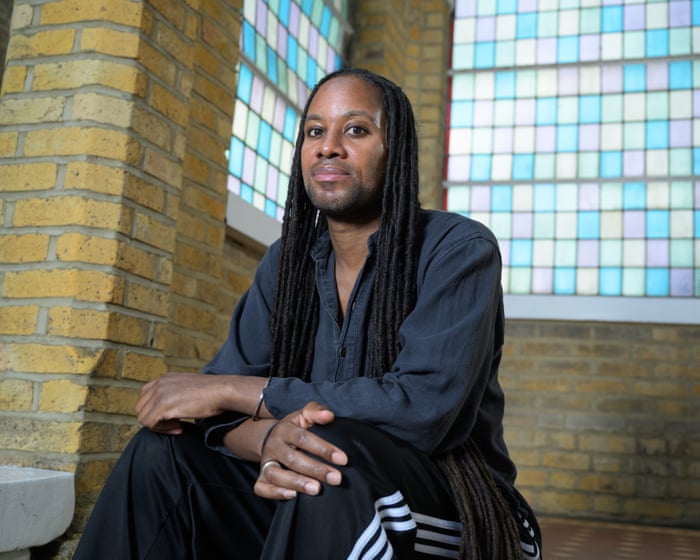
Andy Burnham has described the death of Jason Arday, who was found dead at his home in south London on Friday, as a “tragedy on so many levels.” Arday resigned from his position as a professor at the University of Cambridge last week after facing allegations of plagiarism, which he denied. He was pronounced dead just after 3pm on Friday.
In a statement released through his publisher, Simon & Schuster UK, Arday’s family said they were “in shock to have lost this amazing father, partner, brother, uncle and son.”
Speaking to broadcasters during a visit to Cornwall on Saturday, the Prime Minister said: “It’s a tragedy on so many levels, but particularly just for everybody who knew Jason, his family obviously, his friends. We think of them today. It’s not a moment for any rushing to judgment. It’s a moment for reflection, I would say, reflecting on how things came to this. A really sad, sad and sorry state of affairs, and I think we all today think of Jason, his contribution, and his family and friends.”
Other prominent figures paying tribute included the Mayor of London, Sadiq Khan, and Labour MP Bell Ribeiro-Addy.
Khan said: “I’m devastated for the family and friends of Jason Arday. He faced an unacceptable public hounding and campaign of abuse. I know many Londoners will be angry and upset this evening. Jason Arday was the victim of a pernicious public shaming that other people in his position simply wouldn’t have faced. His death was a tragedy, but once again it should be a wake-up call for all of us.”
Speaking on Newsnight, Ribeiro-Addy read out a list of names, including William O’Reilly, Ross Holmes, David Lachman, and Nicola Morrison. “These are all people that have actually proven to have been plagiarists, or people that have manipulated their data, and people that have been proven to have lifted whole pages from students’ papers or published work that they had to withdraw,” she said.
Ribeiro-Addy said there had been a media witch-hunt which was cruel because “it didn’t aim to just target him.” She added: “It aimed to target anybody that supported him, trying to isolate him as much as possible, going after people who had signed up to statements. The difference between them and him was they were white, and he was not.”
Conservative MP James Cleverly expressed his anger over Arday’s death. In a statement on X, he wrote that a number of people at academic institutions “have serious questions to answer.” He said: “They put him into positions he was clearly not qualified for so they could have a black wunderkind to show off, they pushed him into the spotlight for their own benefit. His exposure was inevitable, a case of when, not if. His whole world fell apart.”
Simon Baron-Cohen, a clinical psychologist and director of the Autism Research Centre, who was a friend of Arday’s, told Radio 4’s Today programme that he contacted him on Friday morning and that Arday said he felt he was unable to go on. “He used those words in voice notes,” Baron-Cohen said. “At the heart of all of this was a man who’d been diagnosed in childhood with disabilities that included autism and language delay and learning differences. He was a vulnerable child, a vulnerable teenager and a vulnerable adult, so he needed and deserved safeguarding and support and reasonable adjustment every step of the way.”
Arday was initially accused of plagiarising another person’s work in his PhD thesis, but denied all allegations. A review conducted by Liverpool John Moores University, where he completed his doctorate, upheld its decision to award him a PhD earlier this year. In recent weeks, other elements of his life story were increasingly questioned.This included claims of raising large sums for charity and completing long-distance running feats. He was also asked about whether he had been nonverbal as a child.
Daniel Kebede, general secretary of the National Education Union, said Arday had faced “a public and brutal takedown that unleashed a tirade of racism.”
“I don’t believe this was ever simply about ‘professional conduct’ or ‘plagiarism,'” he said.
“There is a profound difference between scrutiny and a sustained public campaign that turns an individual into a symbol of everything the right believes is wrong with DEI.
“The effect has been chilling. It tells Black people and others from underrepresented backgrounds that entering prominent public positions will make you a target.
“A target not only for criticism of your work, but for a much broader political and cultural backlash.”
The Metropolitan police said his death was being treated as unexpected, but not believed to be suspicious. In the UK and Ireland, Samaritans can be contacted on freephone 116 123. In the US, you can call or text the 988 Suicide & Crisis Lifeline at 988 or chat at 988lifeline.org. In Australia, the crisis support service Lifeline is 13 11 14. Other international helplines can be found at befrienders.org.
Frequently Asked Questions
Here is a list of FAQs regarding the tributes paid to Jason Arday written in a natural and clear tone
General Questions
1 Who was Jason Arday
Jason Arday was a highly respected British sociologist and professor He made history in 2021 when he became the youngest Black professor at the University of Cambridge in its history
2 Why are tributes being paid to him now
Tributes are being paid following his recent and untimely death His passing has prompted an outpouring of grief and respect from colleagues students and public figures
3 What was he best known for
He was best known for his groundbreaking work on race education and social justice He was a powerful advocate for increasing diversity in higher education and for making academia more accessible to people from underrepresented backgrounds
4 Is it true he was diagnosed with autism and developmental delays as a child
Yes He was diagnosed with autism and global developmental delay at a young age He didnt speak until he was 11 and didnt learn to read until he was 18 which makes his academic achievements even more remarkable
5 What kind of tributes have been paid
Tributes have come in many forms including heartfelt statements from the University of Cambridge social media posts from fellow academics and public figures and personal memories shared by former students and colleagues Many have highlighted his kindness generosity and groundbreaking scholarship
His Work and Impact
6 What was his main area of research
His research focused on the sociology of education He explored how structural inequalities particularly around race and class impact educational outcomes He was especially interested in how to make universities more inclusive
7 What were some of his most significant roles
Before Cambridge he held positions at Durham University and the University of Glasgow At Cambridge he was a Professor of Sociology of Education at the Faculty of Education
8 Why is his achievement at Cambridge considered so important
His appointment was a symbolic and practical step forward for diversity It challenged the traditional image of a Cambridge professor and served as an inspiration to countless young people from similar backgrounds to him showing that they too could succeed in elite academic spaces
9 Did he write any books
Yes he authored several influential works His most famous book is