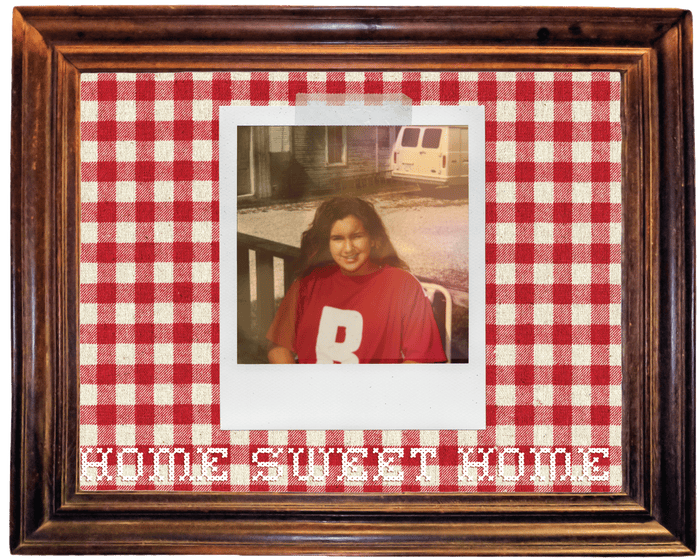
My special skill? I can walk into any room and instantly calculate exactly how many cardboard boxes and rolls of bubble wrap it would take to pack up everything inside. I wish this weren’t my claim to fame, but after living in 28 different homes by age 46, it’s become second nature.
Growing up in a middle-class Midwestern family, we lived by two unbreakable rules: never miss Sunday Mass, and never question why we kept moving. The explanation was always the same: “It’s for your dad’s job.” So we followed him from place to place, our wood-paneled station wagon loaded with clothes, mixtapes, and soccer gear as we watched endless cornfields roll by.
This constant relocation defined my childhood in the 1990s. Now at 46, I still can’t seem to stay in one home for more than a few years. The stability I longed for as a child now feels like a trap. The thought of buying another house terrifies me—it would mean committing to staying put when every fiber of me wants to keep moving.
I used to think our nomadic life was just a family quirk, but we were part of a larger trend. In the 70s and 80s, Americans were constantly on the move—chasing jobs, better opportunities, the idea that progress meant never staying still. We weren’t just packing boxes; we were living out a national belief that movement equaled success, even if it left us feeling rootless.
My story really began in seventh grade. Bullies targeted me for my acne and wild, frizzy hair. When puberty hit, I shot up to 5’9″ with broad shoulders and size 10 feet—looking more like my grandmother than my classmates. So when my parents announced we were moving from rural Missouri to suburban Chicago before eighth grade, I was thrilled to leave the teasing behind.
My stay-at-home mom never questioned these moves—she’d married my dad right after college because his job in Baltimore required it. I sometimes wonder if she secretly craved adventure or resented the constant upheaval.
At my new school, with the help of prescription acne cream and a basement party for my entire eighth-grade class, I reinvented myself as the “fun new girl.” It worked—soon I was singing Soul Asylum into hairbrushes at sleepovers with my new best friends.
My mom fell in love with our Chicago suburb, raving about the riverwalk and all the middle-class comforts we’d never had before. I loved it too—starting high school with a solid group of friends and playing sports. Then, the summer before sophomore year came another announcement: we were moving back to Missouri. I cried for weeks, heartbroken to leave the first place that had ever felt like home. I’ll never forget staring out the minivan window as Carole King’s “Tapestry” played on our drive south.
Recent research shows that frequent moves during childhood can lead to depression in adulthood—a fact I know all too well. By 14, I’d learned some hard lessons: safety is an illusion, stability is temporary, and when things get tough, the easiest solution is to leave.
The day before my senior year began, I came home to find my mom desperately packing boxes again…After years of trying to move us back to Naperville, my dad finally got a job there. We had to leave that same day so my brother could start his freshman year of high school the next morning. I remember hyperventilating between the kitchen table and the bay window, clinging to that house during an emotional breakdown. But our unspoken family motto was clear: keep moving.
Between ages 13 and 18, I attended five schools in five years and lived in even more houses. My experience reflected a deeper truth—instability in childhood shapes how we see ourselves long after the last moving box is unpacked.
Research supports this. A study in the Journal of Personality and Social Psychology found that frequent childhood moves correlate with lower life satisfaction and poorer mental health in adulthood. Tracking over 7,000 Americans for a decade, the study showed this link persisted even after accounting for factors like age and education.
In my early adulthood, I clung to close friendships—my chosen family in college and my twenties. Working entry-level jobs in the city, I expected impermanence, but secretly dreamed of a husband, kids, and the white picket fence I never had. I was desperate for roots.
At 29, I married the first man who asked. Six months before our divorce, I bought us a condo—just before the 2008 housing crash. Everyone said real estate was a safe long-term investment, but living alone in that one-bedroom felt like trauma. By 2014, I sold it at a loss just to escape.
By the early 2000s, job instability and economic shifts made staying in one place feel outdated. Raised on the promise of “Home Sweet Home,” my generation faced economic insecurity instead. Harvard’s housing studies show Gen X and older millennials buy homes less often than previous generations, squeezed by high interest rates and low inventory. The dual-income household, once practical, now feels like a TV trope—homes less a sanctuary, more a productivity hub with decorative throw pillows.
The dream of stability didn’t vanish—it just became unaffordable.
In my mid-30s, I rented a simple fourth-floor walk-up, a place I still remember fondly. Four years later, my second husband swept me into the suburban dream: a “forever home” on a cul-de-sac. We overpaid. I hung his kids’ art on the fridge with “Home Sweet Home” magnets.
The marriage didn’t last. Three years later, the “For Sale” sign in the yard marked another failure—I still couldn’t stay.
I didn’t know how to pack up the loss, so I carried it with me after another costly sale. In 2018, I bought a condo in downtown Chicago, near my old favorite apartment. Then came the pandemic, losing my cat, and getting laid off—Losing my job, ending a relationship, and suffering a miscarriage—all within six months—forced me to sell my condo, which I’d bought with a mortgage under 3% interest, just to cut costs.
Now I live in a dim, basement-level apartment, wrestling with what Freud called “repetition compulsion”—the unconscious urge to relive past traumas or unfulfilling patterns. I keep longing for a life I can’t recreate: my childhood before we moved. The musty scent of the couch blanket we never washed, the sound of my friends dribbling a basketball outside, the cigarette smoke drifting from the kitchen when my parents hosted card games.
If these walls had veins, they’d pulse with the energy of pizza nights, shouts of “Uno!”, and that beautiful chaos when the dishwasher ran nonstop because the house was full of friends and neighbors.
But chasing that feeling only makes it harder to accept my present. I don’t know how to build happiness without the sense of family I’ve been trying to replicate.
I’ve lost thousands on real estate and even more in confidence. My body remembers every goodbye through a minivan window more sharply than my mind does. If I dare to emotionally invest in another home, it might be taken from me too. I just want to believe that true belonging is real.
Sometimes I wonder what will happen if I anchor my restless energy to another permanent place. The wild part of me only knows how to push forward—go, go, go! What if, like motherhood, the American dream just wasn’t meant for me? Is homeownership just another childhood fantasy I need to release, like a balloon drifting from my open hand?
With today’s housing market—scarce inventory, sky-high prices, and brutal interest rates—I’m stuck facing a cruel irony: I’m great at packing up my life, but what I really need is the courage to unpack—to settle where I am and finally start living.