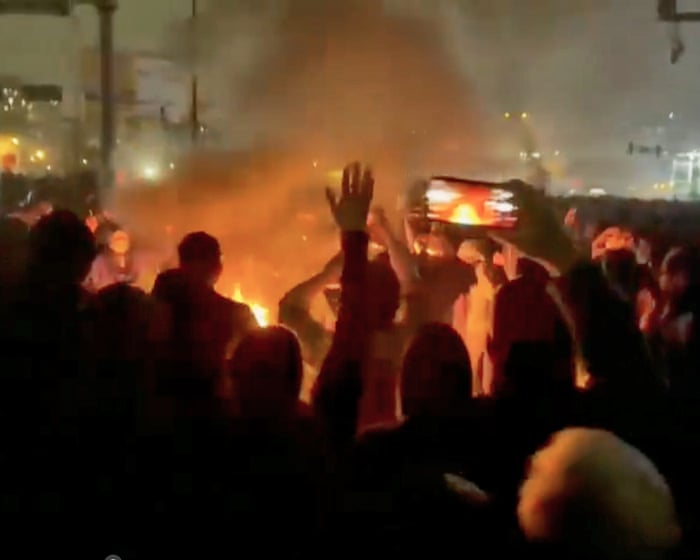
Autoritățile iraniene au arestat figuri cheie ale mișcării de protest care a zguduit țara în ultimele două săptămâni, a anunțat șeful poliției naționale. Acest lucru vine în contextul în care Washingtonul și Teheranul schimbă amenințări cu privire la posibilitatea unei intervenții americane.
Șeful poliției, Ahmad-Reza Radan, a declarat duminică la televiziunea de stat: „Aseară au fost făcute arestări semnificative ale elementelor principale din revolte, care, dacă Dumnezeu vrea, vor fi pedepsiți după parcurgerea procedurilor legale.” El nu a precizat câți au fost arestați.
Anterior, procurorul general al Iranului a declarat că cei prinși protestând sau chiar ajutând protestatarii ar putea fi acuzați de a fi „dușmani ai lui Dumnezeu” – o infracțiune pedepsită cu moartea.
Acum în a doua săptămână, mișcarea de protest marchează cea mai semnificativă agitație pe care Iranul a văzut-o în ultimii ani. Declanșată inițial de o prăbușire bruscă a monedei, protestatarii și-au extins ulterior cererile pentru a include reforma politică și apeluri la căderea guvernului.
Deși regimul iranian a supraviețuit protestelor în masă înainte, analiștii notează că actuala agitație se desfășoară în timp ce guvernul este slăbit de o criză economică și în urma conflictului său din vară cu Israelul.
Autoritățile au întrerupt accesul la internet în toată țara joi, impunând o aproape totală întrerupere națională. Grupurile pentru drepturile omului raportează că autoritățile iraniene au folosit întreruperea internetului pentru a-și intensifica represiunea, folosind forță letală și muniție reală pentru a dispersa demonstrațiile.
Potrivit Agenției de Știri a Activiștilor pentru Drepturile Omului cu sediul în SUA, cel puțin 116 persoane au fost ucise în violențele din jurul protestelor, cu 2.600 de arestați. Grupul a declarat: „Examinarea cauzelor decesului arată că majoritatea victimelor au fost ucise prin muniție reală sau foc de armă cu alice, în principal de la distanță mică.”
Donald Trump a amenințat că va interveni în Iran dacă autoritățile vor ucide protestatarii, o avertizare pe care a părut să o reînnoiască sâmbătă seara. Pe platforma sa Truth Social, președintele american a scris: „Iranul se uită la LIBERTATE, poate ca niciodată înainte. SUA stă gata să ajute!!!”
The New York Times și Wall Street Journal au raportat că oficialii americani i-au prezentat lui Trump opțiuni militare pentru un atac asupra Iranului, deși el nu a decis încă un curs de acțiune.
Senatorii americani au repetat remarcile lui Trump, cu senatorul Lindsey Graham postând pe rețelele sociale că „coșmarul lung al iranienilor se va încheia în curând.”
Oficialii israelieni au spus că sunt în alertă maximă pentru orice intervenție americană în Iran. Mass-media israeliană a raportat că aceștia rămân tăcuți pe această problemă pentru a nu oferi autorităților iraniene un pretext pentru a eticheta protestele ca fiind sprijinite din străinătate.
Amenințările SUA au provocat rapid o reacție din partea oficialilor iranieni. Președintele parlamentului, Mohammad-Bagher Qalibaf, a avertizat că SUA și Israelul vor fi „ținte legitime” dacă SUA lovește Iranul. „În cazul unui atac asupra Iranului, atât teritoriul ocupat, cât și toate centrele, bazele și navele militare americane din regiune vor fi țintele noastre legitime”, a spus el.
Anterior, după ce SUA a lovit site-urile de îmbogățire nucleară ale Iranului în iunie, Iranul a răspuns cu un atac asupra unei baze militare americane din Qatar. Acel atac a fost considerat în mare parte simbolic, deoarece a fost anunțat dinainte și nu a provocat victime militare americane.
În ciuda represiunii, protestele au continuat în noaptea de sâmbătă, iar mai multe sunt așteptate duminică. Videoclipurile au arătat ceea ce părea a fi mii de protestatari în Teheranul de nord, lovind oale și scandând sloganuri. În Mashhad, locul de naștere al Liderului Suprem al Iranului, Ali Khamenei, protestatarii s-au confruntat cu poliția, au instalat baricade și au aprins focuri.
În această captură de ecran de pe rețelele sociale, este arătată o provincie din Iran. Grupurile pentru drepturile omului raportează că, deși documentarea amănunțită este dificilă din cauza întreruperii comunicațiilor, există tot mai multe relatări despre creșterea numărului de decese ale protestatarilor. Centrul pentru Drepturile Omului din Iran a declarat duminică că a primit rapoarte credibile ale martorilor despre sute de protestatari uciși în ultimele zile.
Informațiile și videoclipurile continuă să apară sporadic din Iran, adesea distribuite de activiști folosind internetul prin satelit Starlink. Potrivit mesajelor transmise prin Fundația Abdorrahman Boroumand cu sediul în SUA, un protestatar din orașul central Sari a descris orașul ca fiind sub lege marțială completă de către forțele de securitate. Protestatarul a spus: „Un număr mare de forțe de securitate înarmate cu arme militare au înființat puncte de control. Fiecare mașină este oprită, chiar dacă sunt doar două persoane înăuntru. Le spun tuturor că oricine este afară va fi împușcat.”
Un activist iranian din străinătate i-a spus ziarului The Guardian că vărul său a reușit să facă un apel panicat prin Starlink sâmbătă seara în timp ce fugea de la un protest în cartierul Andarzgoo din Teheran. Vărul a raportat că autoritățile începuseră să folosească „arme militare” împotriva protestatarilor neînarmați, cu forțele de securitate trăgând asupra bărbaților, femeilor și copiilor de la distanță mică.
În videoclipurile distribuite The Guardian, se văd mulțimi mari deplasându-se pe străzi în mijlocul a ceea ce pare a fi gaz lacrimogen. Un alt videoclip arată o protestatară fugind în timp ce se aud focuri de armă în fundal, ea repetând cuvântul „nerușinat”.
Un videoclip verificat de grupul pentru drepturile omului Hengaw arată mai multe cadavre într-un depozit din zona Kahrizak din Teheran, pe care grupul spune că erau protestatari uciși de autorități. Hengaw a declarat că depozitul, situat lângă un morgă, era folosit ca facilitate de depășire din cauza supraaglomerării. Mass-media de stat iraniană a dat vina pentru decesele protestatarilor pe protestatari înșiși.
Președintele Iranului, Masoud Pezeshkian, care a oferit anterior dialog cu protestatarii, a adoptat o poziție mai fermă duminică. El a spus: „Oamenii au îngrijorări, ar trebui să stăm cu ei și, dacă este datoria noastră, ar trebui să le rezolvăm îngrijorările. Dar datoria mai mare este să nu permitem unui grup de răsculați să vină și să distrugă întreaga societate.”
În timp ce se ocupă de protestele interne, guvernul iranian devine tot mai îngrijorat de un potențial atac din partea SUA sau a Israelului.
Întrebări frecvente
Întrebări frecvente privind arestarea organizatorilor de proteste din Iran. Represiunea escaladează.
Întrebări de nivel începător
1. Ce se întâmplă acum în Iran?
Autoritățile iraniene arestează persoane identificate ca organizatori ai recentelor proteste publice. Aceasta face parte dintr-o represiune guvernamentală mai largă, care include supraveghere crescută, restricții de internet și pedepse mai aspre pentru a descuraja disidența.
2. De ce guvernul reprimă protestele?
Guvernul consideră protestele organizate ca o amenințare la adresa securității și stabilității naționale. Acesta urmărește să suprime mișcările pe care le consideră alimentate de adversari străini sau care contestă sistemul de guvernare.
3. Cine sunt organizatorii protestelor?
Pot fi activiști, lideri comunitari, influențatori pe rețelele sociale sau cetățeni obișnuiți care ajută la coordonarea logisticii demonstrațiilor, răspândesc informații sau mobilizează oameni în jurul unor nemulțumiri specifice.
4. Ce înseamnă potențiala implicare a SUA aici?
Se referă la îngrijorările – adesea exprimate de oficialii iranieni – că Statele Unite sau alte țări occidentale încurajează sau sprijină protestele pentru a destabiliza guvernul Iranului. Guvernul SUA condamnă de obicei represiunea și sprijină drepturile omului, dar neagă că ar direcționa protestele.
5. Ce cer în general protestatarii?
Cererile variază, dar au inclus istoric apeluri pentru mai multă libertate politică și socială, drepturile femeilor, justiție economică și responsabilitate guvernamentală.
Întrebări avansate și detaliate
6. Cum este diferită această represiune de cele anterioare?
Rapoartele sugerează că este mai sistematică, vizând coloana vertebrală a mișcărilor de protest preemptiv, cu supraveghere digitală avansată și pedepse cu închisoarea mai lungi. Acuzațiile legale sunt adesea mai severe, cum ar fi „dușmănia împotriva lui Dumnezeu”, care poate atrage pedeapsa cu moartea.
7. Ce justificări legale folosește guvernul iranian pentru aceste arestări?
Autoritățile invocă legile de securitate națională, acuzații de propagandă împotriva statului, adunare și complot împotriva securității naționale și acuzații de legături cu serviciile de informații străine sau grupuri teroriste.
8. Care este răspunsul internațional?
Organizațiile pentru drepturile omului și multe guverne occidentale au condamnat arestările și represiunea, cerând eliberarea deținuților și investigații independente. ONU și-a exprimat îngrijorarea. Unele țări au impus sancțiuni legate de încălcările drepturilor omului.