My mother’s house looks exactly as she left it.
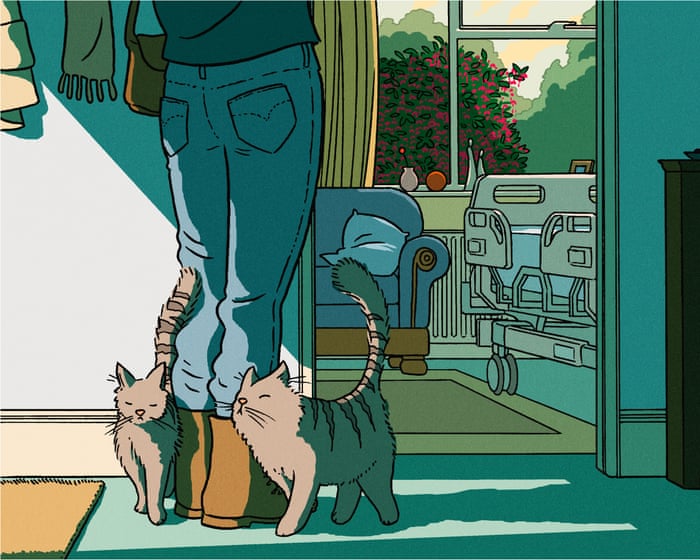
Two novels sit by the armchair, their pages neatly marked for her book group. On the noticeboard, there’s a shopping list written in only slightly shaky handwriting, with “FRUIT!” in urgent capitals and “make soup” underlined. The only visible signs that something is missing are her cats winding around me needily—loneliness has finally overcome their usual dislike of visitors—and the one thing I can’t bear to look at: the empty hospital bed, sitting bleakly in the middle of the sitting room. It was delivered by social services when it was decided she could no longer manage the stairs, and now it’s stripped bare, waiting to be collected. Another family will need it.
This isn’t the house where I grew up—my parents moved here just a few years ago—but it’s the place, I suppose, where childhood truly ended. Standing at her kitchen sink a fortnight ago, washing up and looking out at the same scarlet fuchsia I remember blazing in the garden when my father died, it struck me for the first time that soon I would no longer be anyone’s daughter. What I didn’t realize then was that losing both parents would feel less like the end of a relationship and more like its shift into a new phase—one where I could finally see them clearly as people in their own right.
I thought I’d figured that out years ago, but of course, I was wrong. When news of her diagnosis spread—an aggressively fast-moving cancer that came out of nowhere and overwhelmed her in six weeks—my mother’s friends rushed over in droves, bringing soup, cake, and clove-scented sweet peas from their gardens. But they also brought stories I’d never heard before. Although my father was the outgoing one and my mother more reserved, it turned out she was the one who watched, listened, and noticed what others missed. I already knew she’d spent time volunteering as a Samaritan—her way of coping with the suicide of a close family friend—and training as a Relate counsellor. I was vaguely aware, too, that in retirement she’d started local hillwalking groups and a social club for widows—and who knows what else. But foolishly, I hadn’t realized what the things we took for granted—”there goes Mum, off on one of her missions again”—meant to others. She had been the source of small kindnesses that people remembered for decades.
Have a baby, and the world falls over itself to offer advice. But losing a parent remains a private, confusing, lonely experience.
Why wait for a funeral, one of her friends argued, to say nice things? There was talk of a pre-party, a wake Mum could actually attend, but that idea was dropped when it became clear she was already too tired. Still, the urge to create new rituals makes sense. With modern medicine making heart attacks and strokes more survivable, death increasingly announces itself to elderly people not suddenly overnight, but slowly, with plenty of warning. The creeping degenerative diseases of old age allow more time to say goodbye, or to make amends if needed. But they also force us all to look death straight in the eye, and that takes real courage.
Fiercely independent at 84, my mother dreaded the idea of going into a care home. So when she was given less than three months to live, my sister and I promised to nurse her at home, even though we had no real plan for managing that alongside jobs and teenage children—beyond basically winging it. Have a baby, and the world falls over itself to offer advice. But losing a parent remains a private, confusing, lonely affair. So here are a few things I wish I’d known at the start of summer, in case—like that empty bed—another family can make use of them.
Caring for the dying triggers the same instinctive muscle memory as caring for small children, if you’ve had them: the same broken nights, the same constant vigilance, the same exhaustion after a day when you can’t name a single thing you actually did, and the same unmistakable feeling of love mixed with occasional rage. Then, as now, we wouldn’t have coped without understanding.Employers, good friends, and neighbors, along with a team of often overworked NHS and care staff, plus things my sister picked up from her midwifery training. (For the sake of your back, get a professional to show you how to safely move someone who’s bedbound.)
There are moments of dark, unspeakable humor even in dying, if that’s the kind of family you are.
There are times when your job is to push back against their doctors, and times when you need to stay quiet and listen—and you might never be entirely sure which is which.
If an elderly person who’s usually sharp suddenly seems to lose their mind overnight, check for an underlying infection causing delirium. Antibiotics can work wonders.
Keep the unflattering photos, because those are the ones you’ll want to look at later: the kids scowling, the regrettable haircuts, the rained-out beach day. It’s the real, unpolished life you miss, not the curated version for Instagram.
Death can spark a strong urge to tidy up one’s affairs in ways that make sense only to the dying person, not anyone else. (My mother had to be talked out of repainting the living room; a friend’s father insisted on alphabetizing his CDs.) Within reason, don’t fight it. Like the frantic nesting phase at the end of pregnancy, it’s just part of the process.
If you come across old letters, only read them when you’re feeling strong. Your parents had lives before you existed, and they may have kept secrets.
Death is different for everyone, but even the most peaceful kind looked to me like hard work. The best way I can describe it is like childbirth in reverse: you can comfort the person going through it, but you can’t experience it with them.
It wasn’t nearly as scary as that might sound.
Grief doesn’t always wait for death. Dementia meant I lost my father in some ways years before he died, and a wise friend said that caring for my mother might, looking back, feel like starting to process grief ahead of time. She was right.
Adrenaline might carry you through at first, and kindness might break you down.
And lastly, what I think my mother would have wanted me to say: if you haven’t faced this yet, don’t be afraid. But if you’re already in the thick of it and struggling, you’re far less alone than you think.
Gaby Hinsliff is a Guardian columnist.
Frequently Asked Questions
Here is a list of FAQs based on the themes in Gaby Hinsliffs article about losing a parent
General Emotional Experience
1 Is it normal to feel completely lost and confused after losing a parent even if Im an adult
Yes absolutely It is one of the most disorienting experiences you can go through Even as an independent adult losing a parent often removes a safety net you didnt realize was there Feeling like a lost child even in your 40s or 50s is a very common and normal reaction
2 Why do I feel like no one else understands what Im going through
Grief is incredibly personal While friends may have lost grandparents or pets the loss of a parent is a unique primary relationship Unless someone has walked that exact path they cant fully comprehend the specific dynamic youve lost Its not that they dont care its that they cant relate
3 Is it weird that I feel a sense of relief after they died especially if they were sick
No it is not weird at all Relief is a natural and common emotion especially after a long illness You are often relieved that their suffering is over and relieved that the intense stress of caregiving is over This relief often coexists with deep sadness and that combination is perfectly normal
4 Why do I keep expecting them to walk through the door or wanting to call them
This is a classic grief reaction Your brain has decades of habit to unlearn The impulse to share news or ask a question is a muscle memory These moments can be heartbreaking but they are a sign that the love was real and deep
Practical Administrative Issues
5 What are the first practical things I need to do
First take a breath You dont have to do everything at once Get multiple copies of the death certificate as you will need them for every account Then secure the house and pets and contact their employer bank and a probate attorney or estate executor to begin the legal process
6 I have no idea what their passwords are or what bills they had What do I do
This is a very common hurdle Start by going through their mail and bank statements Look