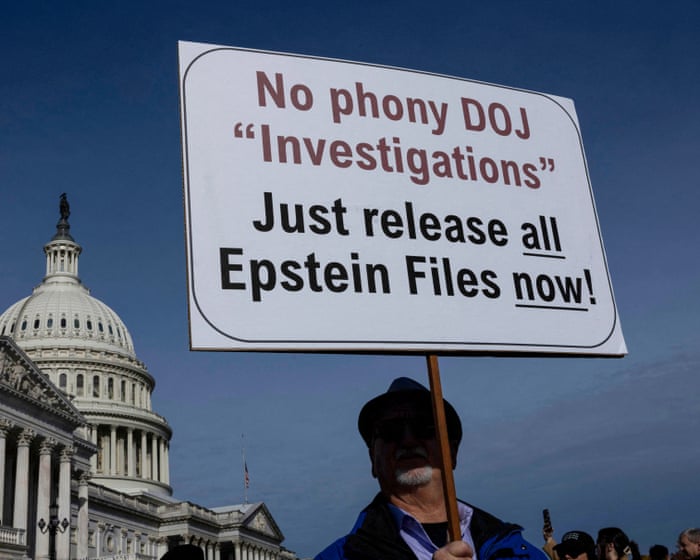
The law was clear: the Department of Justice under Donald Trump was required to disclose all investigative files on Jeffrey Epstein by December 19, 2025, with only rare exceptions. However, one month after this congressional deadline set by the Epstein Files Transparency Act, Trump’s Justice Department has not complied, raising questions about if and when authorities will ever release the documents related to the late sex offender.
In a January 5 court filing in Manhattan, Justice Department attorneys stated they had posted approximately 12,285 documents—about 125,575 pages—to the DoJ website as required by the law. In the same letter, they noted that department staff had identified “more than 2 million documents potentially responsive to the Act that are in various phases of review.”
The fact that the DoJ’s disclosures so far represent only a small fraction of the total—and have done little to clarify how Epstein operated with apparent impunity for years—has angered survivors’ advocates and lawmakers. Among them is attorney Spencer Kuvin, who has represented dozens of Epstein’s survivors.
“Congress did not create a discretionary timeline—it created a legal obligation. Every day these records remain withheld sends a message to victims that transparency is optional when powerful interests are involved,” Kuvin said. “For survivors of Epstein’s abuse, this delay is not procedural—it is personal. These files are not abstract government records; they are evidence of how institutions failed children. Continued secrecy retraumatizes victims and undermines public confidence in the justice system.”
Some are now calling for judicial intervention, asking a judge to appoint a special master to facilitate the release of the documents.
The congressmen who co-sponsored the act, Democrat Ro Khanna and Republican Thomas Massie, have asked Manhattan federal judge Paul Engelmayer to appoint a special master and independent monitor “to compel the Department of Justice (DOJ) to make mandatory production under the Act.”
“We have urgent and grave concerns about DOJ’s failure to comply with the Act as well as the Department’s violations of this Court’s order,” they wrote in a January 8 letter to Engelmayer. “On December 19, 2025, the Department of Justice released only a portion of responsive materials. That release, however, did not comply with the statute as written.”
They argued that the Department failed in multiple ways, including missing the statutory deadline, asserting common-law privileges not permitted by the Act, and applying extensive redactions that appear inconsistent with the Act’s prohibition on withholding or redacting records to protect politically exposed persons.
They also noted that the DoJ has ignored another requirement: the Attorney General must provide a report within 15 days of the disclosure deadline identifying categories of records released and withheld, and summarizing all redactions and their legal bases.
“To date, no such report has been provided. Without it, there is no authoritative accounting of what records exist, what has been withheld, or why, making effective oversight and judicial review far more difficult,” they wrote. “Put simply, the DOJ cannot be trusted with making mandatory disclosures under the Act.”
The congressmen stated that while they believe “criminal violations have taken place and must be addressed, the most urgent need now is for the DOJ to produce all the documents and electronically stored information required by the Act.” They are asking Judge Engelmayer to appoint a special master or independent monitor to ensure compliance.An independent monitor is proposed to ensure all documents and electronically stored information are made public immediately, in line with the Epstein Files Transparency Act. This monitor would also have the power to report on the true nature and extent of document production, including any improper redactions or misconduct.
The Department of Justice recently asked Judge Engelmayer to reject Representatives Khanna and Massie’s request for a special master. However, others believe a special master could help release the files. Radar Online, which sued over eight years ago after the FBI failed to release Epstein files following a public records request, supports the appointment of a special master to ensure transparency. A spokesperson stated that a special master, not being a DOJ employee, would avoid political decisions about what to release and when, and could report compliance issues to the court.
Roy Gutterman of Syracuse University’s Tully Center for Free Speech also suggested a special master could facilitate the release by relieving the court and DOJ from sorting through vast amounts of documents, noting that special masters are often appointed in complex cases involving large volumes of data.
Kuvin echoed this, saying a special master could bring structure and accountability to a stalled process, clarifying what is being withheld, why, and whether the justifications hold up legally.
Even if a special master is appointed, it doesn’t guarantee a quick release of documents. David Weinstein of Jones Walker explained that multiple legal steps and potential court involvement stand between appointment and release. Judge Engelmayer’s authority is tied to Ghislaine Maxwell’s criminal case, so it’s unclear how much power he has over the broader filings.
Weinstein noted that Engelmayer is considering the issue, having asked the DOJ to clarify whether he has the authority to enforce compliance with the Act. If Engelmayer decides he lacks authority, further litigation is likely. Weinstein suggested that if the New York approach fails, Khanna and Massie could file a standalone lawsuit in Washington, D.C., with the DOJ as the defendant.
Regarding potential criminal violations mentioned by Khanna and Massie, Weinstein highlighted the challenges of pursuing such allegations, especially if they involve referring the DOJ’s own actions for prosecution.“Appoint a special prosecutor who has no connection to the DOJ.”
Kuvin believes a special master could be helpful but would not be a complete solution. He emphasized the need for changes to the law, stating, “If the government is intent on delay or excessive redaction, meaningful disclosure will ultimately require judicial enforcement. Congress should amend the law to provide enforcement mechanisms for the victims. Congress can escalate oversight and enforcement. What cannot happen—legally or ethically—is indefinite delay under the guise of ‘review.’ The law already exists. What’s missing is enforcement.
Transparency doesn’t fail because statutes are unclear—it fails when institutions choose protection over accountability.”
Frequently Asked Questions
FAQs The Unreleased Jeffrey Epstein Documents
BeginnerLevel Questions
1 What are the Jeffrey Epstein documents everyone is talking about
These are court records from a 2015 civil lawsuit related to Jeffrey Epstein the financier and convicted sex offender They are believed to contain names flight logs and details about his associates and the operation of his sex trafficking ring
2 Why is there a deadline to release them
A federal judge ordered the documents to be unsealed and publicly released The US Congress also set a specific deadline for their disclosure as part of its oversight efforts aiming to ensure transparency and accountability
3 So have any documents been released at all
Yes a first batch of documents was released in early January 2024 However the vast majority of the records covered by the judges order and the congressional deadline are still not public
4 Why does it matter if these documents are released
Releasing them is seen as crucial for public transparency potentially providing a more complete picture of Epsteins network and how his crimes were enabled It could also inform policy changes to prevent similar abuse
Advanced Practical Questions
5 Who is blocking the release and what reasons are they giving
The delay is primarily due to the court process Does have the right to appeal the judges unsealing order Their lawyers argue for privacy claiming their clients are victims or uninvolved third parties whose reputations could be unfairly harmed
6 Whats the difference between the judges order and the congressional deadline
The judges unsealing order is a legal mandate from the judicial branch The congressional deadline is a political tool from the legislative branch used to pressure executive agencies to comply and turn over related records they might hold They are separate processes aiming at the same goal
7 What are Does or JohnJane Does
These are placeholders for the names of people who were previously anonymized in the court filings to protect their identities Part of the unsealing process involves reviewing each Doe to determine if there is a legitimate legal reason to keep their name redacted or if it should be made public