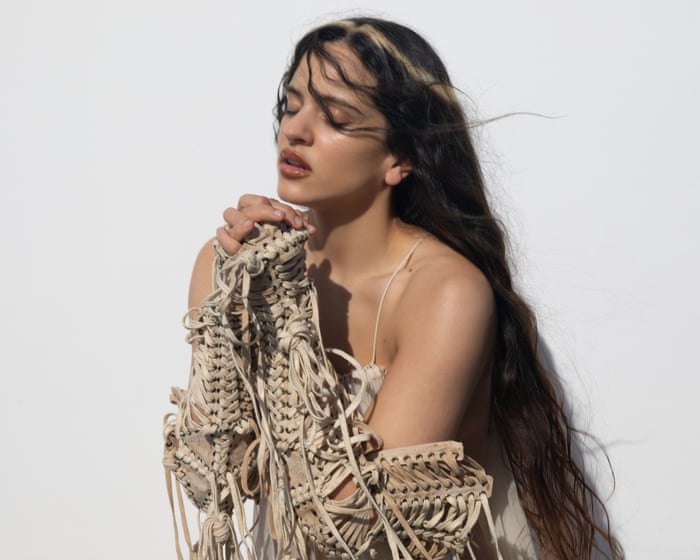
On paper, Lux sounds more like a challenging bonus round on University Challenge than a new album from a pop artist whose last single featured Lisa from Blackpink. Divided into four movements and sung in 13 languages, Lux is a dizzying, classically infused opus that explores feminine mystique, religious transcendence, and bodily transformation—often through the lens of female saints. While Lily Allen’s West End Girl (2025’s other heartbreak dissection) grounds a breakup in raw reality, here it’s launched heavenward, carried by the London Symphony Orchestra and contributions from Pulitzer-winning composer Caroline Shaw, among a long list of collaborators. Its sheer audacity makes the efforts of Rosalía’s pop peers seem almost laughable.
That Lux manages to rise above mere intellectual exercise or dry Wikipedia dives feels near miraculous—and that credit belongs entirely to Rosalía. Though she’s blended past and present before (see 2018’s El Mal Querer and its flamenco-R&B fusion), the stakes are higher here, and the balancing act more delicate. What elevates her fourth album beyond its layered melodies, rich arrangements, and inherent drama is the playfulness at its core. Like Björk in her ’90s prime, there’s a wonder in Rosalía’s voice that pulls you into its whirlwind. Even when she’s breaking your heart—as on the blossoming balladry of La Yugular or the heavenly ascent of closing track Magnolias—you want to stay right beside her.
This exuberance shines brightest toward the end of the Italian piano ballad Mio Cristo Piange Diamanti. Inspired by Saint Clare of Assisi, it bathes in string-drenched sorrow for over four minutes. Then, suddenly, everything drops away and we hear Rosalía giggle, “that’s gonna be the energy,” before a comically over-the-top string crescendo crashes down like a cartoon anvil. The song then shifts abruptly into the wild single Berghain, which races forward on Vivaldi-esque strings, a commanding German choir, and a cameo from Björk as agony aunt.
Part of Lux’s charm—which grows with each listen—is that you never quite know, or even want to know, where you’re headed. Nearly every track ends somewhere entirely different from where it began. Reliquia reflects on the traps and transience of fame over a featherlight symphony before dissolving into electronic chaos. On Porcelana, which feels closest to the sweaty, trap-infused collage of 2022’s Motomami, the mood starts off dark—with Rosalía prowling over sinister drums and chopped male vocals—before fluttering flamenco handclaps and an angelic choir smooth out the song’s jagged edges.
Another of Lux’s balancing acts is between experimentation and accessibility. It’s no coincidence this became Rosalía’s first Top 5 album in both the UK and US: at its heart lies a suite of undeniable pop songs. Divinize, the only English-language track, builds a chorus that seems to gather more infectious hooks as it soars. La Yugular achieves a similar feat, expanding and contracting as it weaves layered melodies like a tapestry. The waltz-like La Perla seduces with its playful, Disney-adjacent drama and chant-along chorus, while lyrically it channels the culture-shifting honesty of West End Girl—eviscerating (in Spanish) an ex as an “emotional terrorist” whose “only masterpiece is his bra collection.” Throughout, RosalíaSalía sings with a painted-on smile, like Cinderella hiding a knife: “Gold medal in being a motherfucker / You’ve got the podium of disappointment.”
Lux is pop on a maximalist scale—a hungry reach for capital-A Art in the face of impending AI blankness. It trades solipsism for glorious transcendence, crafting an over-the-top drama that controls the terms of its own absurdity. It’s a deep well of hidden treasure that takes time to fully uncover, yet never feels like a chore.
While some of 2025’s major pop albums felt like feasting on scraps, Lux is a banquet. Around the table, characters—some tipsy on holy wine—drift from conversations about historical saints, to the galvanizing ache of soul-shattering sadness, to shared gossip about useless men. It’s a modern-day musical from pop’s most restlessly creative voice.
Frequently Asked Questions
FAQs Rosalías Lux The 1 Album of 2025
General Beginner Questions
Q What is Lux and why is it getting so much attention
A Lux is the highly anticipated third studio album by Spanish superstar Rosalía Its being hailed as the best album of 2025 for its groundbreaking sound artistic vision and cultural impact marking a major evolution in her career
Q What kind of music is on Lux Is it still flamenco
A While Rosalías flamenco roots are a subtle influence Lux is a bold departure Its primarily an experimental pop and electronic album exploring futuristic sounds ambient textures and avantgarde production Think less traditional palmas and more sonic innovation
Q Where can I listen to Lux
A Lux is available on all major streaming platforms like Spotify Apple Music Tidal and YouTube Music Physical copies are also available for purchase from major retailers and her official webstore
Q Are there any featured artists on the album
A Yes the album includes a few highprofile and unexpected collaborations Features include artists like which highlight the albums eclectic and global approach
Advanced Detailed Questions
Q What are the major themes and concepts behind Lux
A The title Lux guides the albums themes It explores concepts of clarity rebirth spirituality and digitalage intimacy Lyrically it deals with selfdiscovery the dissolution of ego and finding purity in a chaotic world often using light and shadow as metaphors
Q How does Lux differ from her previous albums El Mal Querer and Motomami
A