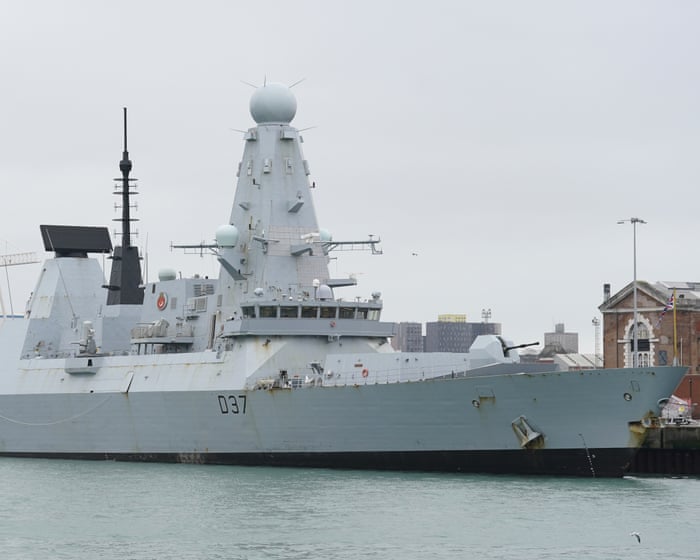
Defence Secretary John Healey is weighing the deployment of a Royal Navy destroyer to Cyprus to bolster the defence of British bases, following a series of apparently hostile drone attacks on RAF Akrotiri.
Defence sources indicate that sending HMS Duncan, currently in Portsmouth, is under consideration to enhance protection for the Cyprus base. However, another source noted that one of two other destroyers could be sent instead. HMS Duncan specialises in counter-drone operations and recently participated in a test exercise off the Welsh coast involving drone swarms, before hosting a family day last Friday. Its readiness to sail is unclear.
The journey from Portsmouth to Cyprus would take approximately five to seven days at a speed of around 30 knots (34.5 mph). Meanwhile, the United States has not specified how long its bombing campaign against Iran will continue, though former President Donald Trump suggested on Monday night that the conflict could last four to five weeks.
John Foreman, a former UK defence attaché to Moscow, expressed surprise at the delay in deploying a warship to protect Cyprus and UK bases, especially given the conspicuous US military buildup prior to Saturday’s joint attack on Iran. “That the UK is now ‘considering’ sending a destroyer to the eastern Mediterranean is a clear indication one should have been there already,” Foreman remarked.
According to Cypriot officials, France has already agreed to send a frigate and anti-drone systems to Cyprus, and a request for German support is under review. Foreman added, “This latest pondering appears driven more by news that the French are sending ships to the area. The MoD has consistently been behind the power curve and is now scrambling to catch up. A failure of planning, of intelligence, and of foresight.”
Despite the conflict entering its fourth day and British interests being targeted, no large Royal Navy warships are currently in or have been deployed to the Middle East. Only a single mine hunter, HMS Middleton, is stationed in Bahrain.
On Monday, a Shahed-type drone breached Akrotiri’s air defences and crash-landed on the runway, causing minor damage, even though counter-drone units were present. Two other incoming drones were intercepted later that day. Cypriot sources believe the drone that struck the runway was launched from Hezbollah-controlled territory in Lebanon, though the Ministry of Defence has not yet confirmed this.
Following the initial incident, Cypriot residents near Akrotiri were advised to shelter in place, and families of UK service personnel are being relocated off the base as a security precaution. Unverified images on social media appear to show that the drone involved had a Russian-made antenna.
Frequently Asked Questions
Of course Here is a list of FAQs about the potential deployment of a Royal Navy destroyer to Cyprus designed to cover a range of questions from basic to more advanced
Basic Contextual Questions
1 Why is the UK considering sending a warship to Cyprus
The primary reason is to help protect a new maritime aid corridor to Gaza ensuring humanitarian supplies can be delivered by sea without being intercepted or attacked Its also a show of support for regional stability
2 What exactly is a Royal Navy destroyer
Its a large powerful and fast warship designed to defend against threats from the air sea and underwater Think of it as a multirole guardian for a fleet or a specific mission area
3 Where is Cyprus and why is it important here
Cyprus is an island nation in the eastern Mediterranean very close to the Middle East Its a stable EU and Commonwealth nation with strong British ties making it an ideal logistical hub for aid operations heading towards Gaza
4 Is this related to the conflict between Israel and Hamas
Yes indirectly The deployment is a direct response to the humanitarian crisis in Gaza aiming to secure the sea route for aid shipments organized from Cyprus It is not a combat mission against any state
Operational Strategic Questions
5 What would the destroyer actually do there
Its main roles would be 1 Deterrence discouraging any interference with aid ships 2 Defense using its radar and weapons systems to protect the aid corridor from airborne or seaborne threats 3 Surveillance monitoring maritime activity in the area
6 What are the benefits of this deployment
Humanitarian Helps get vital food and medicine to Gaza by a safer sea route
Security Prevents the escalation of conflict at sea and protects civilian aid vessels
Diplomatic Shows UK leadership and commitment to addressing the crisis working alongside allies like the US EU and Cyprus
7 Could this lead to the UK getting involved in fighting
The stated goal is purely defensive and humanitarian The UK government has emphasized it is not seeking confrontation However deploying a warship to a tense region always carries a risk of escalation if it is threatened or attacked