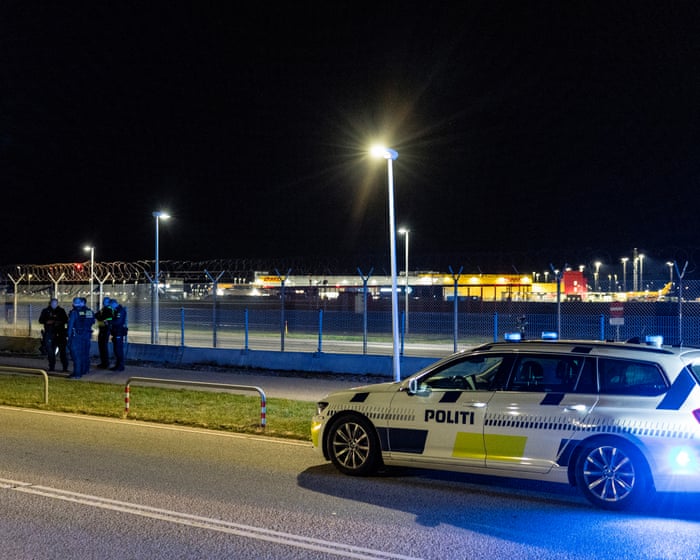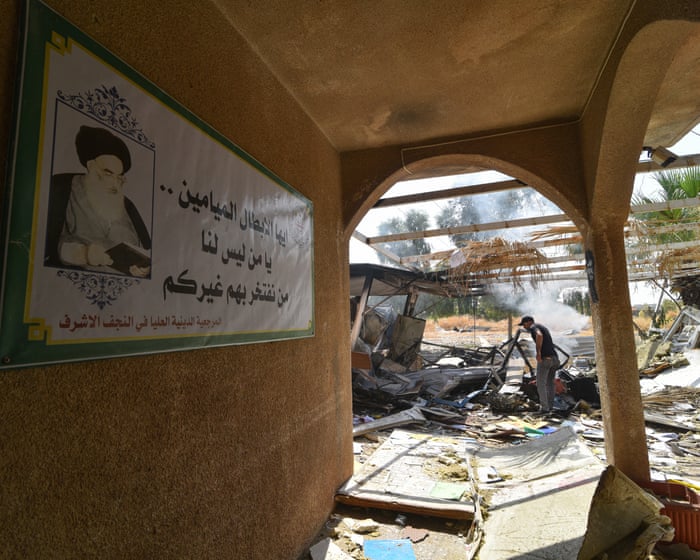
The US military said it intercepted a barrage of Iranian missiles and worked with Saudi forces to strike sites in Iraq that Iran-backed militias have used to launch attacks in recent days. The strikes on Wednesday killed at least 20 members of a former paramilitary alliance that includes pro-Iran groups.
Washington described the incident as an “attempted surprise attack” by Tehran. Iran had launched several ballistic missiles at US forces in the Middle East, breaking a brief pause in fighting. According to Axios, a US official said Iran’s target was a US base in Jordan.
US Central Command (Centcom) said all Iranian missiles launched on Tuesday were intercepted. The US warned that any further attacks on American troops or Saudi Arabia’s energy infrastructure would lead to retaliatory strikes.
The joint US-Saudi strikes on targets in Iraq killed at least 20 members of Iraq’s Popular Mobilisation Forces (PMF) and wounded others. The PMF is an Iraqi state security service that has been infiltrated by Iran.
In another sign that the lull in fighting may be over, Iran’s Revolutionary Guards claimed on Wednesday to have struck and stopped three “violating” oil tankers sailing an “illegal” route in the Strait of Hormuz, according to Iranian state media. The price of Brent crude oil rose after news of the escalation, hovering around $88 a barrel.
Trump pausing Iran attacks shows US military power is not enough on its own
Read more
Both sides had held fire over the weekend, after nearly two weeks of nightly US strikes on Iran and repeated missile and drone attacks by Tehran targeting Washington’s allies around the Gulf.
Oil prices had dropped sharply after the weekend pause, and Donald Trump said there was a “good chance” of progress in negotiations to end the war.
View image in fullscreen
A commercial vessel passes through an international shipping lane off Yemen’s Hanish Island in the Red Sea. Photograph: Khaled Ziad/AFP/Getty Images
US and Saudi warplanes carried out strikes on Iran-backed militants in Iraq after accusing them of launching drone attacks on Saudi oil facilities in recent days.
On Tuesday, Iraqi Prime Minister Ali al-Zaidi ordered security agencies to investigate the alleged attacks by militant groups. He said his country was committed to “preventing Iraqi territory from being used as a route or launching point for any attack targeting brotherly or friendly countries.”
The Iraqi militias have denied any role in the drone attacks. The Islamic Resistance in Iraq, an umbrella group of Iran-backed armed groups, called the Saudi claims “fabrications” and suggested that Monday’s attacks were carried out by the Houthis, who had themselves claimed to have attacked Saudi oil facilities.
The Iran-backed Houthis in Yemen claimed to have forced a Saudi oil tanker to turn around as part of their self-declared blockade. Last week, they announced a blockade of Saudi shipping, putting another key Middle Eastern waterway—through the Bab el-Mandeb strait leading to the Red Sea—at risk.
The United Kingdom Maritime Trade Operations Center said a tanker reported hearing explosions while traveling in the southern Red Sea. It did not name the tanker but said the crew and vessel were safe.
The Houthis also fired on at least one Saudi tanker in the Red Sea last week.
View image in fullscreen
Benjamin Netanyahu meets Donald Trump in the Oval Office on Tuesday. Photograph: GPO/AFP/Getty Images
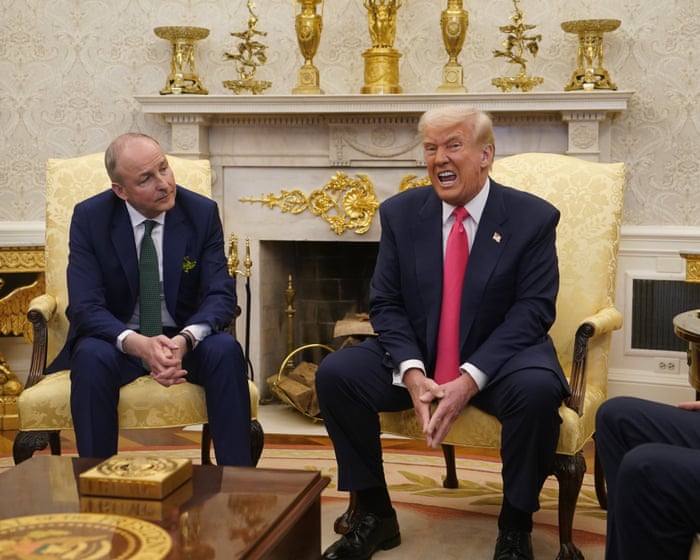
Iran’s surprise attack came as Israeli Prime Minister Benjamin Netanyahu visited Washington. Israel has been notably absent from the recent fighting with Iran.
Netanyahu said he had an “excellent” meeting with Trump at the White House, their first sit-down since launching the war. The meeting gave Netanyahu a chance to ease tensions in their relationship.
The closed-door meeting lasted nearly an hour and a half and was “positive and productive,” according to White House press secretary Karoline Leavitt.
This comes as both leaders face growing pressures at home. Netanyahu is up for re-election and is under pressure, in part because…His relationship with Trump is getting worse. Trump is under pressure to end an unpopular war that has caused economic damage and pushed prices up, just before the midterm elections this November. With the Associated Press and Agence France-Presse.
Frequently Asked Questions
Here is a list of FAQs about the US and Saudi Arabia conducting strikes against Iranbacked militias in Iraq
BeginnerLevel Questions
Q Why did the US and Saudi Arabia strike militias in Iraq
A The strikes were a response to repeated attacks by Iranbacked militias on US forces in Iraq and Syria The US said it was acting in selfdefense to protect its troops
Q Who are the Iranbacked militias in Iraq
A These are armed groups in Iraq that receive money weapons and training from Iran They often target US military bases and personnel in the region
Q Did this happen inside Iraq
A Yes The US and Saudi strikes targeted militia positions and weapons storage facilities inside Iraqi territory
Q Is Saudi Arabia usually involved in US military operations in Iraq
A Not usually This was notable because Saudi Arabia publicly joined the US in these specific strikes signaling a broader regional coalition against Iranian influence
Q Did the Iraqi government agree to these strikes
A No The Iraqi government condemned the strikes saying they violated Iraqs sovereignty and were not coordinated with Baghdad
IntermediateLevel Questions
Q What exactly was the US trying to achieve with these strikes
A The main goal was deterrence The US wanted to degrade the militias ability to attack American forces and send a message that further attacks would have serious consequences
Q Why would Saudi Arabia get involved in a fight inside Iraq
A Saudi Arabia sees Iranbacked militias as a direct threat to its own security and regional stability By joining the US Saudi Arabia aimed to push back against Iranian expansion and protect its interests
Q What kind of targets were hit
A Targets included command centers rocket launchers drone storage sites and weapons depots used by the militias
Q Did the strikes succeed in stopping the attacks on US troops
A The effect was mixed While attacks sometimes paused temporarily the militias often resumed attacks after a short period The strikes did not eliminate the threat entirely
Q How does this affect the relationship between the US and Iraq