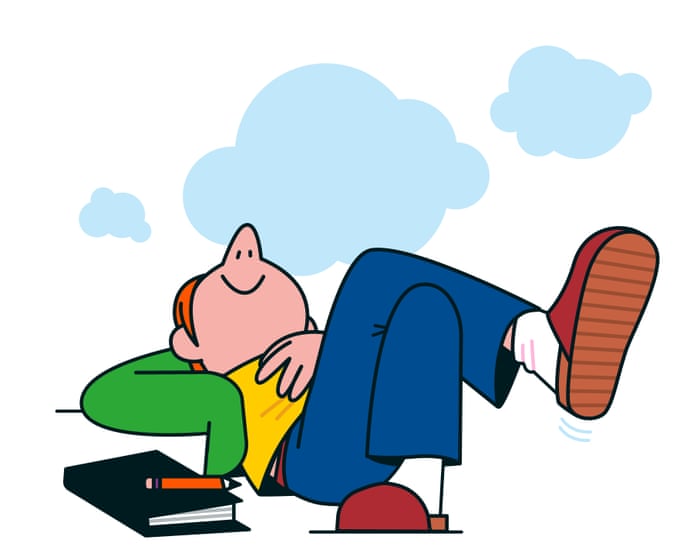
Last weekend, a rainy afternoon left me with canceled plans and nothing to do. As someone who always has backup plans, my first reaction was panic. What now? I drifted from room to room, tidying up random things in a sour mood.
For the first time in weeks, I noticed most of my houseplants were in bad shape, so I decided to give them some care. I moved the worst ones to a sunny windowsill and carefully picked off all the dead leaves. To be thorough, I put together a little kit with plant food, a mister, and a watering can. I might have gone a bit overboard and even ordered a “beautifying leaf shine” spray.
It’s funny how we often rush through life, busy and fueled by adrenaline, while secretly craving rest. But when the chance to slow down finally comes, it can feel uneasy. Still, tending to my plants gave me a calm, nesting feeling. As it grew dark, I felt oddly pleased with myself and went around replacing burnt-out lightbulbs, then dimmed the lamps. I spent the rest of the day dozing on the sofa under an electric blanket, half-listening to a podcast. After dinner, I turned in early and slept better than I had in a long time.
Even with the clear benefits, my initial resistance to slowing down isn’t unusual. Studies show people often underestimate how much they’ll enjoy doing nothing. Humans tend to prefer doing something—even something unpleasant—over nothing at all. Harvard psychologists demonstrated this strikingly: when given the choice between sitting alone with their thoughts for just 6 to 15 minutes or giving themselves an electric shock, many participants chose the shock.
So why do so many of us avoid idleness? “It’s not even an aversion—I don’t think it occurs to many people,” says Gabrielle Treanor, author of The 1% Wellness Experiment. “Nowadays, there’s always something to occupy us. We’re connected all the time,” she explains. “The chance to do nothing rarely comes up.” Social media constantly floods us with ideas—home projects, places to visit, new things to try. “It’s easy to feel like life offers endless possibilities, and we try to pack everything into our days.”
Guilt plays a role too, especially about seeming lazy. Being busy has increasingly become a sign of status and moral worth. “Many of us grew up hearing ‘idle hands are the devil’s workshop,'” Treanor notes. “And we’re very aware of all the extra things we feel we should be doing. We’re trying to be great parents, children, colleagues, employers, friends. All that pressure makes it hard to be okay with doing very little, even briefly.”
Of course, one person’s “nothing” is another’s busy afternoon. A coworker of mine often slips away for a mid-afternoon nap, while a neighbor talks about doing “nothing much” on weekends—then lists fitness classes, brunches, and catching up on work.
Many of us simply fear boredom. Sandi Mann, a psychologist at the University of Lancashire and author of The Science of Boredom,Our research found that boredom, rather than being negative, can actually boost creativity. In one study, participants were given the tedious job of copying numbers from a phone book. Afterward, they were asked to think of as many uses as possible for a plastic cup. This group outperformed a control group. Then, a second group was given an even more boring task—simply reading the numbers aloud—and they did even better at creative brainstorming.
“When we’re bored, our brain is actively searching for stimulation, and everyone has their own optimal level,” explains Mann. “If we can’t get enough stimulation from the outside world, our brain turns inward, leading to mind-wandering and daydreaming—both of which are linked to creativity.”
This happens because when the brain zones out, it taps into the default mode network. “It’s not like dreaming at night, but we enter a semi-conscious state that allows the brain to make connections and generate ideas it wouldn’t come up with when fully alert,” says Mann.
When we’re focused and rational, our critical mind takes over. As Mann puts it: “When you’re daydreaming, you don’t have that inner voice saying, ‘That’s a silly idea!’ Instead, your mind is free to explore beyond the usual boundaries.”
Mann even suggests scheduling time for “productive unproductivity” into our daily routines, especially when we’re trying to solve a problem. “Choose activities that require very little mental effort. Going for an aimless walk is great, as long as you know your way. Or find a spot to lie down and watch the clouds, or simply sit and observe the world around you.”
However, she cautions against confusing mindless activities with mindful ones. “Watching TV or scrolling online doesn’t boost creativity—in fact, it does the opposite by engaging the brain and preventing daydreaming. Activities like doodling or drawing do use some mental energy, but if you’re stuck in a boring meeting, they can be very helpful.”
Of course, at work, doing nothing isn’t usually a good thing. Karoline Schubert, who studies workplace idleness, points to research showing that the average employee spends over a fifth of their day waiting—whether for a phone to ring or a computer to update. Her paper, What to Do When There Is Nothing to Do, explores how to make the most of this downtime.
“We know that idle time at work tends to have negative effects, reducing wellbeing and performance. It’s linked to boredom and fatigue, which can drain mental resources,” she says.
Schubert found a key difference between expected and unexpected downtime. “In some jobs, downtime is common. One woman we interviewed had about six hours of it in an eight-hour day. She expected it and used the time well—helping colleagues, watering plants, even learning a new language.”
If you want to get better at being productively unproductive, try seeing it as an experiment and approach it with a sense of lightness and play.Treanor suggests starting small instead of setting yourself up for failure by committing to 20 minutes of staring into space each morning. “If you walk the dog every day while wearing headphones or chatting with a friend, try removing one layer. Go without. You’re more likely to notice your thoughts even though you’re still active. Or play a game where you notice something new on each walk, whether it’s a new shop or a child skipping down the road.”
For those feeling brave, she recommends going cold turkey and sitting quietly for two minutes. “Be proud of yourself for trying. Acknowledge that it’s really hard and uncomfortable. You don’t have to judge yourself if you don’t enjoy it. Next time, you can try going a bit longer.”
That’s a lovely idea, and I’ll certainly try it sometime. But right now, I have some plants to revive.
Frequently Asked Questions
FAQs The Art of Doing Nothing
Basics Definition
Q What exactly is the art of doing nothing
A Its the intentional practice of stepping away from constant productivity and busyness to simply be present without a goal or agenda Its about mindful idling not laziness
Q Isnt doing nothing just being lazy
A No Laziness often involves avoidance or apathy The art of doing nothing is a conscious restorative choice to recharge and be without guilt
Q Do I have to meditate to do nothing
A Not necessarily While meditation is one form doing nothing can be as simple as staring out a window sitting quietly or just letting your mind wander freely
Benefits Purpose
Q What are the main benefits of learning to do nothing
A It reduces stress boosts creativity improves focus helps process emotions and can lead to greater selfawareness and life satisfaction
Q How can doing nothing make me more creative
A When your brain isnt focused on a task it enters a default mode where it makes unexpected connections This is where aha moments and creative ideas often arise
Q Im always tired Can this help
A Yes Constant busyness is mentally draining Intentional idling allows your nervous system to reset and can be more restorative than scrolling on your phone
Common Problems Challenges
Q I feel guilty when Im not being productive How do I get over that
A Start small Reframe it as an essential part of your wellbeing and productivity cyclelike rest between workout sets Your worth isnt tied to your output
Q My mind races when I try to do nothing What can I do
A This is normal Dont fight it Acknowledge the thoughts and let them pass by like clouds in the sky Start with just 5minute sessions
Q I have a busy schedule How can I possibly find time
A Look for micromoments 5 minutes with your morning coffee a few deep breaths at your desk or sitting in your car before going inside It adds up
Practical Tips Examples