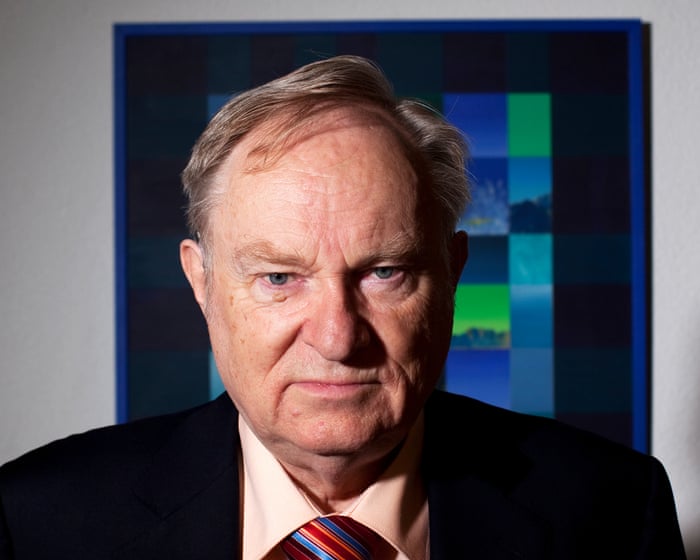
Ludwig Minelli, the founder of the Swiss assisted-dying organization Dignitas, has ended his life with the group’s help, just days before his 93rd birthday. Dignitas announced that until the very end, Minelli sought new ways to support individuals in exercising their right to choose and determine their own end-of-life matters.
The organization pledged to carry on his legacy by continuing to operate as a dedicated international advocate for self-determination and freedom of choice throughout life and at its conclusion.
A former journalist turned lawyer, Minelli overcame numerous legal hurdles through successful appeals to Switzerland’s highest court and the European Court of Human Rights.
Since Dignitas was established in 1998, global attitudes toward assisted dying have shifted significantly. France recently approved assisted dying for certain terminally ill patients, joining countries like Canada, Australia, New Zealand, Spain, and Austria, which have all enacted similar laws since 2015. In the United States, ten states permit assisted dying.
In the UK, debate continues over an assisted dying bill that passed a House of Commons vote in June and is now under review in the House of Lords. Peers were recently granted extra time to debate the bill due to a high number of proposed amendments.
If approved, the law would allow terminally ill adults in England and Wales with less than six months to live to request an assisted death, pending approval from two doctors and a panel of experts. Critics argue the bill needs stronger safeguards to protect vulnerable individuals.
Dignitas honored Minelli’s lasting impact on Swiss law, citing a 2011 European Court ruling that affirmed a person’s right to decide how and when their life ends. While euthanasia remains illegal in Switzerland, assisted dying—where individuals themselves carry out the act—has been permitted for decades.
With over 10,000 members, Dignitas also serves people from abroad. By 2024, the organization had assisted more than 4,000 people, including 571 from the UK. Approximately 1,900 UK residents are members, such as broadcaster and assisted dying advocate Esther Rantzen.
In a 2023 interview, Minelli, then 90, expressed his belief that assisted dying should be accessible to nearly everyone.
Frequently Asked Questions
Of course Here is a list of FAQs about the founder of Dignitas choosing to end his life with assisted dying designed to be clear natural and informative
General Beginner Questions
1 Who is the founder of Dignitas
The founder is Ludwig Lud Minelli a Swiss lawyer and human rights activist
2 What is Dignitas
Dignitas is a Swiss nonprofit organization that provides accompanied suicide to members who suffer from terminal illness severe physical or mental illness and are of sound judgment
3 What does assisted dying mean
Assisted dying is when a person who is suffering intentionally ends their own life with the help of another person usually a doctor who provides the means to do so
4 Why did the founder of Dignitas choose assisted dying
Ludwig Minelli was very elderly and reportedly chose assisted dying as a way to end his life on his own terms consistent with the principles he advocated for throughout his life
5 How old was he
He was 88 years old
Deeper Advanced Questions
6 Isnt it ironic that the founder used his own service
Some people see it that way but for his supporters it demonstrates his profound belief in the right to selfdetermination and the principle of practicing what you preach
7 Whats the difference between assisted suicide and euthanasia
In assisted suicide the person performs the final act themselves In euthanasia a doctor or other person directly administers the substance that causes death
8 Is assisted dying legal where Dignitas is located
Yes In Switzerland assisted suicide is legal under certain conditions provided the person assisting does not have a selfish motive This is why organizations like Dignitas can operate there
9 What are the main benefits of assisted dying according to its supporters
Supporters argue it allows for a dignified painless and controlled death alleviates unbearable suffering and upholds a persons fundamental right to choose what happens to their own body
10 What are the common criticisms or problems with assisted dying
Critics worry about potential pressure on vulnerable people the slippery slope