This CSS code defines a custom font family called “Guardian Headline Full” with multiple font weights and styles. It includes light, regular, medium, and semibold weights, each with normal and italic variations. The font files are provided in WOFF2, WOFF, and TrueType formats, hosted on the Guardian’s servers.@font-face {
font-family: Guardian Headline Full;
src: url(https://assets.guim.co.uk/static/frontend/fonts/guardian-headline/noalts-not-hinted/GHGuardianHeadline-Bold.woff2) format(“woff2”),
url(https://assets.guim.co.uk/static/frontend/fonts/guardian-headline/noalts-not-hinted/GHGuardianHeadline-Bold.woff) format(“woff”),
url(https://assets.guim.co.uk/static/frontend/fonts/guardian-headline/noalts-not-hinted/GHGuardianHeadline-Bold.ttf) format(“truetype”);
font-weight: 700;
font-style: normal;
}
@font-face {
font-family: Guardian Headline Full;
src: url(https://assets.guim.co.uk/static/frontend/fonts/guardian-headline/noalts-not-hinted/GHGuardianHeadline-BoldItalic.woff2) format(“woff2”),
url(https://assets.guim.co.uk/static/frontend/fonts/guardian-headline/noalts-not-hinted/GHGuardianHeadline-BoldItalic.woff) format(“woff”),
url(https://assets.guim.co.uk/static/frontend/fonts/guardian-headline/noalts-not-hinted/GHGuardianHeadline-BoldItalic.ttf) format(“truetype”);
font-weight: 700;
font-style: italic;
}
@font-face {
font-family: Guardian Headline Full;
src: url(https://assets.guim.co.uk/static/frontend/fonts/guardian-headline/noalts-not-hinted/GHGuardianHeadline-Black.woff2) format(“woff2”),
url(https://assets.guim.co.uk/static/frontend/fonts/guardian-headline/noalts-not-hinted/GHGuardianHeadline-Black.woff) format(“woff”),
url(https://assets.guim.co.uk/static/frontend/fonts/guardian-headline/noalts-not-hinted/GHGuardianHeadline-Black.ttf) format(“truetype”);
font-weight: 900;
font-style: normal;
}
@font-face {
font-family: Guardian Headline Full;
src: url(https://assets.guim.co.uk/static/frontend/fonts/guardian-headline/noalts-not-hinted/GHGuardianHeadline-BlackItalic.woff2) format(“woff2”),
url(https://assets.guim.co.uk/static/frontend/fonts/guardian-headline/noalts-not-hinted/GHGuardianHeadline-BlackItalic.woff) format(“woff”),
url(https://assets.guim.co.uk/static/frontend/fonts/guardian-headline/noalts-not-hinted/GHGuardianHeadline-BlackItalic.ttf) format(“truetype”);
font-weight: 900;
font-style: italic;
}
@font-face {
font-family: Guardian Titlepiece;
src: url(https://interactive.guim.co.uk/fonts/garnett/GTGuardianTitlepiece-Bold.woff2) format(“woff2”),
url(https://interactive.guim.co.uk/fonts/garnett/GTGuardianTitlepiece-Bold.woff) format(“woff”),
url(https://interactive.guim.co.uk/fonts/garnett/GTGuardianTitlepiece-Bold.ttf) format(“truetype”);
font-weight: 700;
font-style: normal;
}
@media (min-width: 71.25em) {
.content__main-column–interactive {
margin-left: 160px;
}
}
@media (min-width: 81.25em) {
.content__main-column–interactive {
margin-left: 240px;
}
}
.content__main-column–interactive .element-atom {
max-width: 620px;
}
@media (max-width: 46.24em) {
.content__main-column–interactive .element-atom {
max-width: 100%;
}
}
.content__main-column–interactive .element-showcase {
margin-left: 0;
}
@media (min-width: 46.25em) {
.content__main-column–interactive .element-showcase {
max-width: 620px;
}
}
@media (min-width: 71.25em) {
.content__main-column–interactive .element-showcase {
max-width: 860px;
}
}
.content__main-column–interactive .element-immersive {
max-width: 1100px;
}
@media (max-width: 46.24em) {
.content__main-column–interactive .element-immersive {
width: calc(100vw – var(–scrollbar-width));
position: relative;
left: 50%;
right: 50%;
margin-left: calc(-50vw + var(–half-scrollbar-width)) !important;
margin-right: calc(-50vw + var(–half-scrollbar-width)) !important;
}
}
@media (min-width: 46.25em) {
.content__main-column–interactive .element-immersive {
transform: translate(-20px);
width: calc(100% + 60px);
}
}
@media (max-width: 71.24em) {
.content__main-column–interactive .element-immersive {
margin-left: 0;
margin-right: 0;
}
}
@media (min-width: 71.25em) {
.content__main-column–interactive .element-immersive {
transform: translate(0);
width: auto;
}
}
@media (min-width: 81.25em) {
.content__main-column–interactive .element-immersive {
max-width: 1260px;
}
}
.content__main-column–interactive p,
.content__main-column–interactive ul {
max-width: 620px;
}
.content__main-column–interactive:before {
position: absolute;
top: 0;
height: calc(100% + 15px);
min-height: 100px;
content: “”;
}
@media (min-width: 71.25em) {
.content__main-column–interactive:before {
border-left: 1px solid #dcdcdc;
z-index: -1;
left: -10px;
}
}The interactive content column has a left border and specific spacing for elements. Paragraphs following certain elements have extra top padding, and the first letter of these paragraphs is styled as a large, colored drop cap. Inline elements and figures are limited to a maximum width of 620px on larger screens. Various color variables are defined for consistent theming.Pullquotes within specific containers should have a maximum width of 620 pixels.
Captions for showcase elements in main content and article containers should be positioned statically, with a full width up to 620 pixels.
Immersive elements should span the full viewport width, minus the scrollbar. On larger screens, they are capped at 978 pixels, with caption padding adjusted for medium screens. On mid-range screens, the maximum width is 738 pixels. On smaller screens, immersive elements align to the left edge with adjusted margins and caption padding.
For furniture wrappers on larger screens, a grid layout is used with defined columns and rows. Headlines have a top border, meta sections are positioned relatively, and standfirst content includes specific styling for links and paragraphs. Figures within the wrapper have no left margin and a maximum width of 630 pixels when inline. On extra-large screens, the grid template columns are adjusted.The CSS defines a grid layout for an article header with specific areas for the title, headline, standfirst, meta information, and a portrait image. It sets styles for borders, typography, and spacing, adjusting these properties across different screen sizes using media queries. For example, the headline font size increases on larger screens, and certain elements are hidden or repositioned as the viewport changes. The main media area is configured to be full-width on mobile devices.The CSS code defines styles for a webpage layout, focusing on a furniture wrapper element. It sets background colors, margins, padding, and responsive behaviors for different screen sizes. The styles include custom properties for colors, such as dark mode features and header borders. Specific rules control the appearance of captions, buttons, headlines, and meta information, with adjustments for hover effects and social media icons. Media queries ensure the layout adapts from mobile to desktop views, including wider screens where side backgrounds are added.This CSS code defines styles for a webpage component, likely a sidebar or content wrapper. It sets colors, borders, and layout adjustments for various elements like links, text, and social media icons. The styles adapt to different screen sizes using media queries, changing widths and borders to fit larger screens. Colors are managed using CSS variables for themes, such as dark mode.The CSS code defines styles for article elements and loads custom fonts. It sets the border color for comments to match the header border color. For article headings, it uses a light font weight, but makes headings with strong text bold. The code also imports the Guardian Headline font family in various weights and styles, including light, regular, medium, and semibold, in both normal and italic versions.The font “Guardian Headline Full” is defined with several styles: semibold italic (weight 600), bold (weight 700), bold italic (weight 700), black (weight 900), and black italic (weight 900). Each style includes font files in WOFF2, WOFF, and TrueType formats.
Additionally, the “Guardian Titlepiece” font is defined in its bold style (weight 700), also with WOFF2, WOFF, and TrueType files.
For iOS and Android devices, a dark background color (#1a1a1a) and specific feature colors are set. In dark mode, the feature color adjusts accordingly.
On iOS and Android, special styling is applied to the first letter of the first paragraph in article containers, following certain elements like `.element-atom` or sign-in gates.For Android devices, the first letter of the first paragraph in standard and comment articles is styled with a secondary pillar color. On both iOS and Android, article headers are hidden, and the furniture wrapper has specific padding. Labels within the furniture wrapper use a bold, capitalized font with a new pillar color. Headlines are set to 32px, bold, with bottom padding and a dark color. Image figures are positioned relatively, with full-width margins and automatic height.For Android devices, images within article containers should have a transparent background, span the full viewport width (accounting for scrollbars), and adjust their height automatically.
On both iOS and Android, the introductory text in articles should have specific spacing: 4 pixels of padding on top, 24 pixels on the bottom, and a 10-pixel negative margin on the right.
The paragraphs within this introductory text should use the Guardian’s headline font family.
Links inside this text should be styled with a specific color, an underline positioned 6 pixels below the text, and a light gray underline color. They should have no background image or bottom border. When hovered over, the underline should change to match the link’s text color.
Additionally, the article metadata section should be styled consistently for both operating systems.This CSS code sets styles for article containers on Android and iOS devices. It adjusts margins, colors, padding, and button displays for various article types and their components.On iOS and Android devices, for feature, standard, and comment article containers, images that are not thumbnails or immersive have a margin of zero, a width calculated from the viewport minus 24 pixels and the scrollbar width, and an automatic height. Their captions have no padding.
Immersive images in these containers have a width calculated from the viewport minus the scrollbar width.
Within the article body’s prose, quoted blockquotes use the new pillar color for their decorative element. Links are styled with the primary pillar color, an underline offset by 6px, and a border color underline, which changes to the new pillar color on hover.
In dark mode, the furniture wrapper’s background color is set to #1a1a1a.For iOS and Android devices, the content labels in feature, standard, and comment articles use the new pillar color.
On both iOS and Android, the main headline in these article types has no background and uses the header border color for the text.
The standfirst text in these articles also uses the header border color. Links within the standfirst, as well as author bylines and their links, are styled with the new pillar color.
Icons in the article metadata use the new pillar color for their strokes.
Captions for showcase images in these articles use the dateline color.
Finally, quoted text within the article body on iOS uses the specified styling.For iOS and Android devices, the text color of quoted blocks within article bodies is set to a specific variable color.
Additionally, the background color for various article body containers on both iOS and Android is forced to a dark background using an important declaration.
Furthermore, for iOS devices, the first letter following certain elements like atoms, sign-in gates, or specific IDs within article bodies is styled, though the exact styling is cut off in the provided text.This appears to be a CSS selector targeting the first letter of paragraphs in specific article containers on iOS and Android devices. The selector applies to various article types (standard, feature, comment) and accounts for different page structures and sign-in gate elements.This CSS code sets styles for specific elements on Android and iOS devices. It defines colors, padding, margins, and other visual properties for various article containers, buttons, and text elements. The code also includes dark mode preferences and sets certain headers to be invisible.The CSS code sets styles for article containers on iOS and Android devices. It removes margins from furniture wrappers and adjusts colors for labels, headlines, and links based on custom properties. Headlines are set to a light gray color, while links and labels use a variable color. Meta sections feature a striped background pattern and bylines in light gray.For iOS and Android devices, links within the meta section of feature, standard, and comment articles should use the new pillar color (or a dark mode feature color as a fallback).
Similarly, SVG icons within the meta section’s miscellaneous area should have their stroke set to the same color.
Alert labels within the meta section should be displayed in the color #dcdcdc, and this styling is important.
Icons represented by span elements with a data-icon attribute in the meta section should also adopt the new pillar color (with the dark mode feature as a backup).For iOS and Android devices, the icon color within the meta section of feature, standard, and comment article containers is set to a custom or default dark mode feature color.
On larger screens (71.25em and above), the meta section in these containers displays as a block with a top border, using the same color variable. The margin for the meta__misc element is adjusted, with a left margin of 20px.
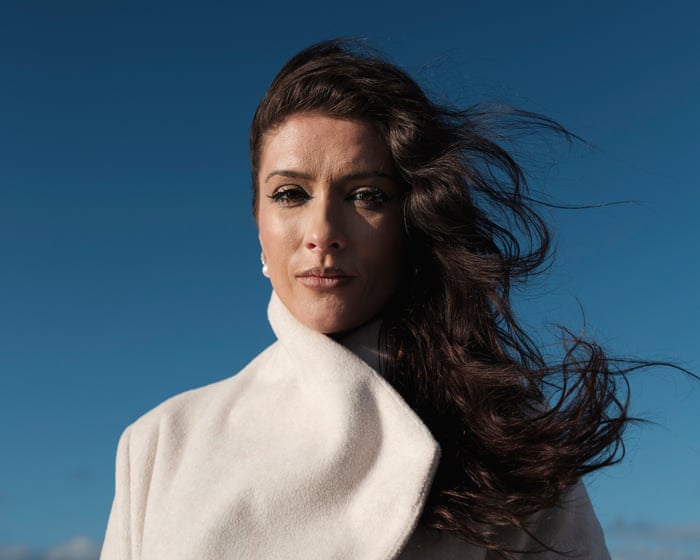
Paragraphs and unordered lists within the article body of these containers have a maximum width of 620px. Additionally, a specific style is applied to blockquote elements with the class “quoted” inside the article body’s prose section.When Cara Hunter, the Irish politician, looks back on the moment she discovered she had been deepfaked, she describes it as “like watching a horror movie.” The scene was her grandmother’s rural home in west Tyrone on her 90th birthday in April 2022. “Everyone was there,” she says. “I was sitting with all my closest family and family friends when I got a notification through Facebook Messenger.” It was from a stranger. “Is that you in the video… the one going around on WhatsApp?” he asked.
Hunter made videos often, especially then—less than three weeks before the Northern Ireland assembly elections. She was defending her East Londonderry seat, campaigning, canvassing, and debating. Yet, as a woman, this mA message from a man she didn’t know put her on alert. “I replied that I wasn’t sure which video he was talking about,” Hunter says. “So he asked if I wanted to see it. Then he sent it over.”
“It was extremely pornographic,” she says. “I won’t go into detail, but I want you to understand what I had to process. Even as I’m sitting here talking about it now, I suddenly feel roasting hot. It’s a clip of a blue-walled bedroom with American plugs. There’s this woman—a woman who seemed to have my face—doing a handstand and having mutual oral sex with a man. And I’m looking at this, sitting surrounded by family, in the middle of a very heated election campaign.”
At the same time, Hunter’s phone was blowing up with message after message from strangers who had seen the video. “All of them were just really vitriolic,” she says. “Those messages were from people who hate women.”
It’s hard to fathom how unknown and niche deepfake pornography still was when this happened only three years ago. “The only ‘altered images’ I really knew about at that time were Snapchat filters,” says Hunter. “My initial reaction was: ‘Is this a woman who looks similar to me?’ Then a friend asked if this could be one of those things where they put your face onto someone else’s body. We were Googling it, trying to see what it was called.”
Since then, this technology has come a frighteningly long way. “Now I have girls calling me, telling me this has happened to them and ruined their lives. Just recently, one young woman told me it had happened to her and 14 others, all when they were under 18,” she says. “Teachers tell me that they’ve seen a spike in nudification apps in schools. The affordability and accessibility have increased tenfold.”
In England and Wales, legislation is finally grappling with the issue—the Online Safety Act and the Data (Use and Access) Act 2025 have made the sharing, creation, and requesting of deepfake intimate image abuse illegal. In Northern Ireland, too, there are plans to criminalize it; the consultation process closed in October.
Yet the public has been slow to grasp its harms. New police research released last week suggests one in four people still think there is nothing wrong with creating and sharing sexual deepfakes or feel neutral about it. “I was shocked by that,” says Hunter. “This is a world where falsified, highly sexualized images can ruin your life, your relationships, your reputation, and your career, and there are people who think: ‘It’s a bit of fun, it’s a bit of craic.'” She takes a long sigh. “I was shocked—but at the same time, not surprised. The normalization of violence against women and girls cannot be overstated.”
“I’d like to think I have a right for my life not to be ruined,” she adds.
For Hunter, who has just turned 30, the weeks after the video’s release were “horrific.” “I didn’t know what to do. Should I do a press release? Should I put a Facebook status out? You’re a young woman, 27 years old, and it was so hard to be taken seriously politically anyway.” Her party, the Social Democratic and Labour Party (SDLP), advised her to ignore it. “Even recalling it now, I can’t believe this happened, but they said: ‘We’re two and a half weeks from an election. If you do a press release, your name will be right up there with words like ‘pornography’—and people will see you through a sexual lens and also go looking for it.’ They said: ‘If 10,000 people know about that video now, 100,000 will know after you’ve drawn attention to it.’ Those numbers are burnt into my brain.”She went to the police, who apologetically told her that no crime had been committed and that they lacked the technology or expertise to investigate. It was Hunter herself who eventually found the original video, which still showed the real woman’s face, by using screenshots in reverse image searches. When she tried to find out who had shared the deepfake on WhatsApp, she discovered it was an encrypted platform that protected its users’ privacy. “I’d like to think I have a right for my life not to be ruined,” she says. “You’re one person up against the massive system of tech and coding.”
Many memories from that time remain deeply humiliating. Her uncle once hammered on her door after a friend showed him the video. She had to invite him in, sit him down, and explain it wasn’t real. Later, she had to explain everything all over again to her father.
“Everywhere I went, people I used to talk to would cross the street to avoid me,” she says. “I live in a beautiful coastal town that I’m lucky to represent. A mile from my house is a bar, and a couple of days after this happened, there was a birthday party for a staff member. I thought, ‘I can’t let this consume me. I’m going to go there and have a drink.’ On the way, a man approached me and asked me for oral sex. I kept going, but when I walked into the bar, there was complete silence. I realized it was a mistake.”
Despite Hunter’s fear that staying silent would make people think the video was real, she followed her party’s advice and tried to campaign as usual. “I remember saying to my boyfriend, who is now my husband, ‘I don’t care if I’m elected or not. I just want this to be over.'” In the end, Hunter won by just 14 votes, making her seat the most marginal in Northern Ireland.
Afterwards, she did speak publicly about her experience and has become a leading voice campaigning for laws against deepfake intimate image abuse. It’s striking that she remains one of the very few to do so. Although many public figures, including MPs, likely have their own experiences with this, almost none speak out. Alexandria Ocasio-Cortez, the U.S. congresswoman, is a rare exception in politics. Hunter understands why others stay quiet. “Few women in public life are strangers to being objectified, and when a deepfake happens, you really don’t want to draw more attention to it,” she says.
But Hunter explains that she already felt so much shame and embarrassment. “I couldn’t let all this cortisol shooting through my veins be for nothing. It felt like an ethical duty. This had happened to me, and I was in a position to help shape policies. I had a voice and a platform, so I had to go 100%.”
This certainly wasn’t the issue she had planned to become known for. Though she grew up in Northern Ireland, she spent a year in Boston when she was 10 after her mother, a nursing professor, moved there for work. Then, at 16, her family won the green card lottery and relocated to California for several years. “I could never have done my job without that time,” she says. “When I went there, I was shy. In America, you have to write and deliver speeches and persuasive presentations in class. It really helped build my sense of self.”
Her first career plan was journalism, but after her oldest and closest friend died by suicide, she began researching mental health and suicides among the ceasefire generation for her final university paper. “I was interviewing politicians, and one of them said, ‘If you’re this passionate about it, you should be in local government.'” At 24, she was invited by the SDLP to run in the local council elections. She became the youngest woman deputy mayor of Derry City and Strabane. Two years later…Later, after the death of politician John Dallat, she was co-opted to the Northern Ireland Assembly, where she also served as mental health spokesperson. On the morning Hunter took her seat, she learned she had a brain tumor. “I was getting ready to go to Stormont when my GP called,” she says. “It’s a pituitary tumor—I’m blessed, it’s not malignant and isn’t large enough to need radiotherapy, thank God. But it can impact fertility and sight, so people should know about this condition.” Her initial symptoms were sore breasts and a missed menstrual cycle, which eventually led to a blood test measuring prolactin levels—the hormone produced in excess by pituitary tumors. Treatment involves daily medication, and Hunter was also advised to avoid stress. “Your prolactin levels can spike when you’re under stress,” she says, then laughs. The following year, she was deepfaked.
She fears experiences like hers will deter young women from entering politics. “I have very capable young girls on work experience in my office, and I don’t want them to think this is just part of the political experience,” she says. “Any time I ask a woman to consider standing, I have to ask three or four times. With men, nine out of ten times, they’ll say yes straight away.”
There’s little doubt the deepfake of Hunter directly affected the democratic process. How could it not have cost her votes? Women have been the first victims of this technology—a 2023 study found that 98% of online deepfakes are pornographic and 99% of the targets are women. However, in what Hunter calls “the AI Olympics,” the potential for future harm goes far beyond this. Examples include the deepfake of Joe Biden’s voice urging voters not to vote in the New Hampshire primary, or the video of Volodymyr Zelenskyy telling his troops to surrender. While the UK government has begun tackling deepfake pornography, Danish authorities are attempting to go further by changing copyright law. The proposed changes guarantee everyone’s right to their own body, facial features, and voice—though the law would allow for satire and parody. “If we could bring that in here, I’d say ‘Hallelujah!’” says Hunter. “What I’d really like to see is a mandatory marking on every AI video so everyone understands what they’re seeing.”
Beyond politics, Hunter still thinks about that video clip—that blue-walled bedroom, that upside-down woman—almost every day. “Even now, I’m thinking: ‘Should I offer £500 to anyone with information on who did this?’” she says. “I need to understand. Is it personal? Do they hate me, or do they hate women and not like to see a woman in power? Is it sectarian because I’m a Catholic nationalist woman? Or do people see me up there and think, ‘I’ll take her down a few pegs’?”
She isn’t sure about her future in politics. At the moment, she’s still on a high from her wedding in September. “I get my wedding album back in December, and I’m counting down the days.” Her husband, Peter Eastwood, isn’t in politics himself, but he is the brother of Colum Eastwood, the former SDLP leader. “I always say at least politics found me my husband,” she says.
“We have an election in May 2027, and to be honest, there is anxiety,” she says. “I’m in the most marginal seat in the north, and in the last election, I was a porn star—so what the hell is coming next?” Her parenthood—Her family wants her to step down, especially because of her pituitary tumor. “They’ve told me repeatedly that nothing is more important than my health,” she says. “They tell me the amount of abuse I face is unimaginable, that I’m running on stress hormones, and that the situation isn’t safe or stable.”
“But I love my job,” she continues. “I love being able to wake up, hear about a problem on Monday morning, and bring it to the minister by Monday afternoon. Having that kind of access on issues I truly care about is such a gift.” There’s a pause, followed by another long sigh. “But there’s always a worry in the back of my mind. I just don’t know—that’s the honest answer.”
Frequently Asked Questions
Of course Here is a list of FAQs about the topic framed around the hypothetical scenario of Cara Hunter and a deepfake political scandal
FAQs Deepfakes Political Careers
Beginner Definition Questions
1 What exactly is a deepfake
A deepfake is a video audio or image that has been convincingly altered using artificial intelligence to make it look or sound like someone is doing or saying something they never did
2 What happened to Cara Hunter
A hyperrealistic deepfake video was released falsely depicting her in a compromising situation The video spread rapidly online and nearly caused her to resign from her political position before it was proven to be fake
3 How can a video be incredibly explicit but still fake
Modern AI can seamlessly superimpose a persons face onto another persons body in a video or generate entirely synthetic content The actions in the video may be real but the identity of the person is digitally forged
4 Why would someone make a deepfake of a politician
The goals are usually to discredit blackmail or humiliate By creating a scandal attackers aim to destroy public trust influence elections or force a resignation
Technical Advanced Questions
5 How are these deepfakes made
They are created using a type of AI called generative adversarial networks One AI system generates the fake while another tries to detect flaws they compete until the fake is highly refined
6 How was Cara Hunters deepfake eventually exposed
Digital forensic experts likely found inconsistencies a human eye would missunnatural blinking patterns strange lighting on the face audio glitches or digital artifacts around the edges of the face and hair
7 Arent there laws against this
Laws are struggling to keep up In many places creating and distributing a malicious deepfake may fall under harassment defamation or election interference laws but specific deepfake legislation is still being developed in many countries
8 Whats the difference between a cheap fake and a deepfake
A cheap fake uses simpler editing tools to mislead A deepfake uses powerful AI to create a much more convincing and hardertodetect forg