This CSS code defines a custom font family called “Guardian Headline Full” with multiple font weights and styles. It includes light, regular, medium, and semibold weights, each with normal and italic variations. The font files are hosted on the Guardian’s servers and are provided in WOFF2, WOFF, and TrueType formats for compatibility across different browsers.@font-face {
font-family: Guardian Headline Full;
src: url(https://assets.guim.co.uk/static/frontend/fonts/guardian-headline/full-not-hinted/GHGuardianHeadline-Bold.woff2) format(“woff2”),
url(https://assets.guim.co.uk/static/frontend/fonts/guardian-headline/full-not-hinted/GHGuardianHeadline-Bold.woff) format(“woff”),
url(https://assets.guim.co.uk/static/frontend/fonts/guardian-headline/full-not-hinted/GHGuardianHeadline-Bold.ttf) format(“truetype”);
font-weight: 700;
font-style: normal;
}
@font-face {
font-family: Guardian Headline Full;
src: url(https://assets.guim.co.uk/static/frontend/fonts/guardian-headline/full-not-hinted/GHGuardianHeadline-BoldItalic.woff2) format(“woff2”),
url(https://assets.guim.co.uk/static/frontend/fonts/guardian-headline/full-not-hinted/GHGuardianHeadline-BoldItalic.woff) format(“woff”),
url(https://assets.guim.co.uk/static/frontend/fonts/guardian-headline/full-not-hinted/GHGuardianHeadline-BoldItalic.ttf) format(“truetype”);
font-weight: 700;
font-style: italic;
}
@font-face {
font-family: Guardian Headline Full;
src: url(https://assets.guim.co.uk/static/frontend/fonts/guardian-headline/full-not-hinted/GHGuardianHeadline-Black.woff2) format(“woff2”),
url(https://assets.guim.co.uk/static/frontend/fonts/guardian-headline/full-not-hinted/GHGuardianHeadline-Black.woff) format(“woff”),
url(https://assets.guim.co.uk/static/frontend/fonts/guardian-headline/full-not-hinted/GHGuardianHeadline-Black.ttf) format(“truetype”);
font-weight: 900;
font-style: normal;
}
@font-face {
font-family: Guardian Headline Full;
src: url(https://assets.guim.co.uk/static/frontend/fonts/guardian-headline/full-not-hinted/GHGuardianHeadline-BlackItalic.woff2) format(“woff2”),
url(https://assets.guim.co.uk/static/frontend/fonts/guardian-headline/full-not-hinted/GHGuardianHeadline-BlackItalic.woff) format(“woff”),
url(https://assets.guim.co.uk/static/frontend/fonts/guardian-headline/full-not-hinted/GHGuardianHeadline-BlackItalic.ttf) format(“truetype”);
font-weight: 900;
font-style: italic;
}
@font-face {
font-family: Guardian Titlepiece;
src: url(https://interactive.guim.co.uk/fonts/garnett/GTGuardianTitlepiece-Bold.woff2) format(“woff2”),
url(https://interactive.guim.co.uk/fonts/garnett/GTGuardianTitlepiece-Bold.woff) format(“woff”),
url(https://interactive.guim.co.uk/fonts/garnett/GTGuardianTitlepiece-Bold.ttf) format(“truetype”);
font-weight: 700;
font-style: normal;
}
@media (min-width: 71.25em) {
.content__main-column–interactive {
margin-left: 160px;
}
}
@media (min-width: 81.25em) {
.content__main-column–interactive {
margin-left: 240px;
}
}
.content__main-column–interactive .element-atom {
max-width: 620px;
}
@media (max-width: 46.24em) {
.content__main-column–interactive .element-atom {
max-width: 100%;
}
}
.content__main-column–interactive .element-showcase {
margin-left: 0;
}
@media (min-width: 46.25em) {
.content__main-column–interactive .element-showcase {
max-width: 620px;
}
}
@media (min-width: 71.25em) {
.content__main-column–interactive .element-showcase {
max-width: 860px;
}
}
.content__main-column–interactive .element-immersive {
max-width: 1100px;
}
@media (max-width: 46.24em) {
.content__main-column–interactive .element-immersive {
width: calc(100vw – var(–scrollbar-width, 0px));
position: relative;
left: 50%;
right: 50%;
margin-left: calc(-50vw + var(–half-scrollbar-width, 0px)) !important;
margin-right: calc(-50vw + var(–half-scrollbar-width, 0px)) !important;
}
}
@media (min-width: 46.25em) {
.content__main-column–interactive .element-immersive {
transform: translate(-20px);
width: calc(100% + 60px);
}
}
@media (max-width: 71.24em) {
.content__main-column–interactive .element-immersive {
margin-left: 0;
margin-right: 0;
}
}
@media (min-width: 71.25em) {
.content__main-column–interactive .element-immersive {
transform: translate(0);
width: auto;
}
}
@media (min-width: 81.25em) {
.content__main-column–interactive .element-immersive {
max-width: 1260px;
}
}
.content__main-column–interactive p,
.content__main-column–interactive ul {
max-width: 620px;
}
.content__main-column–interactive:before {
position: absolute;
top: 0;
height: calc(100% + 15px);
min-height: 100px;
content: “”;
}
@media (min-width: 71.25em) {
.content__main-column–interactive:before {
border-left: 1px solid #dcdcdc;
z-index: -1;
left: -10px;
}
}
@media (min-width: 81.25em) {
.content__main-column–interactive:before {
border-left: 1px solid #dcdcdc;
}
}The provided text appears to be a fragment of CSS code, which is a styling language for web pages. It defines various visual rules for elements like spacing, colors, and layout, particularly for an interactive content column. The code sets specific styles for different sections and conditions, such as dark mode preferences.The CSS code defines styles for various elements on a webpage. It sets specific fonts, sizes, and layouts for drop caps, pullquotes, and immersive elements. The code includes responsive design rules that adjust margins, padding, and grid layouts for different screen sizes, ensuring proper display on devices from mobile to desktop.The CSS code defines styles for a layout wrapper, adjusting grid structures, typography, and element visibility across different screen sizes. For larger screens, it sets specific grid templates, modifies headline font sizes and widths, and hides certain elements like lines and social components. Borders and spacing are customized using CSS variables, and media queries ensure responsive behavior from medium to extra-large viewports.@media (max-width: 46.24em) {
.furniture-wrapper #main-media,
.furniture-wrapper [data-gu-name=”media”] {
width: calc(100vw – var(–scrollbar-width, 0px));
margin-left: -10px;
}
}
@media (max-width: 46.24em) and (min-width: 30em) {
.furniture-wrapper #main-media,
.furniture-wrapper [data-gu-name=”media”] {
margin-left: -20px;
}
}
.furniture-wrapper figcaption {
position: absolute;
bottom: 0;
padding: 4px 10px 12px;
background-color: var(–captionBackground);
color: var(–captionText);
max-width: unset;
width: 100%;
margin-bottom: 0;
min-height: 46px;
}
.furniture-wrapper figcaption span {
color: var(–headerBorder);
}
.furniture-wrapper figcaption span svg {
fill: var(–headerBorder);
}
.furniture-wrapper figcaption span:nth-of-type(1) {
display: none;
}
.furniture-wrapper figcaption span:nth-of-type(2) {
display: block;
max-width: 90%;
}
@media (min-width: 30em) {
.furniture-wrapper figcaption {
padding: 4px 20px 12px;
}
}
.furniture-wrapper figcaption.hidden {
opacity: 0;
}
.furniture-wrapper #caption-button {
display: block;
position: absolute;
bottom: 10px;
right: 8px;
z-index: 30;
background-color: var(–captionBackground);
border: none;
border-radius: 50%;
padding: 6px 5px 5px;
}
.furniture-wrapper #caption-button svg {
transform: scale(0.85);
}
@media (min-width: 30em) {
.furniture-wrapper #caption-button {
right: 10px;
}
}
@media (min-width: 71.25em) {
.content__main-column–interactive:before {
top: -12px !important;
height: calc(100% + 24px) !important;
}
}
.content__main-column–interactive h2 {
max-width: 620px;
}
:root {
–new-pillar-colour: var(–darkmode-pillar, var(–darkModeFeature)) !important;
–headerBorderColor: #606060;
–darkModeFeature: #ff5943;
}
nav + section {
display: none;
}
nav + aside {
display: none;
}
aside + section {
display: none;
}
.furniture-wrapper {
background-color: var(–darkBackground);
margin: 0 -10px;
padding: 0 10px 4px;
}
@media (min-width: 30em) {
.furniture-wrapper {
margin: 0 -20px;
padding: 0 20px 8px;
}
}
@media (min-width: 61.25em) {
.furniture-wrapper {
padding: 0 20px;
}
}
@media (min-width: 81.25em) {
.furniture-wrapper:before {
content: “”;
width: calc((100vw – 1298px) / 2);
height: 100%;
position: absolute;
left: calc((100vw – 1298px) / -2);
background-color: var(–darkBackground);
border-right: 1px solid var(–headerBorderColor);
}
.furniture-wrapper:after {
content: “”;
width: calc((100vw – 1298px) / 2);
height: 100%;
position: absolute;
right: calc((100vw – 1298px) / -2);
background-color: var(–darkBackground);
}
}
.furniture-wrapper .article-header,
.furniture-wrapper [data-gu-name=”title”] a,
.furniture-wrapper [data-gu-name=”title”] span {
color: var(–new-pillar-colour, –darkModeFeature);
}
@media (min-width: 61.25em) {
.furniture-wrapper #headline > div:first-child,
.furniture-wrapper [data-gu-name=”headline”] > div:first-child,
.furniture-wrapper .headline > div:first-child {
border-top: 1px solid var(–headerBorderColor);
}
}
.furniture-wrapper #headline h1,
.furniture-wrapper [data-gu-name=”headline”] h1,
.furniture-wrapper .headline h1 {
font-weight: 700;
color: #dcdcdc;
}
.furniture-wrapper #headline figure,
.furniture-wrapper [data-gu-name=”headline”] figure,
.furniture-wrapper .headline figure {
margin-top: 0;
margin-bottom: 2px;
}
@media (min-width: 71.25em) {
.furniture-wrapper #meta:before,
.furniture-wrapper [data-gu-name=”meta”]:before {
background-color: var(–headerBorderColor);
}
}
.furniture-wrapper #meta details,
.furniture-wrapper #meta summary,
.furniture-wrapper #meta summary span,
.furniture-wrapper [data-gu-name=”meta”] details,
.furniture-wrapper [data-gu-name=”meta”] summary,
.furniture-wrapper [data-gu-name=”meta”] summary span {
color: #dcdcdc;
}
.furniture-wrapper #meta .meta__social a,
.furniture-wrapper #meta .meta__social button,
.furniture-wrapper [data-gu-name=”meta”] .meta__social a,
.furniture-wrapper [data-gu-name=”meta”] .meta__social button {
border-color: var(–headerBorderColor);
color: var(–new-pillar-colour, –darkModeFeature);
}
.furniture-wrapper #meta .meta__social a svg,
.furniture-wrapper #meta .meta__social button svg,
.furniture-wrapper [data-gu-name=”meta”] .meta__social a svg,
.furniture-wrapper [data-gu-name=”meta”] .meta__social button svg {
fill: var(–new-pillar-colour, –darkModeFeature);
}
.furniture-wrapper #meta .meta__social a:hover,
.furniture-wrapper #meta .meta__social button:hover,
.furniture-wrapper [data-gu-name=”meta”] .meta__social a:hover,
.furniture-wrapper [data-gu-name=”meta”] .meta__social button:hover {
/ Hover styles continue here /
}When hovering over links or social media buttons within the furniture wrapper, the text color changes to a dark background, and the background color switches to a new pillar color or dark mode feature. The icons inside these buttons also fill with the dark background color.
Text within meta sections is displayed in a light gray (#dcdcdc), while links are colored with the new pillar color or dark mode feature. On hover, these links maintain the same color and their underline matches it as well.
In standfirst sections, links have no bottom border, use the new pillar color or dark mode feature for text, and feature an underline with a light gray color. Hovering changes the underline to match the link color. Paragraph text in standfirst is light gray, and on larger screens, the first paragraph may have a top border that disappears on even larger screens. List items in standfirst also appear in light gray.
For wider screens, a background element with borders is added on both sides of the furniture wrapper, adjusting its width based on the viewport size to create a framed effect.For screens wider than 1298px, the right position is calculated as half the difference between the viewport width (minus any scrollbar) and 1298px, then made negative. In the furniture wrapper, the stroke color for specific SVGs and the border color for social and comment elements in the meta section are set to the header’s border color. Within the article body, level-two headings have a font weight of 200, but if they contain a strong element, the weight increases to 700.
Several font faces are defined for the “Guardian Headline Full” family, each with different weights and styles (light, light italic, regular, regular italic, medium, medium italic, semibold), specifying sources in WOFF2, WOFF, and TTF formats from the Guardian’s asset domain.@font-face {
font-family: Guardian Headline Full;
src: url(https://assets.guim.co.uk/static/frontend/fonts/guardian-headline/full-not-hinted/GHGuardianHeadline-Semibold.ttf) format(“truetype”);
font-weight: 600;
font-style: normal;
}
@font-face {
font-family: Guardian Headline Full;
src: url(https://assets.guim.co.uk/static/frontend/fonts/guardian-headline/full-not-hinted/GHGuardianHeadline-SemiboldItalic.woff2) format(“woff2”),
url(https://assets.guim.co.uk/static/frontend/fonts/guardian-headline/full-not-hinted/GHGuardianHeadline-SemiboldItalic.woff) format(“woff”),
url(https://assets.guim.co.uk/static/frontend/fonts/guardian-headline/full-not-hinted/GHGuardianHeadline-SemiboldItalic.ttf) format(“truetype”);
font-weight: 600;
font-style: italic;
}
@font-face {
font-family: Guardian Headline Full;
src: url(https://assets.guim.co.uk/static/frontend/fonts/guardian-headline/full-not-hinted/GHGuardianHeadline-Bold.woff2) format(“woff2”),
url(https://assets.guim.co.uk/static/frontend/fonts/guardian-headline/full-not-hinted/GHGuardianHeadline-Bold.woff) format(“woff”),
url(https://assets.guim.co.uk/static/frontend/fonts/guardian-headline/full-not-hinted/GHGuardianHeadline-Bold.ttf) format(“truetype”);
font-weight: 700;
font-style: normal;
}
@font-face {
font-family: Guardian Headline Full;
src: url(https://assets.guim.co.uk/static/frontend/fonts/guardian-headline/full-not-hinted/GHGuardianHeadline-BoldItalic.woff2) format(“woff2”),
url(https://assets.guim.co.uk/static/frontend/fonts/guardian-headline/full-not-hinted/GHGuardianHeadline-BoldItalic.woff) format(“woff”),
url(https://assets.guim.co.uk/static/frontend/fonts/guardian-headline/full-not-hinted/GHGuardianHeadline-BoldItalic.ttf) format(“truetype”);
font-weight: 700;
font-style: italic;
}
@font-face {
font-family: Guardian Headline Full;
src: url(https://assets.guim.co.uk/static/frontend/fonts/guardian-headline/full-not-hinted/GHGuardianHeadline-Black.woff2) format(“woff2”),
url(https://assets.guim.co.uk/static/frontend/fonts/guardian-headline/full-not-hinted/GHGuardianHeadline-Black.woff) format(“woff”),
url(https://assets.guim.co.uk/static/frontend/fonts/guardian-headline/full-not-hinted/GHGuardianHeadline-Black.ttf) format(“truetype”);
font-weight: 900;
font-style: normal;
}
@font-face {
font-family: Guardian Headline Full;
src: url(https://assets.guim.co.uk/static/frontend/fonts/guardian-headline/full-not-hinted/GHGuardianHeadline-BlackItalic.woff2) format(“woff2”),
url(https://assets.guim.co.uk/static/frontend/fonts/guardian-headline/full-not-hinted/GHGuardianHeadline-BlackItalic.woff) format(“woff”),
url(https://assets.guim.co.uk/static/frontend/fonts/guardian-headline/full-not-hinted/GHGuardianHeadline-BlackItalic.ttf) format(“truetype”);
font-weight: 900;
font-style: italic;
}
@font-face {
font-family: Guardian Titlepiece;
src: url(https://interactive.guim.co.uk/fonts/garnett/GTGuardianTitlepiece-Bold.woff2) format(“woff2”),
url(https://interactive.guim.co.uk/fonts/garnett/GTGuardianTitlepiece-Bold.woff) format(“woff”),
url(https://interactive.guim.co.uk/fonts/garnett/GTGuardianTitlepiece-Bold.ttf) format(“truetype”);
font-weight: 700;
font-style: normal;
}
:root:has(.ios, .android) {
–darkBackground: #1a1a1a;
–feature: #c70000;
–darkmodeFeature: #ff5943;
–new-pillar-colour: var(–primary-pillar, var(–feature));
}
@media (prefers-color-scheme: dark) {
:root:has(.ios, .android) {
–new-pillar-colour: var(–darkmode-pillar, var(–darkmodeFeature));
}
}
body.ios #feature-article-container .element-atom:first-of-type + p:first-of-type:first-letter,
body.ios #feature-article-container .element-atom:first-of-type + .sign-in-gate + p:first-of-type:first-letter,
body.ios #feature-article-container .element-atom:first-of-type + #sign-in-gate + p:first-of-type:first-letter,
body.ios #standard-article-container .element-atom:first-of-type + p:first-of-type:first-letter,
body.ios #standard-article-container .element-atom:first-of-type + .sign-in-gate + p:first-of-type:first-letter,
body.ios #standard-article-container .element-atom:first-of-type + #sign-in-gate + p:first-of-type:first-letter,
body.ios #comment-article-container .element-atom:first-of-type + p:first-of-type:first-letter,
body.ios #comment-article-container .element-atom:first-of-type + .sign-in-gate + p:first-of-type:first-letter,
body.ioThis CSS code sets styles for article containers on Android and iOS devices. It adjusts the color of the first letter in certain paragraphs to match a secondary pillar color. It also sets the article header height to zero and styles the furniture wrapper with specific padding, font properties, and colors for labels and headlines. Additionally, it positions and sizes images within the furniture wrapper, setting their width relative to the viewport.For images within the furniture wrapper, set the background to transparent and the width to the full viewport minus the scrollbar width, with the height adjusting automatically.
For the standfirst section in feature, standard, and comment articles on both iOS and Android, add 4 pixels of padding to the top, 24 pixels to the bottom, and a negative 10-pixel margin on the right.
Within the standfirst inner content, set paragraph text to use the Guardian Headline font family.
For all links within the standfirst inner content, apply the new pillar color, remove any background image, add an underline with a 6-pixel offset using the header border color, and remove any bottom border. This styling also applies when hovering over these links.When links within the standfirst are hovered over, the underline color should match the new pillar color. On iOS and Android devices, for feature, standard, and comment articles, the meta section should have no margin. Within that meta section, the byline, author name, and related links should also use the new pillar color for their text.
Additionally, the meta__misc area should have no padding, and any SVG icons within it should be stroked with the new pillar color. For showcase elements, the caption button should be displayed as a flex container, centered with 5px padding, 28px in both width and height, and positioned 14px from the right.For iOS and Android devices, the article body in feature, standard, and comment containers has no side padding. Non-thumbnail, non-immersive images within these article bodies are set to full viewport width (accounting for padding and scrollbars) with no margin and auto height, and their captions have no padding. Immersive images span the full viewport width minus the scrollbar. Inside the article body’s prose, quoted blockquotes use a custom color for their decorative element, and links are styled with an underline that changes color on hover. These styles also apply in dark mode.On iOS and Android devices, the furniture wrapper for feature, standard, and comment articles has a dark background. Within these wrappers, content labels use the pillar color, while headlines and standfirst text adopt the header border color. Links in the standfirst and author bylines also use the pillar color. Icons in the meta section are styled with the pillar color as their stroke. Additionally, captions for showcase images within these articles are formatted consistently.For iOS and Android devices, the text color of captions in showcase images within feature, standard, and comment articles is set to the dateline color.
For the same devices and article types, the text color of quoted blockquotes within the article body uses the new pillar color.
Additionally, for these devices and articles, the background color of the main content areas (like the article body, feature body, comment body, and interactive content) is set to a dark background, and this is marked as important.
Finally, for iOS devices in these article types, the first letter of a paragraph that directly follows specific elements (like an atom element or a sign-in gate) will have a special styling applied.This appears to be a lengthy CSS selector targeting specific elements for styling the first letter of paragraphs under various conditions. It applies to iOS and Android devices, within different article containers and body sections, following specific HTML elements like `.element-atom`, `.sign-in-gate`, or `#sign-in-gate`.This CSS code defines styles for article content on Android and iOS devices. It sets colors, padding, and other visual properties for elements like first letters, captions, and headers. The code also includes dark mode preferences and defines custom color variables for different parts of the page.On iOS and Android devices, hide the article header in feature, standard, and comment article containers by setting its opacity to zero. For these same containers, remove any margin from the furniture wrapper. Set the color of content labels within the furniture wrapper to use a custom CSS property for the new pillar color, defaulting to a dark mode feature color. Ensure the main headline text appears in a light gray color. Style links within the article header or title section to also use the new pillar color variable. For the meta section, create a subtle striped background using a repeating linear gradient based on the header border color. Finally, apply these same meta and byline styling rules consistently across all specified article containers on both operating systems.This CSS code sets styles for different article types on iOS and Android devices. It defines colors for bylines, links, icons, and labels within the metadata sections. The colors vary based on the device type and article container, using specific hex codes and CSS variables for consistency.For iOS and Android devices, the color of specific icons within article meta sections is set using a CSS variable. On larger screens, these meta sections display a top border and adjust their internal spacing. Additionally, paragraph and list elements within the article body receive consistent styling across different article types and operating systems.On August 7, 1985, five people were found dead at White House Farm in Essex, England. The victims were 28-year-old Sheila Caffell (often called Bambi), her six-year-old twin sons Daniel and Nicholas, and her adoptive parents, June and Nevill Bamber. All five had been shot with a rifle. The police were alerted by Caffell’s 24-year-old brother, Jeremy Bamber, who was also adopted.Police were called to a disturbance inside the farmhouse—Jeremy Bamber said his father had phoned to tell him about it—and he was outside with officers for four hours before the bodies were found. Sheila Caffell, who had recently been hospitalized for schizophrenia and reportedly feared her children would be taken into foster care, was discovered with the rifle lying on her chest, pointed toward her neck. She had two gunshot wounds to her neck and chin, and a bloodied Bible lay beside her.
Initially, the case seemed straightforward: a tragic murder-suicide carried out by Caffell. But a month later, Jeremy Bamber was arrested. He has now been in prison for 41 years, and doubts about the safety of his conviction have persisted, growing stronger recently. The proper body to review this is the Criminal Cases Review Commission (CCRC), but it is in disarray; it has already taken the CCRC four years to examine less than half of the evidence Bamber has submitted. In a short series, we are looking at specific pieces of evidence, with analysis from forensic experts.
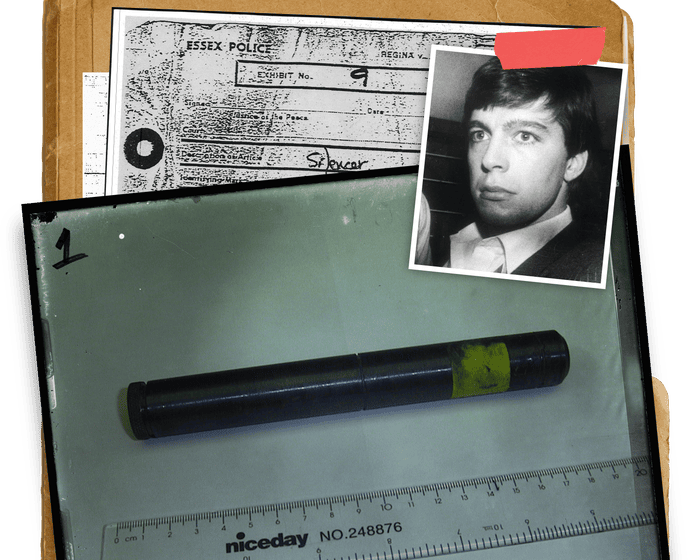
Central to the case against Jeremy Bamber is whether a silencer was used in the killings and then removed from the rifle and hidden. If so, the court argued, Sheila Caffell could not have been the killer.
A silencer was found in a downstairs cupboard by Bamber’s relatives three days after the murders. This itself is puzzling. Why wasn’t it discovered when Essex police searched the cupboard on the day of the killings? Also, if Bamber were a criminal genius who murdered five family members, left the house, called the police, and successfully framed his sister, why would he carefully put the silencer back in the cupboard to be found, rather than dispose of it?
The silencer became crucial in court. In 1986, Justice Maurice Drake told the jury at Essex Crown Court that if they believed it had been attached to the Anschütz 525 rifle used to kill Sheila Caffell, then Jeremy Bamber had killed all five family members.
After about 10 hours of deliberation, the jury sent a note asking for clarification: Was the blood found in the silencer a perfect match for Caffell? Justice Drake replied yes, explaining it contained only Caffell’s blood and did not match anyone else in the family. Twenty-one minutes later, the jury returned with a majority verdict of 10–2, finding Bamber guilty of the murders.
Now, a distinguished British forensic physician has said he does not believe a silencer, also known as a moderator, was used when Caffell was shot. The Guardian commissioned Professor Jason Payne-James, a specialist in forensic and legal medicine, to examine crime-scene photographs taken by Essex police. He concluded that the bullet injuries are not consistent with a contact or close-range injury caused by an Anschütz 525 rifle with a silencer attached. Payne-James, president of the European Council of Legal & Forensic Medicine, specializes in the medical recording and interpretation of injuries.
He told the Guardian: “The pattern imprint on the skin is not large enough to suggest that a silencer was used, either at very close range or in contact with her body. These are close-range bullet holes, and the nature of the moderator or silencer is such that you’d expect some form of pattern imprint equivalent to the diameter of the silencer if it was used in contact or at very close range.”
Bamber and his legal team believe this is a game-changer. Why is it so significant? Because at trial, the closest thing to forensic evidence was contained in the silencer. The prosecution argued that Caffell’s blood was found inside it. The blood was “backspatter,” a forensic term referring to biological material ejected backward from a gunshot entrance wound, traveling opposite to the bullet’s flight path—a “blow back” effect.The blood found in the silencer did not automatically prove Bamber was the killer. The prosecution’s case relied on two points: first, that the blood inside—matching Sheila Caffell’s—showed the silencer was used in her shooting, and second, that her arms were too short to have reached the trigger and shot herself in the neck with the silencer attached.
Then came the decisive argument: Caffell could not have shot herself twice in the neck, removed the silencer, walked downstairs to put it away, then returned upstairs to die in her parents’ bedroom. The only other explanation was that Bamber committed the murders.
A month after the killings, attention moved away from the murder-suicide theory when Bamber’s former girlfriend, Julie Mugford, changed her original statement. She told police he had spoken about murdering his family to inherit their wealth, first claiming he hired a hitman. When that person provided a solid alibi, Mugford changed her story again, saying Bamber—who had broken up with her shortly after the murders—told her he planned to kill them himself.
It later emerged that Mugford had agreed to sell her story to the News of the World for £25,000 if Bamber was convicted. Essex police and Crown prosecutors also dropped charges against her for burglary, cheque fraud, selling cannabis, and robbery, reasoning that prosecuting her might affect her availability or credibility as a key witness against Bamber. The Guardian has contacted Mugford for comment.
Aside from the silencer, the evidence against Bamber was circumstantial. But this six- to seven-inch steel tube has a controversial history. Bamber has argued it is suspicious that the silencer was found by his late uncle Robert Boutflour and cousins David Boutflour and Ann Eaton. He has repeatedly claimed they never liked him and stood to inherit the family wealth if he was convicted—which they did. Eaton, who now lives at White House Farm, and David Boutflour have always denied framing Bamber and have declined to speak to the Guardian.
After discovering the silencer, Robert Boutflour went to Essex police with a speculative theory: that Bamber rode his mother’s bike across fields in a wetsuit, entered the house, shot the family, escaped through the kitchen window, and washed off blood in the nearby North Sea. In his diary, Robert wrote that Bamber sprayed his parents with bullets to “make it look like the work of a maniac.” He suggested Bamber then woke Sheila, led her into the master bedroom past her dead mother, told her to lie down with a Bible, and shot her. Though far-fetched, much of this hypothesis became part of the prosecution case. Crucially, it was Robert who told police about blood inside the silencer and its potential significance.
When Justice Drake—who died in 2014—told the jury the silencer contained only Caffell’s blood, he misled them. The blood found between two baffle plates matched her blood type, but the Forensic Science Service had already noted this type was shared by 8% of the population, including Robert Boutflour, who regularly used the family guns. At trial, it was claimed a “considerable amount” of Caffell’s blood was in the silencer, though only one small flake matching her blood group was found.A second blood group was found in the baffles that did not match any of the deceased or Jeremy Bamber, though it potentially matched David Boutflour. The jury was not told any of this. During his summing up, Justice Drake repeatedly stated that the blood in the silencer was a match “for Sheila alone.”
Later, DNA testing before Bamber’s 2002 appeal revealed three mixed DNA profiles in the moderator. This prompted the Criminal Cases Review Commission to refer the case back to the Court of Appeal. However, the three appeal judges ruled that while the original blood evidence was now less certain, the DNA could still partly belong to Sheila Caffell, and the “vast” amount of other evidence—including Julie Mugford’s testimony—meant the conviction was safe. They noted the silencer had been handled by many people since 1985, making other DNA explicable, and suggested all of Caffell’s blood might have been swabbed away in earlier tests. “The more we examined the detail of the case, the more likely we thought it to be that the jury were right,” the judges concluded in December 2002.
But nothing quite made sense. In the 17 years since the killings, no one had explained why Bamber would have placed the key evidence in a downstairs cupboard where it was bound to be found. Barbara Wilson, the White House Farm secretary, was summoned by the relatives just before they found the silencer. She told the New Yorker she believed the discovery had been staged for her benefit: “I would say that they’d already found it, but they wanted someone to prove that they’d found it.” David Boutflour denied any re-staging.
Even with the silencer evidence, there was no DNA linking Bamber to the crime. The prosecution argued there had been a fierce struggle between Bamber and his father, Nevill, but conceded Bamber was unmarked.
Over the decades, the mystery of the silencer has deepened. The Parker Hale sound moderator has become a central figure in the crime, almost as infamous as Bamber himself. Is it an accessory used to cover up a horrific familicide, or does it hold the key to one of Britain’s greatest miscarriages of justice?
In 2011, over 350,000 documents were disclosed to Bamber. Among them was evidence suggesting police had examined at least two different silencers, though the jury had been told there was only one—the one containing Caffell’s blood. It now appeared there were silencers with different exhibit numbers (SBJ1, DB/1, DRB/1), different sizes (six and a half inches, and seven inches), and different groove patterns (one knurled, one straight-cut).
Bamber’s team argued that police had conflated forensic results from a moderator found on the day of the killings and the one the Boutflours found. Essex Police announced at a press conference on September 16, 1985, that they had found a “heavily bloodstained silencer hours after the gruesome massacre,” as reported in at least a dozen newspapers, including the front page of the Daily Mirror. The police now claim they never said this.
At the trial, David Boutflour said police had not seized his silencer before the trial. But in the New Yorker’s 2024 investigation, he told journalist Heidi Blake they had taken it away for “months and months” before the trial, supporting the claim that Essex Police had more than one moderator before the 1986 trial, despite decades of denials.
When invited to comment about the silencers, Essex Police said: “In August 1985, the lives of five people, including two children, were needlessly, tragically and caThe lives of Nevill and June Bamber, their adoptive daughter Sheila Caffell, and her two sons Nicholas and Daniel were tragically cut short when they were murdered in their own home by Jeremy Bamber. In the years since, this case has undergone multiple appeals and reviews by the Court of Appeal and the Criminal Cases Review Commission. All of these processes have consistently concluded that Bamber is responsible for the killings.
In 2012, Bamber told the Guardian’s former prisons correspondent, Eric Allison, that he had always believed the rifle silencer was a red herring and that he had received new scientific evidence supporting his claim. An eminent American pathologist, Dr. David Fowler, the chief medical examiner for the state of Maryland, wrote a report concluding the rifle was fired without a silencer. This report was peer-reviewed and agreed upon by two other respected American pathologists.
Also in 2012, ballistics expert Philip Boyce conducted an experiment on pig skin using the same model of rifle, comparing wounds made with and without the silencer attached. The test showed that wounds made without the silencer were clean, resembling those found on Sheila Caffell, while wounds made with the silencer were larger with a “halo” effect. Boyce stated that, based on his examination, the contact wound to Sheila’s chin was made without the silencer fitted.
Bamber believed this silencer evidence, which had originally helped convict him, would now clear him. However, it took another nine years for the significance of Dr. Fowler’s report to be formally assessed. In 2021, Bamber’s team submitted new evidence to the CCRC consisting of ten points. The commission took four years to review the first four points, which included the silencer evidence, and announced in June of last year that it would not refer the case back to the Court of Appeal based on these. It continues to examine the remaining six points.
The commission dismissed Dr. Fowler’s report. Bamber expressed astonishment, saying the CCRC rejected it partly based on “facts” known to be untrue at the original trial 40 years ago, and partly on what appear to be semantic grounds. The CCRC cited “the fact that blood matching that of Sheila Caffell was found in the moderator,” despite its own 2002 findings contradicting this. It is now accepted that the trial judge’s statement to the jury—that the blood was an exact DNA match for Caffell’s, rather than simply the same blood type—was incorrect.
Five forensic experts have now stated they do not believe a silencer was attached to the gun that killed Caffell.
In its provisional statement, the CCRC also rejected Dr. Fowler’s report because it did not align with the trial testimony. They claimed Dr. Fowler characterized Caffell’s wounds as resulting from “firm contact,” whereas the prosecution’s firearms witness, Malcolm Fletcher, had suggested the lower wound may have been fired from one to three inches away. However, the prosecution’s own pathologist at trial, Dr. Peter Vanezis, described both wounds as having been caused by a weapon “lightly touching” the skin—a description consistent with Dr. Fowler’s conclusions.
The CCRC concluded there is “no real possibility that evidence from Dr. Fowler might lead the Court of Appeal to quash any of Mr. Bamber’s convictions.”
Last year, the CCRC’s chair, Helen Pitcher, and CEO, Karen Kneller, resigned after an independent review highlighted poor management, weak decision-making processes, and a culture resistant to challenging the Court of Appeal under their leadership. Dame Vera Baird has since taken over as interim chair.In June 2025, she told BBC Radio 4’s Today programme that the CCRC “looks for reasons not to refer cases, rather than to refer them.” Bamber sees the commission’s dismissal of Dr. Fowler’s evidence as another example of this approach. He questions why, if the CCRC doubted Fowler’s expertise, it did not appoint its own specialist to examine the wounds.
A CCRC spokesperson stated: “It would be inappropriate for us to discuss the case or comment further while the application is under review.”
However, Professor Payne-James’s new report for The Guardian undermines the CCRC’s position. After reviewing digitised crime scene photographs, he concluded that, regardless of whether the injury was contact or close-range, he does not believe a silencer was used. “I’m in agreement with Dr. Fowler,” he wrote. In total, five forensic experts have now stated they do not believe a silencer was attached to the gun that killed Caffell.
Philip Walker, a spokesperson for the Jeremy Bamber Innocence Campaign, said: “For over a decade, the CCRC has dismissed the report of three senior US pathologists on entirely spurious grounds, without further investigation or consulting other experts. Thankfully, The Guardian has done the work the CCRC should have been doing all along by asking a leading forensic physician to examine the wounds—which has confirmed the conclusions of Dr. Fowler and others.”
Bamber believes the CCRC now has no choice but to refer his case back to the Court of Appeal. Writing from Wakefield Prison, he said: “I am very pleased that one of the UK’s leading forensic medicine experts has confirmed what we have known for years: that Sheila was shot without a moderator on the rifle. This completely removes the central plank of the prosecution’s case—the ‘blood evidence’—which was manipulated to convince 10 of the 12 jurors of my guilt.”
Bamber maintains he would never have been convicted without the silencer. The narrative built around it led to his downfall, he insists, and now he hopes it will lead to his exoneration. “Without the silencer,” he says, “the whole case collapses.”
Frequently Asked Questions
Of course Here is a list of FAQs about the silencer evidence in the White House Farm murders case designed to be clear and accessible
Beginner Core Questions
1 What is the White House Farm case
Its a notorious UK murder case from 1985 where five members of the Bamber family were shot dead at their farmhouse in Essex Jeremy Bamber the adopted son was convicted of the murders and has always maintained his innocence
2 Who is Jeremy Bamber
Jeremy Bamber was the 24yearold adopted son of Nevill and June Bamber He reported the murders to police claiming his schizophrenic sister Sheila Caffell had killed the family before turning the gun on herself He was convicted and sentenced to life in prison
3 What is the silencer and why is it so important
The silencer is a firearm accessory for the murder weapon a 22 Anschtz rifle The prosecution argued Bamber used it to muffle the shots Crucially blood and tissue found inside it allegedly came from Sheila placing it at the scene and contradicting the suicide theory The defence argues it was not found until days later and may have been planted or contaminated
4 What is the core dispute about the silencer evidence
The dispute is about when it was found and what was on it Police initially logged the rifle without a silencer Days later a silencer was allegedly found in a gun cupboard with what appeared to be blood inside from Sheila Supporters of Bamber claim this evidence was fabricated or mishandled to secure his conviction
Advanced Detailed Questions
5 How could the silencer evidence free Jeremy Bamber
If it could be conclusively proven that the silencer was not at the scene that night or that the forensic evidence from it is unreliable a major pillar of the prosecution case collapses This could create fresh and compelling evidence potentially leading to a successful appeal or a referral back to the Court of Appeal
6 What are the specific problems with the silencer evidence cited by Bambers team
Chain of Custody Inconsistent police logs about its discovery