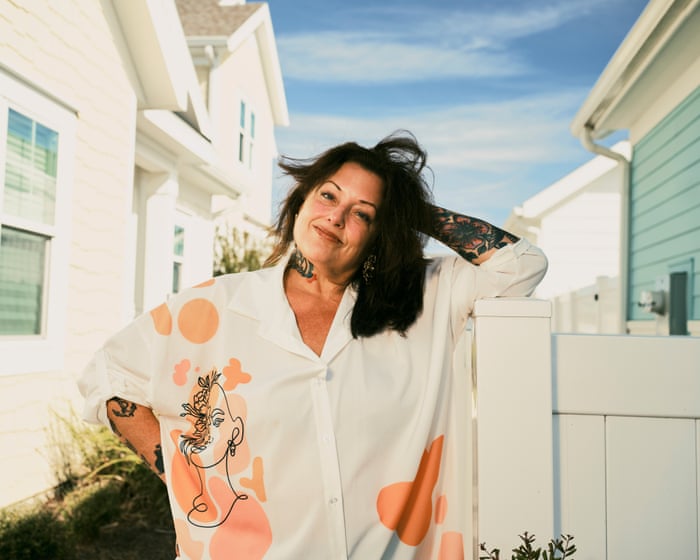
Growing up in North Miami Beach in the 1980s was a lot of fun. We might not have had TikTok, but we weren’t bored. We’d ride our bikes around and blast music from our boomboxes all weekend. In my mid-teens, I did a work placement at a record store. I loved it and became something of an expert in R&B and rap, listening to Grandmaster Flash, Run-DMC, and 2 Live Crew on repeat.
One day in 1984, when I was 17, a record producer named Tony Butler—better known as “Pretty Tony”—came into the store. He heard me speak and asked if I wanted to make some music. I thought, “Why not?!”
Tony was well known in Miami for a new genre called freestyle, a kind of electronic music with elements of disco, funk, and Latin, which was all the rage at roller discos. My voice and lyrics clicked with his beats, and we made two songs that would be my first singles as Debbie Deb on Jam Packed Records: “When I Hear Music” and “Lookout Weekend.” I looked up to Tony a lot—he was a fantastic producer.
I was having fun in the studio, but I had no idea what would happen with the songs. [Butler has maintained in interviews that he wrote the lyrics to them.] I had signed a contract that said I was an “artist for hire” and would receive a few hundred dollars for appearing on each one. A few months later, the songs started blowing up, and “Lookout Weekend” even entered the Billboard dance chart.
Then clubs in New York and LA wanted to see who was singing them, but I wasn’t a trained performer. Besides, I was a big girl at a time when skinny girls like Madonna were popular. It wasn’t the look the record company wanted, so they found someone else to perform the songs for live shows and appear on the EP covers.
It worked: back then we didn’t have social media, so nobody knew what I looked like. As well as doing shows as Debbie Deb, another singer also recorded under my name, even though we sounded nothing alike. Seeing someone else use my name was really hard. With another, better-promoted “Debbie Deb” on the scene, I was more or less forced out of the business. I found it so depressing that I didn’t listen to the radio for years afterwards. I became a hairstylist and a mother and had a lot of therapy to rebuild myself.
In the ’90s, I was approached by another producer and dipped a toe back into the industry. I released an album under the name Debbie Deb and toured around LA, Arizona, and Texas. I also did a lot of radio interviews and got my story out there. It was very satisfying to be able to talk about what had happened and for people to finally see what I looked like.
Suddenly, I was getting calls every week to play in different cities. I was nervous about getting on stage, but the love from the crowds gave me the adrenaline I needed. In the years since, I’ve toured with other freestyle artists of my era. There’s a sisterhood between us—even back in the day, if Angel from the Cover Girls needed fake eyelashes, I’d lend her my glue.
Over the years, I’ve been covered and sampled by artists including Janet Jackson and Pitbull. Then, in November 2024, I got a call from my son. He said, “Mom—you’re all over Kendrick Lamar’s new song.”
I stopped what I was doing and played the song, “Squabble Up,” which samples my debut single, “When I Hear Music.” I thought, this is going to be something. Almost immediately, it shot to No. 1 on the Billboard Hot 100, and Kendrick performed it at the 2025 Super Bowl. It was very surreal and flattering. When he won the Best Rap Album Grammy for GNX earlier this month, I was honored to be a part of it.
I would love to chat with Kendrick. I’d like to know how he feels about the fact that I got such a raw deal from the original song, or if he even knows. And, of course…Of course, I want to congratulate him and ask him about music, too. These days I keep busy not just with shows, but also by running a business with my husband where we sell my handmade jewelry and paintings. Is it bittersweet to see my songs find new life in chart-topping tracks? I don’t dwell on the bitter side these days—I try to focus on the sweet. As told to Hannah J Davies.
Do you have an experience to share? Email experience@theguardian.com.
Frequently Asked Questions
Of course Here is a list of FAQs about the scenario My record label replaced me with a lookalike framed in a natural conversational tone
Beginner Core Concept Questions
1 What does it mean to be replaced by a lookalike in the music industry
It means your record label has decided to use someone who physically resembles you to publicly perform appear in music videos or do interviews in your place while still releasing music under your name
2 Is this even legal Can a record label really do that
It depends entirely on your contract Many standard contracts grant the label extensive control over your image and brand If you signed away those rights they may legally be able to use a standin though its ethically controversial and rare
3 Why would a label want to replace a real artist with a lookalike
Common reasons include the artist is difficult to work with has health issues is unreliable or the label believes they can better control a compliant standin Its ultimately about minimizing risk and maximizing profit from the established brand
4 Has this ever actually happened
While often the stuff of conspiracy theories there are documented cases in entertainment history especially in the early days of rock n roll and in some international markets Its more common for specific performances than a full permanent replacement
Advanced Practical Concern Questions
5 What clauses in a recording contract should I look out for to prevent this
You or your lawyer must scrutinize clauses related to moral rights image and likeness personal services and obligation to perform A strong key person or personal approval clause stating that you must be the one performing all public duties is crucial
6 If this is happening to me what are my first legal steps
1 Do not go public immediately Gather all evidence
2 Immediately consult with an experienced entertainment lawyer They will review your contract
3 Formally notify the label in writing that you believe they are in breach of contract andor violating your moral rights