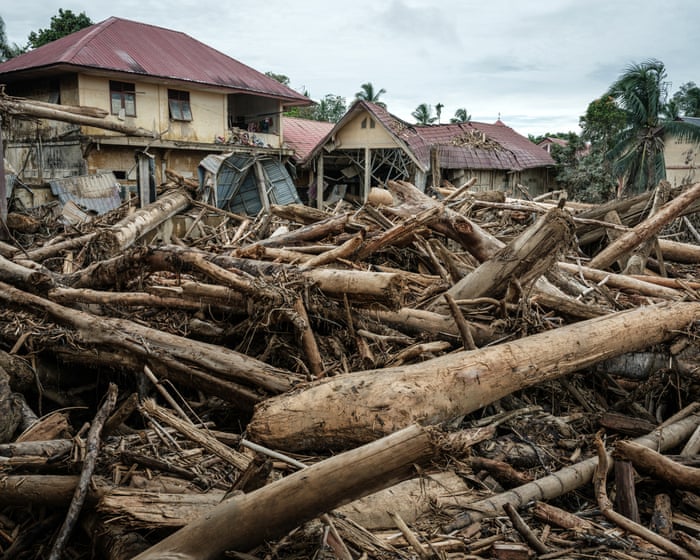
This autumn, cyclones and floods in Southeast Asia killed over 1,750 people and caused more than $25 billion in damage. Meanwhile, California wildfires resulted in over 400 deaths and $60 billion in damage, according to research on the year’s costliest climate-related disasters.
China’s devastating floods, which displaced thousands, ranked as the third most expensive disaster, causing around $12 billion in damage and claiming at least 30 lives.
A report from the charity Christian Aid found that the ten worst climate-related disasters of 2025 led to over $120 billion in insured losses. The true financial and human costs are likely far higher, as these figures only account for insured damages and not the full toll in lives, displacement, and lost livelihoods.
Such events are often mislabeled as “natural disasters,” implying they are simply part of normal weather patterns. However, the report’s authors argue this is a misconception. Joanna Haigh, emeritus professor of atmospheric physics at Imperial College London, stated that damaging events are increasing in frequency and intensity due to the human-made climate crisis. “The world is paying an ever-higher price for a crisis we already know how to solve. These disasters are not ‘natural’—they are the inevitable result of continued fossil fuel expansion and political delay,” she said.
While the economic cost of disasters often appears greater in developed countries due to higher insurance coverage, the true toll in developing nations can be much more severe. Mohamed Adow, director of the Power Shift Africa think tank, noted, “While wealthy nations count the financial cost of disasters, millions of people across Africa, Asia, and the Caribbean are counting lost lives, homes, and futures. In 2026, governments must stop burying their heads in the sand and start responding with real support for people on the frontlines.”
The top ten list represents only a portion of the global damage. The report also examined ten other major extreme weather events, each causing less than $1 billion in damage, with many less costly incidents not included at all.
Other highlighted events include a series of typhoons in the Philippines that displaced over 1.4 million people and caused $5 billion in damages. Disasters affected all regions throughout the year: a drought in Iran threatens to displace 10 million residents of Tehran; floods in the Democratic Republic of the Congo in April were followed by floods in Nigeria in May, which killed 700 people; and floods in India and Pakistan killed over 1,860 people, cost about $6 billion, and affected more than 7 million people in Pakistan alone.
In the developed world, record-breaking fires swept across the Iberian Peninsula, droughts impacted Canada, and Scotland experienced unprecedented heatwaves.
At this year’s UN climate summit, COP30 in Belém, rich countries agreed to triple financial support to help poor countries adapt to extreme weather impacts. However, even this increase, expected to reach $120 billion by 2035, will fall far short of funding all the necessary protections in developing countries.
Patrick Watt, chief executive of Christian Aid, emphasized that the costs of extreme weather will continue to rise until the world drastically cuts greenhouse gas emissions and phases out fossil fuels. “These climate disasters are a warning of what lies ahead if we do not accelerate the transition away from fossil fuels,” he said. “They also underline the urgent need for adaptation, particularly in the global south, where resources are stretched and people are especially vulnerable to climate shocks.”
At COP30, efforts to begin developing roadmaps for countries to phase out fossil fuels were downgraded to a voluntary initiative rather than a mandatory task. However, work on this will begin this year, led by COP30 host Brazil, at a special meeting.Colombia will host a fossil fuels conference in April, which is expected to draw over 80 countries that support the roadmap initiative.
Frequently Asked Questions
Of course Here is a list of FAQs about the projection that cyclones floods and wildfires will be the most expensive climaterelated disasters of 2025
General Beginner Questions
1 Why are cyclones floods and wildfires expected to be the most expensive disasters in 2025
These events are becoming more frequent and intense due to climate change They affect large often developed areascoastal cities river valleys and wildlandurban interfacescausing massive damage to homes infrastructure businesses and agriculture leading to huge insurance and recovery costs
2 What makes a disaster expensive
The cost includes immediate damage to property and infrastructure business interruption emergency response healthcare lost wages agricultural losses and longterm costs like higher insurance premiums and rebuilding
3 Isnt this just normal weather How do we know its linked to climate change
While these are natural events climate change acts as a threat multiplier Warmer oceans fuel stronger cyclones a warmer atmosphere holds more moisture leading to heavier rainfall and floods and hotter drier conditions create longer more severe wildfire seasons The increased frequency and severity are the clear links
4 Will every region be affected equally
No The risk is highest in specific areas coastal regions for cyclones floodplains and valleys for floods and dry forested or grassland areas for wildfires However shifting weather patterns can create surprising vulnerabilities
Advanced Detailed Questions
5 Why are these particular disasters more costly than say droughts or heatwaves
Droughts and heatwaves are slowonset disasters with devastating but often indirect economic impacts Cyclones floods and wildfires are rapidonset events that cause immediate visible and catastrophic physical destruction triggering massive insurance claims and government disaster declarations all at once
6 What role does human development play in driving up these costs
Building homes and businesses in highrisk areas dramatically increases the value of assets in harms way This is often called the expanding bullseye effect
7 Are there hidden costs beyond property damage
Absolutely These include mental health impacts displacement of communities ecosystem damage increased insurance