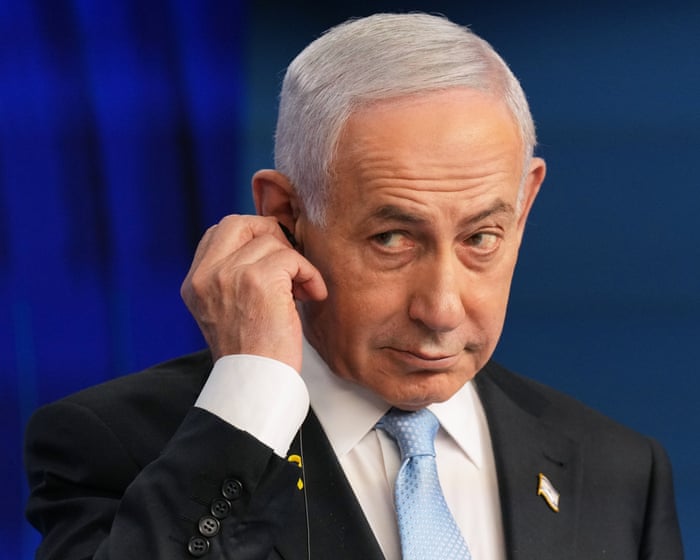
Israeli Prime Minister Benjamin Netanyahu is set to meet with U.S. President Donald Trump at the Mar-a-Lago resort in Florida on Monday evening. This comes amid rising concerns that Israel may initiate new military actions against regional adversaries, which could further destabilize the Middle East.
Netanyahu departed Israel on Sunday for his fifth visit to the United States this year. A key topic of discussion will be the ceasefire in Gaza, which ended a devastating two-year war in October. While the initial phase of the ceasefire has been largely completed—with Israeli forces withdrawing to new positions and Hamas releasing nearly all living and deceased hostages—significant challenges remain in implementing the second phase of President Trump’s 20-point peace plan.
There are also fears that Israel could launch offensives against Hezbollah in Lebanon, breaking a ceasefire that has held for over a year, or against Iran, which Israel accuses of rapidly expanding its ballistic missile program in recent months.
Gershon Baskin, co-head of the peace-building commission at the Alliance for Two States and a participant in back-channel talks with Hamas, described the timing of Netanyahu’s trip as “very significant” for Gaza. He noted that Phase 1 is essentially complete, with only one deceased Israeli hostage yet to be recovered.
Both sides have accused each other of violating the ceasefire. Hamas has not explicitly committed to disarmament and has largely reasserted its control in densely populated areas of Gaza. Meanwhile, Israel appears hesitant to withdraw from the 53% of Gaza it currently occupies or to facilitate the unrestricted flow of humanitarian aid into the territory.
Baskin emphasized the urgency of moving to Phase 2, stating that the U.S. recognizes the delay has allowed Hamas to regroup—a situation Washington does not want to persist.
The war resulted in over 70,000 Palestinian deaths, mostly civilians, and displaced nearly all of Gaza’s 2.3 million residents. Since the October ceasefire, around 400 Palestinians have died, and many continue to endure severe hardship. Recent heavy rains and cold weather have worsened conditions in Gaza, where most homes and infrastructure are severely damaged or destroyed.
The conflict began with a surprise Hamas attack on southern Israel in 2023, which killed 1,200 people, mostly civilians, and led to the abduction of 250 others.
Under the next stages of Trump’s plan, an interim authority composed of nonaligned Palestinian technocrats would replace Hamas in governing the territory, supported by an international stabilization force of thousands of troops. U.S. officials have indicated that the composition of this new authority could be announced in January.
Last Friday, Axios reported that senior Trump officials are growing frustrated as Netanyahu has taken steps that undermine the fragile ceasefire and stall the peace process. Analysts in Israel and abroad share this view.
Yossi Mekelberg, a Middle East expert at Chatham House in London, noted increasing signs of U.S. frustration with Netanyahu, adding that Phase 2 currently appears stalled.
For Netanyahu, a key priority will be persuading Trump to allow Israel to take action against Iran to prevent it from rebuilding its nuclear program—damaged during a brief war with Israel and the U.S. this summer—or enhancing its ballistic missile capabilities.
On Saturday, Iranian President Masoud Pezeshkian stated that Iran is engaged in a full-scale conflict with the U.S., Israel, and Europe, describing the situation as “more complex” than ever.The potential conflict is described as “more complicated and difficult” than the Iran-Iraq war, which resulted in over one million casualties.
Meanwhile, efforts to broker a security agreement between Israel and Syria have stalled and will be a topic of discussion at Mar-a-Lago, according to Israeli media. Israeli officials are also pushing for more effective measures to disarm Hezbollah, as outlined in the 2024 Lebanon ceasefire.
With an election looming within ten months, Prime Minister Netanyahu’s agenda is heavily influenced by his political survival, analyst Yossi Mekelberg noted. Current polls indicate his coalition would face significant challenges forming a government if elections were held today. Voter dissatisfaction stems from the security failures leading to the 2023 Hamas attack, controversies over exempting ultra-Orthodox men from military service, and various scandals.
Analysts suggest a strong alliance with Donald Trump would bolster Netanyahu’s support among undecided voters and his base, making any public disagreement between the two leaders highly improbable.
Netanyahu is expected to emphasize to Trump the necessity for Israel to maintain a military technological advantage over regional rivals, given its reliance on U.S. defense support. Many Israeli officials were alarmed earlier this year when Trump expressed willingness to sell advanced F-35 stealth fighters to Saudi Arabia, calling it a “great ally.” These aircraft were crucial to Israel’s military successes against Iran during the summer’s conflict.
Frequently Asked Questions
Of course Here is a list of FAQs about the reported meeting between Netanyahu and Trump framed in a natural conversational tone
BeginnerLevel Questions
1 Who are Netanyahu and Trump and why is their meeting a big deal
Answer Benjamin Netanyahu is the Prime Minister of Israel Donald Trump is the former US President and current candidate Their meeting is significant because the US is Israels closest ally and the Presidents stance heavily influences Israels security and diplomatic options especially during times of potential conflict
2 What are the main concerns over potential Israeli military actions mentioned
Answer The primary concern is a major Israeli military operation in Lebanon against Hezbollah a powerful Iranianbacked militant group There are also ongoing operations in Gaza and fears of escalation with Iran The world is worried these conflicts could spiral into a wider regional war
3 Why would Netanyahu meet with Trump and not the current President Joe Biden
Answer Netanyahu is meeting with Trump as a presidential candidate and former ally It highlights the deep domestic political divisions in the US regarding Israel policy Netanyahus relationship with Biden has been strained over the war in Gaza and Palestinian civilian casualties
4 What could Netanyahu hope to get from this meeting
Answer He likely seeks a powerful show of political support a promise of unwavering backing if Trump is reelected and to potentially strengthen his own political position at home by showcasing his strong US ties
Advanced Strategic Questions
5 How does this meeting impact current US diplomacy under President Biden
Answer It complicates it significantly It can undermine Bidens authority and negotiating leverage as actors in the region may start looking ahead to a potential future Trump administration It sends a message that US policy might change dramatically after the November election
6 Whats the difference between Trumps and Bidens approach to Israel and potential action against HezbollahIran
Answer
Trump Likely to give Israel more unconditional green light for military action similar to his approach with the 2020 strike that killed Iranian General Qasem Soleimani He prioritizes overwhelming force and overt alliance