Israel launched more than 120 airstrikes on Lebanon on Tuesday, marking one of the heaviest days of bombing in weeks. Prime Minister Benjamin Netanyahu said the military was stepping up its offensive against Hezbollah. A US-brokered ceasefire between Israel and the militant Islamist group, reached last month, now appears close to collapsing entirely, complicating efforts to end the war with Iran. Tehran, which has close ties to Hezbollah, has repeatedly signaled that ending Israel’s offensive in Lebanon is a condition for any deal with Washington.
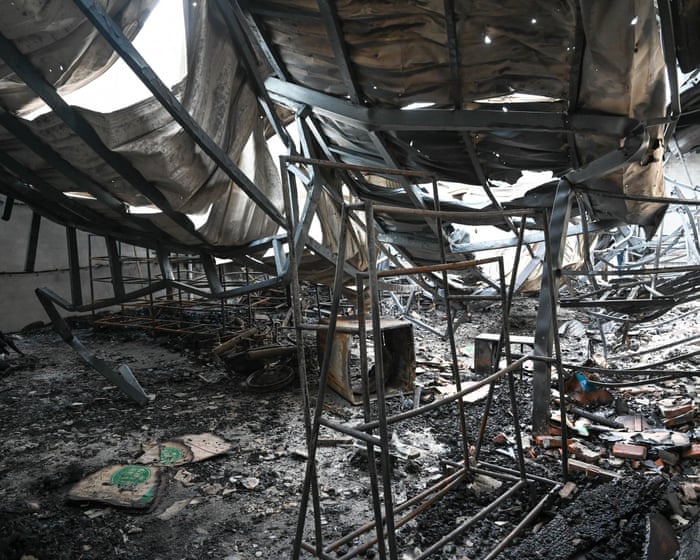
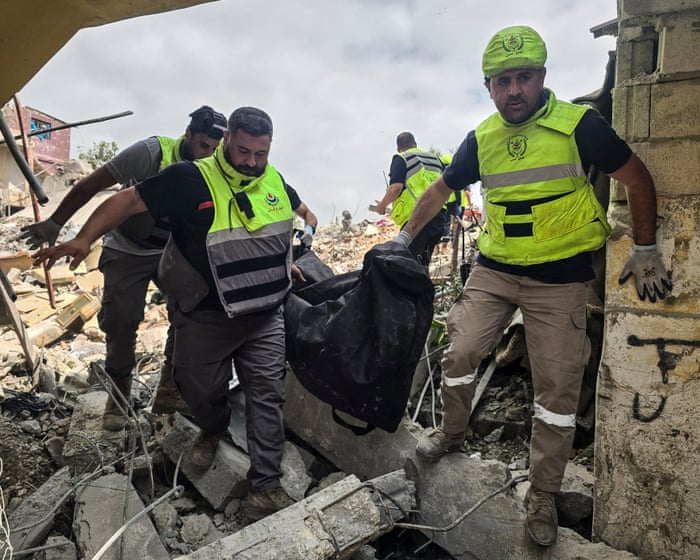
The Israeli military said it struck around 100 Hezbollah-linked sites across southern Lebanon and the eastern Bekaa Valley, including storage facilities, command centers, and observation points that officials say are used to attack troops and civilians in northern Israel. Lebanon’s national news agency reported that at least 10 people, including women and children, were killed in one strike on the town of Burj al-Shamali in southern Lebanon. Another strike on the eastern village of Mashghara killed 12 people, including several members of the same family.
In a statement, Netanyahu said the military was “operating with large forces in the field and capturing and controlling areas.” He added, “We are fortifying the security strip to protect the northern communities [in Israel],” referring to a self-declared security zone occupied by Israeli troops several kilometers inside southern Lebanon.
Netanyahu, who faces a tough re-election battle later this month, is under pressure to show results against Hezbollah, especially since few of the apparent goals of the war Israel launched with Iran in February have been achieved. Politicians and commentators in Israel have recently called on Netanyahu to ignore any pressure from Washington to limit military operations in Lebanon. Writing in the Maariv newspaper, Avi Ashkenazi urged “sustained around-the-clock attack waves of strikes using hundreds of aircraft simultaneously.” He wrote, “The ground in Lebanon must tremble. Residents of Beirut, Tyre, and Sidon must sit in shelters just as residents of [Israel’s] north are being forced to remain confined to their homes.”
Beirut has so far been spared Israeli strikes since the ceasefire began, but the prospect of an escalation has caused widespread concern. “By just saying a few words on TV, [Netanyahu] causes everyone to panic and flee their homes,” said Tony Aboud in Beirut’s bustling Hamra district. “I don’t know what’s going to happen and how long we can live like this.”
On Wednesday, there were reports of new fighting in southern Lebanon between Israeli troops and Hezbollah. Hezbollah said its fighters clashed with Israeli forces in a town north of the strategic Litani River, which currently serves as the de facto boundary in Lebanon, with large areas to the south under Israeli military control. Israel’s military has ordered residents not to return to dozens of villages in the buffer zone it is trying to establish, extending five to ten kilometers into Lebanon, where troops have been destroying homes. An Israeli military official said the military was “operating in a targeted manner beyond the Forward Defense Line in order to remove direct threats to the citizens of the state of Israel [and Israeli soldiers].”
In recent weeks, Hezbollah has boasted about using new fiber-optic drones that Israeli troops have struggled to intercept, hitting Israeli forces and villages in northern Israel. Israel has told people there not to gather in large groups.On Wednesday, air raid sirens went off in the Shlomi area of the western Galilee after reports of a drone crossing into Israeli airspace.
“What this means for us now is that we need to strike harder and more often. We will hit them hard,” Netanyahu said earlier this week.
Over 1 million people in Lebanon have been displaced in the latest round of fighting between Hezbollah and Israel. The conflict began when the Islamist group fired rockets into northern Israel in March, two days after Israel launched strikes on Tehran that killed Iran’s then supreme leader, Ayatollah Ali Khamenei.
According to the Lebanese Health Ministry, at least 3,213 people have been killed and more than 9,700 wounded in Israeli strikes since the war began.
Netanyahu’s office reports that 23 Israeli soldiers and a defense contractor have been killed in or near southern Lebanon, and two civilians have died in northern Israel.
The Israeli military said 10 of its soldiers have been killed since the April 16 ceasefire, six of them by Hezbollah’s explosive drones. Hezbollah has not released its own casualty figures.
Israel’s defense minister, Israel Katz, said the military had killed Mohammed Odeh, the new leader of Hamas’ military wing, in airstrikes in Gaza City. This came less than two weeks after his predecessor was killed. Local hospitals reported at least five people dead and 12 injured.
Reuters and Associated Press contributed to this report.
Frequently Asked Questions
Here is a list of FAQs about the recent escalation of airstrikes on Lebanon by Israel written in a clear and natural tone
Frequently Asked Questions
1 What exactly happened
Israel launched over 120 airstrikes on southern and eastern Lebanon This is a major escalation in their ongoing conflict with the militant group Hezbollah
2 Why is Israel doing this
Israel says it is targeting Hezbollahs military infrastructure including rocket launchers and weapons depots to prevent attacks on Israeli civilians It follows months of crossborder fire and threats from Hezbollah
3 Is this a war
Its a very serious escalation that many fear could lead to a fullscale war For now its described as a major military offensive but the situation is extremely tense
4 Who is Hezbollah
Hezbollah is a powerful Lebanese militant group and political party It is backed by Iran and is considered a terrorist organization by Israel and many Western countries It has a large rocket arsenal aimed at Israel
5 Why is Hezbollah involved
Hezbollah has been firing rockets into northern Israel in support of Hamas which is fighting Israel in Gaza They say they wont stop until the war in Gaza ends
6 Are civilians in Lebanon in danger
Yes Even though Israel says its targeting military sites airstrikes in populated areas often cause civilian casualties and damage homes Thousands of people have already fled the affected areas
7 Is northern Israel safe
No Sirens are going off constantly in northern Israel as Hezbollah fires rockets and drones Many people have been evacuated or are staying in shelters
8 How is this different from the war in Gaza
This is a separate front The war in Gaza is between Israel and Hamas This new escalation is between Israel and Hezbollah in Lebanon Both groups are allies but they operate in different countries
9 Could this turn into a bigger war
Yes there is a very high risk Both sides have powerful militaries A fullscale war could draw in Iran and other regional powers making it a much wider conflict
10 What can other countries do to stop this
The US France and the UN are all pushing for diplomacy to deescalate the situation