Irish officials have agreed to a second autopsy on the body of a Congolese man who died after being restrained by shop security guards on a Dublin street. The incident has sparked public outrage and drawn comparisons to the death of George Floyd.
A forensic pathologist from England will carry out an independent postmortem this week on Yves Sakila, 35, who was accused of shoplifting and was chased and pinned to the ground in the city center on May 15. The police force, An Garda Síochána, is investigating the case.
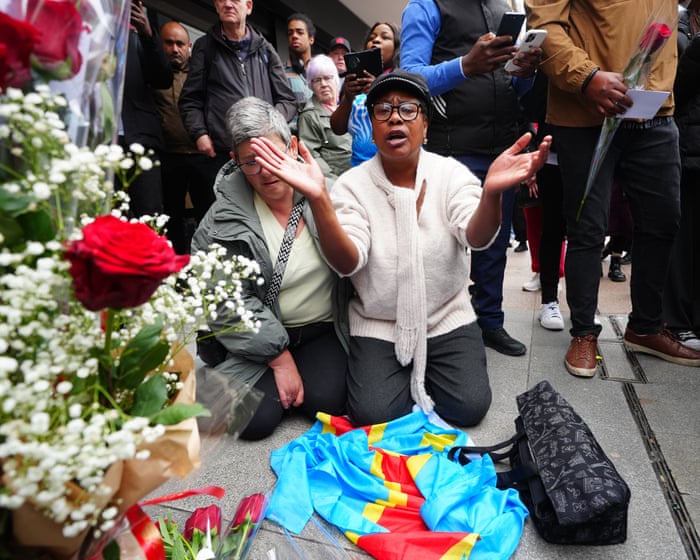
Protesters have held several rallies, and on Saturday, they gathered for a vigil on Henry Street near Arnotts, the department store where Sakila allegedly stole a bottle of perfume. The theft led to a chase outside, where security guards detained him for about five minutes until police arrived and found him unresponsive. Part of the incident was filmed and shared on social media.
Thérèse Kayikwamba Wagner, the foreign minister of the Democratic Republic of the Congo, visited Dublin last week to meet with Sakila’s family representatives and Irish officials.
Sakila’s relatives were traumatized and “reeling,” the minister told RTÉ. “But they also showed an enormous amount of courage, calmness, and, of course, patience and trust in the Irish authorities that justice will be done and that the circumstances around Mr. Sakila’s untimely death will be clarified.”
The family wants to understand “how such a display of excessive force could happen in broad daylight” and to ensure that the case doesn’t fade from public attention, Wagner said.
The minister met with Ireland’s president, Catherine Connolly, Justice Minister Jim O’Callaghan, and Foreign Minister Helen McEntee. “The conversations I had in Dublin were very productive, constructive, and encouraging,” she said.
The case has intensified scrutiny of race relations in Ireland, where some activists and politicians have linked the arrival of immigrants and asylum seekers to the housing shortage and cost-of-living crisis.
Earlier this month, before Sakila’s death, former Taoiseach Bertie Ahern was secretly recorded saying, “The ones I worry about are the Africans. We can’t be taking in people from the Congo and all these places.”
Signs at vigils for Sakila have referenced Black Lives Matter, the movement that spread in the U.S. after a police officer in Minneapolis was filmed kneeling on George Floyd’s neck for nine minutes, cutting off his oxygen supply. The officer, Derek Chauvin, was convicted of murder.
Sakila, who had lived in Ireland since 2004, reportedly had theft convictions and was staying in a homeless shelter. During his pursuit, an elderly man was knocked over and broke his hip.
Footage shared on social media showed Sakila face down and being restrained, with one man appearing to kneel on his neck. When police arrived, they briefly handcuffed Sakila before realizing he was unresponsive and took him to Mater Hospital, where he was pronounced dead.
The initial autopsy appeared inconclusive, requiring a second one, the family’s solicitor, John Gerard Cullen, told reporters. “There are so many unanswered questions,” he said. He has submitted 41 questions to the Gardaí. David Rouse, a pathologist with Forensic Healthcare Services in Essex, will conduct the second postmortem.
Frequently Asked Questions
Here is a list of FAQs about the renewed attention to race relations in Ireland following the death of a Congolese man
BeginnerLevel Questions
Q What happened to the Congolese man that everyone is talking about
A A Congolese man died after an incident in Dublin The exact circumstances are under investigation but the case has sparked widespread public debate about racism and how minorities are treated in Ireland
Q Why is this one case bringing so much attention to race relations in Ireland
A Many people feel this incident is part of a larger pattern of discrimination and inequality faced by Black and minority ethnic communities in Ireland The public reaction shows that many believe the country has a serious problem with racism that needs to be addressed
Q Is racism a new problem in Ireland
A No While Ireland has a reputation for being welcoming racism and discrimination have been issues for decades especially as the country has become more diverse This case has simply brought these longstanding issues back into the spotlight
Advanced Questions
Q What specific aspects of the case are fueling the debate about race
A The debate focuses on how the man was treated before his death the response from authorities and the publics reaction Many are asking whether the outcome would have been different if he were a white Irish citizen and whether systemic bias played a role
Q How does this incident compare to similar racial justice movements in other countries like Black Lives Matter
A It has strong parallels Just like the BLM movement in the US and UK this case has mobilized people to protest police and institutional accountability and to demand that Ireland confront its own history of colonialism and current racial inequalities
Q What practical steps are activists calling for in response to this case
A Activists are calling for a full transparent investigation better training for police and public services on racial bias stronger hate crime legislation and a national conversation about racism in schools and workplaces
Q How can someone who wants to be an ally help right now