Nearly one in four voters in Europe now support far-right parties, according to research. That share has grown nearly fivefold since the mid-1990s and has risen especially sharply over the past three years.
An analysis by more than 150 political scientists across 31 countries found that the proportion of Europeans voting for a far-right party in their country’s most recent national elections has climbed to over 23%. That’s up from about 10% a decade ago and roughly 5% in 1995.
The research was led by Matthijs Rooduijn, a political scientist at the University of Amsterdam, for the PopuList survey of European far-left, far-right, and populist parties. It also found that nearly 30% of Europeans now vote for anti-establishment parties—another record.
“When we started the PopuList project in 2018, the key finding was that one in four Europeans were voting for populist parties, mostly far-left and far-right,” Rooduijn said. “Now one in four are voting for far-right parties, mostly populist. It’s a big shift.”
The surge in far-right support was especially noticeable between 2023 and 2025, the research found. Far-right parties made often historic gains in national elections in large countries like France and the UK in 2024, and then in Germany the following year.
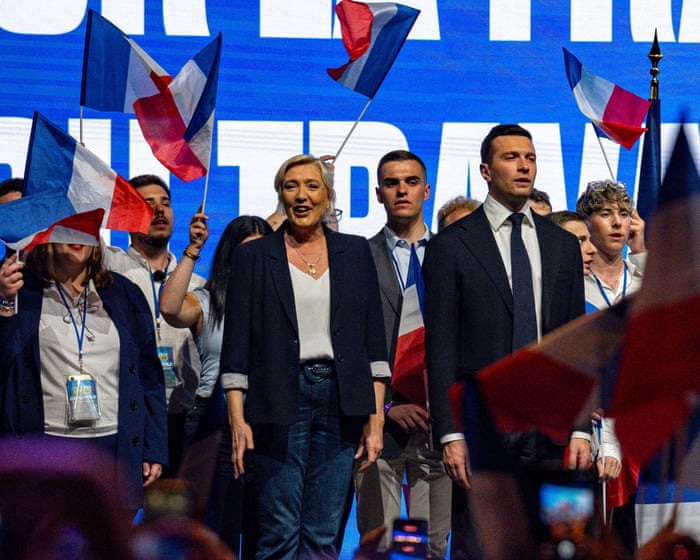
France’s National Rally, led by Jordan Bardella, became the largest single party in the French parliament in 2024. Austria’s far-right Freedom Party (FPÖ) jumped from 16% to 29% in elections in 2024. France’s National Rally (RN) surged from 19% to 37%, becoming the largest single party in the French parliament. Chega in Portugal rose from 7% to 18%.
In Britain, Reform UK increased its vote share from 2% in 2019 (when it was the Brexit Party) to 14% in 2024, the research said. Reform has previously insisted it is not far-right. It did not respond to a request for comment from the Guardian.
In Germany’s 2025 election, the far-right Alternative for Germany (AfD) doubled its score from 10% to 21%, finishing as the country’s second-largest party for the first time.
Far-right populist parties are now part of ruling coalitions in Croatia, Czechia, Italy, and Finland. They also support a right-wing minority government in Sweden. According to the analysis, they are leading in the polls in Austria, Belgium, France, Germany, and the UK.
These parties have also faced recent defeats. In the Netherlands, Geert Wilders’ Freedom Party (PVV) lost nearly a third of its seats and finished second last year. In Hungary, Viktor Orbán’s Fidesz was soundly beaten by his center-right rival in April.
Despite these setbacks, the share of European voters supporting far-right parties has continued to rise. “It’s important to emphasize that this isn’t a sudden thing,” Rooduijn said. “It’s been happening for decades, and it’s been speeding up recently.”
A range of factors explain this trend, according to the experts working on the PopuList. The list includes political parties that have won at least one parliamentary seat or 2% of the popular vote in national legislative elections since 1989.
First, Rooduijn said, research suggests that voter attitudes toward core far-right themes, like immigration, haven’t changed much over time. But these issues have become much more important in how people decide which party to vote for.
Second, far-right parties have become normalized—a process that reinforces itself. “The bigger and more successful they get, the more ‘normal’ they become,” Rooduijn said. “That’s helped by the media and by mainstream parties adopting their ideas.”
Finally, far-right parties are “just really, really good storytellers,” he said. “They know how to frame their message, which is always about an in-group and an out-group—the nation versus immigrants, for example.”He said this created a “heroes versus villains” story, tied to an idealized past where everything was better. “And they’ve gotten much better at expressing it, at stirring up emotions: anger, contempt, but also pride and hope. They’ve become more professional.”
In Germany’s 2025 election, the Alternative für Deutschland (AfD), co-led by Alice Weidel, doubled its share of the vote from 10% to 21%.
The PopuList was launched eight years ago in partnership with the Guardian. Following widely accepted practice among political scientists, it defines far-right parties as those that support two core ideologies: “nativism” and “authoritarianism.”
Nativism is the belief that a country should only be home to its native group. So nativists are generally hostile to immigrants and non-natives, seeing them as a threat to the culture and interests of the native population.
It’s also a major form of “exclusionism”: far-right parties typically exclude other perceived “out-groups” too, such as people of different religions or sexual orientations, or establishment elites.
Authoritarians believe societies should be well-ordered and that any violation of authority should be severely punished. They see strict law and order as a key requirement for a stable society and a healthy nation-state.
Many political scientists divide far-right parties into “extreme right” parties, which aim to overthrow the existing order, including through violence, and “radical right” parties, which generally operate—or claim to—within the democratic system.
However, because it can sometimes be unclear whether a party is “radical” or “extreme” right—its messaging may be inconsistent, some members may be more extreme than others, and its position may change—”far right” is used to cover both.
Some far-right parties in Europe have tried to stop this label from being applied to them. In Germany, the domestic intelligence agency’s designation of the AfD as a “suspected right-wing extremist” group has been upheld by the courts, but the party cannot be called a “confirmed” right-wing extremist until a court review is complete.
France’s top court rejected a 2024 objection by the National Rally (RN) to the interior ministry’s label of “far right” (extrême droite), saying the party’s core ideology, specific rhetoric, and long-standing political platform justified the classification.
In Belgium, Vlaams Blok rebranded as Vlaams Belang back in 2004, after the high court dismissed its argument that a lower court ruling upholding a description of the party as “racist” was an unconstitutional attempt to silence an elected rival.
In general, courts have found that classification is a matter of political science and that, despite far-right parties’ efforts to clean up their image, the media, state authorities, and opponents are free to call them that based on their foundational ideology.
The latest PopuList identifies 133 far-right parties in Europe, up from 112 in 2003. As with Europe’s 65 far-left parties, almost all are also classified as populist. In total, it names 201 populist parties, most of them far-right or far-left, up from 165 in 2003.
Usually combined with a right-wing or left-wing “host ideology,” populism divides society into two homogeneous and opposing groups: a “pure people” versus a “corrupt elite,” and argues that all politics should reflect this.expression of the “will of the people.” Its supporters see it as a democratic check that puts ordinary people ahead of the establishment. Critics argue that when populists take power, they often weaken democratic norms—for example, by undermining the courts and the media, or by limiting minority rights.
“They give a voice to people’s frustrations,” Rooduijn said. “That’s good for democracy. But their ideas don’t always align with the core values of liberal democracy. This is especially true for far-right populist parties.”
“And that matters. The experience of countries like Hungary, Poland, and the US shows that when far-right populists come to power, democracy itself can come under threat.”
Frequently Asked Questions
Here is a list of FAQs based on the topic of farright party support in Europe written in a natural tone with clear direct answers
BeginnerLevel Questions
1 What exactly is a farright party
A farright party usually holds very nationalist antiimmigration and often authoritarian views They tend to oppose the European Union and traditional political elites and they often promote law and order policies and traditional social values
2 Does nearly one in four mean a quarter of all Europeans are farright
No It means that in the most recent elections across Europe roughly 24 of people who actually voted chose a farright party This doesnt count people who didnt vote or those who voted for other parties
3 Why are so many people voting for these parties now
The main reasons include worries about immigration frustration with the economy a feeling that mainstream parties dont listen to them and a desire for strong simple leadership during uncertain times
4 Is this happening everywhere in Europe
Its happening in many countries but not all Its very strong in places like France Italy Germany and Sweden Its weaker in places like Spain and Portugal and still very small in the UK
5 Does voting for a farright party mean you are a racist or a Nazi
Not necessarily While some farright groups have openly racist or neoNazi origins many people vote for them because they are angry about immigration or the economy They see the party as the only one offering simple solutions to their problems
Advanced Deeper Questions
6 Are these parties actually getting into power or are they just winning more votes
Both In some countries they are part of the government In others they are the main opposition party Even when they dont govern their growing popularity often pushes mainstream parties to adopt their ideas
7 Whats the difference between a populist party and a farright party
Not all populists are farright Populism is a style that says the pure people are fighting the corrupt elite Farright parties often use this style but they also have specific goals like restricting immigration and national identity A leftwing populist party