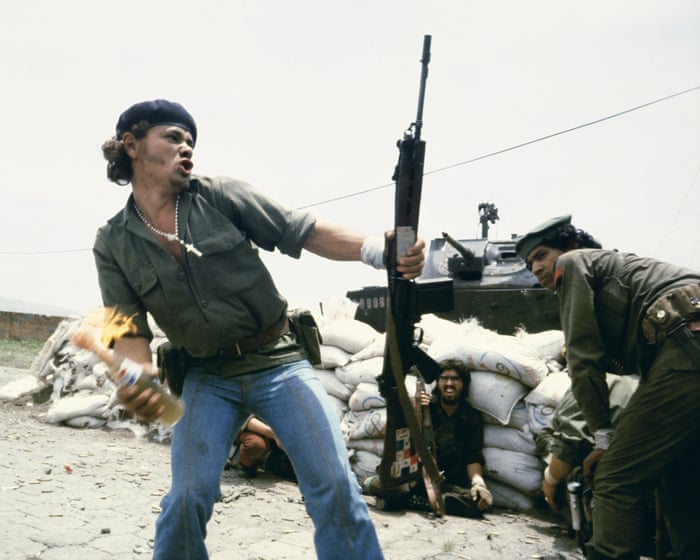
Latin America’s turbulent history, filled with massacres, slavery, violent rule, coups, revolutions, and uprisings, often overshadows another side of the region: a vibrant, culturally rich place where art, creativity, and solidarity are central to society.
Since the arrival of Christopher Columbus in 1492, Latin America has struggled with the forces of colonial and imperial control, resistance, and the fight for independence.
This deeper, more nuanced history—less focused on institutional crises—is now visually captured in History of Latin America in 100 Photographs, the latest work by journalist and historian Paulo Antonio Paranaguá. Born in Rio de Janeiro in 1948, he uses photographs to weave a transnational story of the continent.
The son of a diplomat, Paranaguá grew up in Buenos Aires and Madrid, learning Spanish before Portuguese and gaining an early education in defying dictatorship. As a teenager under General Franco, he read underground newspapers from exiled republicans in Tangier.
Returning to Brazil, he studied social sciences before moving to Leuven, Belgium, and then to Paris in 1968, drawn by its radical intellectual energy. At Nanterre University, he met Daniel Cohn-Bendit and future Brazilian president Fernando Henrique Cardoso, joining the May 1968 protests that later inspired his activism in the Trotskyist Fourth International.
This activism brought Paranaguá back to Latin America, where in 1975 he was imprisoned for two years by Argentina’s dictatorship. Stripped of his passport by Brazil’s military regime, he escaped with help from French contacts, gained refugee status, and returned home only after Brazil’s 1979 amnesty.
Paranaguá began his career as a photographer in 1968, then became the Paris correspondent for Jornal do Brasil, later working for Radio France Internationale and Le Monde as editor for Latin America and the Caribbean.
Alongside journalism, he became a leading scholar of Latin American cinema, publishing Cinema in Latin America: Far from God and Close to Hollywood in 1985 and editing works on the region’s cultural history.
In 2017, he co-authored History of Brazil in 100 Photographs. For this new book, he worked alone. “I appreciate collective work,” he says, “but to tell the story of Latin America, I needed more control.”
Rejecting national narratives, Paranaguá builds a connected global history of the region, covering Indigenous peoples, colonization, slavery, and migration—even the non-Latin Caribbean, from Dutch Suriname to British Belize.
“National histories, even those of small countries, are inadequate to explain Latin America’s evolution,” he says. “Connected and global history challenge the old paradigm.”
Photography, he notes, expands history beyond politics. “I wanted to develop, alongside political history, the cultural, social, and anthropological history of Latin America—all the creativity that defined its identity.”
Drawing on archaeological discoveries, Paranaguá…The book revisits the Olmec, Aztec, Inca, and Guarani civilizations, as well as the 19th and 20th-century archaeologists who helped shape national identities in Mexico and Peru. It also steers clear of clichés: the Mexican Revolution is shown through images of female soldiers instead of the usual portraits of Pancho Villa or Zapata, while the Trujillo dictatorship in the Dominican Republic is portrayed through the murdered Mirabal sisters rather than the “Generalísimo” himself.
Alongside major upheavals like wars, revolutions, and dictatorships, the book highlights smaller yet revealing subjects. Frida Kahlo is seen crafting her international image for American photographers; Wifredo Lam connects surrealism with Afro-Cuban culture. The Chaco War (1932–35) is documented through German photographer Willi Ruge’s trench scenes, which echo imagery from the First World War.
The real treasure of the book lies in the author’s archival work. For instance, the photo of Che Guevara’s body displayed after his execution in Bolivia came from an archive in Buenos Aires, not Bolivia. “Some archives have been digitized, but most remain in uneven conditions,” he notes.
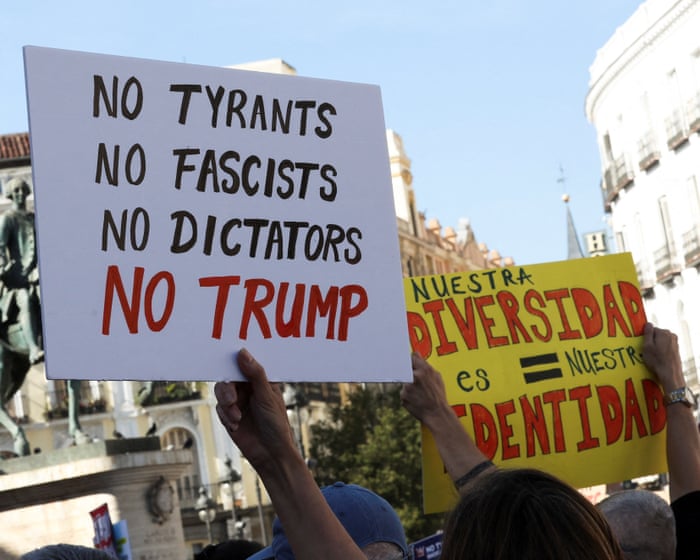
The images link Latin America’s past to its present, showing how fascist ideas, inequality, and violence persist. A massive pro-Nazi rally in Buenos Aires in 1938, filled with swastikas, mirrors the far-right resurgence seen across the region today. “These moments help us understand the present,” says the author. “Today’s far-right movements are not unprecedented—they echo our past.”
He argues that national independence did not free Latin Americans from entrenched elites. “At the heart of Latin American societies, exclusion is the rule,” he states. Class and corporate interests remain tied to foreign powers, especially the United States. “The political regression we are seeing takes us not back to the 20th century, but to the 19th, when the U.S. sought territorial expansion,” he adds.
The legacies of slavery and conquest continue to shape the region. In Brazil, the violence of colonization lives on in state brutality and urban inequality. Across the continent, the author observes, “A murder is like a cluster bomb: it traumatizes families, communities, and young Black people, with impunity and devastating economic impact.”
In an age of AI-generated images, the author values historical photography for its authenticity. “A photograph, like a letter or document, isn’t the absolute truth, but it is evidence,” he says. “We’ll need ever-stricter criteria to analyze where images come from.”
In this work, the author portrays a Latin America that is unstable yet vibrant, brutal yet creative—a mosaic of tragedies and hopes for a fairer future. It is far from a stagnant back yard.
Frequently Asked Questions
Of course Here is a list of frequently asked questions about Brutal vibrant and creative 100 photographs that capture the soul of Latin America
General Beginner Questions
What is this book about
Its a curated collection of 100 powerful photographs from across Latin America showcasing the regions raw beauty intense emotions rich culture and innovative spirit through the lens of talented photographers
Who is this book for
Its for anyone interested in photography Latin American culture art history or social issues Its great for curious beginners seasoned photographers looking for inspiration and travelers wanting to understand the regions soul
Do I need to know about photography to appreciate it
Not at all The book is designed to be visually impactful and emotionally resonant first The images tell their own stories though photography enthusiasts will appreciate the technical and artistic skill on display
What does Brutal in the title mean
In this context brutal refers to the unflinching honest and sometimes harsh reality captured in the photographs Its about raw truth resilience in the face of struggle and the powerful unfiltered essence of life and landscapes
Are the photos in color or black and white
The collection features a mix of both chosen to best serve the mood and message of each individual photograph Youll find vibrant saturated colors alongside stark dramatic black and white images
Content Themes
What parts of Latin America are featured
The book aims to be representative featuring work from Mexico Central America the Caribbean and South America It includes iconic locations and lesserknown communities
What kinds of subjects do the photographs cover
Youll see a wide range bustling city life serene and dramatic landscapes intimate portraits vibrant street festivals social and political movements indigenous cultures and everyday moments of joy and hardship
Does the book focus more on people or places
It strikes a balance The soul in the subtitle is captured through both the people who inhabit the region and the environmentsurban and naturalthat shape their lives and identities
Is there text to go with the photos
Typically each photograph is accompanied by a caption with the photographers name location and year There is likely an introductory essay providing context about the curation and themes and possibly short commentaries on select