China Gains Ground: Trump's Outbursts Drive U.S. Allies Toward Beijing

China Gains Ground: Trump's Outbursts Drive U.S. Allies Toward Beijing

This CSS code defines a custom font family called “Guardian Headline Full” with multiple font weights and styles. It includes light, regular, medium, and semibold weights, each in both normal and italic versions. For each style, the code provides three different font file formats (woff2, woff, and ttf) hosted on the Guardian’s servers, ensuring broad browser compatibility.@font-face {
font-family: Guardian Headline Full;
src: url(https://assets.guim.co.uk/static/frontend/fonts/guardian-headline/noalts-not-hinted/GHGuardianHeadline-Bold.woff2) format(“woff2”),
url(https://assets.guim.co.uk/static/frontend/fonts/guardian-headline/noalts-not-hinted/GHGuardianHeadline-Bold.woff) format(“woff”),
url(https://assets.guim.co.uk/static/frontend/fonts/guardian-headline/noalts-not-hinted/GHGuardianHeadline-Bold.ttf) format(“truetype”);
font-weight: 700;
font-style: normal;
}

@font-face {
font-family: Guardian Headline Full;
src: url(https://assets.guim.co.uk/static/frontend/fonts/guardian-headline/noalts-not-hinted/GHGuardianHeadline-BoldItalic.woff2) format(“woff2”),
url(https://assets.guim.co.uk/static/frontend/fonts/guardian-headline/noalts-not-hinted/GHGuardianHeadline-BoldItalic.woff) format(“woff”),
url(https://assets.guim.co.uk/static/frontend/fonts/guardian-headline/noalts-not-hinted/GHGuardianHeadline-BoldItalic.ttf) format(“truetype”);
font-weight: 700;
font-style: italic;
}

@font-face {
font-family: Guardian Headline Full;
src: url(https://assets.guim.co.uk/static/frontend/fonts/guardian-headline/noalts-not-hinted/GHGuardianHeadline-Black.woff2) format(“woff2”),
url(https://assets.guim.co.uk/static/frontend/fonts/guardian-headline/noalts-not-hinted/GHGuardianHeadline-Black.woff) format(“woff”),
url(https://assets.guim.co.uk/static/frontend/fonts/guardian-headline/noalts-not-hinted/GHGuardianHeadline-Black.ttf) format(“truetype”);
font-weight: 900;
font-style: normal;
}

@font-face {
font-family: Guardian Headline Full;
src: url(https://assets.guim.co.uk/static/frontend/fonts/guardian-headline/noalts-not-hinted/GHGuardianHeadline-BlackItalic.woff2) format(“woff2”),
url(https://assets.guim.co.uk/static/frontend/fonts/guardian-headline/noalts-not-hinted/GHGuardianHeadline-BlackItalic.woff) format(“woff”),
url(https://assets.guim.co.uk/static/frontend/fonts/guardian-headline/noalts-not-hinted/GHGuardianHeadline-BlackItalic.ttf) format(“truetype”);
font-weight: 900;
font-style: italic;
}

@font-face {
font-family: Guardian Titlepiece;
src: url(https://assets.guim.co.uk/static/frontend/fonts/guardian-titlepiece/noalts-not-hinted/GTGuardianTitlepiece-Bold.woff2) format(“woff2”),
url(https://assets.guim.co.uk/static/frontend/fonts/guardian-titlepiece/noalts-not-hinted/GTGuardianTitlepiece-Bold.woff) format(“woff”),
url(https://assets.guim.co.uk/static/frontend/fonts/guardian-titlepiece/noalts-not-hinted/GTGuardianTitlepiece-Bold.ttf) format(“truetype”);
font-weight: 700;
font-style: normal;
}

@font-face {
font-family: Guardian Headline Full;
src: url(https://assets.guim.co.uk/static/frontend/fonts/guardian-headline/noalts-not-hinted/GHGuardianHeadline-Light.woff2) format(“woff2”),
url(https://assets.guim.co.uk/static/frontend/fonts/guardian-headline/noalts-not-hinted/GHGuardianHeadline-Light.woff) format(“woff”),
url(https://assets.guim.co.uk/static/frontend/fonts/guardian-headline/noalts-not-hinted/GHGuardianHeadline-Light.ttf) format(“truetype”);
font-weight: 300;
font-style: normal;
}

@font-face {
font-family: Guardian Headline Full;
src: url(https://assets.guim.co.uk/static/frontend/fonts/guardian-headline/noalts-not-hinted/GHGuardianHeadline-LightItalic.woff2) format(“woff2”),
url(https://assets.guim.co.uk/static/frontend/fonts/guardian-headline/noalts-not-hinted/GHGuardianHeadline-LightItalic.woff) format(“woff”),
url(https://assets.guim.co.uk/static/frontend/fonts/guardian-headline/noalts-not-hinted/GHGuardianHeadline-LightItalic.ttf) format(“truetype”);
font-weight: 300;
font-style: italic;
}

@font-face {
font-family: Guardian Headline Full;
src: url(https://assets.guim.co.uk/static/frontend/fonts/guardian-headline/noalts-not-hinted/GHGuardianHeadline-Regular.woff2) format(“woff2”),
url(https://assets.guim.co.uk/static/frontend/fonts/guardian-headline/noalts-not-hinted/GHGuardianHeadline-Regular.woff) format(“woff”),
url(https://assets.guim.co.uk/static/frontend/fonts/guardian-headline/noalts-not-hinted/GHGuardianHeadline-Regular.ttf) format(“truetype”);
font-weight: 400;
font-style: normal;
}

@font-face {
font-family: Guardian Headline Full;
src: url(https://assets.guim.co.uk/static/frontend/fonts/guardian-headline/noalts-not-hinted/GHGuardianHeadline-RegularItalic.woff2) format(“woff2”),
url(https://assets.guim.co.uk/static/frontend/fonts/guardian-headline/noalts-not-hinted/GHGuardianHeadline-RegularItalic.woff) format(“woff”),
url(https://assets.guim.co.uk/static/frontend/fonts/guardian-headline/noalts-not-hinted/GHGuardianHeadline-RegularItalic.ttf) format(“truetype”);
font-weight: 400;
font-style: italic;
}The font “Guardian Headline Full” is defined with multiple styles and weights. The regular italic style uses font-weight 400 and includes files in woff2, woff, and ttf formats. The medium style has a weight of 500 and is normal (non-italic). The medium italic also uses weight 500 but with an italic style. Similarly, semibold (weight 600) and bold (weight 700) each have normal and italic versions. The black style (weight 900) is normal, and its italic counterpart is also defined. All font files are hosted at the specified URLs.The provided text appears to be a mix of CSS font definitions and responsive grid layout rules for a website, likely The Guardian. Here is a fluent, natural English rewrite that simplifies the technical phrasing while preserving the meaning:
This CSS code defines custom fonts and the layout for article content. It specifies two fonts: “Guardian Headline” in a heavy italic style and “Guardian Titlepiece” in bold.

The layout uses a grid system that changes based on screen size. On the smallest screens, the grid is a single column with areas stacked vertically for media, title, headline, and other elements. As the screen gets wider, the layout adjusts. For medium screens, the grid remains a single column but reorders some areas. On larger screens, it switches to a two-column layout with a main content area and a right sidebar. For the widest screens, it introduces a left border and further refines the placement of all grid areas, including the headline and sidebar.For interactive grid figures with immersive captions, the caption padding is set to 4 pixels at the top and 0 elsewhere. Within various content areas like article, comment, or feature bodies, elements named “lines” and “meta” are positioned in the grid from row 2, column 1 to row 5, column 2. The “lines” elements adjust their height to fit content and have a top margin of 5 pixels, while “meta” elements have an 18-pixel top margin.

On wider screens (over 81.25em), these interactive grids use a specific column layout: 219px, 1px, 620px, 80px, and 300px.

For iOS and Android devices, article headers use specific fonts: the standfirst text uses Guardian Headline or similar serif fonts with medium weight, section kickers display as blocks with capitalized first letters, keylines have 12 pixels of top padding, and byline authors appear in bold serif fonts. Within articles, image figures have auto height, and paragraphs following atomic elements have no top margin.

Additionally, custom font faces are defined for Guardian Headline Full in light and light italic weights, sourced from specific woff2, woff, and ttf files.The provided text appears to be a series of CSS font-face rules for a font family named “Guardian Headline Full.” These rules define different font weights and styles (like regular, italic, medium, bold, etc.) and specify the web addresses where the font files can be found in various formats (WOFF2, WOFF, and TTF).@font-face {
font-family: ‘Guardian Headline Full’;
src: url(‘https://assets.guim.co.uk/static/frontend/fonts/guardian-headline/noalts-not-hinted/GHGuardianHeadline-Black.woff2’) format(‘woff2’),
url(‘https://assets.guim.co.uk/static/frontend/fonts/guardian-headline/noalts-not-hinted/GHGuardianHeadline-Black.woff’) format(‘woff’),
url(‘https://assets.guim.co.uk/static/frontend/fonts/guardian-headline/noalts-not-hinted/GHGuardianHeadline-Black.ttf’) format(‘truetype’);
font-weight: 900;
font-style: normal;
}

@font-face {
font-family: ‘Guardian Headline Full’;
src: url(‘https://assets.guim.co.uk/static/frontend/fonts/guardian-headline/noalts-not-hinted/GHGuardianHeadline-BlackItalic.woff2’) format(‘woff2’),
url(‘https://assets.guim.co.uk/static/frontend/fonts/guardian-headline/noalts-not-hinted/GHGuardianHeadline-BlackItalic.woff’) format(‘woff’),
url(‘https://assets.guim.co.uk/static/frontend/fonts/guardian-headline/noalts-not-hinted/GHGuardianHeadline-BlackItalic.ttf’) format(‘truetype’);
font-weight: 900;
font-style: italic;
}

@font-face {
font-family: ‘Guardian Titlepiece’;
src: url(‘https://assets.guim.co.uk/static/frontend/fonts/guardian-titlepiece/noalts-not-hinted/GTGuardianTitlepiece-Bold.woff2’) format(‘woff2’),
url(‘https://assets.guim.co.uk/static/frontend/fonts/guardian-titlepiece/noalts-not-hinted/GTGuardianTitlepiece-Bold.woff’) format(‘woff’),
url(‘https://assets.guim.co.uk/static/frontend/fonts/guardian-titlepiece/noalts-not-hinted/GTGuardianTitlepiece-Bold.ttf’) format(‘truetype’);
font-weight: 700;
font-style: normal;
}

@media (min-width: 71.25em) {
.content__main-column–interactive {
margin-left: 160px;
}
}

@media (min-width: 81.25em) {
.content__main-column–interactive {
margin-left: 240px;
}
}

.content__main-column–interactive .element-atom {
max-width: 620px;
}

@media (max-width: 46.24em) {
.content__main-column–interactive .element-atom {
max-width: 100%;
}
}

.content__main-column–interactive .element-showcase {
margin-left: 0;
}

@media (min-width: 46.25em) {
.content__main-column–interactive .element-showcase {
max-width: 620px;
}
}

@media (min-width: 71.25em) {
.content__main-column–interactive .element-showcase {
max-width: 860px;
}
}

.content__main-column–interactive .element-immersive {
max-width: 1100px;
}

@media (max-width: 46.24em) {
.content__main-column–interactive .element-immersive {
width: calc(100vw – var(–scrollbar-width, 0px));
position: relative;
left: 50%;
right: 50%;
margin-left: calc(-50vw + var(–half-scrollbar-width, 0px)) !important;
margin-right: calc(-50vw + var(–half-scrollbar-width, 0px)) !important;
}
}

@media (min-width: 46.25em) {
.content__main-column–interactive .element-immersive {
transform: translate(-20px);
width: calc(100% + 60px);
}
}

@media (max-width: 71.24em) {
.content__main-column–interactive .element-immersive {
margin-left: 0;
margin-right: 0;
}
}

@media (min-width: 71.25em) {
.content__main-column–interactive .element-immersive {
transform: translate(0);
width: auto;
}
}

@media (min-width: 81.25em) {
.content__main-column–interactive .element-immersive {
max-width: 1260px;
}
}

.content__main-column–interactive p,
.content__main-column–interactive ul {
max-width: 620px;
}

.content__main-column–interactive:before {
position: absolute;
top: 0;
height: calc(100% + 15px);
min-height: 100px;
content: “”;
}

@media (min-width: 71.25em) {
.content__main-column–interactive:before {
border-left: 1px solid #dcdcdc;
z-index: -1;
left: -10px;
}
}

@media (min-width: 81.25em) {
.content__main-column–interactive:before {
border-left: 1px solid #dcdcdc;
left: -11px;
}
}

.content__main-column–interactive .element-atom {
margin-top: 0;
margin-bottom: 0;
padding-bottom: 12px;
padding-top: 12px;
}

.content__main-column–interactive p + .element-atom {
padding-top: 0;
padding-bottom: 0;
margin-top: 12px;
margin-bottom: 12px;
}

.content__main-column–interactive .element-inline {
max-width: 620px;
}

@media (min-width: 61.25em) {
figure[data-spacefinder-role=”inline”].element {
max-width: 620px;
}
}

:root {
–dateline: #606060;
–headerBorder: #dcdcdc;
–captionText: #999;
–captionBackground: hsla(0, 0%, 7%, 0.72);
–feature: #c70000;
–new-pillar-colour: var(–primary-pillar, var(–feature));
}

.content__main-column–interactive .element.element-atom,
.element.element-atom {
padding: 0;
}

#article-body > div .element-atom:first-of-type + p:first-of-type,
#article-body > div .element-atom:first-of-type {The first paragraph after certain elements like an atom, sign-in gate, or horizontal rule gets a top padding of 14 pixels.

For the first letter of that first paragraph, the styling changes to use specific headline fonts with a bold weight, a large font size of 111px, and a line height of 92px. It floats to the left, is set to uppercase, and uses a custom color variable. It also has an 8-pixel margin on the right and aligns to the top of the text.

If a paragraph comes directly after a horizontal rule, its top padding is removed.

Elements with the attribute `data-gu-name=”pullquote”` are given a maximum width of 620 pixels.

For showcase elements within the main content or specific article containers, the figure caption is positioned statically, takes the full width, and is also limited to a maximum width of 620 pixels.

Immersive elements span the full viewport width, minus the scrollbar. On screens smaller than 71.24em, these immersive elements are constrained to a maximum width of 978 pixels, and their figure captions receive internal padding.@media (max-width: 71.24em) and (min-width: 30em) {
.element.element–immersive.element-immersive figcaption {
padding-inline: 20px;
}
}

@media (min-width: 46.25em) and (max-width: 61.24em) {
.element.element–immersive.element-immersive {
max-width: 738px;
}
}

@media (max-width: 46.24em) {
.element.element–immersive.element-immersive {
margin-left: -10px !important;
margin-right: 0 !important;
left: 0;
}
}

@media (max-width: 46.24em) and (min-width: 30em) {
.element.element–immersive.element-immersive {
margin-left: -20px !important;
}
.element.element–immersive.element-immersive figcaption {
padding-inline: 20px;
}
}

@media (min-width: 61.25em) {
.furniture-wrapper {
display: grid;
grid-column-gap: 20px;
grid-row-gap: 0px;
grid-template-columns: [title-start headline-start meta-start standfirst-start] repeat(5, 1fr) [title-end headline-end meta-end standfirst-end portrait-start] repeat(5, 1fr) [portrait-end];
grid-template-rows: [title-start portrait-start] .25fr [title-end headline-start] 1fr [headline-end standfirst-start] .75fr [standfirst-end meta-start] auto [meta-end portrait-end];
}
.furniture-wrapper #headline > div:first-child,
.furniture-wrapper [data-gu-name=headline] > div:first-child,
.furniture-wrapper .headline > div:first-child {
border-top: 1px solid var(–headerBorder);
}
.furniture-wrapper #meta,
.furniture-wrapper [data-gu-name=meta] {
position: relative;
padding-top: 2px;
margin-right: 0;
}
.furniture-wrapper .standfirst .content__standfirst,
.furniture-wrapper #standfirst .content__standfirst,
.furniture-wrapper [data-gu-name=standfirst] .content__standfirst {
margin-bottom: 4px;
}
.furniture-wrapper .standfirst ul li,
.furniture-wrapper #standfirst ul li,
.furniture-wrapper [data-gu-name=standfirst] ul li {
font-size: 20px;
}
.furniture-wrapper .standfirst li a,
.furniture-wrapper .standfirst a,
.furniture-wrapper #standfirst li a,
.furniture-wrapper #standfirst a,
.furniture-wrapper [data-gu-name=standfirst] li a,
.furniture-wrapper [data-gu-name=standfirst] a {
border-bottom: none;
background-image: none !important;
text-decoration: underline;
text-underline-offset: 6px;
text-decoration-color: var(–headerBorder, #dcdcdc);
}
.furniture-wrapper .standfirst li a:hover,
.furniture-wrapper .standfirst a:hover,
.furniture-wrapper #standfirst li a:hover,
.furniture-wrapper #standfirst a:hover,
.furniture-wrapper [data-gu-name=standfirst] li a:hover,
.furniture-wrapper [data-gu-name=standfirst] a:hover {
text-decoration-color: var(–new-pillar-colour);
}
.furniture-wrapper .standfirst p:first-of-type,
.furniture-wrapper #standfirst p:first-of-type,
.furniture-wrapper [data-gu-name=standfirst] p:first-of-type {
border-top: 1px solid var(–headerBorder);
padding-bottom: 0;
}
}

@media (min-width: 61.25em) and (min-width: 71.25em) {
.furniture-wrapper .standfirst p:first-of-type,
.furniture-wrapper #standfirst p:first-of-type,
.furniture-wrapper [data-gu-name=standfirst] p:first-of-type {
border-top: unset;
}
}

@media (min-width: 61.25em) {
.furniture-wrapper figure {
margin: 0 0 0 -10px;
}
.furniture-wrapper figure[data-spacefinder-role=inline].element {
max-width: 630px;
}
}

@media (min-width: 71.25em) {
.furniture-wrapper {
grid-template-columns: [title-start headline-start meta-start] repeat(2, 1fr) [meta-end standfirst-start] repeat(5, 1fr) [title-end headline-end standfirst-end portrait-start] repeat(7, 1fr) [portrait-end];
grid-template-rows: [title-start portrait-start] 80px [title-end headline-start] auto [headline-end standfirst-start meta-start] auto [standfirst-end meta-end portrait-end];
}
.furniture-wrapper #meta:before,
.furniture-wrapper [data-gu-name=meta]:before {
content: “”;
width: 540px;
position: absolute;
top: 0;
background-color: var(–headerBorder);
height: 1px;
}
.furniture-wrapper .standfirst p,
.furniture-wrapper #standfirst p,
.furniture-wrapper [data-gu-name=standfirst] p {
border-top: unset;
}
.furniture-wrapper .standfirst:before,
.furniture-wrapper #standfirst:before,
.furniture-wrapper [data-gu-name=standfirst]:before {
content: “”;
width: 1px;
background-color: var(–headerBorder);
height: 100%;
position: absolute;
top: 0;
left: .5px;
}
}

@media (min-width: 81.25em) {
.furniture-wrapper {
grid-template-columns: [title-start headline-start meta-start] repeat(3, 1fr) [meta-end standfirst-start];
}
}The grid layout uses five equal-width columns from the title to the standfirst, then eight equal-width columns from the portrait onward. Rows are defined with specific start and end points for the title, headline, standfirst, meta, and portrait sections.

For the meta section and its related elements, a width of 620px is set. The standfirst section has a slight left adjustment.

Labels within the article header and title have a small top padding. The headline uses a semi-bold font, a maximum width of 620px, and a font size of 32px. On larger screens (over 71.25em), the headline’s maximum width reduces to 540px with a font size of 50px.

On medium screens (over 46.25em), the right margin for certain lines is removed. On larger screens (over 61.25em), these lines are hidden. Their SVG strokes use a custom border color.

On medium screens, the meta section’s right margin is removed. Social and comment elements within the meta section use the same custom border color. Specific container elements are hidden.

The standfirst section has a negative left margin and relative positioning, with a small top padding on medium screens. Paragraphs inside are normal weight, 20px in size, with bottom padding.

The main media area is positioned relatively, placed in the ‘portrait’ grid area, with no top margin and a small bottom margin. Its inner divs take full width. On larger screens, the bottom margin is removed. On smaller screens (under 46.24em), it spans the full viewport width with a left adjustment, which increases slightly on very small but wider screens (between 30em and 46.24em).

Figure captions are positioned at the bottom with a custom background and text color, spanning the full width. The first span inside is hidden, while the second is displayed and limited to 90% width. Padding increases on larger screens. A hidden class reduces opacity.

A caption button is positioned at the bottom right, with a circular background and scaled SVG icon. Its right position adjusts on larger screens.

For very large screens (over 71.25em), an interactive content column has adjusted top positioning and height.The main column for interactive content has a maximum width of 620 pixels for h2 headings. For iOS and Android devices, the color scheme uses a dark background and specific accent colors. In dark mode, the accent color adjusts to a different shade.

On iOS and Android, the first letter of the first paragraph in article containers is styled with a secondary color. The article header height is set to zero, and the furniture wrapper has specific padding. Labels within the furniture wrapper use a bold, capitalized font with the accent color, while the main headline is large, bold, and dark gray.For iOS and Android devices, the image elements within furniture wrappers across feature, standard, and comment article containers are styled with a relative position, a top margin of 14px, a left offset of -10px, and a width that fills the viewport minus the scrollbar. Their inner elements, images, and links have a transparent background and the same responsive width.

The standfirst sections in these containers have top and bottom padding with a right margin offset. The paragraphs inside use a specific font family, and the links within them are also targeted for styling.For comment articles, links within the standfirst section should use the designated pillar color, have an underline with a specific offset and color, and no background image or bottom border. On iOS and Android devices, when hovering over these links in feature, standard, or comment articles, the underline color should change to match the pillar color. Also, on these devices, the meta section should have no margin, the author byline text and links should use the pillar color, and the miscellaneous meta information should have no padding.For iOS and Android devices, the following CSS rules apply to feature, standard, and comment article containers:

– SVG icons within the meta miscellaneous section use the new pillar color for strokes.
– The caption button in showcase elements is displayed as a flex container, centered with 5px padding, dimensions of 28px by 28px, and positioned 14px from the right.
– The article body has 12px padding on the left and right.
– Non-thumbnail, non-immersive image figures within the article body have no margin, a width calculated as 100vw minus 24px and the scrollbar width, and an automatic height. Their captions have no padding.
– Immersive image figures have a width calculated as 100vw minus the scrollbar width.
– Quoted blockquotes within the article body prose have a before pseudo-element styled accordingly.For quoted blockquotes in the article body on iOS and Android, the color before the quote uses the new pillar color.

On iOS and Android, links within the article body for feature, standard, and comment articles are styled with the primary pillar color. They have an underline with an offset of 6px, using the header border color for the underline. On hover, the underline color changes to the new pillar color.

In dark mode, the furniture wrapper background for these article types on iOS and Android changes to #1a1a1a. Within it, content labels use the new pillar color, headlines have no background and use the header border color for text, standfirst paragraphs use the header border color, and standfirst links, byline authors, and author links also use the header border color.This appears to be CSS code for styling web articles on Android and iOS devices. The code sets colors for author bylines, icons, image captions, and blockquotes using custom color variables. It also applies a dark background to article content areas. The styling targets different article types (feature, standard, comment) across both mobile operating systems.This appears to be a CSS selector targeting the first letter of paragraphs in specific containers on iOS and Android devices. The selector applies to various article containers (feature, standard, comment) and looks for paragraphs following certain elements like `.element-atom`, `.sign-in-gate`, or `#sign-in-gate`.For Android and iOS devices, the first letter of paragraphs following specific elements in various article containers will be styled with a custom color variable, defaulting to white.For comment articles on Android with the Garnett design, the standfirst section has a top padding of 24 pixels and no top margin. All second-level headings in the main text are set to a font size of 24 pixels.

On iOS devices, the caption button for feature, standard, and comment articles has a top padding of 6 pixels and 5 pixels on the sides. On Android, the same button has 4 pixels of padding on all sides.

When the system is set to dark mode, several color variables are adjusted for a dark theme, including text and icon colors for follow elements, standfirst text and links, and bylines.

If the page includes a Guardian organization logo, the branding component is forced to display. On both iOS and Android, labels and main headlines within article furniture are given a medium font weight. Headlines and paragraphs within the standfirst also use this weight.

For a specific weekend essay layout, the page background and related sections use a custom light pink color (#fff4f2). A lines component is hidden. The furniture wrapper uses a relative position and, on larger screens, a specific grid layout.

The article header or title area has a fixed height of 70 pixels. Within it, the labels container uses a background GIF of a book in the bottom-right corner, sized at 70×70 pixels (or 110×110 on very large screens). A full-width horizontal line is also added at the bottom of this container.For screens with a minimum width of 61.25em, the furniture wrapper hides the pseudo-elements after divs within content labels in the article header and title sections. When the viewport reaches at least 71.25em, the article header and title areas adjust to a height of 80px. This increases to 125px at 81.25em. At that same breakpoint, the headline, its data attribute counterpart, and .headline class receive a top margin of -2px.

Within the furniture wrapper, the headline, its data-gu-name equivalent, and .headline class have inner divs with no bottom padding. The portrait-mainmedia__headline-wrapper inside these elements is set to full height, positioned relatively, with hidden overflow and 24px of bottom padding. The h1 and a tags within this wrapper have their maximum width unrestricted. On hover, these links and headings show a 2px thick underline, offset by 6px.

The text styling for h1, a tags, and byline spans inside the portrait-mainmedia__headline-wrapper includes a line height of 115%, a font weight of 500, and a font size of 36px. This font size increases to 50px on screens 71.25em or wider.

The standfirst section, along with its ID and data-gu-name equivalents, is positioned relatively with a 4px top padding. This top padding is removed at 61.25em and then set to 2px at 71.25em.

Inside the meta section, the branding component within the content meta container is displayed as a block element..furniture-wrapper [data-gu-name=media] {
position: relative;
}

@media (min-width: 61.25em) {
.furniture-wrapper #main-media,
.furniture-wrapper [data-gu-name=media] {
grid-area: portrait;
}
}

.furniture-wrapper #main-media > div,
.furniture-wrapper [data-gu-name=media] > div {
position: relative;
}

.furniture-wrapper #main-media div + span,
.furniture-wrapper [data-gu-name=media] div + span {
display: block;
}

.furniture-wrapper #main-media figure,
.furniture-wrapper [data-gu-name=media] figure {
height: 100%;
margin-left: 10px;
}

.furniture-wrapper #main-media figure picture img,
.furniture-wrapper #main-media figure figcaption,
.furniture-wrapper [data-gu-name=media] figure picture img,
.furniture-wrapper [data-gu-name=media] figure figcaption {
width: calc(100vw – 40px – var(–scrollbar-width, 0px));
height: auto;
margin-left: 10px;
padding: 10px 0;
}

.furniture-wrapper #main-media figure figcaption,
.furniture-wrapper [data-gu-name=media] figure figcaption {
margin-bottom: 10px;
padding: 10px;
}

.furniture-wrapper #main-media figure:before,
.furniture-wrapper [data-gu-name=media] figure:before {
content: “”;
display: block;
width: calc(100vw – 20px – var(–scrollbar-width, 0px));
background-image: url(https://interactive.guim.co.uk/atoms/2025/04/2025-weekend-essay-test/assets/v/1764331689/frame.png);
background-size: contain;
background-position: center;
background-repeat: no-repeat;
position: absolute;
top: 0;
left: 10px;
height: inherit;
}

@media (min-width: 46.25em) {
.furniture-wrapper #main-media figure,
.furniture-wrapper [data-gu-name=media] figure {
margin-left: 0;
}

.furniture-wrapper #main-media figure picture img,
.furniture-wrapper [data-gu-name=media] figure picture img {
width: 670px;
height: auto;
margin-left: 5px;
padding: 15px 10px;
}

.furniture-wrapper #main-media figure:before,
.furniture-wrapper [data-gu-name=media] figure:before {
width: 700px;
left: -10px;
}

.furniture-wrapper #main-media figure figcaption,
.furniture-wrapper [data-gu-name=media] figure figcaption {
width: 650px;
margin-left: 15px;
margin-bottom: 15px;
padding: 15px 10px;
}
}

@media (min-width: 61.25em) {
.furniture-wrapper #main-media figure:before,
.furniture-wrapper [data-gu-name=media] figure:before {
width: 470px;
}

.furniture-wrapper #main-media figure picture img,
.furniture-wrapper #main-media figure figcaption,
.furniture-wrapper [data-gu-name=media] figure picture img,
.furniture-wrapper [data-gu-name=media] figure figcaption {
width: 450px;
margin-left: 0;
}

.furniture-wrapper #main-media figure picture img,
.furniture-wrapper [data-gu-name=media] figure picture img {
padding: 10px 0;
}

.furniture-wrapper #main-media figure figcaption,
.furniture-wrapper [data-gu-name=media] figure figcaption {
margin-bottom: 10px;
}
}

@media (min-width: 71.25em) {
.furniture-wrapper #main-media figure:before,
.furniture-wrapper [data-gu-name=media] figure:before {
width: 550px;
}

.furniture-wrapper #main-media figure picture img,
.furniture-wrapper [data-gu-name=media] figure picture img {
width: 520px;
margin-left: 5px;
padding: 10px 5px;
}

.furniture-wrapper #main-media figure figcaption,
.furniture-wrapper [data-gu-name=media] figure figcaption {
width: 510px;
margin-left: 10px;
margin-bottom: 10px;
}
}

@media (min-width: 81.25em) {
.furniture-wrapper #main-media figure:before,
.furniture-wrapper [data-gu-name=media] figure:before {
width: 630px;
}

.furniture-wrapper #main-media figure picture img,
.furniture-wrapper [data-gu-name=media] figure picture img {
width: 600px;
padding: 15px 0;
}

.furniture-wrapper #main-media figure figcaption,
.furniture-wrapper [data-gu-name=media] figure figcaption {
width: 600px;
margin-left: 5px;
margin-bottom: 15px;
}
}

.furniture-wrapper #main-media #caption-button,
.furniture-wrapper [data-gu-name=media] #caption-button {
right: 15px;
bottom: 20px;
}

@media (min-width: 46.25em) {
.furniture-wrapper #main-media #caption-button,
.furniture-wrapper [data-gu-name=media] #caption-button {
right: 45px;
bottom: 30px;
}
}

@media (min-width: 61.25em) {
.furniture-wrapper #main-media #caption-button,
.furniture-wrapper [data-gu-name=media] #caption-button {
right: 15px;
bottom: 20px;
}
}

@media (min-width: 71.25em) {
.furniture-wrapper #main-media #caption-button,
.furniture-wrapper [data-gu-name=media] #caption-button {
right: 20px;
}
}

@media (min-width: 81.25em) {
.furniture-wrap
}For the main media caption button, the furniture wrapper sets the bottom position to 30px. When there’s no media, a centered div displays a bold, underlined, 24px text in a specific color.

On larger screens, the interactive main column aligns to the left without a preceding element. Supporting content with blockquotes uses a light background. The first letter of the opening paragraph is styled with a light weight, while drop caps in specific contexts are large, uppercase, and colored.

Headings are styled with a burnt orange color and light weight, turning bolder if they contain strong text. Figures with iframes also use the light background.

In apps, follow buttons appear below bylines with 14px text, and media elements fit their content. Dark mode switches backgrounds to a dark gray.[data-app-os=android] .furniture-wrapper .article-header:after,
[data-app-os=android] .furniture-wrapper [data-gu-name=title] .content__labels:after {
background-image: url(https://interactive.guim.co.uk/atoms/2025/04/2025-weekend-essay-test/assets/v/1764331689/book-white.gif)
}

[data-rendering-target=apps] .furniture-wrapper .meta__byline gu-island[name=FollowWrapper] svg path,
[data-rendering-target=apps] .furniture-wrapper [data-component=meta-byline] gu-island[name=FollowWrapper] svg path,
[data-app-os=ios] .furniture-wrapper .meta__byline gu-island[name=FollowWrapper] svg path,
[data-app-os=ios] .furniture-wrapper [data-component=meta-byline] gu-island[name=FollowWrapper] svg path,
[data-app-os=android] .furniture-wrapper .meta__byline gu-island[name=FollowWrapper] svg path,
[data-app-os=android] .furniture-wrapper [data-component=meta-byline] gu-island[name=FollowWrapper] svg path {
fill: var(–byline-anchor, #ffffff) !important
}

[data-rendering-target=apps] .furniture-wrapper #main-media figure:before,
[data-rendering-target=apps] .furniture-wrapper [data-gu-name=media] figure:before,
[data-app-os=ios] .furniture-wrapper #main-media figure:before,
[data-app-os=ios] .furniture-wrapper [data-gu-name=media] figure:before,
[data-app-os=android] .furniture-wrapper #main-media figure:before,
[data-app-os=android] .furniture-wrapper [data-gu-name=media] figure:before {
background-image: url(https://interactive.guim.co.uk/atoms/2025/04/2025-weekend-essay-test/assets/v/1764331689/frame-white.png) !important
}

body.ios,
body.android {
background-color: #fff
}

body.ios #feature-article-container .furniture-wrapper .content__labels,
body.ios #standard-article-container .furniture-wrapper .content__labels,
body.ios #comment-article-container .furniture-wrapper .content__labels,
body.android #feature-article-container .furniture-wrapper .content__labels,
body.android #standard-article-container .furniture-wrapper .content__labels,
body.android #comment-article-container .furniture-wrapper .content__labels,
body.ios #feature-article-container .furniture-wrapper h1.headline,
body.ios #standard-article-container .furniture-wrapper h1.headline,
body.ios #comment-article-container .furniture-wrapper h1.headline,
body.android #feature-article-container .furniture-wrapper h1.headline,
body.android #standard-article-container .furniture-wrapper h1.headline,
body.android #comment-article-container .furniture-wrapper h1.headline {
font-weight: 500
}

@media (prefers-color-scheme: light) {
html:has(body.ios, body.android) {
background-color: var(–weekend-essay-bg, #fff4f2)
}
}

html:has(body.ios, body.android) body.ios,
html:has(body.ios, body.android) body.android {
–opinion-primary: #c74600;
–byline-anchor: var(–opinion-primary, #c74600);
–primary-pillar: var(–opinion-primary, #c74600)
}

@media (prefers-color-scheme: light) {
html:has(body.ios, body.android) body.ios,
html:has(body.ios, body.android) body.android {
background-color: var(–weekend-essay-bg, #fff4f2)
}
}

@media (prefers-color-scheme: dark) {
html:has(body.ios, body.android) body.ios,
html:has(body.ios, body.android) body.android {
–weekend-essay-bg: #1a1a1a;
–opinion-primary: #ff7f0f
}
html:has(body.ios, body.android) .garnett–pillar-opinion:not(.garnett–type-media).ios .article__body,
html:has(body.ios, body.android) .garnett–pillar-opinion:not(.garnett–type-media).ios .tags {
background-color: unset
}
}

body.ios #feature-article-container,
body.ios #standard-article-container,
body.ios #comment-article-container,
body.android #feature-article-container,
body.android #standard-article-container,
body.android #comment-article-container {
background-color: var(–weekend-essay-bg, #fff4f2)
}

@media (min-width: 61.25em) {
body.ios #feature-article-container .furniture-wrapper,
body.ios #standard-article-container .furniture-wrapper,
body.ios #comment-article-container .furniture-wrapper,
body.android #feature-article-container .furniture-wrapper,
body.android #standard-article-container .furniture-wrapper,
body.android #comment-article-container .furniture-wrapper {
grid-column-gap: 20px;
grid-row-gap: 0px;
grid-template-columns: [title-start headline-start meta-start standfirst-sThe grid is set up with five equal-width columns, starting from the title and ending at the portrait. The rows are defined with specific fractions and auto heights for different sections like the title, headline, standfirst, meta, and portrait.

On iOS and Android devices, for feature, standard, and comment articles, the title and GIF wrapper uses flexbox to arrange items in a row, spaced apart, with relative positioning.

Within this wrapper, content labels have a bold font size of 17px with 115% line height. Links inside these labels are colored using a custom variable (defaulting to #c74600) and have no text transformation.

GIF containers and their images are set to 70px by 70px. Specific classes like `book-gif-white` apply to both the container and image for these GIFs.For Android devices, hide the white book GIFs in feature, standard, and comment article containers. In dark mode, hide the regular book GIFs and show the white ones instead for both iOS and Android. On iOS and Android, add a light gray line at the bottom of the title and GIF wrapper in these article containers. For larger screens, adjust the layout of the title and GIF wrapper in iOS feature and standard articles.The title and GIF wrapper for furniture sections is set to the grid area named “title” across various article containers on iOS and Android. For iOS devices, after this wrapper in feature, standard, and comment articles, the width is set to 50 viewport width units.

In dark mode, the background color after these wrappers changes to #606060 for the same article types on both iOS and Android.

On larger screens (61.25em and above), the portrait main media headline wrapper within furniture sections is assigned to the “headline” grid area for feature, standard, and comment articles on iOS and Android.

For headlines, bylines, and their links within furniture sections of feature, standard, and comment articles on iOS and Android, the font size is 36px with normal style, medium weight (500), and 115% line height.For feature, standard, and comment articles on iOS and Android devices, the byline text and links are set to a red color (#c70000) or a custom variable. In dark mode, this changes to a darker orange (#c74600). Avatars are hidden in these sections. Headlines have no bottom margin or padding. Bylines are displayed in italics.For iOS and Android devices, the author’s byline in feature, standard, and comment articles should be displayed in a normal font style, not italicized.

In these same article types, the main media container should have an automatic height, a 4:5 aspect ratio, and a transparent background. Any figure elements within this container should take up the full height and have no left margin.

Inside these figures, the inner containers should be positioned normally at the top-left, with a transparent background, no padding, and visible overflow.

For images within these figure elements, the width should be the full viewport width minus 40 pixels, with a left margin of 20 pixels and a top margin of 25 pixels.The CSS code sets specific styles for images and captions within article containers on iOS and Android devices. Images get a 13px top margin, while captions are set to auto height with block display and a gray text color. On screens wider than 46.25em, figures expand to full width and have a left-aligned decorative element.For iOS and Android devices, the image width within article containers is set to the full viewport width minus 60 pixels, with a left margin of 30 pixels and a top margin of 40 pixels.

On larger screens (61.25em and above), the width adjusts to half the viewport width minus 40 pixels and the scrollbar width, with reduced margins. The top margin becomes 10 pixels, and the left margin changes to 18 pixels.

At 71.25em and above, the positioning is fine-tuned by moving the element 4 pixels upward.

For even larger screens (81.25em and above), the left margin shifts by -20 pixels, and the image width recalculates to half the viewport width minus 90 pixels and the scrollbar width. The left margin adjusts to 12 pixels, the top margin becomes -10 pixels, and a top padding of 21 pixels is added.

In dark mode, specific styles are applied to maintain visual consistency.For iOS and Android devices, the first image in articles (feature, standard, or comment types) has specific styling. A white frame background is applied to these images.

On smaller screens, the first image spans almost the full viewport width, accounting for scrollbars, with no left margin and 10px of padding.

On wider screens (61.25em and above), the image width reduces to half the viewport, gains a small left margin, and has auto height with top padding.

On even larger screens (81.25em and above), the width adjusts further, a negative top margin is applied, and the top padding is maintained.For the main media figure element that is the first image, set the height to 100% and the maximum width to 620px as important.

On iOS and Android devices, for feature, standard, and comment article containers within the furniture wrapper, before the main media figure element that is the first image, set the width to 50 viewport width minus 20px and the scrollbar width variable (defaulting to 0px). Align it to the left and set the height to 100%.

For viewports at least 81.25em wide, adjust the left position of the before pseudo-element to -20px for the same selectors.

For viewports at least 46.25em wide, position the caption button at the bottom 45px within the main media for the same selectors.

For viewports at least 61.25em wide, set the main media grid area to portrait, limit the maximum width to 620px as important, and set the height to auto for the same selectors.

For figure elements within the furniture wrapper on iOS and Android devices, set the position to relative and remove the top margin.

For the inner figure element within these containers, set the position to absolute, place it 15px from the top and 20px from the left, set the width to 100 viewport width minus 40px, and set the height to auto.

For images within these inner figure elements, apply the same styling rules.Images within figure elements are set to cover their containers fully. On iOS and Android devices, caption buttons in article containers are positioned 24px from the right and 20px from the bottom.

For screens wider than 46.25em, the inner figure dimensions adjust to 680px wide with automatic height, positioned 10px from the top and left, while caption buttons move to 25px from the bottom.

On screens wider than 61.25em, figures themselves become half the viewport width minus 20px and any scrollbar width.

Standfirst sections in these article containers have no top margin, 8px top padding, and 10px right padding, with their before pseudo-elements hidden. Paragraphs, links, and list items within standfirst inners maintain consistent styling.For Android devices, links, list items, and paragraphs within the standfirst section of feature, standard, and comment articles will have a font size of 20px, a normal style, medium weight, 115% line height, and no bottom padding.

On screens wider than 61.25em, the standfirst section for these article types on both iOS and Android will be placed in the grid area named ‘standfirst’.

For all these article types on iOS and Android, the meta section will have no top padding. The published date within the meta section will be positioned relatively. A thin gray line will appear below the published date, extending the full viewport width on smaller screens. On screens wider than 61.25em, this line will only extend half the viewport width, and the meta section itself will be placed in the grid area named ‘meta’ and set to display as a block.

On screens wider than 81.25em, the miscellaneous meta information will be styled for these article types on both iOS and Android.For iOS and Android devices, the following styles apply:

– The left margin for `.meta .meta__misc` is removed.
– In dark mode, the background color after the published date in article containers is set to #606060.
– The `:before` pseudo-elements for `.meta` and `.keyline` are hidden.
– Rich link elements within article containers are hidden.
– The cutout container in comment headers is hidden with `!important`.
– The article body background uses a custom property for weekend essay styling with a fallback color, and adds a top margin.
– Horizontal rules in the article body are styled with specific dimensions, colors, and spacing.
– The first letter of the first paragraph (or the paragraph after a horizontal rule) is styled as a drop cap with specific typography, size, and color.
– Strong or bold text within `h2` headings is set to a medium font weight.

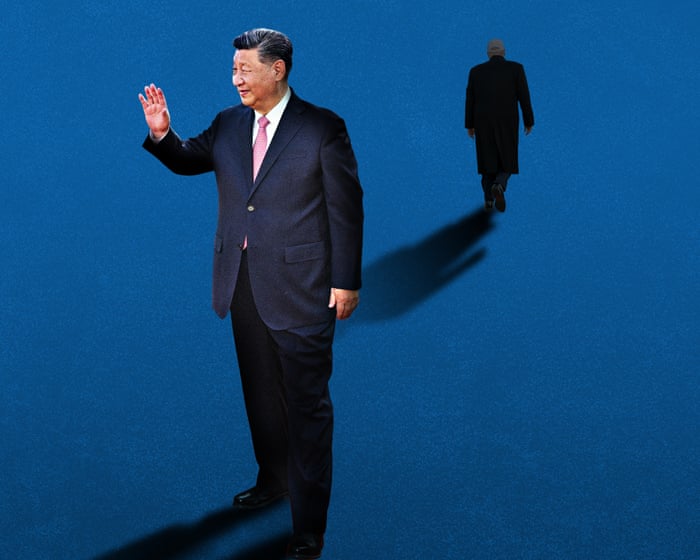
These styles are applied across feature, standard, and comment article containers.When the taoiseach visited Beijing this month, China made an unexpected effort to win Ireland’s favor—if geopolitics depends even partly on goodwill between world leaders. Meeting Ireland’s leader, Micheál Martin, in Beijing’s Great Hall of the People, Chinese President Xi Jinping mentioned that one of his favorite books as a teenager was The Gadfly, a novel by Irish author Ethel Voynich set against the revolutionary fervor of 1840s Italy.
“It was unusual that we ended up discussing The Gadfly and its impact on both of us, but there you are,” Martin told reporters in Beijing.
China is currently on a charm offensive with Western leaders, a strategy made easier by Donald Trump’s increasingly erratic and destabilizing grasp on power.On the global stage, the United States no longer appears to be a reliable partner. Although Europe breathed a sigh of relief this week when President Trump withdrew his threat of military action over Greenland and said he would not impose tariffs on opponents of his Arctic plans, the underlying uncertainty remains.

An editorial in China’s Global Times made Beijing’s position clear. Headlined “Europe should seriously consider building a China-EU community with a shared future,” the state media article warned that the world risks “returning to the law of the jungle” and called for China and the EU to cooperate in building “a shared future for mankind.”

No country can afford to sever ties or truly antagonize the world’s largest economy. Yet, in their search for stability, U.S. allies are increasingly turning to China—a country many in Washington view as an existential threat.

“With U.S. policy again looking unpredictable—highlighted by recent tensions and tariff threats over Greenland—European leaders are making sure to keep channels with Beijing open,” says Eva Seiwert, a senior analyst at the Mercator Institute for China Studies. “The risk is that this approach sustains or even deepens existing dependencies on China at a time when Europe’s stated goal is de-risking.”

Mark Carney, who was elected Canada’s prime minister on promises to stand up to U.S. pressure, set the tone for Western countries’ recalibration toward China during his visit to Beijing last week. “Canada is forging a new strategic partnership with China,” Carney stated. He described the global order as being at a point of “rupture … not a transition.”

Officially, China views this rebalancing with caution. Another state media article this week explicitly pushed back against the idea that Beijing welcomes the current chaos.

Song Bo, a fellow at Tsinghua University’s Center for International Security and Strategy, notes that Chinese policymakers are reluctant to publicly acknowledge that the global order has fundamentally changed. “We have always believed we are the greatest beneficiary of the international order established after the Cold War,” Song says, referring to China’s rapid economic growth during the globalization of the 1990s and 2000s. “It is difficult for us to accept that the current order is undergoing a major transformation.”

Ryan Haas, a senior fellow at the Brookings Institution, offered another perspective on X: “In viewing Trump’s efforts to gain control of Greenland, Beijing appears to be following Napoleon’s maxim: ‘Never interrupt your adversary when he’s making a mistake.’”

Although China pledges allegiance to the rules-based international order, President Xi Jinping has long spoken of the world undergoing “great changes unseen in a century,” echoing Carney’s sense of global rupture. Seiwert observes, “Beijing could use Carney’s language rhetorically to suggest a shared diagnosis of U.S.-centric instability, even if there is no convergence on values, interests, or outcomes.”

Carney’s outreach to China stems in part from his strained relationship with Trump. In a rambling address at Davos, Trump lambasted Carney for failing to be “grateful” to the United States, declaring, “Canada lives because of the United States. Remember that, Mark.”

Rather than submit to pressure from its southern neighbor, Carney is seeking to reduce Canada’s dependence on the U.S. During his visit to Beijing, he agreed to lower tariffs on Chinese electric vehicles from 100% to 6.1%, diverging from Washington’s stance, which had effectively blocked one of China’s key exports from the North American market. Chinese EVs are now on track to make up about one-fifth of Canada’s market.Electric vehicle sales, if not more. The agreement marks a significant political victory for China, even though it accounts for only a small portion of China’s EV exports. Concerns about economic reliance on China and even potential Chinese interference in Canadian elections seem to have become less of a priority.

UK Prime Minister Keir Starmer arrives in China next week under somewhat different circumstances. He has a warmer relationship with Trump, though his tone toughened recently amid disputes over Greenland and the Chagos Islands. Domestically, he faces pressure to demonstrate a firm stance on China regarding security and human rights—two issues that fueled controversy over China’s large embassy application in London, which the government approved this week despite strong opposition.

“Starmer may not have proven himself an effective prime minister or particularly knowledgeable about China, but he is not foolish,” says Steve Tsang, director of the Soas China Institute. “He will aim to improve relations with China to boost the UK’s economy and trade, but he won’t view China as a more reliable partner than the US.”

Nevertheless, like Carney, Starmer hopes to secure deals and attract much-needed investment for the UK economy. He will be joined by representatives from leading British companies and is expected to restart a UK-China CEO council, despite growing worries about the national security risks of Chinese investment.

The shift toward Beijing is far from simple. Song points out that the European Commission’s leadership remains hostile toward China, which Chinese officials and business leaders struggle to reconcile with the supposedly warmer ties between China and individual European nations.

According to Song, the EU’s overall chilliness and the war in Ukraine are the biggest obstacles to strengthening relations. “Without resolving these two issues, Sino-European relations will not see any major improvement,” Song states.

Ukraine is likely high on the agenda for Finnish Prime Minister Petteri Orpo, who arrives in Beijing on Sunday. “China’s support for Russia has definitely strained relations with the Nordic states, and Finland is no exception,” says Patrik Andersson, an analyst at the Swedish Institute of International Affairs. However, Andersson notes that Finland’s ties with China have generally been more stable than Sweden’s or Norway’s, and this visit is likely to reinforce those connections.

In the months following Russia’s full-scale invasion of Ukraine in 2022, European countries grappled with their dependence on Russia for key resources like fossil fuels. There were warnings against becoming similarly reliant on China, the world’s leading supplier of clean energy technology. Even back in 2020, Simon Gass, chair of the UK’s Joint Intelligence Committee, remarked, “China represents a risk on a pretty wide scale.”

Such concerns may be fading as middle powers strive to uphold multilateralism in the face of disruption from the nation that once championed it. China insists that Trump’s actions are no cause for celebration. Yet, the outcome may still enhance Beijing’s global standing.

Additional research by Lillian Yang.

Frequently Asked Questions
Of course Here is a list of FAQs about the topic China Gains Ground Trumps Outbursts Drive US Allies Toward Beijing designed to cover a range of perspectives and detail levels

Beginner Definition Questions

1 What does the headline China Gains Ground actually mean
It means China is increasing its political influence economic partnerships and diplomatic leverage on the world stage often at the expense of traditional US leadership

2 How can Trumps outbursts drive allies toward Beijing
When a US president publicly criticizes threatens or undermines traditional allies it creates uncertainty Allies may feel they need to diversify their partnerships for economic and security stability making China a more attractive option

3 Which US allies are we talking about
Primarily traditional partners in Europe and AsiaPacific These countries have deep ties with the US but may reassess their options during periods of strained relations

Mechanisms Examples

4 Can you give a concrete example of this happening
A key example is the Comprehensive and Progressive Agreement for TransPacific Partnership After the US withdrew from its predecessor under Trump Asian allies like Japan led the creation of a major trade pact without the US increasing regional economic integration where China also seeks influence

5 Besides trade what other areas does China gain in
Diplomacy Allies may more frequently align with Chinas position in international organizations like the UN
Defense Countries may hesitate to fully join USled security initiatives or even purchase Chinese military equipment
Technology Nations may adopt Chinese tech standards if the US stance is seen as coercive rather than cooperative

6 Is this just about Trump or a longerterm trend
Trumps style accelerated and highlighted the trend but it is part of a longerterm shift Chinas economic rise and proactive diplomacy were already creating alternatives US political instability amplifies the incentive for allies to hedge their bets

Advanced Analytical Questions