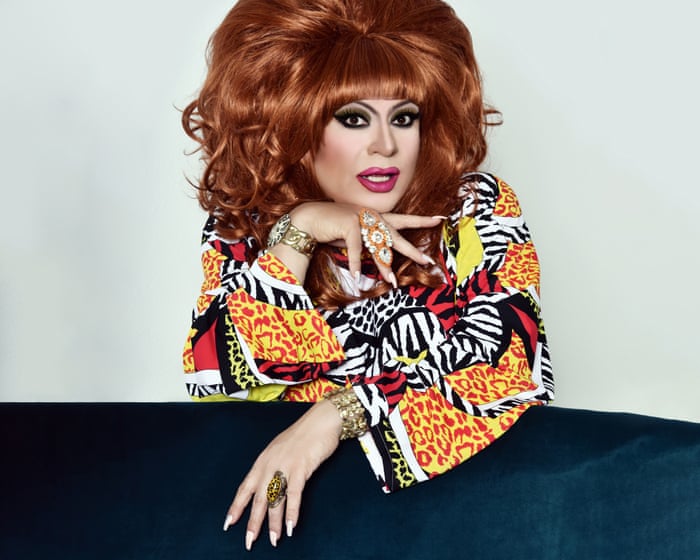
In the tributes and memorials after her death, the consensus was clear: Heklina had been a bitch. In San Francisco’s drag scene, where she made her name, this wasn’t an insult. Heklina was a legendary performer whose stage persona was both raunchy and abrasive, delivering sharp-tongued insults—known as “reads” in drag tradition. “Yeah, she was a bitch,” recalls her longtime collaborator Sister Roma, “but she was a bitch in the best possible way.”
Seven weeks after Heklina’s death, a memorial in her honor shut down San Francisco’s Castro Street, with crowds gathering to watch the event on giant screens. Through comedy routines and performances, the city’s queer community honored Heklina not only as a drag queen but also as a savvy promoter. Her long-running event series, Trannyshack, provided a platform for countless drag artists to hone their craft, including future stars of RuPaul’s Drag Race like Alaska, BenDeLaCreme, and Jinkx Monsoon.
Monsoon credits Heklina with giving her the drag gig that launched her career. She describes Heklina as part of the “old guard of drag”—queens who rose to fame before TV shows like Drag Race. “To be a drag artist known within the community before Drag Race was a special distinction held by only a handful of amazing performers,” Monsoon says.
Alaska recalls that attending a Heklina show on her 22nd birthday first inspired her to pursue drag. “I witnessed drag on stage that was raw, real, and told a story. It was lawless and wild. I was hooked.”
Heklina was just 55 when she died in London under what the Metropolitan Police described as “unexpected” circumstances. Her close friend and collaborator of 27 years, filmmaker and drag performer Peaches Christ, discovered her body. On April 3, 2023, Peaches wrote: “I am shocked and horrified to bring this news to you. I am living in a real-life nightmare, so forgive me if I don’t have all the answers right now.”
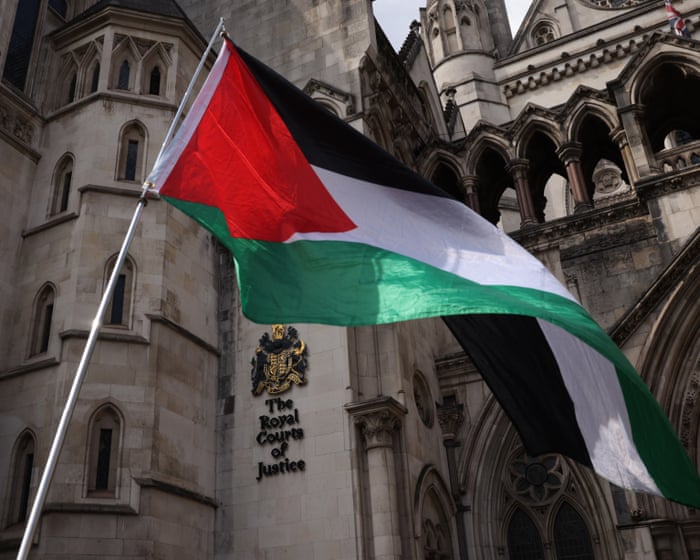
Peaches never expected that, nearly three years later, she would still have so few answers about how and why Heklina died. The police investigation moved so slowly that it sparked protests, with queer activists, drag queens, and allies marching outside Scotland Yard. They held photos of Heklina and signs with slogans like “We deserve justice, not discrimination.” Why was the Met taking so long? Peaches began to suspect that drag queens working in the so-called “seedy” world of queer nightlife—whose sex lives might be unconventional—were not being given the same level of care and attention by the police.
At the time of her death, Heklina was in London to perform Mommie Queerest, a drag parody of the gloriously trashy 1981 Joan Crawford biopic Mommie Dearest, which she had been staging with Peaches for over two decades. The pair were staying in a flat on Soho Square while rehearsing for their shows at the nearby Soho Theatre.
On a day off between rehearsals, Heklina wanted to arrange a hookup. She often dressed in drag to meet men who identified as “straight” for sex—a habit she openly discussed on stage. Peaches didn’t want to be around for that, so they agreed she would stay at a nearby hotel. They kept in touch by text, and on the morning of Monday, April 3, Peaches returned to the apartment to pick up Heklina for rehearsals.
When Peaches went to unlock the front door, she found it already open. Inside, the apartment was in disarray: Heklina’s makeup was scattered on the table, and her bedroom door was ajar. Peaches assumed Heklina had stepped out for coffee.She had forgotten to lock the door. After tidying the flat and preparing their lunches for the day, she went into the darkened living room to draw the curtains. That’s when she found Heklina’s body.
“I found her on the floor, in drag, in a very unusual position,” she recalls. “It looked like yoga—she was on her knees with her face on the ground and both hands on either side of her head.” At first, she thought it must be some kind of prank. “And then it’s like: are you asleep? I’m shaking her, and eventually I touched her hand and it was cold.” The memory of Heklina’s face still haunts Peaches today. “It’s the image I see at night when I lay down in bed to sleep. It’s the thing I think about when I wake up in the morning.”
Police were called to the flat at 9:47 a.m., where Heklina was found unresponsive and later pronounced dead. The drugs GHB and methamphetamine were found in her body at levels that could be fatal.
Peaches was initially treated as a potential suspect, but after interviews and a review of CCTV footage, she was cleared. As a close friend of Heklina, she was provided with a family liaison officer by the Met. At first, the police seemed kind and helpful, promising to keep Peaches updated alongside Nancy French, another close friend who was designated next of kin.
While the circumstances—Heklina meeting men for anonymous hook-ups and the drugs found at the scene—likely pointed to an accidental overdose during chemsex (a term used in the gay community for sex while using specific drugs), a cause of death has still not been confirmed, and an inquest has yet to take place. Nearly two years after her death, police shared a previously unseen CCTV video showing three men walking away from Heklina’s flat, which only raised more questions. The men remain unidentified, and Heklina’s loved ones are still waiting for answers.
Heklina was born Steven Grygelko in 1967 near Minneapolis, Minnesota. His father, of Native American and Polish heritage, had been stationed with the U.S. Navy in Iceland, where he met Grygelko’s mother at a local dance. The two married against the Icelandic grandparents’ wishes and moved to America to start a family. They had a daughter, and then they had Steven.
He would later describe his childhood as unhappy. His parents divorced, and both struggled with alcoholism. He recalled once attending a family dinner where he realized he was the only member of his immediate family who had never been to prison.
Throughout his childhood, Grygelko moved around a lot—first to upstate New York, and then to Iceland for a few years in his teens with his mother. She eventually found him too difficult and sent him to live with his father back in the U.S. It wasn’t long before he left his father’s home, which he described as “repressively heterosexual.”
At 18, he joined the navy to escape from home but was kicked out for failing a drug test while stationed in San Diego. By 20, he was in rehab back in Iceland, where he lived for another four years. “There was a lot of chaos in my childhood and teen years,” he said in a 2022 episode of the LGBTQ+ history podcast You Make Me Real. “I was able to kind of rise above all that. And I really credit the gay thing for that, because I just knew there was a more fabulous life waiting in the big city.”
For decades, San Francisco has been a city where misfits from all over the world flock to find their tribe. “For many of us, it’s the American version of Oz,” says Peaches. “If you’re weird, queer, or an outsider, it’s been a place to run away to and reinvent yourself.” Grygelko moved there in 1991 and instantly felt at home.
His first time on stage in drag was at the Miss Uranus pageant in 1992. He had to come up with a name and spontaneously devised Heklina, derived from the Icelandic volcano Hekla. While he didn’t win the pageant, he began…Heklina was eager to dive into San Francisco’s drag scene. By 1996, she was working at a gay bar called The Stud in the city’s South of Market district. There, she was offered a chance to host an event on the typically quiet Tuesday nights. That’s how Trannyshack began—a weekly party where drag shows started at midnight. In the early days, the stage was just wooden planks stacked on beer crates, which sometimes collapsed during especially energetic performances. Back then, drag was still an underground movement. No one expected it to become a career, let alone a path to fame.
Heklina championed one of the defining features of San Francisco’s drag scene: everyone was welcome to perform. You didn’t have to be a man dressed as a woman; you could be a bearded queen, a drag king, trans, or a cisgender woman who might otherwise be excluded from traditional drag spaces. For example, Ana Matronic of the Scissor Sisters performed at Trannyshack almost every week for three years. “Heklina’s policy was very open,” she recalls. “As long as you were a good performer, you had a place on the stage.” The band’s 2004 song “Filthy/Gorgeous” was inspired by this era, and Heklina makes a brief appearance in its music video.
While there were some old-school drag shows in the city, Trannyshack was more transgressive. “It wasn’t your standard boa and sequins style of drag,” says Matronic. “It was new drag, alternative drag, inspired more by John Waters than old Hollywood.” Following in the footsteps of New York’s Club Kid scene and earlier San Francisco parties like Klubstitute, Heklina helped push the boundaries of drag—focusing more on art, experimentation, and provocation than just female impersonation.
Trannyshack featured lip-syncs and DJ sets, but that was just the beginning. “Numbers would involve blood and vomit and feces,” says Sister Roma. “You never knew what you were going to get. It was wild, and if you went there, you had to be prepared for that.”
“San Francisco drag at that time had no rules,” recalls Alaska, a former winner of RuPaul’s Drag Race All Stars. “I love Drag Race and it has changed my life, but it has always existed within certain parameters and strict guidelines. Trannyshack was anti-rules. It was representative of the truth of our community in a way that something on television could never be, still to this day. And I think that’s why the community loved it and needed it so much.”
The shows provided an important outlet for the queer community, which was grappling with the devastation of the AIDS epidemic. In the early 1990s, Heklina would check the obituary pages of the local newspaper each week to see who had died. “It was a very surreal time of intense grief,” she later recalled, “and everybody was dealing with it and walking through this constant sea of death.”
Trannyshack rose from these ashes. “People had just stopped dying of AIDS because new medications came out,” Heklina said in 2008. “It felt like a celebration after all that mourning… I’d planned to go to some people’s funerals and there they were on stage with me.”
Heklina herself had been living with HIV for many years. In early Trannyshack performances, the use of blood and horror-filled imagery echoed the community’s recent trauma. Her friends remember her wicked sense of humor, her gravelly laugh, and her ability to find lightness even in the darkest situations. With her enormous boxy wig and famous beauty spot, she commanded the stage with impeccable comic timing, skillfully delivering brutalHeklina had a knack for making a comeback and finding humor in playing the fool. In a clip from her drag version of The Golden Girls—an annual tradition in San Francisco—she stretches the simple word “no” into a masterful comic routine that lasts over a minute and a half. The result is so hilarious that her co-stars break character laughing.
Trannyshack grew steadily, running weekly for 12 years. It inspired a popular pageant competition and expanded to cities like Los Angeles, Seattle, Portland, London, New Orleans, and Honolulu. Celebrities like Sofia Coppola, Gwen Stefani, and Pink attended. Lady Gaga performed there just before she became famous and stayed to dance all night.
By 2015, however, the name Trannyshack had become controversial among younger community members, as the term was increasingly seen as a slur. Heklina acknowledged that culture evolves and words change meaning. Her new regular show was renamed Mother—and “mother” was exactly what Heklina was to many younger queens. She could be intimidating, but she was also a supportive figure who gave many aspiring drag performers their first break. “There’s a Heklina archetype in many drag communities,” says Peaches. “The cold, calculated businesswoman running the gig. The Mama Rose who’s in the trenches building an amazing stage for you, but who also holds you to a standard.”
Though known for her frosty persona, Heklina’s generosity was remembered by many friends after her death. She helped one friend pay rent, hired another in need of cash, and supported performers struggling with substance abuse. Heklina herself battled addiction throughout her adult life. “She did not want to be known for being kind,” says Peaches. “Behind the scenes, she helped many people but would never publicize it.”
In 2014, Heklina opened a theater and nightclub called Oasis with three business partners, aiming to create a space run by drag queens, for drag queens. “It was refreshing to see someone who actually does drag in charge of the business, rather than some guy who’d never put on a wig,” says Alaska. The club was successful, but by 2020 Heklina grew tired of managing a venue. She started a podcast, toured a one-woman show (Heklina’s Grand Opening), and moved out of San Francisco to a house she bought near Palm Springs in Southern California, just a few doors down from her friend Nancy. They planned to grow old there together.
After Heklina’s death, friends and family were busy handling her estate and organizing memorials. Months later, Peaches and Nancy realized London’s Metropolitan Police had gone silent. Emails to officers went unanswered for months, leaving an information vacuum that fueled conspiracy theories—some believed Peaches and Nancy were hiding the truth, while others suspected a covered-up murder.
Only when Peaches raised this theory with the Met did they finally respond, leading to a call with an officer in February 2024. According to a lawyer’s notes from the meeting, the officer strongly denied a cover-up but apologized for how the investigation was handled. He explained that the main investigator had been replaced, suggesting that failures in the case may have been due to “conscious or unconscious bias.”
Just a year earlier, the Baroness Casey Review—a report commissioned after police officer Wayne Couzens abducted, raped, and murdered Sarah Everard—had raised urgent questions about bias in the police. Published in March 2023, the 363-page report concluded that the Met was institutionally racist, sexist, and homophobic.In the LGBTQ+ section, the text details the homophobia faced by queer officers in the Met Police. It also reports that trust in the Met fell by 20% among LGBTQ+ Londoners between 2015-2016 and 2021-2022, compared to a 12% drop among non-LGBTQ+ people.
Homophobia within an institution like the Met isn’t only shown through overt acts of hatred but also in the assumptions officers make during investigations. For example, between 2014 and 2015, serial killer Stephen Port murdered four young men by giving them fatal doses of GHB and leaving their bodies near his flat in Barking, east London. An inquest jury found that a series of fundamental failures in the Met’s investigation may have contributed to three of those deaths, as a more thorough inquiry could have caught Port sooner. The victims’ families accused the Met of homophobic bias in handling the case.
When asked about improvements made after the Casey Review, a Met spokesperson said, “We understand more work needs to be done for us to build trust with the LGBT+ community in London.” They pointed to the introduction of full-time LGBT+ community liaison officers across all London boroughs as a single point of contact.
However, Kai O’Doherty, director of policy and research at the LGBT+ anti-abuse charity Galop, was critical. They noted the Casey Review called for a “complete overhaul” of the Met, “yet we have seen no meaningful action from the Met to address its institutional anti-LGBT+ prejudice. A comprehensive strategy to combat homophobia and transphobia in the Met is urgently needed for LGBT+ victims and survivors to have meaningful access to safety and justice.”
This bias may have affected the Met’s handling of Heklina’s death. When officers encountered a drag queen who died after a drug-fueled sexual encounter, assumptions likely played a role. As London-based Canadian drag queen Crystal, who attended a protest at Scotland Yard, put it: “I think that police see that tableau and go: OK, case closed, it’s not really worth looking into. That’s just what you get if you’re that kind of gay.”
Bias might also explain why the investigation was deprioritized, taking so long and leaving Heklina’s loved ones without answers. Another drag queen at the protest, Cheddar Gorgeous, said: “If that had been a young white girl found dead in an Airbnb with men coming and going, regardless of drugs or her personal life, I guarantee that investigation would have gone forward at full pelt. That’s homophobia manifest.”
Despite promising better communication after an apologetic call, the Met went silent again. A series of missteps followed, frustrating Heklina’s friend Peaches. Police failed to access Heklina’s phone, which could have held clues about who she met the night she died, then accidentally sent it to California and had to retrieve it. In January 2025, police finally released CCTV footage of three men who were in Heklina’s flat that night, asking the public for information. Peaches noted that the chances of anyone recognizing these men had greatly diminished after nearly two years.
“I’m still livid that it took almost two years and me going to the press and blasting the police for there to be any movement,” said Peaches.Eklina (left) and Joshua Grannell, also known as Peaches Christ, in 2017. Photograph: Courtesy of Joshua Grannell
Peaches organized protests in London and San Francisco on March 31, 2025, to raise awareness about Heklina’s case, pressure the police, and highlight broader unfair treatment of the LGBTQ+ community by law enforcement. Afterwards, DCI Christina Jessah, who leads policing in the area, stated, “We understand many are deeply distressed by Steven’s death and some are frustrated with the investigation’s pace. We are also aware of the concerns of Steven’s next of kin and have apologized to them directly.”
She added that a review of the Heklina investigation is underway to identify any missed opportunities. The police have now assigned a new investigator—the fifth so far. “The detectives assigned to us now are lovely,” says Peaches. “They’re doing damage control, and they’re very effective at it. They’re gentle, they’re communicating. But for me, the damage has already been done.”
While the Met won’t comment on an active investigation, off-the-record conversations with those familiar with the case suggest they will likely conclude Heklina’s death was caused by an accidental overdose after the three men left her apartment, with no evidence of foul play. If that’s the conclusion, Peaches wonders why it took so long to get answers. “Why not just say earlier she overdosed on drugs, no foul play, and be done with it? We would have thought it was sad and awful, but it never would have escalated into all this.”
Without closure, what would justice for Heklina look like? For Peaches, it would mean “shining a light on the Met police’s longstanding institutional homophobia”—a cause she never expected to be part of. She asks, “Can we move the dial so the police feel pressure to do better with future cases involving people from our community?”
In California, Heklina’s loved ones are sorting through her belongings. An article in the San Francisco Chronicle details Nancy’s process of distributing Heklina’s wardrobe to the wider drag community. A benefit at Oasis nightclub raised $10,000 to digitize Heklina’s video collection, which contains over 300 hours of footage from the 1990s and 2000s. Nancy and Peaches are discussing making a documentary about Heklina’s life.
After her death, Heklina was cremated in London. A cousin on her father’s side followed a Native American tradition by cutting off her own long braid and offering it to be burned with the body.
At a memorial in Palm Springs, Nancy explained how Heklina’s ashes were divided into four parts (“so she’s skinny now”) and shared among her family and loved ones. She keeps her portion in a chic black clutch that Heklina had brought on the trip to London—a fitting resting place for someone who always refused to be bound by convention.
The way Heklina’s community has come together after this tragedy reflects her influence as a performer and organizer. Beyond her sharp demeanor, they honor the genuine love and care she poured into her queer family and her lifelong dedication to advancing drag as an art form.
“Heklina will be remembered for helping create more drag in the world—drag of all styles, representations, backgrounds, and messages,” says Jinkx Monsoon. “She lifted others up in a world where we are used to being pushed down.”
Frequently Asked Questions
FAQs She was a bitch in the best possible way The Life Death of Heklina
BeginnerLevel Questions
Q Who was Heklina
A Heklina was a legendary drag queen performer and producer who was a central figure in the San Francisco drag and LGBTQ scene for decades
Q What does the phrase a bitch in the best possible way mean in this context
A It celebrates her sharp nononsense and fiercely honest personality She was known for her acerbic wit and tough love which she used to challenge norms and build community making her an iconic and beloved bitch
Q How did Heklina die
A Heklina died unexpectedly in her sleep on April 3 2023 while in London for a performance The exact medical cause of her death has not been publicly detailed contributing to the sense of mystery and shock
Q What was she most famous for creating
A She was the cofounder and host of Drag Race viewing parties and the stage show Mother which famously parodied the reality TV show RuPauls Drag Race long before the official touring shows existed She also founded the longrunning drag party Trannyshack
Intermediate Advanced Questions
Q Why was Trannyshack such a big deal and why did the name change
A Launched in 1996 Trannyshack was a groundbreaking chaotic and wildly popular weekly drag show that celebrated underground punk and camp drag It was a reaction to more polished cabaret drag The name was changed to TShack in the 2010s as cultural understanding evolved and the term tranny was widely recognized as a derogatory slur for transgender people
Q What was her relationship with the official RuPauls Drag Race franchise
A It was famously complicated Her show Mother was a beloved satirical roast of Drag Race While some queens from the TV show performed in her productions Heklina was also an outspoken critic of the shows corporate influence on drag culture valuing San Franciscos more alternative theatrical scene