People often ask me if I think all future novels will be written by AI. It’s less a real question and more of a challenge. Are they asking if I worry that a machine can do my job, and do it better? I usually brush it off with something like, “No algorithm is going to write Anna Karenina!” But that’s not a real answer either.
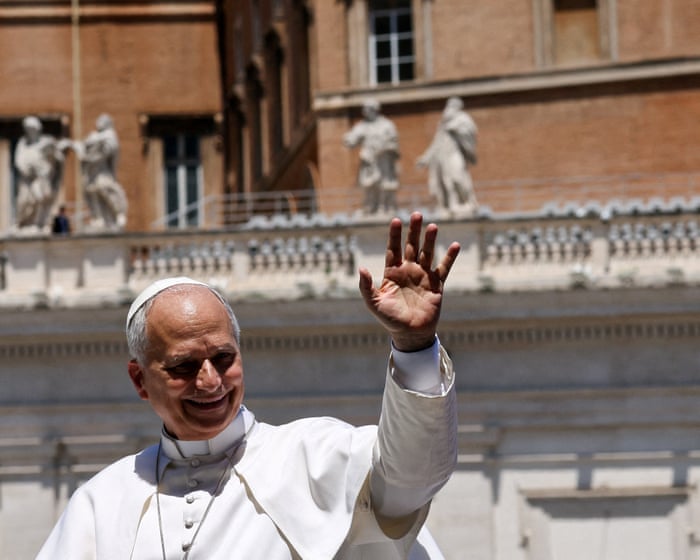
So I’m grateful to Pope Leo XIV, the American pope, for his recent letter to the world, Magnifica Humanitas: On Safeguarding the Human Person in the Time of Artificial Intelligence. It’s a long (over 40,000 words), intelligent, and thoughtful document where the pope addresses how this fast-growing technology can be used and misused. Now, when someone asks my opinion on AI, I can just point them to the pope’s letter—or at least chapter three.
The letter starts with a fitting biblical reference to the tragic results of a breakdown in human communication. Humanity faces a “pivotal choice: either to construct a new Tower of Babel or to build a city in which God and humanity dwell together.” What follows is a detailed look at how Pope Leo’s predecessors thought about things, and the Vatican’s ideas on labor, authority, government, science, power, and our moral duty to each other. It also highlights the church’s work in defending human dignity and freedom.
The third chapter, Technology and Dominance: The Grandeur of Humanity in Light of the Promises of AI, lives up to the letter’s title. In a powerful (and often quoted) passage explaining what AI is not, the pope essentially defines what it means to be human. “So-called artificial intelligences do not undergo experiences, do not possess a body, do not feel joy or pain, do not mature through relationships and do not know from within what love, work, friendship or responsibility mean.” AI has no moral conscience and shows no real concern for the greater good of humanity.
The letter then says the most important and necessary things about what might be AI’s biggest threat: it can be programmed solely to maximize profit, which can only lead to the many suffering for the benefit of the few. The pope warns against the “manipulation of privacy” and the “misuse of information,” against using algorithms to manage employment, control access to public services and credit, and to boost or damage someone’s personal reputation.
Compassion, mercy, and forgiveness—not high on a machine’s list of priorities—could become outdated. “‘Necessary sacrifices’ may begin to be justified, placing the burden on the most vulnerable in pursuit of the supposed optimization of the species.” If the tools of this new power end up in the hands of those who already have wealth and influence, they will be used to improve the comfort, health, and well-being of our richest and most privileged citizens.
The pope isn’t outright condemning AI, but rather the way it can be used as a tool for political repression and to make economic inequality even worse.
As the letter wraps up, the pope calls on us to stay true to the truth, invest in education, build relationships, and live in justice and peace—to resist how new technologies can “exploit the most vulnerable, create new forms of slavery and derive profit from conflict.” It becomes clear that the pope isn’t condemning AI outright, but rather the way it can be used as a tool for political repression and to worsen economic inequality.
In theory, you could criticize the letter for not going far enough, for not using another biblical metaphor—the golden calf—to condemn AI because it prioritizes saving money over spiritual, individual, and community well-being.Growth. But that ship has already sailed, and there’s not much that Leo XIV – or any religious leader – can do to condemn these new advances as a 21st-century form of idolatry.
Even so, the encyclical’s vision of human nature, the spirit of justice and empathy that must prevail, and the essential importance of the highest moral values – it’s ultimately so kind, so positive, so generous, and so clearly right about our duty to protect the weak and the poor that it’s hard to find reasons to dismiss it.
But that’s the scary part. Apparently, there’s been some pushback from Silicon Valley, where the creators and masters of the latest technology have suggested that the pope doesn’t know what he’s talking about.
The Guardian view on the Pope and Claude: Leo XIV’s encyclical on AI is right to put humanity first | Editorial
Read more
Jeremy Nixon, a founder of AGI House – a group focused on proving that AI is essentially equal to the human brain – was quoted in the New York Times as saying that the church hadn’t “thought deeply about … AI,” adding: “They couldn’t have a position on it, because they don’t understand it.” And there seems to be a widespread belief that the end result of current research will be, in effect, a new God, or at least a convincing imitation. Worried about the dangers of the future, our society is choosing to ignore the evidence that the downsides of AI are already here. A friend’s daughter, a college student majoring in advertising, was recently told by her adviser that by the time she graduates, all the jobs in advertising will have been taken over by AI.
If the masters of this new technology can’t agree with what the pope sees as its dangers and drawbacks, we are in very deep trouble. The problem isn’t that we’ll have a robot writing Anna Karenina. The problem is that no one will see any need for a novel that so beautifully captures the suffering of a woman, a unique human being.
There would be no point in a book like that unless that story of a life-changing mistake could be turned into profit by a forward-thinking tech bro and used to buy a bigger, better yacht – presumably serviced by a permanent underclass, by workers whose dignity, whose once-valued and valuable jobs, have been stolen by the greedy forms of artificial intelligence.
Francine Prose is a former president of PEN American Center and a member of the American Academy of Arts and Letters and the American Academy of Arts and Sciences. Her new novel, Five Weeks in the Country, was published in May.
Frequently Asked Questions
Here is a list of FAQs based on the statement Im grateful to the Pope for his encyclical on AI Heres why
BeginnerLevel Questions
Q What is an encyclical
A Its a formal letter from the Pope to the entire Catholic Church about an important topic Its meant to teach and guide people
Q Why did the Pope write an encyclical about Artificial Intelligence
A Because AI is rapidly changing how we live work and interact The Pope believes it raises deep moral and ethical questions about human dignity justice and peace so he wanted to offer guidance
Q Is the Pope saying AI is bad
A No Hes not against technology Hes saying we need to be careful and use AI in ways that respect human life protect the vulnerable and promote the common good not just profit or power
Q What is the main message of the encyclical on AI
A The core idea is that AI should serve humanity not replace or control it It calls for a global conversation to ensure AI is developed and used ethically with a focus on peace truth and human dignity
Q How does this affect me as a regular person
A It matters because AI is already in your lifein search engines social media banking and even medical diagnoses The Pope is asking everyone to think about fairness privacy and whether these tools are helping or hurting society
Intermediate Questions
Q What specific dangers does the Pope warn about regarding AI
A He warns about an algorithmic society where machines make decisions that affect peoples lives without fairness or transparency He also highlights risks of surveillance misinformation and widening inequality between those who control AI and those who dont
Q Does the encyclical talk about AI in weapons or warfare
A Yes It strongly condemns the development of autonomous weapons systemsmachines that can kill without human decisionmaking The Pope argues that this strips war of any moral accountability and could lead to catastrophic conflicts
Q How does the Churchs view on AI differ from tech companies views