I won the lottery. Out of roughly 8,000 artists, my name was randomly selected to be one of the 2,000 recipients of a basic income paid by the Irish government. This pilot program tested whether supporting artists would lead to more creative work, improved wellbeing, and—calculated down to the cent—a financial return for society.
For three years, I received €325 a week with no conditions other than completing a survey. I could still earn other income and apply for artist grants. As a freelance writer, like most artists, I’ve always had to work outside my creative field just to get by, constantly worried I’d never afford a home or be able to start a family. The basic income changed my life.
Just months into the program, I learned I was pregnant. The basic income gave me the confidence to have my baby, knowing I could continue my creative work and keep my small studio in a light-filled warehouse in central Dublin. The Back Loft, one of the few affordable spaces left for artists, is a close-knit community of visual artists, musicians, writers, tattoo artists, and knitters.
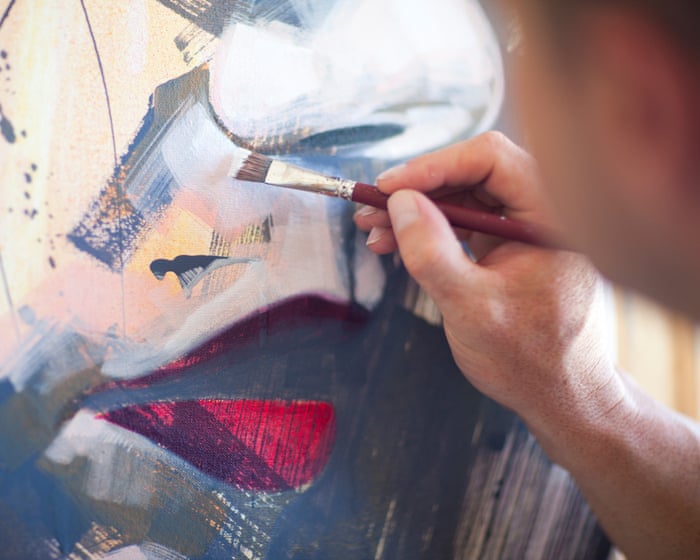
The basic income allowed me more freedom to experiment in my work, write for independent publications, and take part in community projects. I helped organize events that brought together artists from different disciplines and raised money for a local rape crisis center.
The pilot’s collective successes led the Irish government to launch a permanent basic income for the arts scheme, opening this May. It turned out that artists in the pilot generated millions in return. Government research found that for every euro spent supporting artists, society received €1.39 back, and the scheme was estimated to have created over €100 million in social and economic benefits.
The pilot also revealed the deep instability of the creative sector and its toll on artists’ mental health and livelihoods—issues the basic income greatly eased. Yet despite the scheme paying for itself, the government has chosen not to extend it to all artists. Instead, it will support only a few thousand at a time, in three-year cycles with mandatory three-year gaps.
On my studio wall hangs an image by a young photographer I collaborated with throughout my time on basic income—support she never received. Under the new scheme, only a fraction of the artists in my building may get state support to create, while the rest struggle to make ends meet in a city where the housing crisis hits people in unstable work like ours especially hard. I’m fortunate to have a partner who now owns our home, but many artists I know lack that security.
With growing global uncertainty, funding the arts might seem like a luxury. But creative work helps us understand the world in new ways, strengthens communities, and speaks vital truths.
I will apply for the new permanent scheme. After all, don’t look a gift horse in the mouth. But should a basic income for the arts feel like a lucky gift and work like a lottery? While Ireland calls itself a “global leader” for making this support permanent, the current design risks perpetuating the very insecurity it aims to reduce.
Ireland will take over the EU’s rotating presidency this year and says other member states have consulted Dublin about replicating this experiment. Yet successive Irish governments have worsened inequality and instability in the country for years.
Before this scheme, Ireland ranked among the lowest in the EU for cultural spending. In 2022, it spent €897 million, or 0.2% of GDP, compared to an EU average of 0.5%. A basic income for 2,000 artists adds only about €35 million a year—offset by economic gains. The National Campaign for the Arts argues the basic income must be expanded significantly. Praxis, the artists’ union of Ireland, also supports expanding the permanent scheme.The permanent scheme is moving forward, but it carries a warning: some aspects may “risk reproducing precarity rather than addressing it.” For example, disabled artists could see their social welfare payments significantly reduced if they accept the basic income, due to means-testing thresholds.
My own basic income period ended just as the new scheme was announced. I might not be selected in the next round, or I could receive support for nine out of twelve years from the pilot’s start, while another artist gets nothing. I know young creatives, forced onto the streets by the housing crisis, who might not even be able to apply. The eligibility requirements for the permanent scheme are still unclear.
If the arts basic income pays for itself—and I know firsthand the relief and creative freedom it provides—then it should be expanded to everyone. While people on welfare in Ireland still face stigma, artists seem to possess a cultural capital the government is eager to leverage. But the government should remember that as artists, we are uniquely positioned to highlight inequality and the evident lack of political will to ensure everyone is free from insecurity—even if they try to paint us as biting the hand that feeds.
The subheading of this article was amended on 13 March 2026. An earlier version referred to “€300-plus a month,” when it should have said “€300-plus a week,” as stated in the article text.
Caelainn Hogan is the author of Republic of Shame.
Do you have an opinion on the issues raised in this article? If you would like to submit a response of up to 300 words by email to be considered for publication in our letters section, please click here.
Frequently Asked Questions
FAQs Irelands Basic Income for the Arts Pilot Scheme
The Basics What is it
Q What exactly is the Basic Income for the Arts scheme
A Its a 3year Irish government pilot program that provides a regular unconditional payment to a selected group of practicing artists and creative arts workers The goal is to support them to focus on their creative work without the constant financial pressure of making ends meet
Q Is it just for famous artists
A Not at all Its for a wide range of practicing artists and creative arts workers including musicians writers visual artists actors dancers circus performers and more Participants were chosen by random selection from a pool of eligible applicants
Q How much is the payment
A The payment is 325 per week Its paid every two weeks totaling 16900 per year
Impact Benefits How does it help
Q How can a basic income transform an artists life
A For many it provides stability It means less time scrambling for side jobs and more time creating It reduces the feast or famine cycle lowers anxiety and allows for longerterm artistic planning and risktaking
Q What are the real practical benefits people have seen
A Artists report being able to buy better materialsequipment afford studio space say no to exploitative gigs invest in training dedicate proper time to complex projects and improve their overall mental and physical health by reducing financial stress
Q Does it make artists lazy or less creative
A Evidence from the pilot and similar schemes suggests the opposite With financial security artists often become more productive and ambitious The freedom allows them to pursue passion projects and innovate rather than just creating what they know will sell quickly
Common Concerns Problems
Q Whats the catch Are there strict rules on how to use the money
A There is no catch in how you spend it The payment is unconditional The core requirement is that you must continue your creative practice and provide some data for the research study evaluating the pilot
Q Does it affect other social welfare payments
A Yes its considered taxable income It may affect meanstested benefits Recipients